Sekisui Chemical takes on the challenge of "Shu-Ha-Ri" with new technology: What is the world's first biorefinery project aiming for a circular economy?
公開日:
What thoughts and stories were behind its development?
How will that connect to the people and societies living on Earth?
"SEKISUI | Connect with" is a future-creating media platform that connects you with Sekisui Chemical.
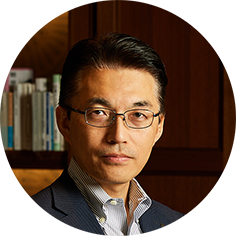
Sekisui Chemical's biorefinery development project is progressing smoothly. Once fully operational, it will be possible to recycle "waste," the final stage of consumption, into resources and produce plastic products. What kind of environment and approach are necessary to realize this unprecedented and ultimate circular economy?
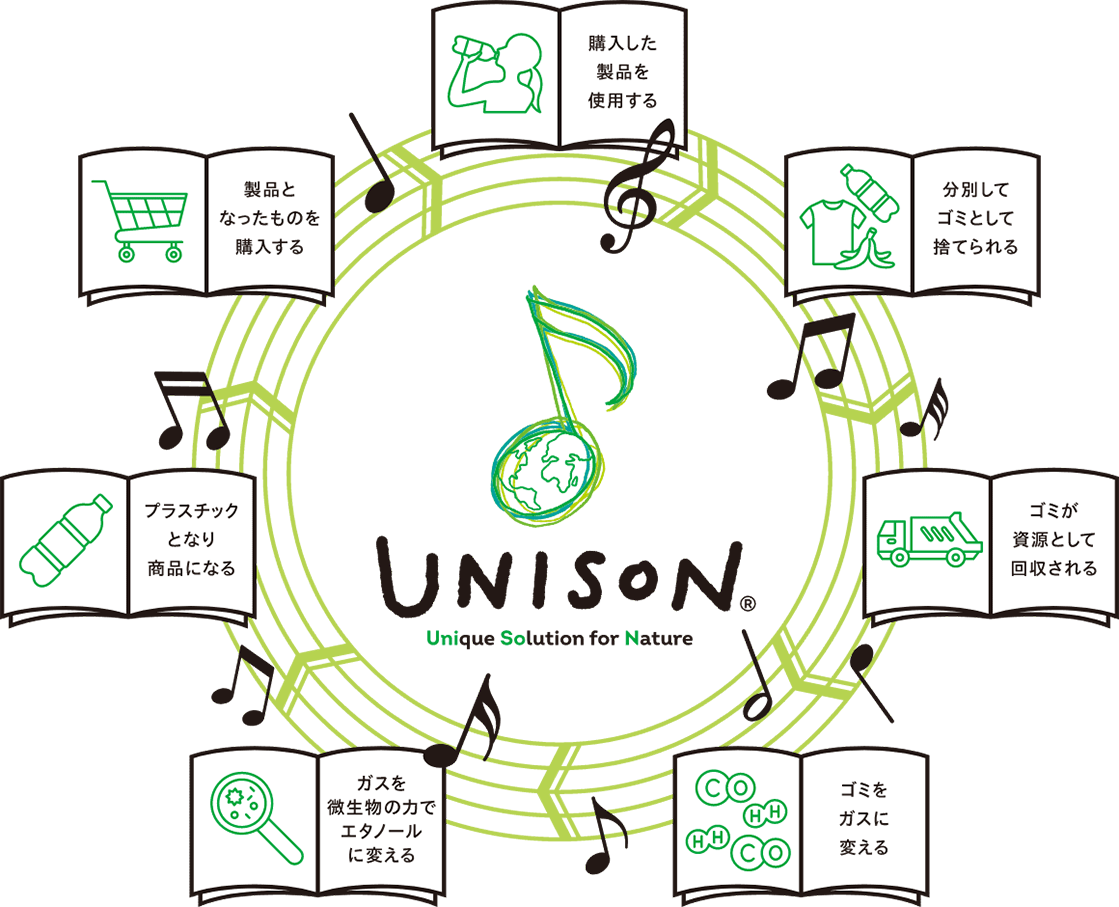
"Our new technology (BR ethanol technology) gasifies combustible waste without sorting it and converts it into ethanol using the power of microorganisms, making it possible to realize an unprecedented resource recycling cycle: combustible waste → ethanol → plastic products → combustible waste."
Sekisui Chemical Co., Ltd. (hereinafter referred to as Sekisui Chemical) started developing this biorefinery business in 2008. Currently, it is in the final stages of development, and ethanol is actually being produced from combustible waste at the demonstration plant in Kuji City, Iwate Prefecture. Tadahiko Yoshioka, General Manager of Corporate New Business Development, continues as follows:
"We aim for full-scale operation to begin in 2026 or later. The ethanol produced using this technology can be used as a raw material for plastic products, as well as for sustainable aviation fuel (SAF)."
In other words, in the near future, it will be possible to manufacture plastic products without using petroleum as before, without emitting large amounts of CO2, and even produce aviation fuel. Moreover, it is a sustainable technology that contributes to solving multiple social problems, as it uses waste (combustible waste), which is currently being called for reduction worldwide, as a raw material and generates resources through the mediation of naturally occurring microorganisms.
"This resource recycling system cannot be achieved by our company alone. Collaboration with various partner companies is essential at each phase, from the collection of combustible waste to the production of polyethylene from ethanol and the manufacturing of plastic products."
The first step in this initiative is about to begin. It involves a three-way collaboration between Shiseido, Sumitomo Chemical, and another company to create a new circular model for plastic cosmetic containers. While it is yet to be fully operational, it will make it possible to recycle plastic cosmetic containers, which were previously difficult to recycle due to the difficulty in sorting them.
Creating new values with the "UNISON®" brand.
Yoshioka says that in order to realize a new resource recycling system, it is necessary to instill a new worldview and values into consumer behavior.
"Products produced through this resource recycling process will likely be slightly more expensive than conventional petroleum-based products. Therefore, we believe consumers need to choose products not just because they are 'cheap' or 'stylish,' but also because they are 'sustainable' and 'contribute to resource recycling.'"
The company has already launched the brand "UNISON®" for this business, and will now focus on creating a new worldview through the brand. Unison is a musical term meaning everyone playing the same melody, but it also embodies the idea that people who resonate with this worldview will work together to create a better future.
"For example, I would be delighted if we could create a scene where products using 'UNISON®' are displayed in a corner of a convenience store or retail shop, and consumers who sympathize with this resource recycling approach pick them up. The image is of our company, our partner companies, and consumers working together as one to drive the cycle of manufacturing → consumption → disposal → manufacturing... We want to solve the social issues we face today in our generation, and pass on a better world to our children and grandchildren."
Of course, that's not something that can be achieved overnight. Yoshioka says he wants to start by creating a small circle of partners, working with companies and brands that share his vision.
The founding DNA and leadership attitude that support innovation
Sekisui Chemical has invested over 15 years and significant resources in its biorefinery business, which contributes to resource recycling. At the same time, it has actively pursued the development of perovskite solar cells and stationary lithium-ion batteries, which contribute to decarbonization and disaster resilience. These are all major innovations addressing societal challenges and have attracted attention from various sectors. While Sekisui Chemical operates on a balanced model of profitable businesses and possesses high technological capabilities, what is the background behind its ability to boldly tackle such challenging developments and continuously create innovation?
"That's our DNA. Since our founding in 1947, we have continuously offered solutions to various social challenges through our technological capabilities. It's not just about technological innovation; it's about contributing to solving social problems and making a positive impact on society. I believe this is the essence of our innovation. This spirit of continuing to create such innovations has been passed down through generations as part of our corporate culture."
Another factor that greatly supports innovation is the top management's attitude of "tolerating failure."
"Failure is an inevitable part of innovation. In an organization that blames failure, no one will want to take on challenges. The attitude of the top management and the culture that encourages proactive challenges are also very important."
New challenges continue in this biorefinery business as well. Currently, as the next step following ethanol production, they are working on developing manufacturing technologies for high-performance chemicals with support from the national Green Innovation Fund. If this technology is established, it may become a reality that all plastic products in the world can be made from combustible waste.
"What we're working on right now is something no one in the world has ever achieved before. The idea of making ethanol from waste sounds like something out of a science fiction movie, doesn't it? Thinking about it that way, I'm incredibly excited, and I'm proud to be involved in this project."
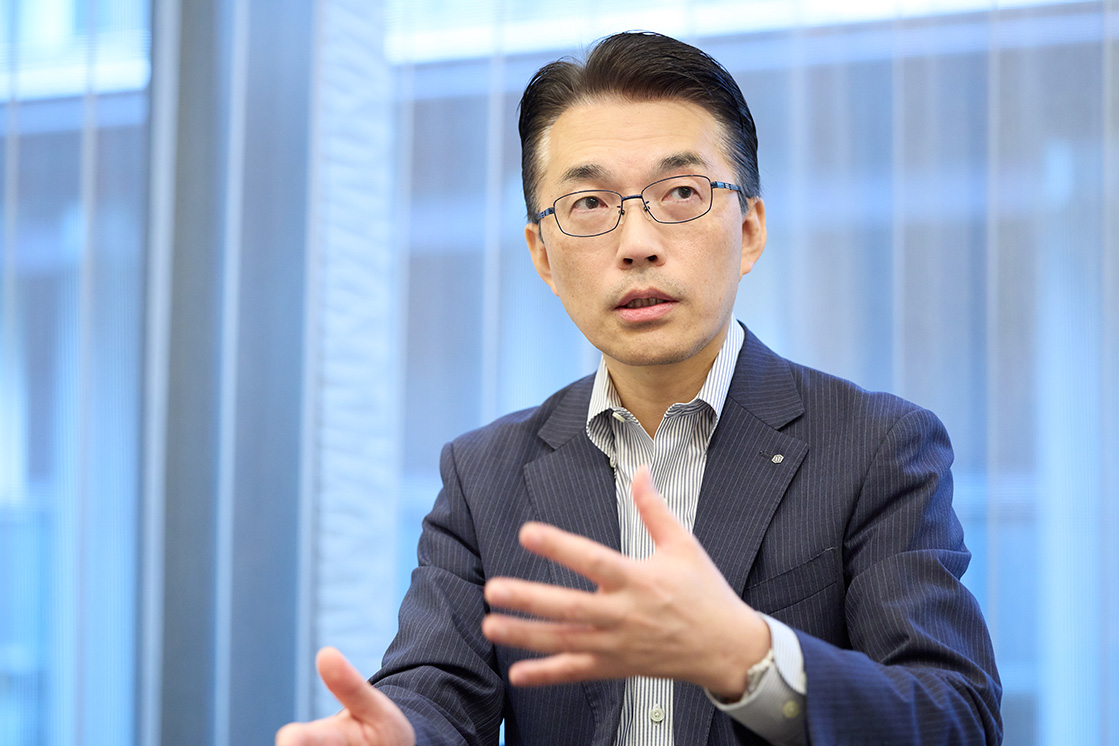
Aiming to move from "breaking" to "separating" valuable things for the next generation.
Yoshioka is also involved in activities to preserve "Imayo," a traditional performing art that was extremely popular from the mid-Heian period to the Kamakura period, as his life's work.
"There was a period of 800 years when 'Imayo' (a type of traditional Japanese music) had completely disappeared. No matter how wonderful something is, if no one takes it on, it will just end there. That would be a great waste. We want to make sure that valuable and wonderful things are properly passed on to the next generation."
This sentiment resonates with the core principle of the biorefinery business: "To make society even better with new value, and to firmly pass that on to the next generation." Yoshioka, who himself practices Imayo and Iaido, likened the biorefinery business to "Shu-Ha-Ri," a term that describes the process of training and development in Japanese performing arts.
"If expanding existing businesses is considered 'preservation,' then technological innovation is 'breaking,' and innovation that brings joy to society is 'separation.' I believe the biorefinery business is precisely what we can call 'separation.'"
Sekisui Chemical is poised to take a significant step towards achieving that goal.
Text by Rie Suzuki / Photographs by Yuji Kanno / Edit by Hirotaka Imai
Reprinted from an article published in Forbes JAPAN BrandVoice on November 27, 2023.