Towards further growth
Innovation for the Earth
In 2020, SEKISUI CHEMICAL Group formulated its long-term vision, "Vision 2030," aiming for a further leap forward ten years into the future.
For the three years starting in fiscal 2026, we are working on the medium-term management plan 'Accelerate 2028' as a crucial third step toward realizing 'Vision 2030.'
Held on May 21, 2026
Medium-term Management Plan Briefing
Information session materials
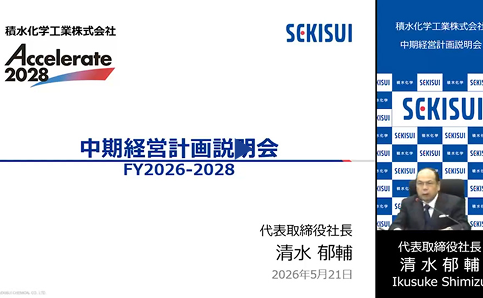
(45 minutes 55 seconds)
Clicking will open an external website.
INDEX
| A review of the previous medium-term management plan, "Drive 2.0" | President and CEO Ikusuke Shimizu |
|---|---|
| New Medium-Term Management Plan About "Accelerate 2028" |
〃 |
| High Performance Plastics (HPP) Company | Director Senior Managing Executive Officer Akira Asano |
| Housing Company | Director Senior Managing Executive Officer Masahide Yoshida |
| Urban Infrastructure and Environmental Products (UIEP) Company | Director Senior Managing Executive Officer Yoshiyuki Hirai |
| Medical Business | SEKISUI Medical Co., Ltd. President and CEO Hiroyuki Yamashita |
Long-term vision
Vision 2030
Innovation for the Earth
Supporting the foundation of life and creating "peace of mind that continues into the future."
With a reform and creation centered on ESG management*, we aim to expand our contribution to social issues solutions, aiming for double the Group’s business by 2030 (sales of 2 trillion yen, operating profit margin of 10% or more)
SEKISUI CHEMICAL Group ESG Management: Corporate activities that strategically address environmental and social issues and work to solve them, aiming to balance social sustainability improvement and SEKISUI CHEMICAL Group profitable growth.
Concrete examples of SEKISUI CHEMICAL Group 's goal of "innovation and creativity"
Film-type perovskite solar cells
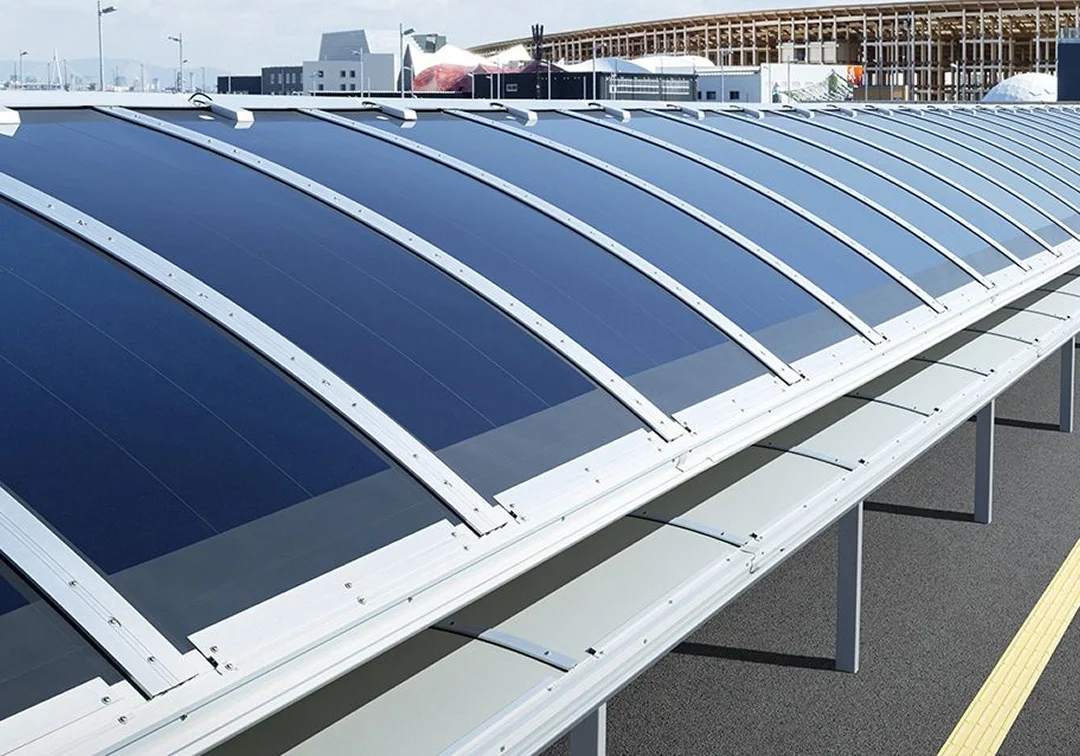
We are promoting the development and commercialization of film-type perovskite solar cells, which are expected to be a next-generation renewable energy technology. Perovskite solar cells are a next-generation solar cell that uses a perovskite crystal structure as the power generation layer. Because it is made up of an aggregate of small crystals forming a film, it is lightweight and highly flexible, and is expected to be introduced in places where conventional solar cells are difficult to install.
|
|
|
|
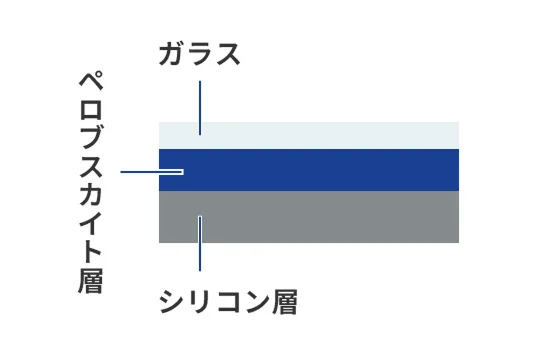
| Film type | Glass type | Tandem type | |
|---|---|---|---|
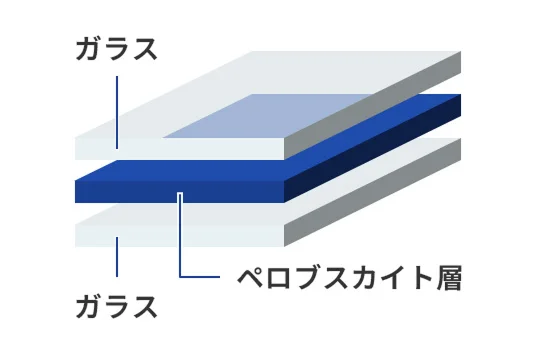
| structure | The power generation layer is coated onto the film. | The power generation layer is sandwiched between glass. | Layered on top of a silicon-based solar cell |
| Features | Lightweight, thin, and flexible | Easy to ensure durability | Easy to improve conversion efficiency |
| Intended Use | Building walls, roofs with low load-bearing capacity | Window glass and balcony | Replacement of existing silicon molds |
|
|
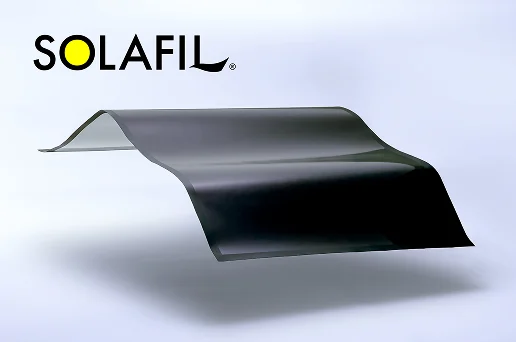
| Film type | |
|---|---|
| structure | The power generation layer is coated onto the film. |
| Features | Lightweight, thin, and flexible |
| Intended Use | Building walls, roofs with low load-bearing capacity |
|
|
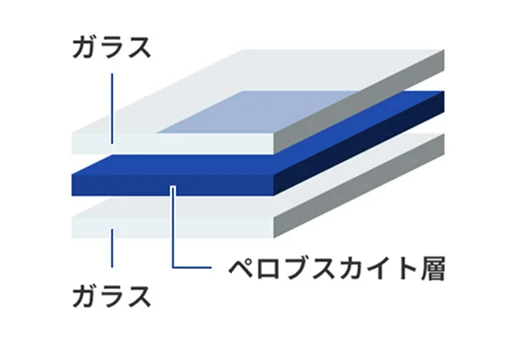
| Glass type | |
|---|---|
| structure | The power generation layer is sandwiched between glass. |
| Features | Easy to ensure durability |
| Intended Use | Window glass and balcony |
|
|
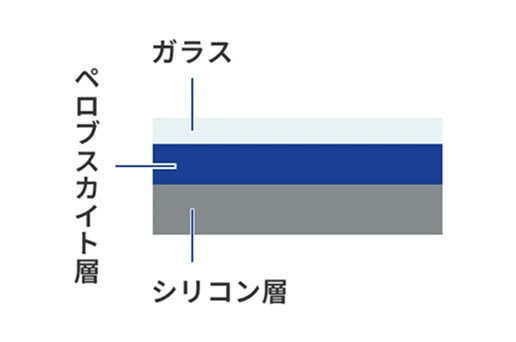
| Tandem type | |
|---|---|
| structure | Layered on top of a silicon-based solar cell |
| Features | Easy to improve conversion efficiency |
| Intended Use | Replacement of existing silicon molds |
The "film-type perovskite solar cells," for which SEKISUI CHEMICAL Group designs, manufactures, and sells products, are astonishingly thin—just 1mm thin—yet combining lightness and flexibility. This enables installation in places where conventional solar cells were previously impossible. This means that the possibilities of renewable energy are being rapidly expanded.
Installation example
Perovskite solar cells are lightweight and flexible, making them suitable for installation in a variety of locations.