
Business Strategy (Medium-Term Business Plan)
Medium-term management plan
"Accelerate 2028" (Fiscal Years 2026-2028)
As a crucial third step toward realizing its long-term vision "Vision 2030," SEKISUI CHEMICAL CO., LTD. has implemented aggressive ESG management through both "business strategy" and "foundation strengthening," and to "rapidly accelerate" toward realization, has formulated a new medium-term management plan "Accelerate 2028" for the entire SEKISUI CHEMICAL Group company, with an implementation period spanning three years from fiscal 2026 to 2028 (announced on May 21, 2026).
Accelerate 2028 Overview
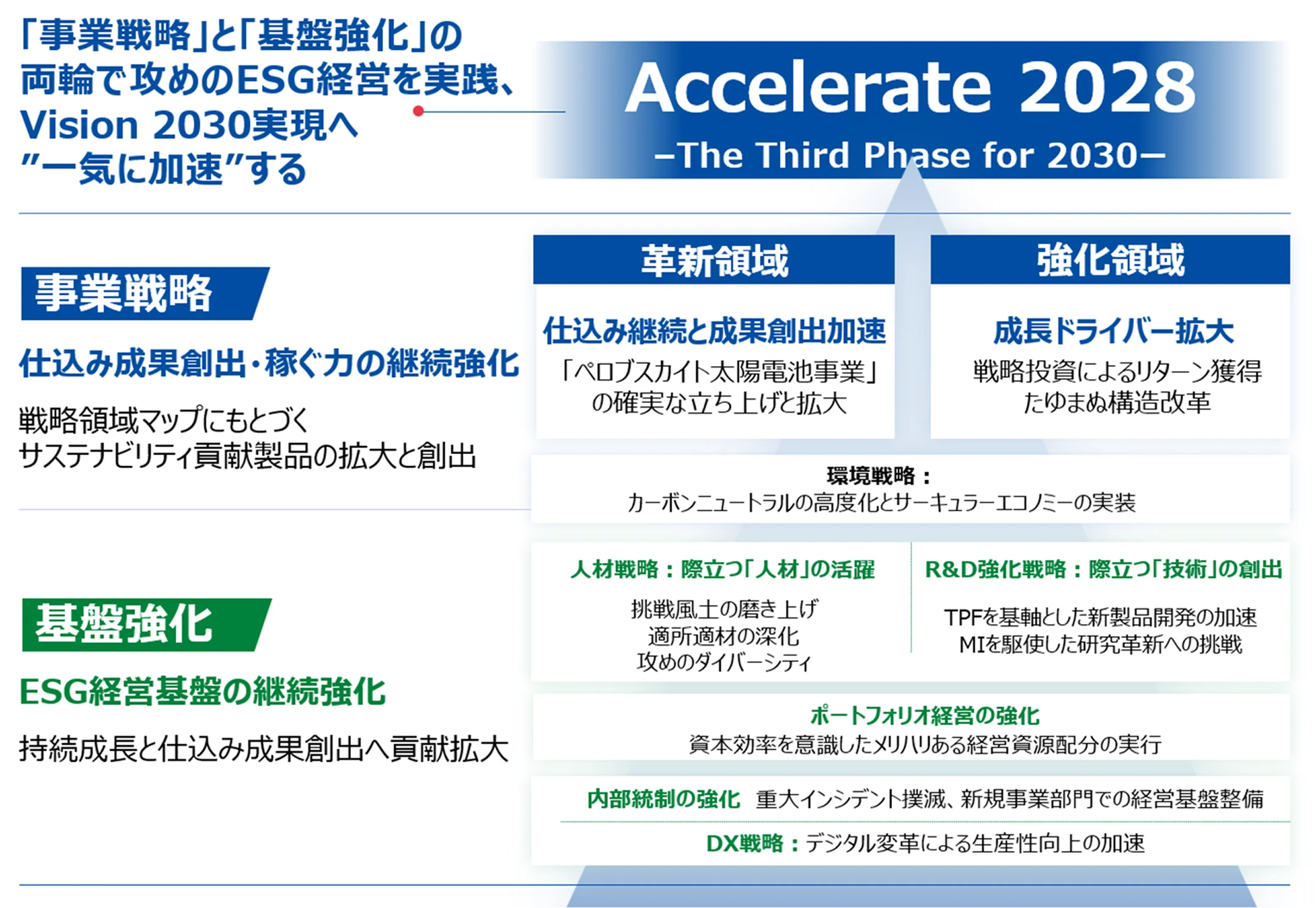
policy
By implementing proactive ESG management through a two-pronged approach of "business strategy" and "foundation strengthening," we will "accelerate rapidly" towards realizing our long-term vision "Vision 2030."
Basic Strategy
Business Strategy
Strengthening the ability to generate results and earn money through preparation.
Expanding and creating sustainability-contributing products based on strategic area maps.
Strengthening the foundation
Continued strengthening of the ESG management foundation
Expanding contributions to sustainable growth and the creation of results.
Target (FY2028)
Sales
1,600 billion yen
Operating profit
150 billion yen
EBITDA
226 billion yen
ROIC (Return on Invested Capital)
8 % or more
ROE (return on equity)
11%
Materiality KPIs
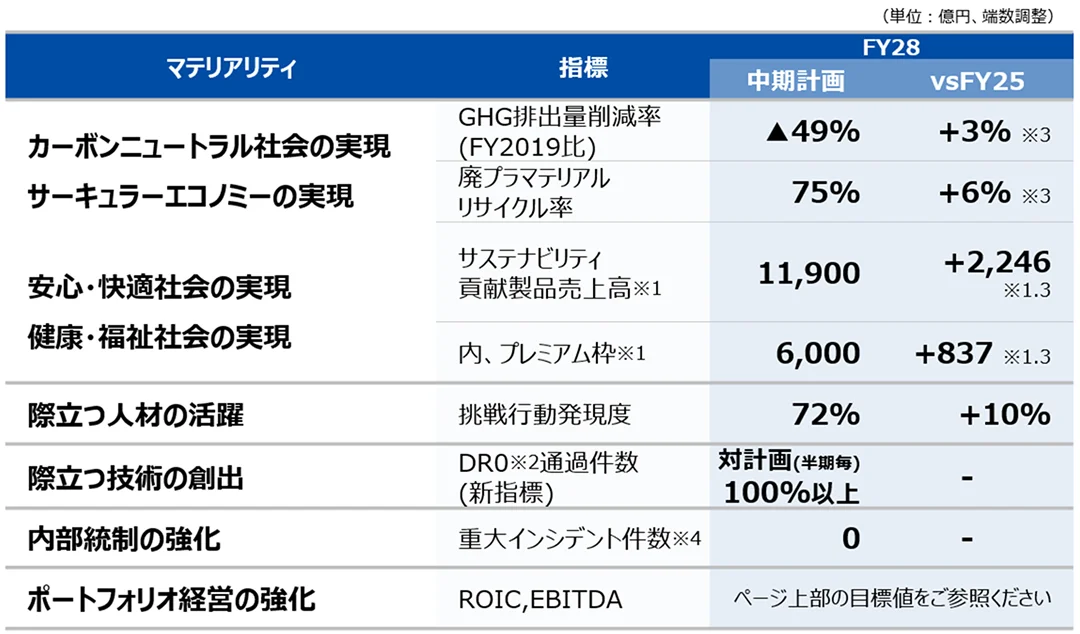
The calculation method for sales of sustainability-contributing products will be revised to emphasize their connection to consolidated financial statements, and from FY26 onwards, sales of equity-method affiliates will not be included in the calculation scope. The new standard will also be used for calculations in FY25.
Internal review process for creating new development themes
FY25 is based on preliminary figures for April 2026.
Cases where there are flaws in the current internal controls and which have been made public.
Accelerate 2028 overall picture
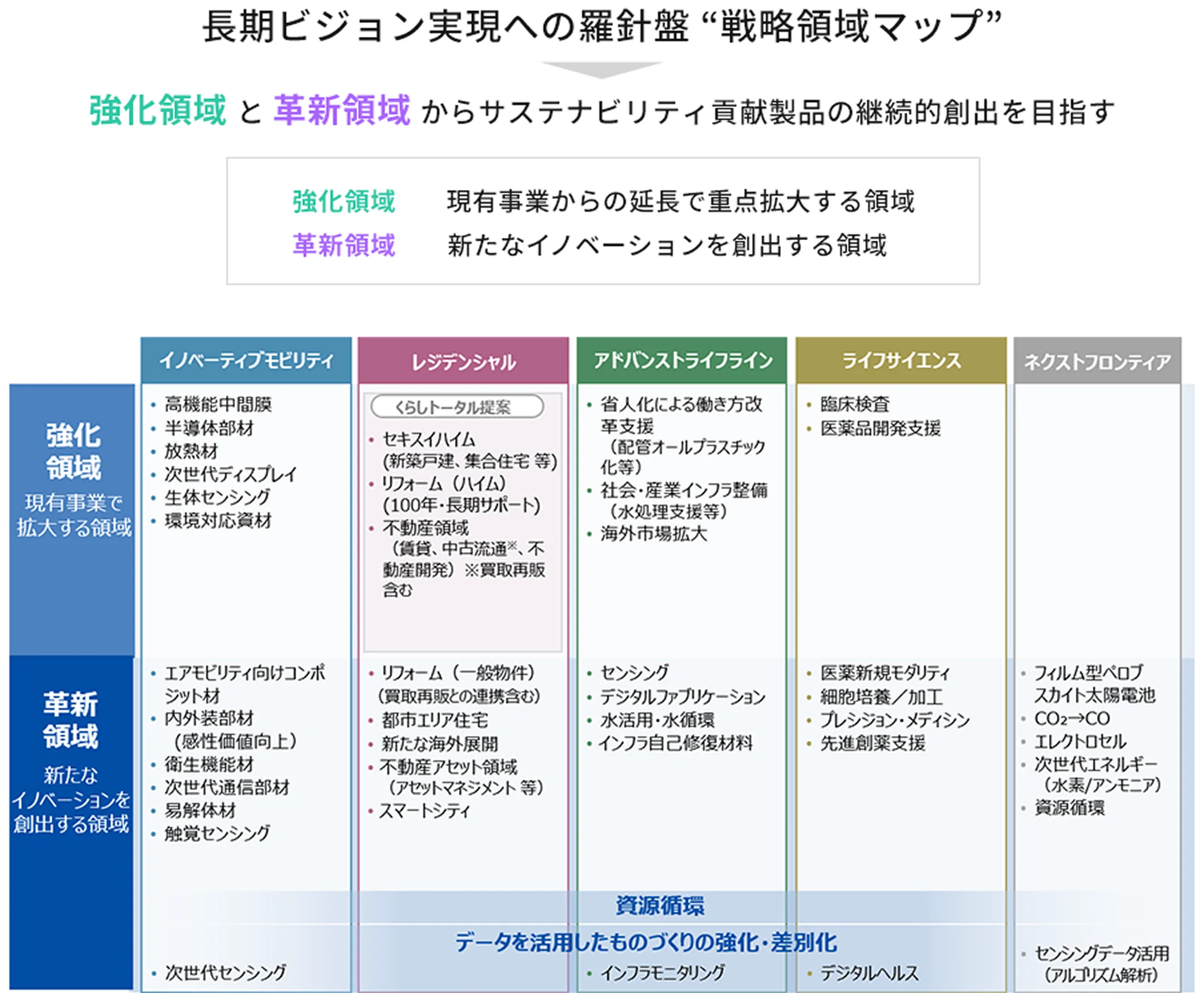
Execution of growth strategies based on Strategic area map
Medium-term Management Plan Related Links
- Medium-term Management Plan" Accelerate 2028" Presentation Materials(PDF: 3.4 MB)
- Medium-term Management Plan "Drive 2.0" Briefing Presentation Materials(PDF: 1.7 MB)
- SEKISUI CHEMICAL Group Medium-term Management Plan Formulation of "Drive 2.0" (PDF: 749 KB)
- Long-term Vision and Medium-term Management Plan "Drive 2022" briefing materials(PDF: 1.9MB)
- SEKISUI CHEMICAL Group Formulation of the Medium-Term Management Plan "Drive 2022"