
Message from the President
Turning challenges into results through "Accelerate 2028" to realize "Vision 2030"
President and Representative Director

Message from the Integrated Report
I joined the company in 1987 and began my career as an engineer specializing in adhesive tape for corrugated packaging, and since then I have driven operations at High Performance Plastics (HPP) Company. The turning point came in 2006, when I was assigned to the United States. At that time, as president of a local subsidiary suffering from poor performance, I was faced with a tough decision: "Rebuild or withdraw." Together with our employees, we advanced reforms aimed at business restructuring, and achieving the highest profit in ten years gave me great confidence. After returning to Japan, I served as the division manager of the intermediate film and foam business, and from 2019, as Company president of High Performance Plastics (HPP) Company, I was involved in the acquisition and PMI of SEKISUI Aerospace. I believe the valuable experience gained through business restructuring, acquisitions, and integration will be highly applicable to future management.
Halfway through "Vision 2030" and heading toward the launch of "Accelerate 2028"
At our company, Group set the goal of "Vision 2030" in 2020 with the goal of double the Group’s business by fiscal year 2030, and currently, all employees are united and working hard to realize "Vision 2030." Under the leadership of former president Kato, over the five years starting in 2020, we drove growth, resulting in record-high profits and steady momentum. And 2026 marks the halfway point of "Vision 2030" and marks an important milestone as we launch a new Medium-term Management Plan. At this timing, we will take on the steering of management, and we strongly feel the weight of that responsibility. The new Medium-term Management Plan" Accelerate 2028" is, as the name suggests, three years aimed at accelerating growth toward realizing "Vision 2030." My role as the one who took over the baton is to ensure that this is carried out reliably.
Through "Accelerate 2028," we will turn challenges into results and earnestly realize the vision statement "Innovation for the Earth" set forth in "Vision 2030."
Realizing "Innovation for the Earth"
To seriously realize "Innovation for the Earth," we will focus on three key initiatives. The first is "Accelerating the expansion of existing businesses and continuing to strengthen preparation." Our Group operates in four segments: housing, environment & utilities, high-performance plastics, and medical. We will concentrate management resources on the Growth-driving and Growth potential businesses in each segment to accelerate business expansion and steadily invest in new businesses and technologies that support future growth. The second is "Film-type Perovskite Solar Cells Launching Businesses." First, we will fully commit to mass production at Sakai Plant and fully commercialize them, contributing to the spread of renewable energy and the realization of a decarbonized society. The third is "Building people and groups that continue to take on challenges." While inheriting the "becoming a vibrant company" mindset advocated by former president Kato, we will further nurture individuals and groups who continue to challenge themselves without giving up even when facing obstacles. Specifically, we will promote human resource development programs that nurture leaders who can plan and execute strategies and specialists with advanced expertise, while creating an environment where each individual can take on challenges. Regardless of success or failure, by appropriately evaluating the challenge itself and the experiences gained from it, we will foster a corporate culture where each individual continues to grow.
We want to truly realize "Innovation for the Earth." We want to share this vision with as many people as possible and work together with all stakeholders who empathize with us, working to solve social issues problems while co-creating "Peace of Mind for Generations to Come."
The value SEKISUI CHEMICAL Group provides to society
Since our founding, our Group has consistently addressed global environmental issues that seriously impact the survival of society, such as climate change social issues and natural disasters, which affect the safety and health of people worldwide.
Our Group vision is "Through prominence in technology and quality, SEKISUI CHEMICAL Group will contribute to improving the lives of the people of the world and the Earth's environment by continuing to open up new frontiers in residential and social infrastructure creation and chemical solutions.," and to that end, we believe that earnestly realizing "Innovation for the Earth," driving innovation on a global scale, and contributing to solving various social issues solutions is the value our Group provides to society.
social issues We focus on continuously creating "Products to Enhance Sustainability" to contribute to solving the problem. Among these, one of the businesses I see particularly great potential for is the Film-type Perovskite Solar Cells business.
Everyone, please try to imagine a world where this has become widespread. Film-type Perovskite Solar Cells are installed on roofs, walls, and throughout the city, turning the entire city into a power plant. There is no need to cut down forests or install solar panels. Operating thermal power plants does not emit CO2. If we can create such cities worldwide with our own strength, I believe this would truly be "Innovation for the Earth" on a global scale.
The source of innovation: "Strategic Foresight, processing, Value Transformation"
"Strategic Foresight, processing, and Value Transformation" are our strengths. We focus on "Strategic Foresight, processing, and Value Transformation" by rotating Value Creation Process to generate innovation. Specifically, we first anticipate social issues and market needs. Then, we combine 27 Technological Platforms (TPF) with highly competitive core technologies to create unique solutions. Through this, we create new value, starting with Products to Enhance Sustainability, and by implementing these in society, we realize social Value Transformation.
In this cycle, our uniqueness comes into play, with four domains: "Residential," "Advanced Lifeline," "Innovative Mobility," and "Life Science." We can discover new needs and seeds from a wide range of business domains, and as a chemical manufacturer, we can directly implement solutions centered on materials into social infrastructure such as housing and infrastructure.
To give a concrete example, in response to the social issues of 'natural disasters' that intensify in climate change, our company is developing disaster-resilient 'community development.' Developed on the site of the former Tokyo Plant in Asaka City, Saitama Prefecture, 'Asaka Lead Town' combines infrastructure technology designed to withstand heavy rain and earthquakes with energy-self-sufficient SEKISUI HEIM with earthquake-resistant energy, enhancing the city's resilience. Regarding 'power and energy issues,' we have Film-type Perovskite Solar Cells businesses. Film-type Perovskite Solar Cells utilizes advanced High Performance Plastics (HPP) Company technologies, characterized by high flexibility, thinness, and lightweight. Additionally, combining the engineering skills cultivated in Urban Infrastructure and Environmental Products (UIEP) Company, we will first proceed with installation on low-load-bearing roofs such as elementary and junior high school gymnasiums that serve as evacuation shelters during disasters. In the future, we also plan to consider introducing them into general housing by utilizing Housing Company 's technology and networks. In this way, by driving the processes of "Strategic Foresight, processing, and Value Transformation," we will continue to realize "Innovation for the Earth" in a form unique to our company, growing together with society.
Long-term Vision Achievements and challenges of "Vision 2030" so far, and the pathway toward achievement
Long-term Vision The achievements of the first five years toward "Vision 2030" include solid decision-making and preparation for investments in the Growth-driving and Growth potential businesses, as well as investments that will lead to future growth. Specifically, we have promoted various capacity enhancement investments, including expanding a new intermediate film line in Thailand, increasing domestic production capacity for semiconductor production tape "SELFA," and establishing a new Makuragi Plant in the Netherlands. Additionally, for Film-type Perovskite Solar Cells, which has high expectations for future growth, we have formulated an equipment investment plan exceeding 300 billion yen. By 2030, we aim to achieve sales of around 100 billion yen and operating profit of 15~20 billion yen, making this an indispensable business for achieving Long-term Vision, and expectations are high.
Regarding M&A, although investment allowances were left in the first and middle term, the discussions themselves have been thoroughly promoted. This is not based solely on the consumption of the M&A slot, but rather on carefully examining the content and pushing forward, and I believe this is commendable in its own way.
I believe the challenge is the speed of achieving results. Previous Medium-term Management Plan In "Drive 2.0," as mentioned earlier, we made solid decisions and prepared for growth investment, but the speed of results was not as fast as expected, and as a result, operating profit did not meet our targets, resulting in frustrating results.
To achieve "Vision 2030," it is necessary to continue investing in growth sectors, rapidly realize the effects of investment, and raise the slope of growth.
To achieve this, it is first necessary to invest in growth businesses and carry out M&A, and even in our new Medium-term Management Plan, 'Accelerate 2028', we have set an active investment threshold. And for me, I will also launch the Film-type Perovskite Solar Cells business, which is a major challenge for me.
Next is speeding up. To achieve this, it is necessary to strengthen the management foundation. One is strengthening DX. We will improve productivity through digital Value Transformation.
Our company's focus on materials informatics (MI) is also expected to contribute to development efficiency and new product creation, so we will continue to focus on this.
And above all, it is human resources. The driving force behind achieving "Vision 2030" is our people. Each individual's challenge and growth are indispensable. We will establish the culture of challenge we are currently working on, support employee growth through challenges, and connect that strength to the growth of Group. For the last five years, we will accelerate growth through these activities and connect it to the realization of "Vision 2030."

Management practices with capital costs in mind
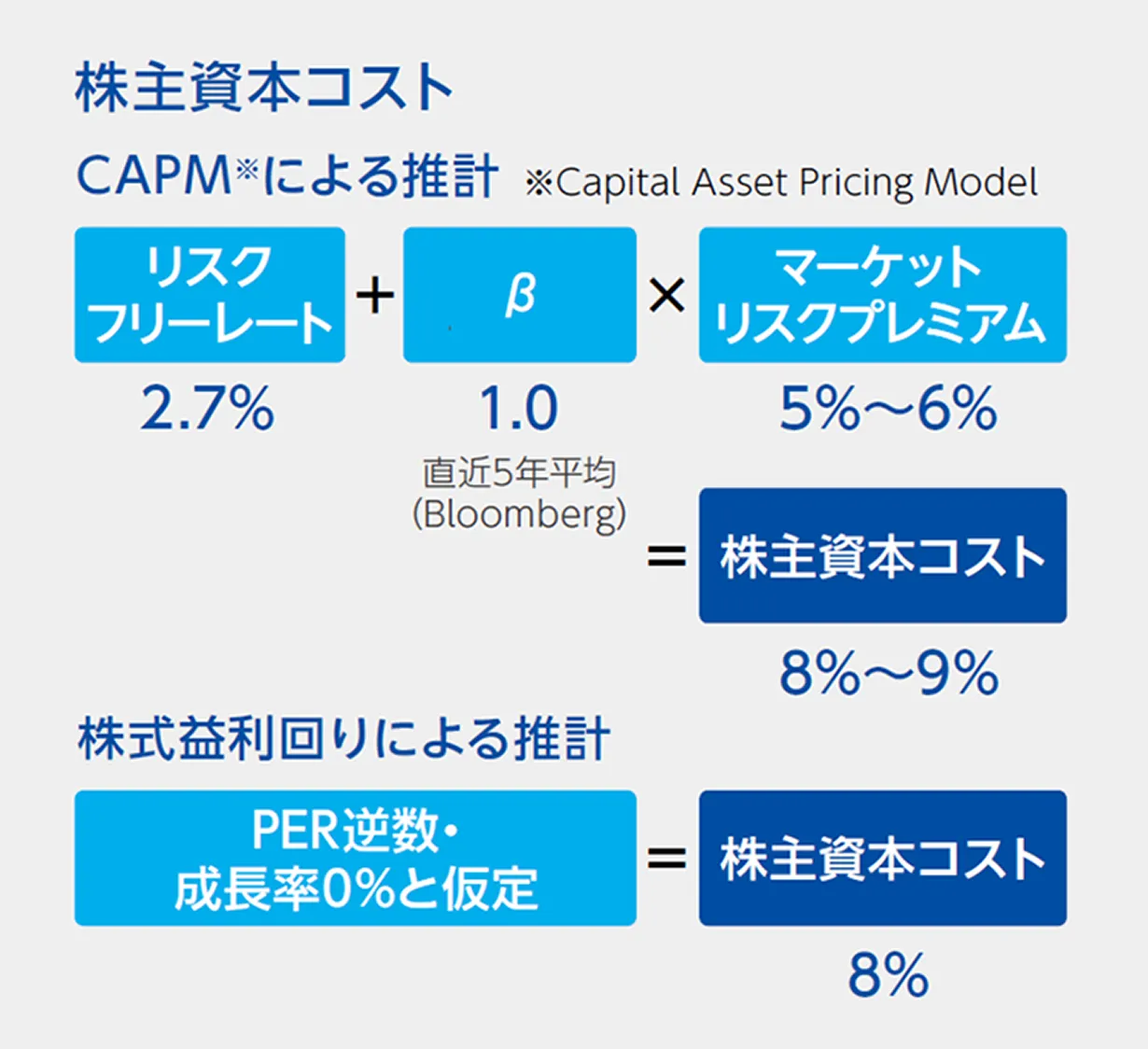
In our Group, we have established a premise of capital costs in investment decisions and business evaluations, incorporating ROE and ROIC as KPIs and reflecting them in employee evaluations. Not only among management but also among employees, awareness of capital efficiency has increased, and the concept of ROIC spreads has steadily taken hold. I myself have greatly increased awareness of ROE and ROIC compared to before, and I am strongly determined to meet the expectations of investors and shareholders. To enhance corporate value, our Group is advancing three initiatives: "Accelerated growth," "Capital Efficiency Improvement," and "Improvement of confidence."
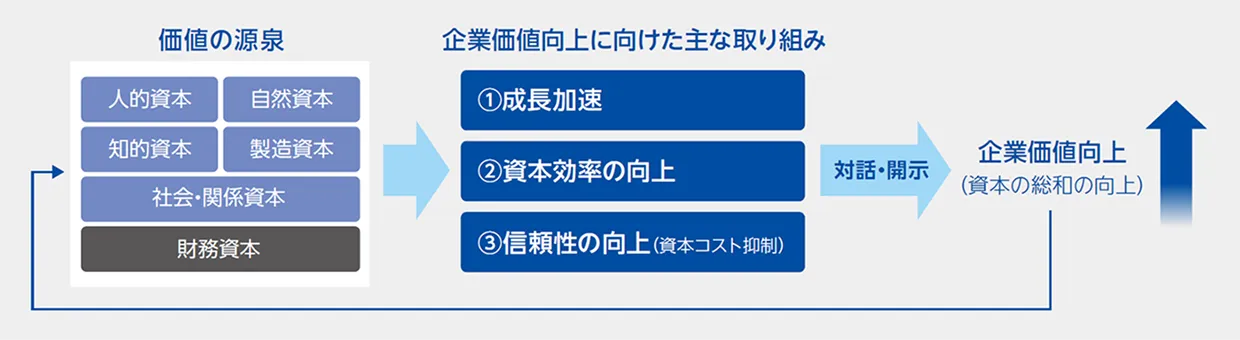
"Accelerated growth" thoroughly implements Portfolio Management, concentrating management resources on Growth-driving and Growth potential businesses to continue strengthening earning capacity.
Regarding "improving capital efficiency," we will make decisions to downsize or withdraw from businesses as needed, taking into account market conditions and the future prospects of our business. Returns to Shareholders In addition to reviewing our policies, we are also working on capital policies that are mindful of the ideal balance sheet.
Regarding "Improvement of confidence," safety and compliance are the foundation of management, and we are strengthening quality and risk management while utilizing DX. Reducing business risks and building a management foundation that generates stable results enhances trust from society and the market, and also leads to reduced capital costs.
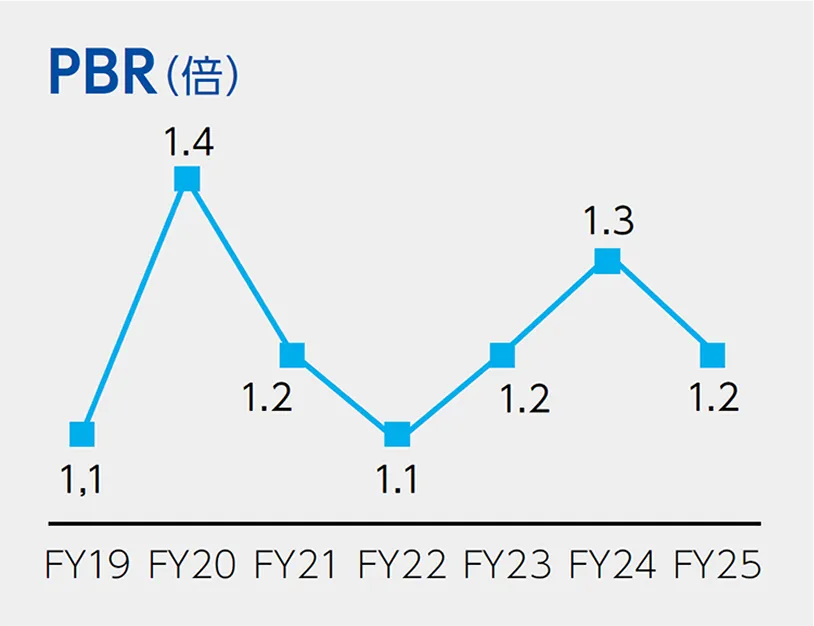
The PBR, which serves as an indicator for stock prices, is currently at about 1.2 times, and we recognize that there is room for improvement in both ROE and PER.
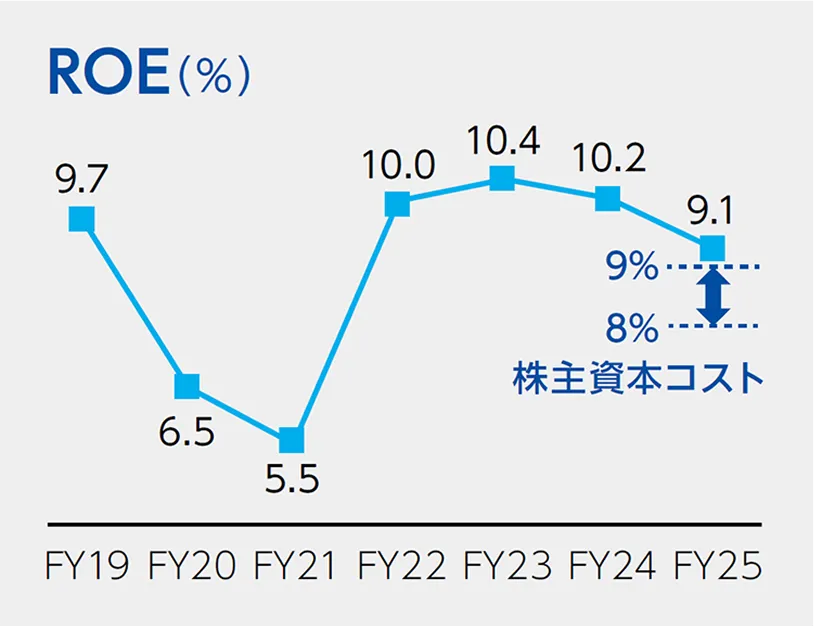
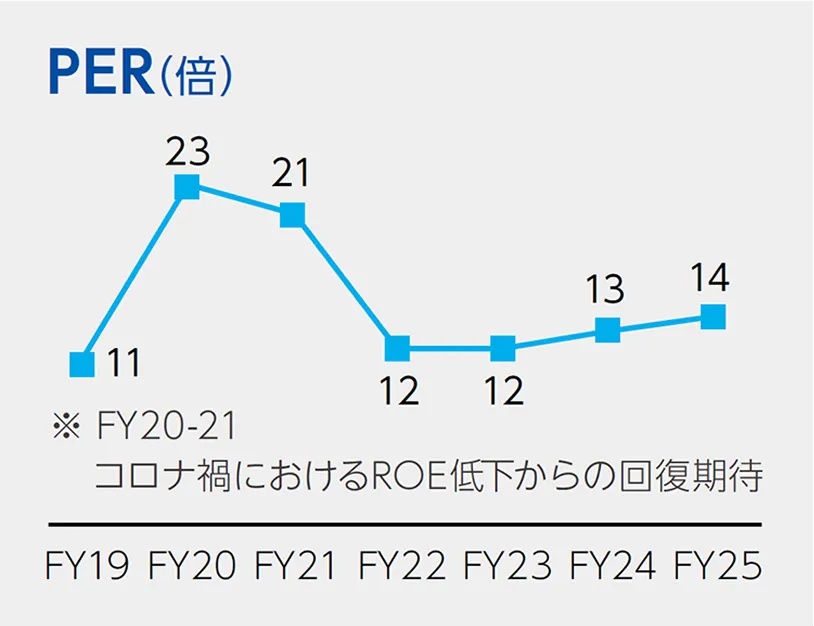
Regarding ROE, which we consider a key management indicator, we have broken it down into three elements: "net profit margin," "total asset turnover," and "financial leverage," and we are working to improve each of them.
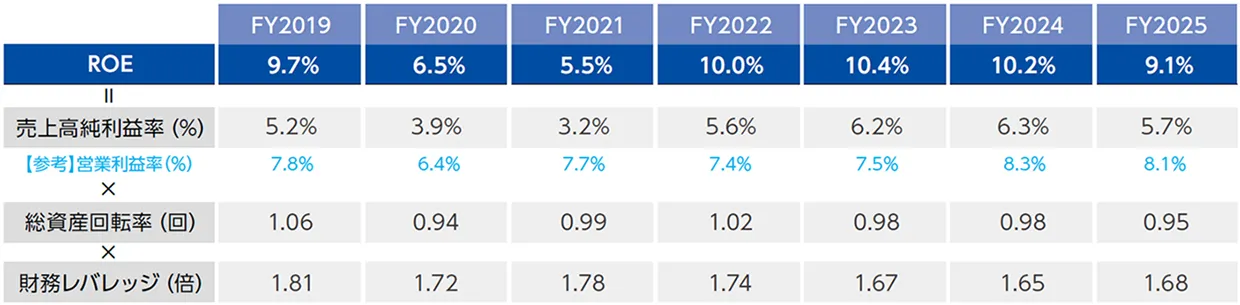
First, regarding net profit margin, the base operating profit margin has improved by shifting to high value-added products in Previous Medium-term Management Plan "Drive 2.0." On the other hand, although there are aspects to aggressive investment, impairment losses and other factors have prevented us from sufficiently improving the net profit margin compared to operating profit margin. The most important thing is to increase net profit, ensure that measures for growth are firmly implemented, further strengthen the management foundation, and lead to improved net profit margin.
Regarding total asset turnover, it has recently declined due to active capital investments aimed at growth in Growth-driving sectors such as Film-type Perovskite Solar Cells and High Performance Plastics (HPP) Company. Going forward, we aim to improve these facilities by generating sales and realizing investment returns.
Regarding financial leverage, we have raised growth investment funds mainly through debt and actively Returns to Shareholders, but due to valuation differences such as foreign exchange rates, equity has increased and has declined recently. We will continue to select and Returns to Shareholders appropriate funding methods with a focus on capital efficiency.
Next, regarding PER, we have many attractive businesses, including electronics, interlayers, Pipeline Renewal, and Film-type Perovskite Solar Cells, and we will actively disclose the growth potential, competitive advantages, and investment progress of these sectors to ensure fair market evaluation.
Although we cannot directly control the stock price, we believe that by continuing these initiatives to enhance corporate value, along with careful dialogue and disclosure, ROE and PER will continue to improve sustainably.
We sometimes receive harsh feedback from investors and shareholders, saying, "We have not yet achieved sufficient results." We sincerely take these concerns seriously, continue dialogue with the market, and aim to respond with results such as improved capital efficiency and corporate value.
About Portfolio Management
Our Portfolio Management analyzes and evaluates businesses from the perspectives of profitability (operating profit margin), capital efficiency (ROIC), and growth potential (sales growth rate), clarifies the strategic roles of each business (Growth-driving, Growth potential, Revenue base, Improvement), and allocates management resources. If ROIC spreads cannot be sufficiently secured or operating profit margin stagnates and it is difficult to establish a path to the expected level, we promptly review our business strategy.
For example, regarding the biorefinery business, which generates resources from combustible waste using microorganisms, it was a highly advanced technology and a promising new business. However, due to the unexpectedly uncertain external environment and difficulty in securing spreads, we decided to review our strategy.
To promote Portfolio Management, securing ROIC spreads and lowering capital costs are crucial. It is necessary to strengthen the management foundation through ESG management practices and firmly conduct IR activities to earn the trust of stakeholders. We will continue to work on this firmly.
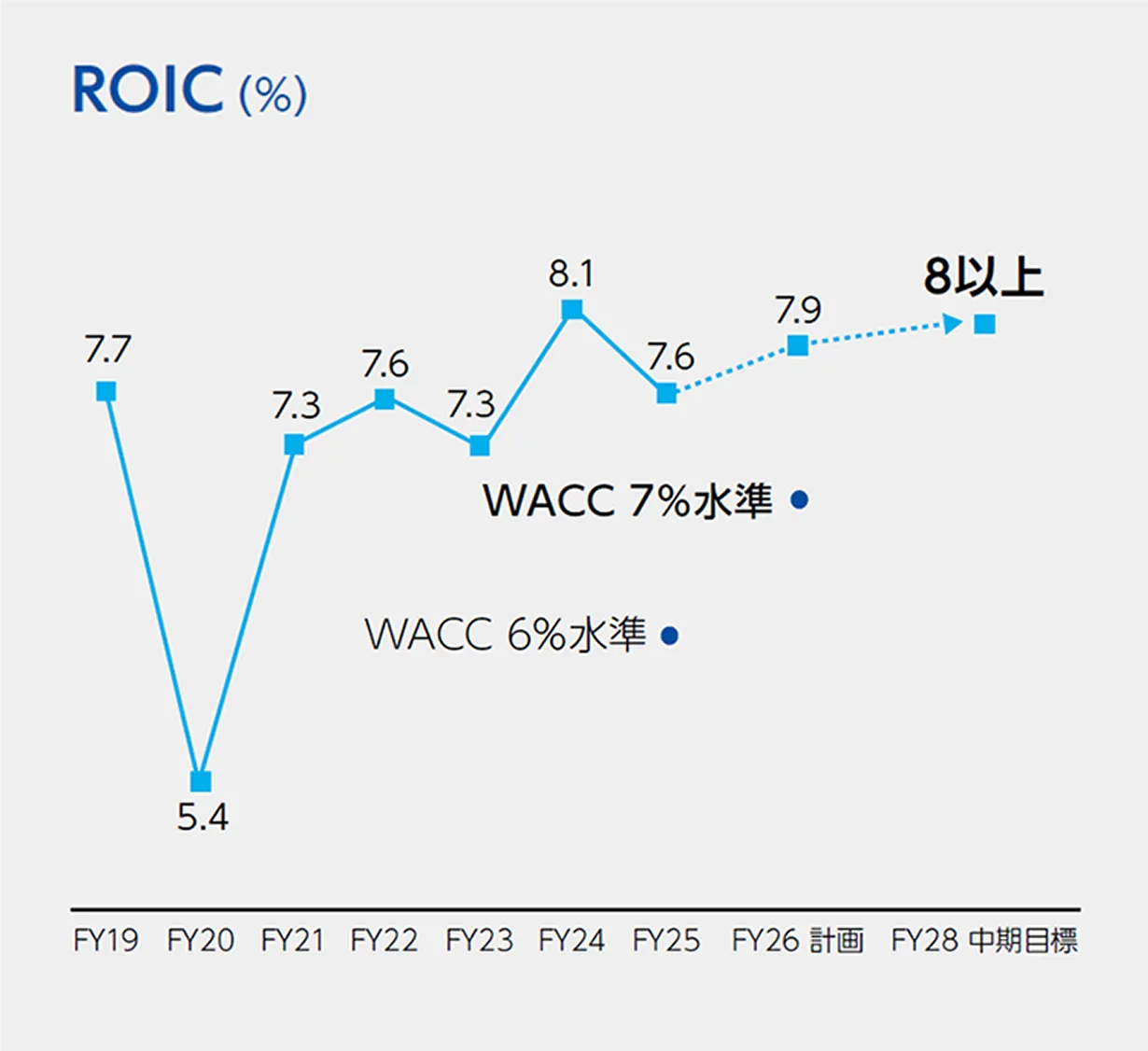
Next, regarding Portfolio Management as the company-wide business structure. Our Group consists of three Divisional Company: housing, environment & lifelines, and high-performance plastics, plus Medical Business. While this diversity of businesses is sometimes cited as a factor leading to conglomerate discounts, I believe that diverse business portfolio are the strengths of our Group. Our unique Group value lies in building Revenue base in different markets by each business to enhance management stability and create synergies between businesses. Going forward, we will continue to carefully share Portfolio Management perspectives and current situations, aiming to be a company that recognizes the "strengths unique to a conglomerate."
The significance of owning a housing business
We believe the housing business plays a crucial role in the stability of our portfolio. The housing business faces different markets and risks from our other businesses, such as "domestic entities" and "B2C," which helps reduce management risks. Additionally, with the know-how in Plant production accumulated over many years, we believe we can continue to maintain a strong presence in the housing market. Eventually, while promoting synergies with Film-type Perovskite Solar Cells, we will provide unique value unique to our company and offer even higher value-added products.
Going forward, we will continue M&A activities aimed at maximizing the use of existing housing production equipment and strengthening sales and engineering capabilities, but the housing business remains positioned as a pillar of company-wide stability. Rather, by thickening the core that forms stability, we believe we can lay the foundation for more challenges.
The ability to adapt to change is essential in an era of uncertainty.
In recent years, the external environment has become more uncertain than ever, and we recognize that companies' responsiveness is also being demanded of even greater resilience. Recent major changes include the instability of the Middle East situation and the acceleration of technological innovation, including AI. Regarding the Middle East situation, we have reaffirmed the importance of securing stable energy and raw materials through its impact on supply chain. As a company contributing to solving social issues, we have a responsibility to continuously supply products and services stably. To that end, we will further strengthen efforts to strengthen procurement and production system resilience and risk diversification.
Furthermore, technological innovation centered on AI presents a major opportunity for our company, as well as a factor that significantly changes the competitive landscape. We are advancing initiatives such as materials informatics (MI), which are leading to improved development speed and value-added capabilities. Going forward, we will further evolve these to enhance our competitive advantage. Rather than being swayed by changes in the external environment, we believe it is important not only to identify Risks and Opportunities within the ongoing changes, but also to appropriately assess and tolerate risks, shift or avoid them as needed, and turn them into opportunities.
Because of the high uncertainty in this situation, we will thoroughly review the current situation from scratch without affirming it, then design the desired state and advance Value Transformation toward that goal. While building on daily business management, we aim to transform our business over the medium to long term, and through these initiatives, we aim to build a strong organization where each individual grows.
Taking a culture of challenge to the next level
Regarding challenging behaviors, we provide opportunities to try again even if they fail, and I myself have repeatedly sent the message of "Don't blame you for failing." The Challenge Action Rate I set as a KPI will reach 62% by fiscal year 2025, and I feel that the culture of challenge is steadily taking root as more people on the ground say, "It's a small thing, but now I can take on challenges." On the other hand, it is also true that we are still in a transitional phase. Until now, the value of "challenging something different from before" itself was valuable, but from here on, I believe we have entered a stage of improving the quality and speed of challenges and increasing the probability of success. What I consider important is leadership management. I want members to encourage challenges, accept their desire to "take on this kind of challenge," and guide them toward challenges that lead to the realization of Long-term Vision, practicing management that enables each individual to build their own abilities. Even if you fail as a result, it is important to support them with the belief that "the lessons and experiences gained from that will surely lead to the next step." Innovation begins with the challenge of each employee.
Our Group has always had a culture that encourages challenges. I myself was involved in designing new craft tape processes during my engineering days, achieving Reduce Environmental Impacts and quality improvements and cost reductions. This process improvement required a significant capital investment, but by clearly expressing my desire to do it, my supervisor and company responded to my wishes, encouraged me, and set a budget, which made it possible.
We want to carry on this positive corporate culture.
By clarifying the roles of supervisor and executive, we can implement management practices that are even more mindful of corporate value.
We believe that the structure of the Board of Directors needs to constantly evolve to the optimal form in accordance with the company's situation and goals. As our business becomes more globalized and diversified, the Board of Directors is required to not only deliberate on individual matters, but also to conduct higher-quality discussions on important themes that lead to the enhancement of corporate value, such as medium- to long-term management strategies and ESG management foundations.
Therefore, we have revised our structure to include a majority of outside directors, clearly separating the roles of oversight and execution, and increasing the proportion of female directors to over 30%. By enhancing independence and diversity, we have established a system that oversees management from a more objective and multifaceted perspective.
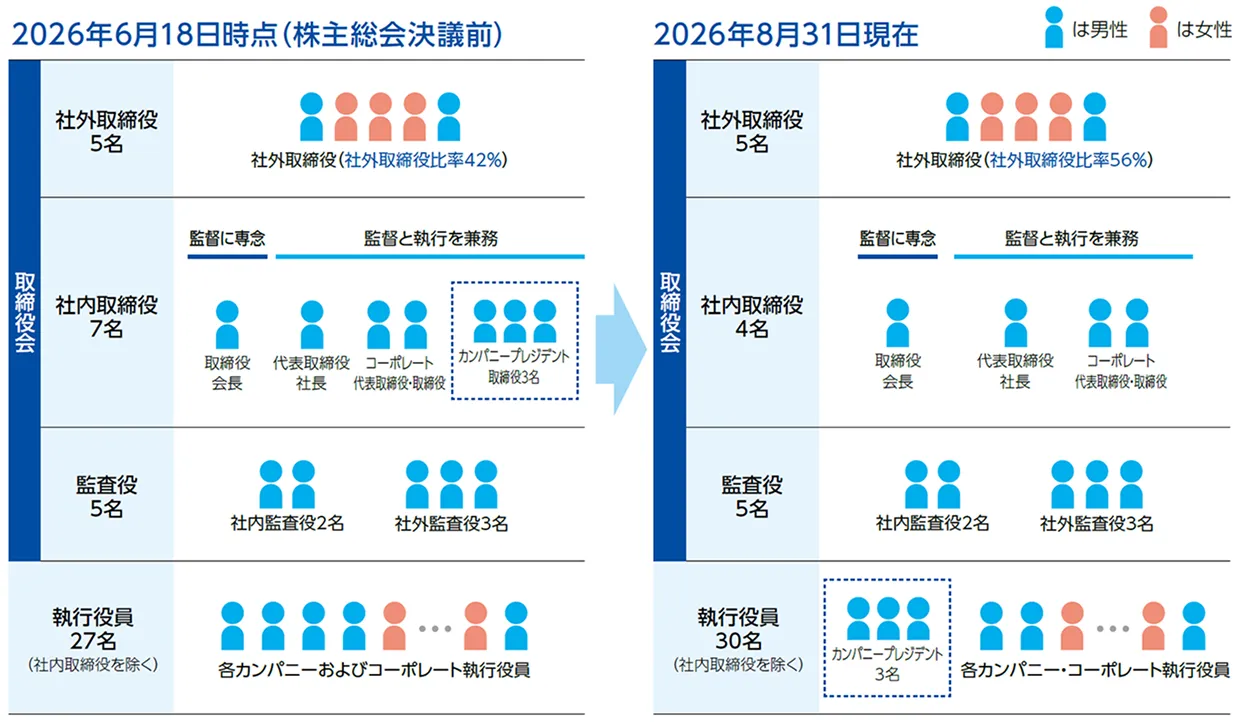
Going forward, we will proceed with the delegation of authority to executives under a strengthened supervisory function. Furthermore, the Board of Directors will further enhance discussions on capital efficiency, including ROIC spread, ROE, and WACC, in addition to medium- to long-term business strategies and ESG management foundations, with the aim of sustainably improving corporate value.
By pursuing supervisory functions that bring out the best in execution, we will achieve both agile management and strengthened governance, thereby sustainably improving corporate value.
Dialogue with shareholders and investors to enhance corporate value
We believe that dialogue with our shareholders and investors is extremely important for enhancing corporate value and forming a fair stock price. First, we will strengthen our information dissemination and strive to ensure that our shareholders and investors have a correct understanding of our current situation, growth strategy, and future prospects. Then, through dialogue, we will identify the gap between expectations and the current situation, and reflect the opinions and suggestions we receive in our management, thereby contributing to the enhancement of corporate value and the formation of a fair stock price.
I myself value opportunities to engage in direct dialogue with our shareholders and investors. Recently, when I spoke with investors in Europe, a shareholder who had held our shares for over 20 years encouraged me by saying, "I hope you will continue to do your best." I took this to mean that they understood the direction our company is aiming for, and I found it very encouraging. I am reminded once again of the importance of deepening mutual understanding through such dialogues.
Of course, we receive not only expectations but also critical feedback, but we take these as important insights for our medium- to long-term growth. We will continue to engage in constructive and frank dialogue to further deepen our relationship of trust with our shareholders and investors.
SEKISUI CHEMICAL Group Challenges as President
My greatest challenge as president is nurturing human resources. I believe that the growth of each individual strengthens the business and becomes the driving force for enhancing corporate value. Creating an environment where each employee can take on challenges and grow is my most important role.
Not only is the realization of "Vision 2030" necessary, but looking beyond that, we must now systematically nurture the next generation of leaders who can succeed globally. To that end, we spare no time or investment in human resource development. We believe that the growth of each employee will be the driving force to pioneer the future of SEKISUI CHEMICAL Group.
Message from the President
Turning challenges into results
with Accelerate 2028 to realize Vision 2030
President & CEO

Message from the Integrated Report
I joined SEKISUI CHEMICAL in 1987 and began my career as an engineer working on adhesive tape for corrugated cardboard packaging. Since then, I have pursued my career in the High Performance Plastics Company. A major turning point came in 2006, when I was assigned to the United States. As president of a local subsidiary whose performance was struggling at the time, I faced the difficult decision of whether to rebuild the business or withdraw from it. Working together with employees to implement reforms aimed at rebuilding the business, we achieved record-high profit for the first time in 10 years, which gave me tremendous confidence. After returning to Japan, I served as head of the Interlayer Film and Foam Division, and from 2019, as President of the High Performance Plastics Company, I was also involved in the acquisition and PMI of SEKISUI AEROSPACE CORPORATION. I believe the valuable experience I gained through business revitalization, acquisitions, and integration will be of great use in management going forward.
At the Midpoint of Vision 2030 Toward the Launch of Accelerate 2028
In 2020, the SEKISUI CHEMICAL Group announced Vision 2030, which aims to double the scale of our business by FY2030. Today, all Group employees are working as one toward its realization. Under former President Kato, we drove growth over the five years from 2020 and firmly established momentum, including by achieving record-high profits. The year 2026 marks both the exact midpoint of Vision 2030 and the important milestone of launching a new Medium-term Management Plan. Having assumed responsibility for steering management at this juncture, I feel the weight of that responsibility keenly. As its name suggests, the new Medium-term Management Plan, Accelerate 2028 is a three-year period for accelerating growth toward the realization of Vision 2030. I believe my role, having received the baton, is to ensure that we execute this plan.
Through Accelerate 2028, we will turn challenges into tangible results and make a concerted effort to realize Innovation for the Earth, the vision statement set forth in our Long-term Vision, Vision 2030.
Realizing “Innovation for the Earth”
To fully realize Innovation for the Earth, we will pursue three priority measures. The first is “accelerating the expansion of existing business and continuing to strengthen preparations for future growth.” The Group operates across four segments: Housing, Urban Infrastructure & Environmental Products, High Performance Plastics, and Medical. We will concentrate management resources on the growth-driving and growth-potential businesses in each segment to accelerate business expansion, while steadily investing in new businesses and technologies that will underpin growth beyond that. The second is “launching the film-type perovskite solar cell business.” We will first devote our full efforts to establishing mass production at the Sakai Plant and, by developing this into a full-scale business, contribute to the wider adoption of renewable energy and the realization of a decarbonized society. The third is “developing people and organizations that continue to take on challenges.” While carrying forward former President Kato’s aspiration to create a vibrant company, we will further cultivate people and organizations that continue to take on challenges without giving up when they encounter obstacles. Specifically, we will advance human resource development programs that cultivate leaders capable of formulating and executing strategies and specialists with advanced expertise, while creating an environment in which every individual can step forward and take on challenges. By appropriately evaluating the act of taking on a challenge itself and the experience gained from it, regardless of success or failure, we will foster a corporate culture in which every individual continues to grow.
I am determined to realize Innovation for the Earth. I want to share that commitment with as many people as possible and, together with all stakeholders who share our aspirations, address social issues and co-create “peace of mind for generations to come.”
Value that the SEKISUI CHEMICAL Group Provides to Society
Since our founding, the Group has consistently worked to address social issues that affect the safety and health of people around the world, as well as global environmental issues such as climate change and natural disasters that pose serious threats to the continued existence of society.
Our Group Vision is: “Through prominence in technology and quality, SEKISUI CHEMICAL Group will contribute to improving the lives of the people of the world and the Earth’s environment, by continuing to open up new frontiers in Residential and Social Infrastructure Creation and Chemical Solutions.” To fulfill this vision, I believe the value the Group provides to society lies in fully realizing “Innovation for the Earth,” generating innovation on a global scale, and contributing to solutions to a wide range of social issues.
To contribute to solving social issues, we are focused on continuously creating “Products to Enhance Sustainability” Among these, one business in which I see particularly significant potential is film-type perovskite solar cells.
I encourage everyone to imagine a world in which these cells are widely adopted. Film-type perovskite solar cells would be installed on roofs, walls, and throughout cities, turning entire communities into power plants. There would be no need to clear forests to install solar cells, nor to operate thermal power plants and emit CO2. If we can use our capabilities to create such cities around the world, I believe that would truly represent Innovation for the Earth on a global scale.
The Source of Innovation: Strategic Foresight,
Processing, and Value Transformation
“Strategic foresight, processing, and value transformation” is one of our strengths. We generate innovation by driving our value creation process around these three capabilities. Specifically, we first anticipate social issues and market needs. We then combine and process highly competitive core technologies defined as our 27 Technological Platforms (TPFs) to create distinctive solutions. In this way, we create new value, including Products to Enhance Sustainability, and implement that value in society to drive social transformation.
Our distinctive position as a company with four domains—Residential, Advanced Lifeline, Innovative Mobility, and Life Science—comes into its own as we drive this cycle. We can identify new needs and seeds across a broad range of business fields, while also directly implementing material-based solutions created as a chemical manufacturer in social infrastructure such as housing and infrastructure.
One example is our approach to the social issue of increasingly severe natural disasters caused by climate change, where we are developing disaster-resilient communities. ASAKA Lead Town, developed on the former site of our Tokyo Plant in Asaka City, Saitama Prefecture, combines infrastructure technologies designed to withstand torrential rain and earthquakes with SEKISUI HEIM homes that are highly earthquake-resistant and possess energy self-sufficiency features. To address power and energy issues, we have our film-type perovskite solar cell business. These cells employ advanced technologies from the High Performance Plastics Company and are characterized by their high flexibility, thinness, and light weight. By combining these technologies with the engineering capabilities cultivated by the Urban Infrastructure & Environmental Products Company, we will initially promote installation on low-load-bearing roofs, such as those of elementary and junior high school gymnasiums that serve as evacuation shelters during disasters. In the future, we also intend to consider installation in ordinary homes by leveraging the technologies and networks of the Housing Company. In this way, by continuously driving the process of strategic foresight, processing, and value transformation, we will continue to realize Innovation for the Earth in ways unique to SEKISUI CHEMICAL and, in doing so, grow together with society.
Achievements and Challenges to Date under the Long-term Vision, Vision 2030, and the Path to Its Realization
One achievement during the first five years toward the Long-term Vision, Vision 2030 is that we have steadily made investment decisions and laid the groundwork for investments in growth-driving and growth-potential businesses and for future growth. Specifically, we have promoted a variety of capacity expansion investments, including the addition of a new interlayer film production line in Thailand, expansion of domestic production capacity for the “SELFA” semiconductor processing tape, and construction of a new synthetic lumber (FFU) railways sleeper plant in the Netherlands. For film-type perovskite solar cells, which hold significant promise for future growth, we have formulated a capital investment plan exceeding ¥300.0 billion. By 2030, we aim to achieve net sales on the scale of ¥100.0 billion and operating profit of ¥15.0–20.0 billion. This is becoming an indispensable business for achieving our Long-term Vision, and expectations continue to rise.
With regard to M&A, although some of the investment allocation under the previous Medium-term Management Plan remained unused, we actively pursued opportunities and conducted thorough evaluations. This was the result of carefully scrutinizing potential deals rather than simply seeking to use up the M&A allocation, and I believe this approach deserves recognition in its own right.
The challenge, in my view, is the speed at which we generate results. Under the previous Medium-term Management Plan, Drive 2.0, as noted above, we made firm decisions on growth investments and laid the groundwork for them. However, results did not emerge as quickly as expected, and operating profit ultimately fell short of the target, which was disappointing.
To achieve Vision 2030, we must continue investing in growth fields while quickly realizing the effects of those investments and increasing the trajectory of growth.
To do so, we must first follow through on investments and M&A for growth businesses. Accordingly, we have established an aggressive investment allocation under our new Medium-term Management Plan, Accelerate 2028. We will also establish the film-type perovskite solar cell business, which represents a major challenge for me personally.
The next priority is greater speed. Achieving this will require us to strengthen our management foundation, with DX being one key area of focus. Through digital transformation, we will improve productivity.
We will also further strengthen our focus on materials informatics (MI), an area in which we have been investing considerable effort and which is expected to improve development efficiency and contribute to the creation of new products.
Above all, however, it comes down to our people. Human resources are the driving force behind the realization of Vision 2030. The challenges and growth of each individual are indispensable. We will firmly establish a culture that embraces challenge we are currently fostering, support employee growth through challenge, and harness that strength to drive the Group’s growth. During the latter five years, we will accelerate growth through these activities and leverage that growth to realize Vision 2030.
Practicing Management with an Awareness of the Cost of Capital
Across the Group, the use of the cost of capital as a premise for investment decisions and business evaluations has become firmly established. We incorporate ROE and ROIC into KPIs and reflect them in employee evaluations as well. Awareness of capital efficiency has increased not only among management but also among employees, and the concept of the ROIC spread has steadily taken root. My own awareness of ROE and ROIC has also increased significantly compared with the past, reinforcing my determination to meet the expectations of investors and shareholders. To enhance corporate value, the Group is pursuing three initiatives: “Accelerated Growth,” “Improvement of Capital Efficiency,” and “Improvement of Confidence.”
Under Accelerated growth, we will thoroughly implement portfolio management, concentrate management resources on growth-driving and growth-potential businesses, and continue to strengthen our earning power.
Under Improvement of capital efficiency, we will decide, as necessary, to downsize or withdraw from businesses in light of the market environment and their future prospects. In addition to reviewing our shareholder return policy, we are pursuing capital policies with an awareness of the balance sheet we should maintain.
Under Improvement of confidence, we position safety and compliance as the foundation of management and are strengthening quality and risk management, including through the use of DX. Building a management foundation that reduces business risks and consistently generates results will enhance confidence from society and the market and also help reduce the cost of capital.
PBR, an indicator of share price valuation, currently remains at approximately 1.2 times, and we recognize that there is room to improve both ROE and PER.
We position ROE as a key management indicator and break it down into three components—net profit margin, total asset turnover, and financial leverage—working to improve each of them.
First, regarding the net profit margin, the underlying operating profit margin has improved as we shifted toward high-value-added products under the previous Medium-term Management Plan, Drive 2.0. On the other hand, partly as a consequence of proactive investment, impairment losses and other factors have prevented us from raising the net profit margin sufficiently relative to the operating profit margin. Our most important task is to increase net profit. To this end, we will steadily execute growth initiatives and further strengthen our management foundation to improve our net profit margin.
Total asset turnover has recently declined due to proactive capital investment for growth in areas including film-type perovskite solar cells and the High Performance Plastics Company’s growth-driving fields. Going forward, we aim to improve this ratio by generating sales from these facilities and realizing the effects of our investments. As for financial leverage, although we have financed growth investments primarily through debt and implemented proactive shareholder returns, shareholders’ equity has increased due to foreign exchange translation adjustments and other valuation differences, resulting in a recent decline in financial leverage. We will continue to select appropriate financing methods with capital efficiency in mind, while also maintaining shareholder returns.
Turning next to PER, SEKISUI CHEMICAL has many attractive businesses, including electronics, interlayer films, pipeline renewal construction, and film-type perovskite solar cells. We will proactively disclose information on their growth potential, competitive advantages, and investment progress to ensure that the market appropriately recognizes their value.
Although we cannot directly control our share price, I believe that by continuing these initiatives to enhance corporate value, together with careful dialogue and disclosure, we can sustainably improve ROE and PER.
Investors and shareholders sometimes voice criticism that “we have yet to deliver sufficient results.” We take such views seriously and will continue our dialogue with the market, responding through tangible improvements in capital efficiency and corporate value.
Portfolio Management
Our portfolio management analyzes and evaluates businesses from the perspectives of profitability (operating profit margin), capital efficiency (ROIC), and growth potential (net sales growth rate), clarifies the strategic role of each business—growth-driving, growth-potential, revenue base, or improvement—and allocates management resources accordingly. If we cannot secure a sufficient ROIC spread, or if the operating profit margin remains low and it is difficult to establish a path toward the target level, we promptly review the business strategy.
For example, the biorefinery business, which uses microorganisms to produce resources from combustible waste, was a highly advanced technology and a promising new business. However, as the external environment developed differently from our assumptions and the prospects for securing sufficient margins became uncertain, we decided to revise our strategy.
To advance portfolio management, it is important both to secure the ROIC spread and to undertake initiatives that reduce the cost of capital. We need to strengthen our management foundation through the practice of ESG management, firmly pursue IR activities, and earn the confidence of our stakeholders. We will continue to work steadily on these priorities.
Next, I would like to discuss portfolio management from the perspective of the Group-wide business structure. The Group comprises three companies—Housing, Urban Infrastructure & Environmental Products, and High Performance Plastics—as well as the Medical Business. This diversity of businesses is sometimes cited as a factor that can lead to a conglomerate discount. I, however, see our diverse business portfolio as a strength of the Group. By having each business establish an earnings base in a different market, we enhance management stability while also generating synergies among businesses. This is a value unique to the SEKISUI CHEMICAL Group. Going forward, we will continue to carefully communicate our approach to portfolio management and its current status, aiming to become a company that is valued for the strengths that come precisely from being a conglomerate.
The Significance of Retaining the Housing Business
I believe the Housing Business plays an important role in the stability of our portfolio. Because it is primarily domestic and BtoC, its markets and risks differ from those of our other businesses, helping to reduce management risk. We have also accumulated extensive expertise in factory production over many years, and I believe we can continue to maintain a strong presence in the housing market. In time, we will leverage synergies with film-type perovskite solar cells to provide value unique to SEKISUI CHEMICAL and offer products with even greater added value.
Going forward, we will continue to pursue M&A aimed at strengthening sales and engineering capabilities in order to maximize the use of our existing housing production facilities. However, the Housing Business will continue to be positioned as a source of stability for the Group as a whole. Indeed, I believe that strengthening this core source of stability will create a foundation that enables us to take on even more challenges.
“Adaptability to Change” Required in an Era of Uncertainty
In recent years, the external environment has become more uncertain than ever, and I recognize that companies are being called upon to respond with even greater adaptability. Recent major changes include instability in the Middle East and the accelerating pace of technological innovation, including AI. The situation in the Middle East has once again underscored, through its impact on supply chains, the importance of securing stable supplies of energy and raw materials. As a company that contributes to solving social issues, we have a responsibility to continue providing products and services reliably. To fulfill that responsibility, we will further strengthen the resilience of our procurement and production systems and our efforts to diversify risks.
At the same time, technological innovation centered on AI represents a major opportunity for us, while also being a factor that can significantly reshape the competitive environment. We are advancing initiatives including materials informatics (MI), which are helping to accelerate development and enhance our ability to create added value. Going forward, we will further evolve these initiatives and strengthen our competitive advantage. Rather than being buffeted by changes in the external environment, it is important to identify both risks and opportunities within those changes. We must properly assess and accept risks, transfer or avoid them as necessary, and turn them into opportunities.
Precisely because uncertainty is so high, we must question existing assumptions, reassess everything from the ground up, define where we want to be, and drive the transformation needed to get there. While maintaining sound day-to-day business management as our foundation, we will transform our businesses over the medium to long term and, through these efforts, build a strong organization in which every individual grows.
Taking Our Culture of Challenge to the Next Stage
With regard to Challenge Actions, we provide opportunities to try again even after failure, and I myself have repeatedly communicated the message that “people will not be blamed for failure.” The Challenge Action Rate, which we use as a KPI, reached 62% in FY2025, and I am increasingly hearing employees say, “Even in small ways, I feel I am now more willing to take on challenges.” I feel that a culture that embraces challenge is steadily taking root, but at the same time, we are still in a transitional phase. Until now, there has been value in the act of “trying something different from before” itself. From here, however, I believe we are entering a stage in which we must raise the quality and speed of our challenges and increase the probability of success. What I consider particularly important here is leadership management. I want leaders to encourage their team members to take on challenges, foster aspirations such as “this is what I want to pursue,” and channel those aspirations into challenges that contribute to realizing our Long-term Vision, while creating an environment in which each individual can develop their capabilities. Even when the outcome is failure, it is important to support people from a long-term perspective with the conviction that “the learning and experience gained will surely lead to the next opportunity.” Innovation begins with the challenges taken on by each and every employee.
The Group has always had a culture that encourages people to take on challenges. During my own years as an engineer, I was involved in designing a new process for kraft tape that reduced environmental impact, improved quality, and lowered costs. This process improvement required substantial capital investment, but it became possible because I clearly communicated what I wanted to achieve, and my supervisors and the Company responded to my commitment, encouraged me, and provided the necessary budget. I want to carry forward this culture of encouraging people to take on challenges.
Clarifying the Roles of Supervision and Execution and Practicing Management with an Even Stronger Focus on Corporate Value
I believe the structure of the Board of Directors must continually evolve toward the optimal form in accordance with the Company’s circumstances and the future state we seek to achieve. As our businesses become increasingly global and diverse, the Board is expected not only to deliberate individual matters but also to engage in higher-quality discussions on important themes that contribute to enhancing corporate value, including medium- to long-term management strategies and the ESG management foundation.
Accordingly, we have revised the Board structure so that Outside Directors constitute a majority, further clarifying the separation of supervision and execution, while also increasing the proportion of female Directors to more than 30%. By increasing independence and diversity, we have established a framework for supervising management from more objective and multifaceted perspectives.
Going forward, with this enhanced supervisory function in place, we will further delegate authority to executive management. At the Board of Directors, we will also deepen discussions aimed at sustainably enhancing corporate value, covering not only medium- to long-term business strategies and the ESG management foundation but also capital efficiency, including the ROIC spread, ROE, and WACC.
By strengthening oversight in a way that enables executive management to perform at its best, we will both accelerate management and enhance governance, supporting sustainable growth in corporate value.
Turning Dialogue with Shareholders and Investors into Enhanced Corporate Value
I believe dialogue with shareholders and investors is extremely important for enhancing corporate value and ensuring that our share price appropriately reflects that value. We will first improve on our communication so that stakeholders can accurately understand our current position, growth strategies, and future potential. With our improved communication, we will engage in dialogue to identify gaps between what shareholders and investors expect of us and where we stand today, and incorporate their opinions and recommendations into management with the aim of enhancing corporate value and ensuring that our share price appropriately reflects that value.
I personally place great importance on opportunities to engage directly with shareholders and investors. Recently, when speaking with investors in Europe, a shareholder who has held our shares for more than 20 years offered words of encouragement, saying, “I hope you will keep up the good work.” I took those words as an indication that they understood the direction we are pursuing, and found them extremely encouraging. The experience once again impressed upon me the importance of deepening mutual understanding through dialogue.
Of course, we sometimes receive critical feedback as well as expressions of support and high expectations, but we regard such feedback as important input for our medium- to long-term growth. We will continue constructive and candid dialogue and further deepen our relationships of trust with shareholders and investors.
My Challenge as President of the SEKISUI CHEMICAL Group
My greatest challenge as President is developing our people. I believe the growth of each individual strengthens our businesses and serves as the driving force behind enhanced corporate value. Creating an environment in which every employee can take on challenges and grow is my most important role.
Looking not only to the realization of Vision 2030 but also beyond it, we must begin systematically developing the next generation of leaders who can succeed globally. To that end, we will spare neither time nor investment in human resource development. I firmly believe that the growth of each and every employee will be the force that opens up the future of the SEKISUI CHEMICAL Group.