I visited Sekisui Chemical's innovation hub, where they showcase everything from concept cars to metamaterials.
公開日:
What thoughts and stories were behind its development?
How will that connect to the people and societies living on Earth?
"SEKISUI | Connect with" is a future-creating media platform that connects you with Sekisui Chemical.
- The latest exhibition and demonstration area, featuring concept cars.
- Adding "tactile feedback" to touch sensors reduces human error.
- Inkjet 3D printer born from open innovation
- Promoting the widespread adoption of transparent flexible films capable of reflecting 5G/6G radio waves.
- MIC brings together Sekisui Chemical's wisdom and technology, and welcomes people from outside to realize open innovation.
If you get off at Shimamoto Station on the Tokaido-Sanyo Main Line in Osaka Prefecture and walk along the tracks for about 10 minutes, you'll see a distinctive building. This is the Minase Innovation Center (hereafter, MIC) of Sekisui Chemical High Performance Plastics (HPP) Company. It's a five-story building, with the first floor serving as an open innovation space, and anyone can enter by applying in advance. Right at the entrance was the 'Technology Garage,' which was the main attraction for this visit.
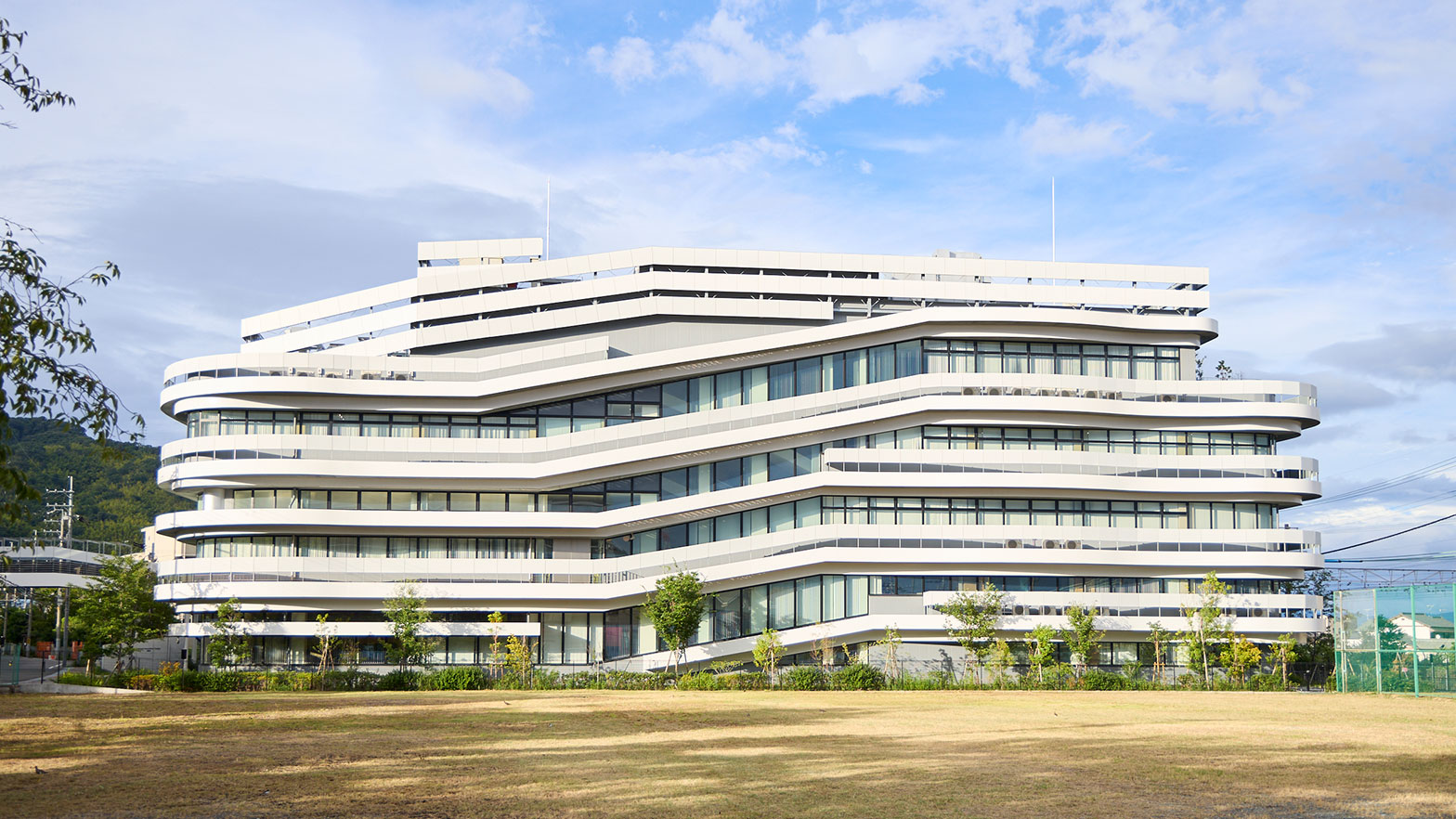
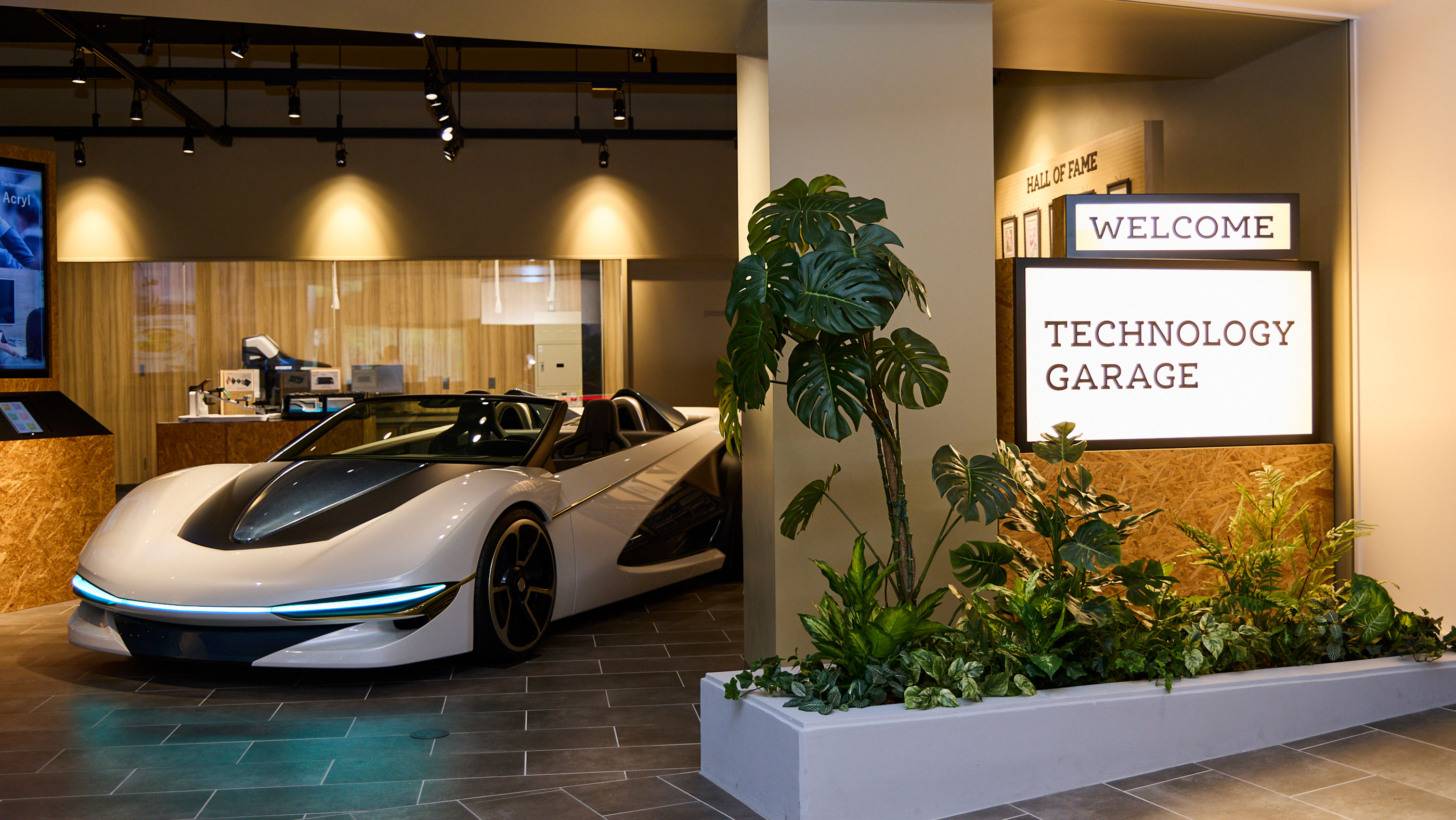
The latest exhibition and demonstration area, featuring concept cars.
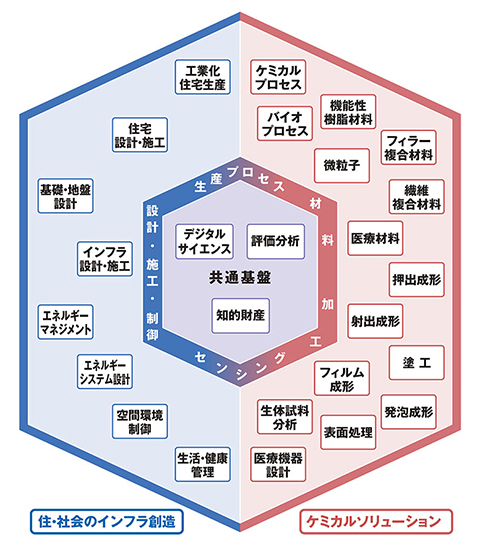
In the "Technology Garage," there is a central area showcasing Sekisui Chemical's Technology Platform (TPF). TPF is a core technology that Sekisui Chemical has cultivated through product development since its founding, and it serves as the basis for creating various products that solve social issues. These products are displayed around the area.
The first thing that catches the eye is the concept car. It's an iconic piece at the exhibition hall and was first displayed at the Frankfurt Motor Show in 2019. It was created by Sekisui Chemical, a materials manufacturer, to propose ideas to automobile manufacturers through concept cars.
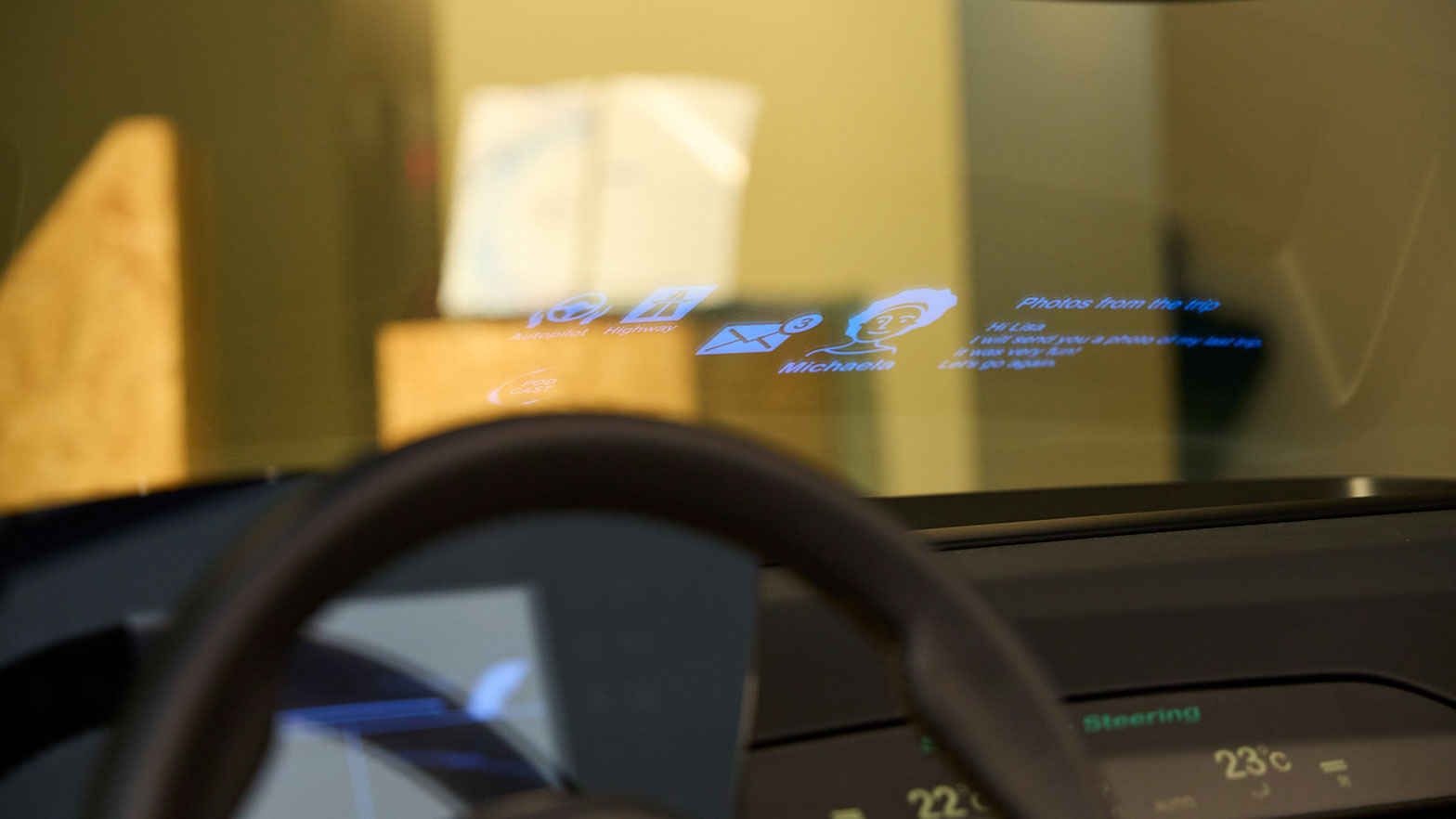
Let's actually try out the concept car.
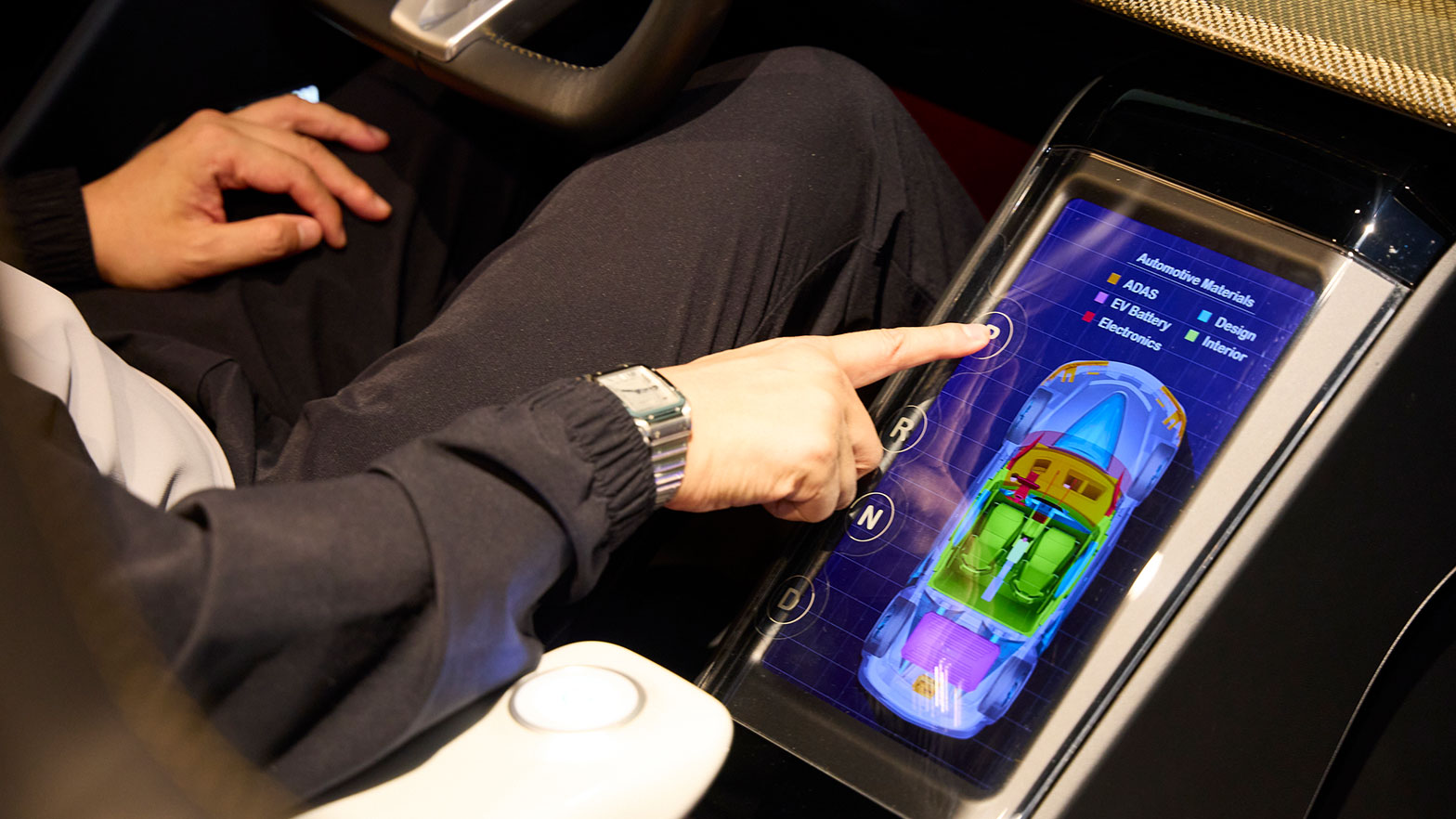
The center console features a touch panel. The sensor portion of this touch panel utilizes technology from Sekisui Polymatec.
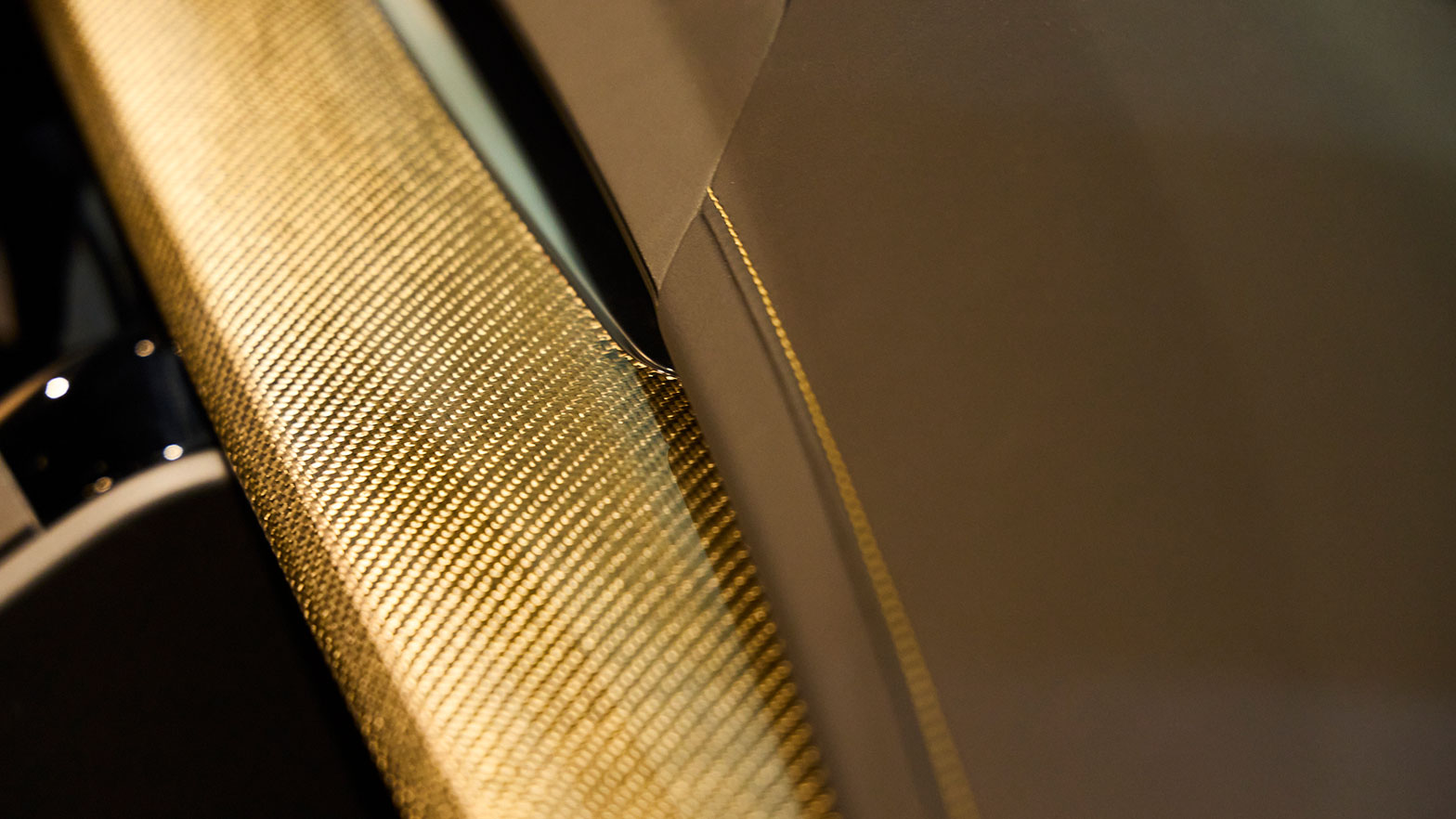
In the car's interior, there was a section of the instrument panel that lit up. A display of that section was located right next to it. The part that glowed had a soft texture, and this was achieved by using a light-transmitting foam material. Ordinary foams scatter light when light passes through them, but through ingenuity, they succeeded in making it transmit light beautifully. It seems like it could be used in furniture and computer cases as well.
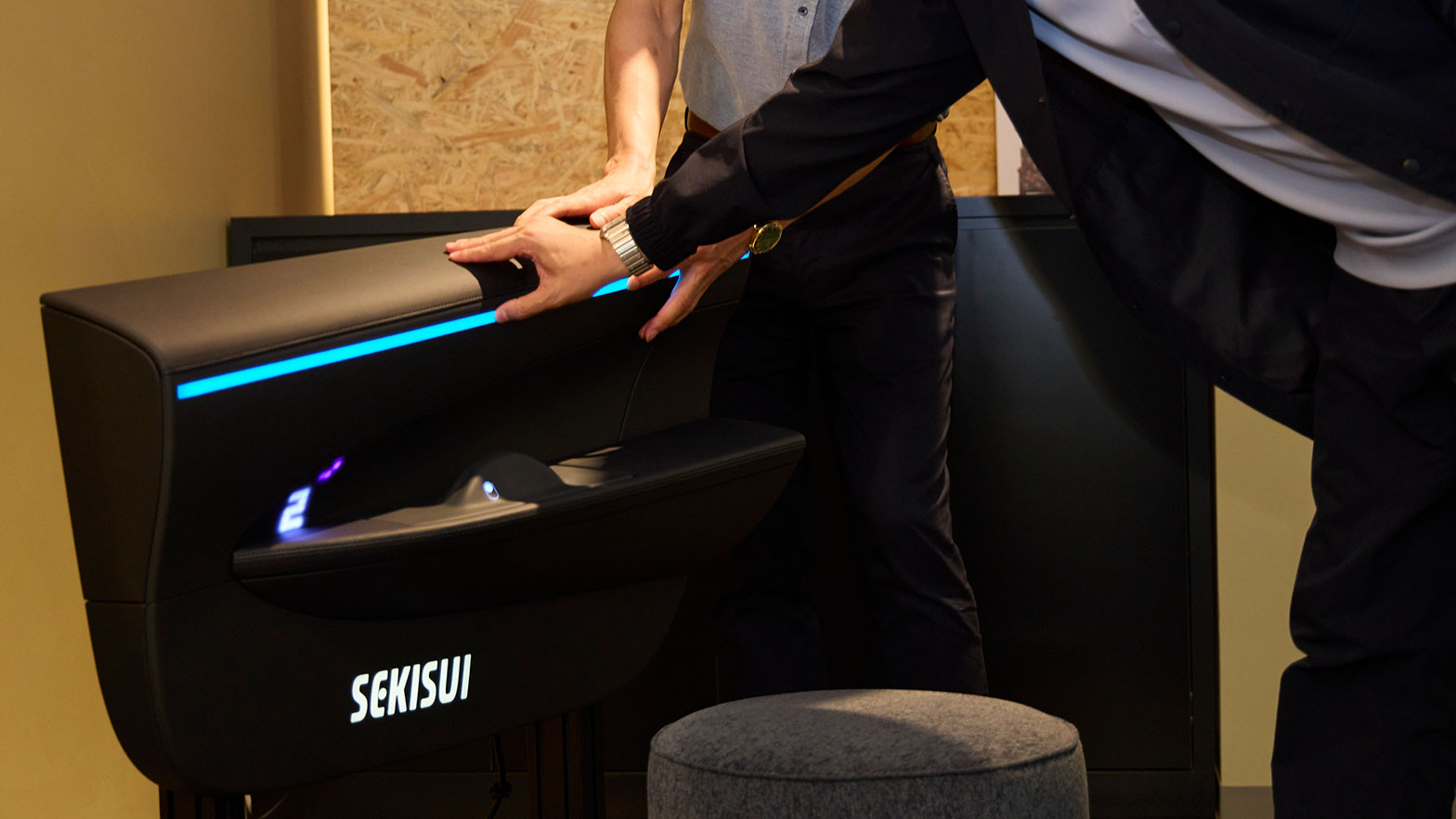
As autonomous driving advances, cars may become less about "driving" and more about "staying" in them. In that case, creating comfort through such design elements will likely become even more important.
Even in the materials used in cars, for example, the "Technology Garage" has two camera housings, one made of aluminum and the other of plastic, available for customers to compare. Sekisui Chemical was the first company in Japan to perform plastic injection molding in 1947, making it their area of expertise. When you actually compare them, you'll notice that even though they are the same part, the weight is completely different. The plastic part is overwhelmingly lighter. Using this kind of technology will likely lead to further weight reduction in automotive materials.
Adding "tactile feedback" to touch sensors reduces human error.
There were also exhibits that resembled buttons with raised bumps, and upon closer inspection, icons were displayed on them using light. In other words, these were not analog buttons, but 3D touch panels. When you actually try to operate them, you feel a vibration in your fingers, as if you were moving a physical button.
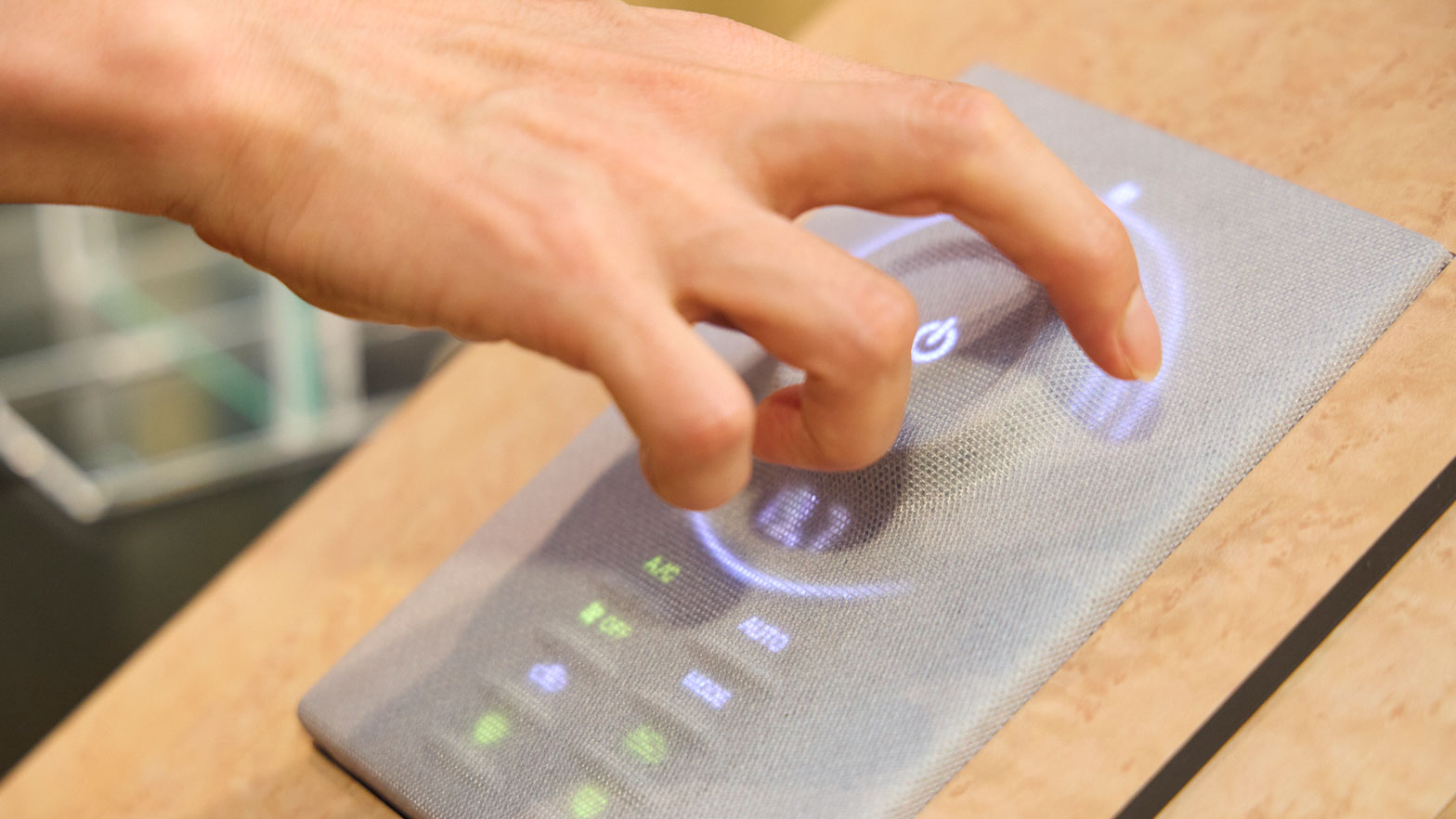
When made 3D, unlike typical touch panels, unevenness is created. The wiring on the back also needs to be stretched within the unevenness, but ordinary wiring can sometimes break. Wiring technology that stretches to match the 3D shape without breaking is also SEKISUI CHEMICAL Group 's technology.
Touch sensors in cars are sometimes disliked because they don't provide tactile feedback. Drivers often need to operate buttons while driving, and they can't see the buttons. Since they're operating by touch, a sense of depth and tactile feedback are desired. Traditional touch panels couldn't provide this. However, this new touch panel has raised and recessed areas, making it easier to locate the sensor.
Inkjet 3D printer born from open innovation
When people think of 3D printers, they generally imagine them as building shapes by stacking materials. However, Sekisui Chemical's 3D printers can print thicker materials using inkjet printing. Home inkjet printers spray liquid ink in droplet form onto an object such as paper. Because the sprayed droplets have low viscosity, they adhere to the object with a smear and spread, creating the print.
Sekisui Chemical's 3D printer uses the same inkjet printing method, but it sprays droplets of material and hardens them immediately with ultraviolet light. Because it hardens so quickly, you can spray more material on top of it to create three-dimensional prints. By repeating this process, you can even create walls.
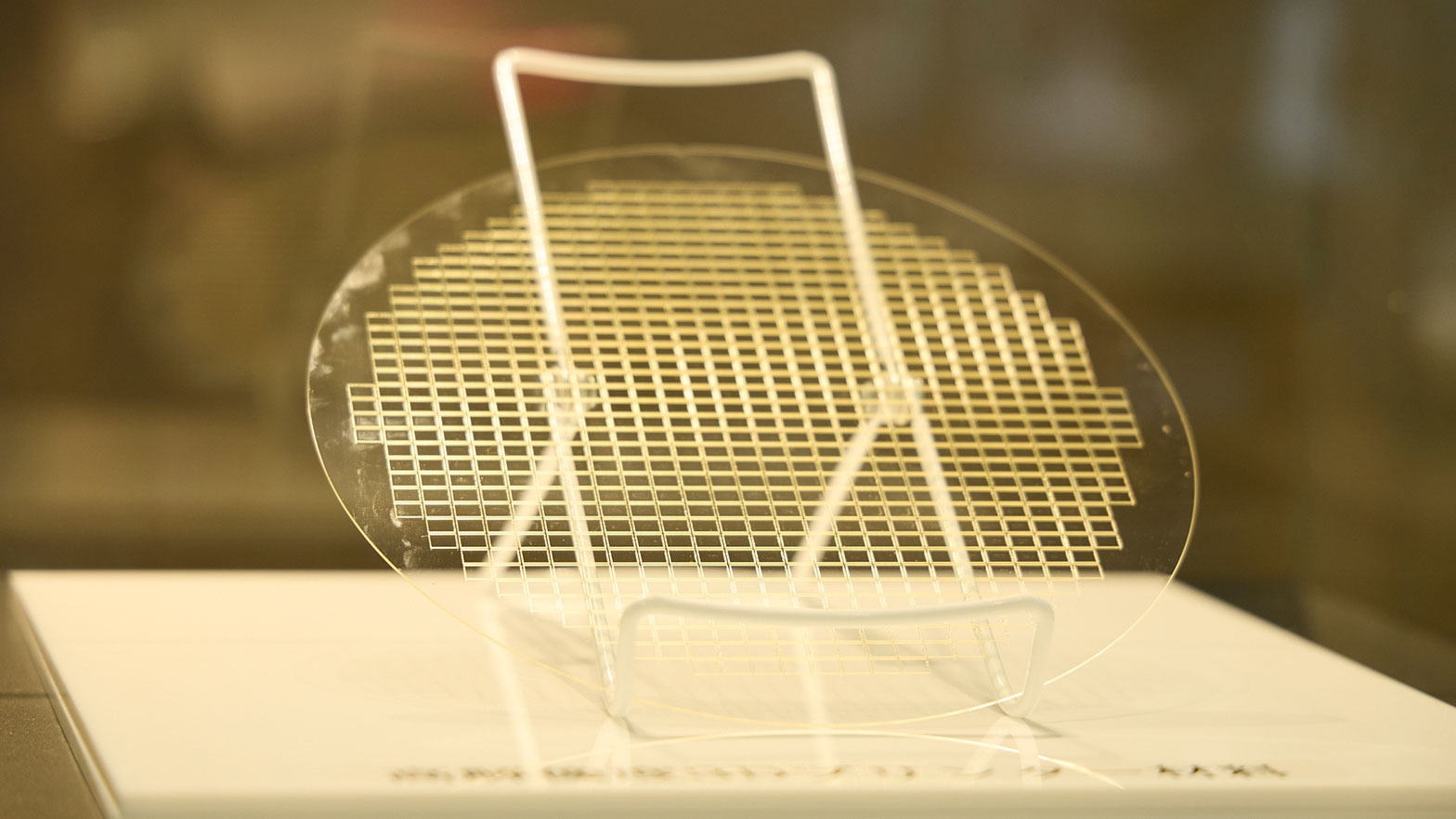
The ability to 3D print using inkjet technology allows for higher resolution and aspect ratio prints than conventional 3D printers. This product was made possible through a collaboration between Sekisui Chemical, which handles the ink, and a head manufacturer, which is responsible for the ink ejection and UV light application mechanism. It is truly a product of open innovation.
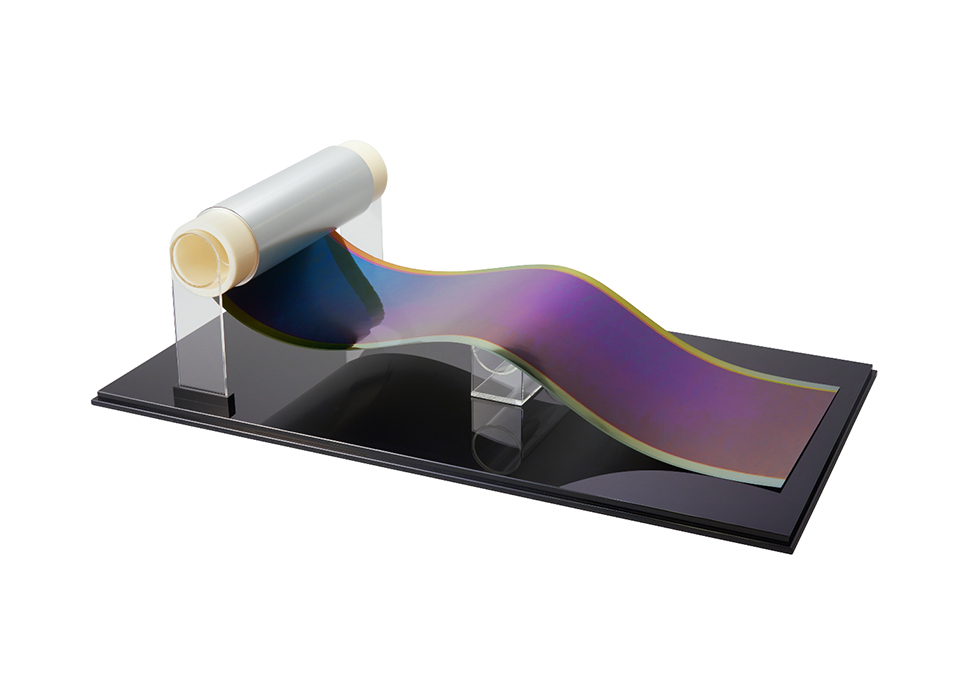
Promoting the widespread adoption of transparent flexible films capable of reflecting 5G/6G radio waves.
Next to it was a transparent film. This film allows light wavelengths within the range we can see to pass through, but it can reflect other types of radio waves, especially those used for high-speed communication (so-called 5G and 6G).
Compared to 4G, 5G and 6G radio waves are highly directional (they travel in a straight line), which creates dead spots. Currently, to prevent this, base stations are being increased while using 5G and 6G in conjunction. However, building base stations is extremely costly. As a solution, Sekisui Chemical is trying to use transparent reflective film to reflect radio waves in various directions, making it usable in many locations.
While metal plates can also reflect light, placing too many of them can spoil the scenery. Transparent materials, however, can be applied without worrying about the aesthetics. This is made possible by metamaterials—artificial substances that behave differently from natural materials—used in the film. This has resulted in a product that reflects radio waves but lets visible light through, a feature not found in nature.
This too was conceived by Sekisui Chemical, and the metamaterial was created through open innovation, leveraging the power of overseas startup companies.
MIC brings together Sekisui Chemical's wisdom and technology, and welcomes people from outside to realize open innovation.
"The initial concept for MIC dates back to 2015. Since our founding in 1947, Sekisui Chemical has created numerous innovations that contribute to society. However, in order to double the scale of our company's business—and thus the amount of our contribution to addressing social issues—by 2030, we need to continue creating innovations continuously. We felt that this would be difficult if we continued as we were."
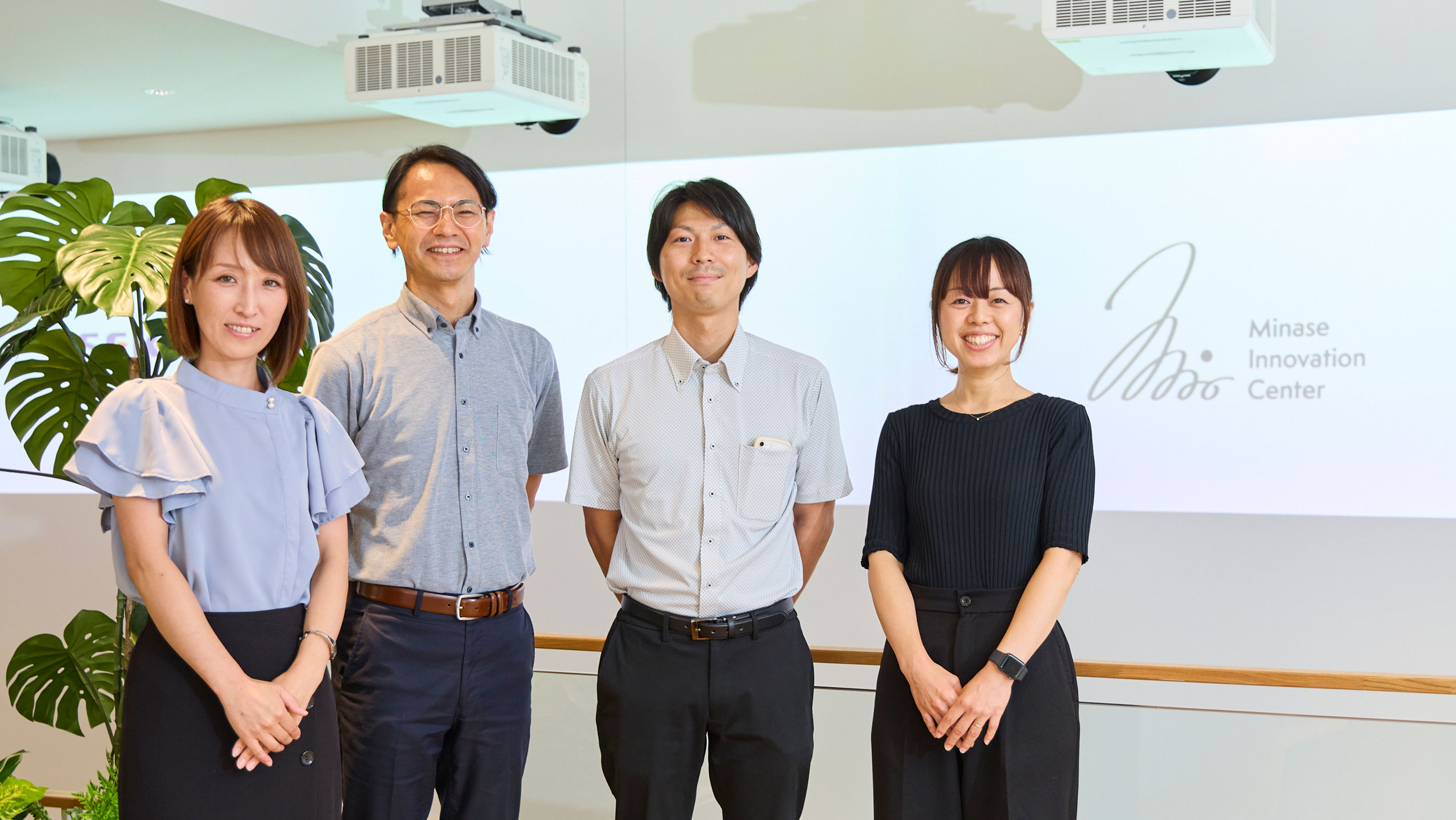
This is said by Kyosuke Aoki, Group Head of the Innovation Promotion Group at Sekisui Chemical's High Performance Plastics (HPP) Company Development Research Institute, Development Strategy Department. He is involved in the operation of MIC.
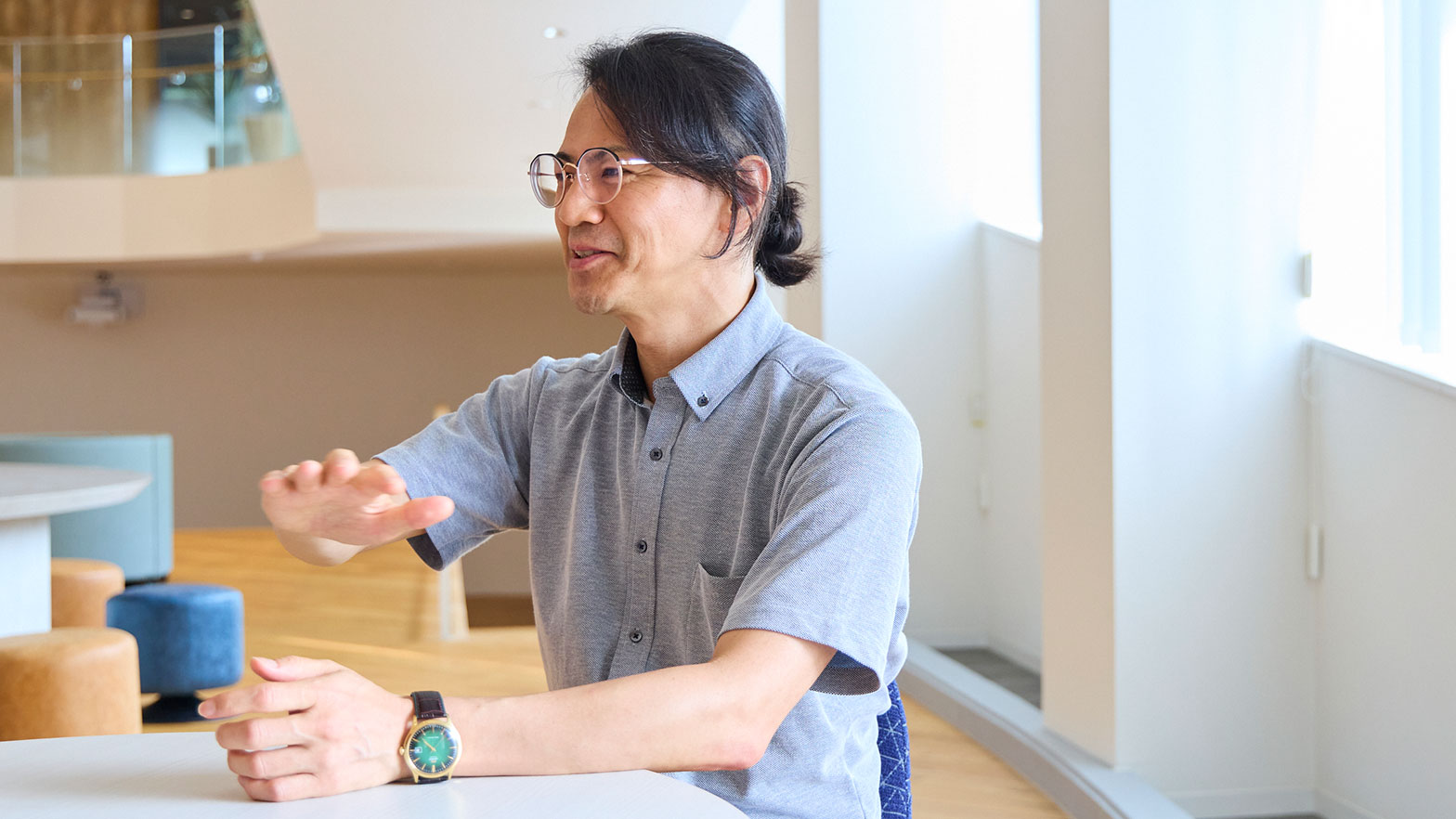
"Sekisui Chemical's business areas are wide-ranging, including housing, infrastructure, electronics, automobiles, and medical products. However, we felt that we hadn't been able to collaborate effectively across these areas. Furthermore, there were concerns that we were falling into a self-reliant approach to development. So, we decided to re-examine our development methods as well. We wanted to consolidate technology in one place, invite our customers, and conduct development together. MIC was born from the desire to create a world where various elements blend together and integrate into one."
Aoki explains that Sekisui Chemical has always promoted its business with solving social issues in mind. "However, these social issues have grown significantly. When it comes to tackling these challenges, there's only so much an individual company can do. We need to bring together the wisdom of many people and solve these social issues through new innovations."
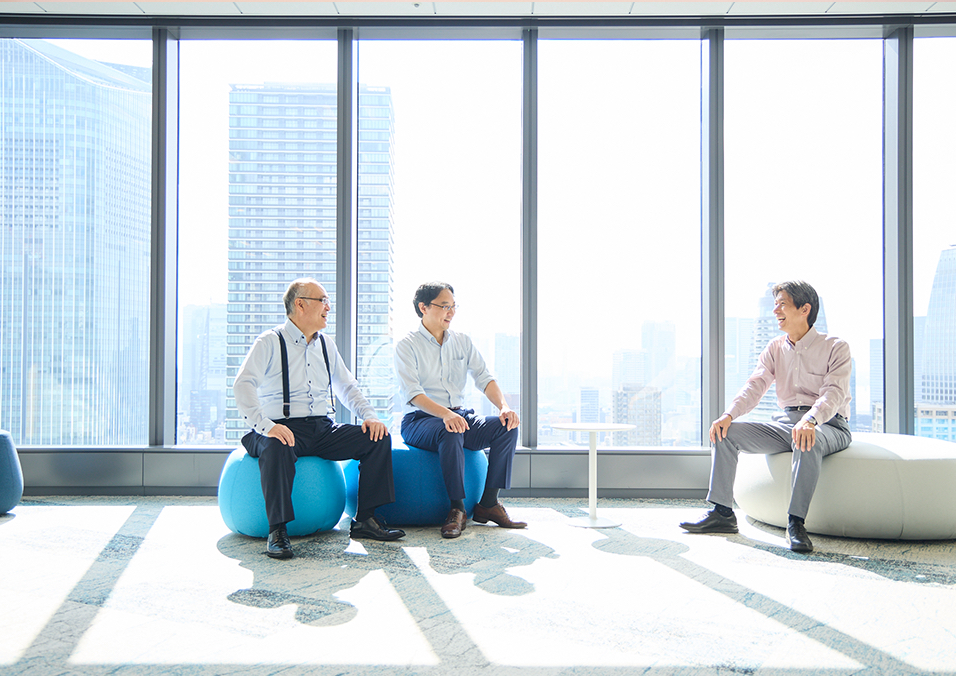
The MIC building has no partitions, allowing people to move around freely, and the ceilings are high. This design is said to be a solution to the problem that "dividing floors with walls restricts open communication."
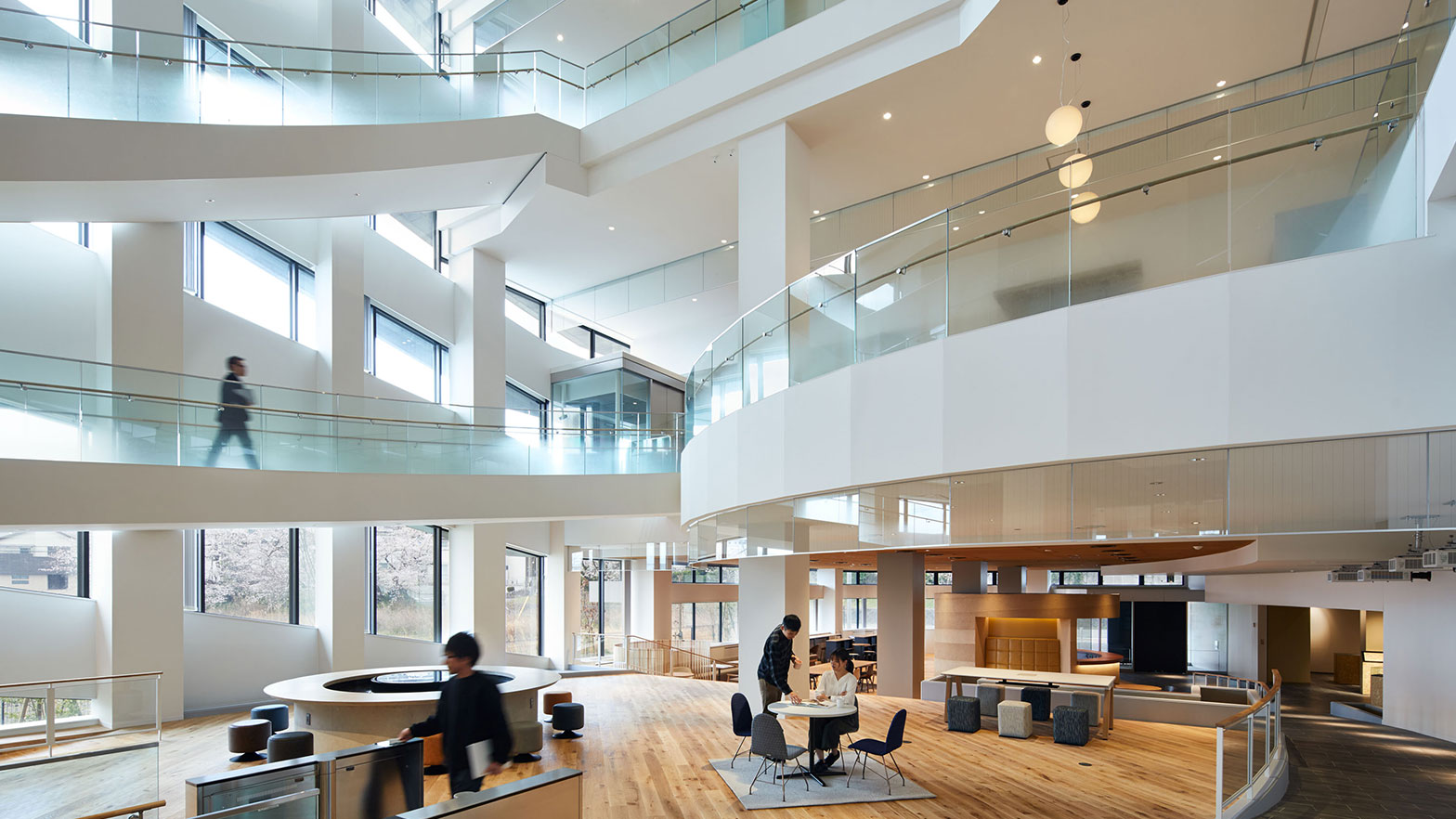
In addition to the "Technology Garage" mentioned at the beginning, the first floor also houses a "Lab Studio" equipped with experimental facilities and meeting spaces, facilitating the exchange of ideas and prototyping among visitors. In fact, many people were working and conversing during our visit.
Floors 2 to 5 are space for idea generation, offices, laboratories, and cafeterias, and spiral corridors are adopted to promote interaction and co-creation among employees in Divisional Company strategic fields such as electronics, mobility, and housing infrastructure.
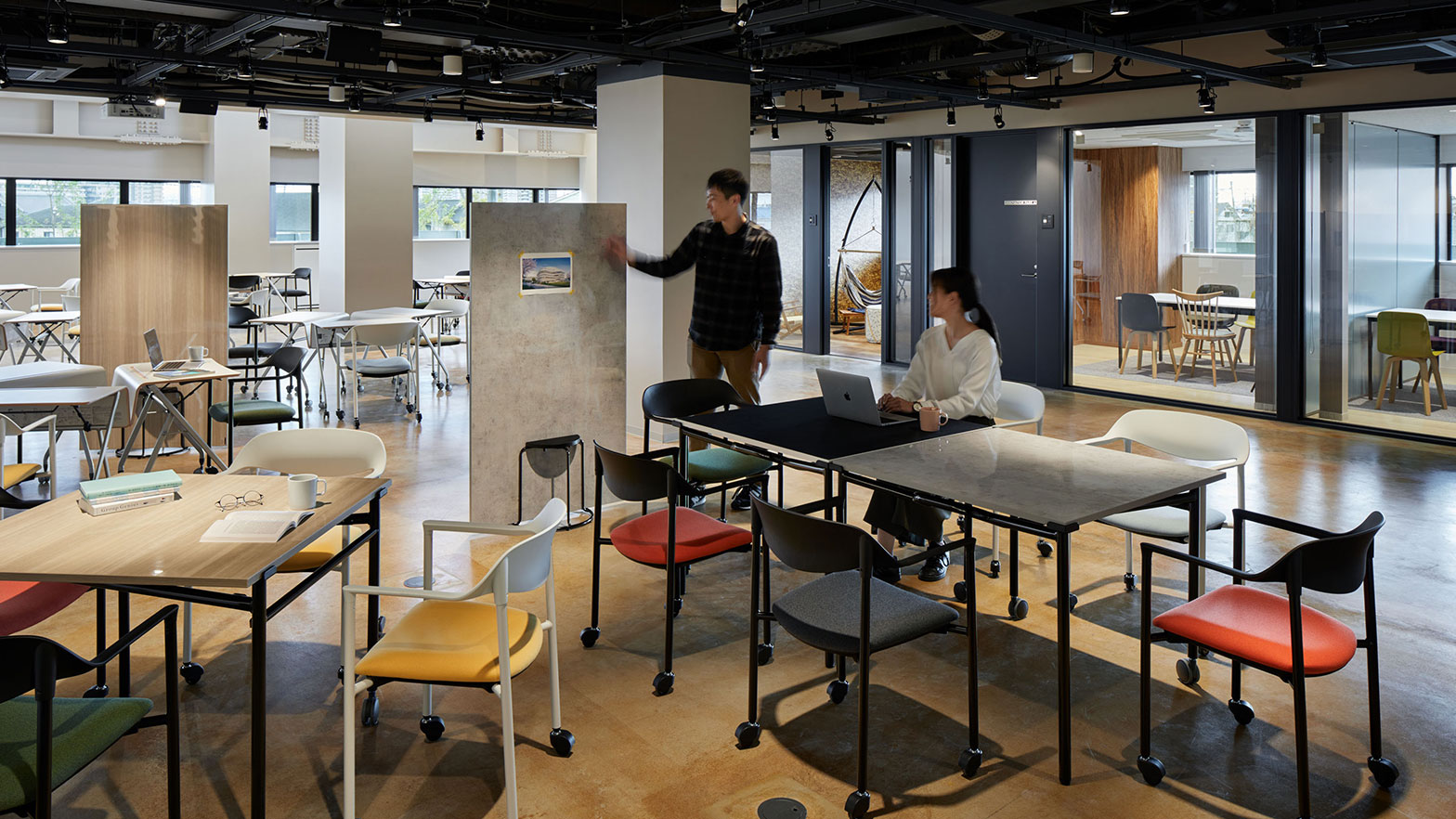
"MIC is still not very well-known, but gradually we are seeing not only Japanese companies but also overseas companies and startups coming here. We want even more people to gather here, share their knowledge, and combine it to solve social issues."
Now, more than ever, with the importance of open innovation being emphasized, the importance of MIC as an innovation hub will only increase.