A winning strategy for a new form of capitalism, illustrated by "thin, flexible perovskite solar cells."
公開日:
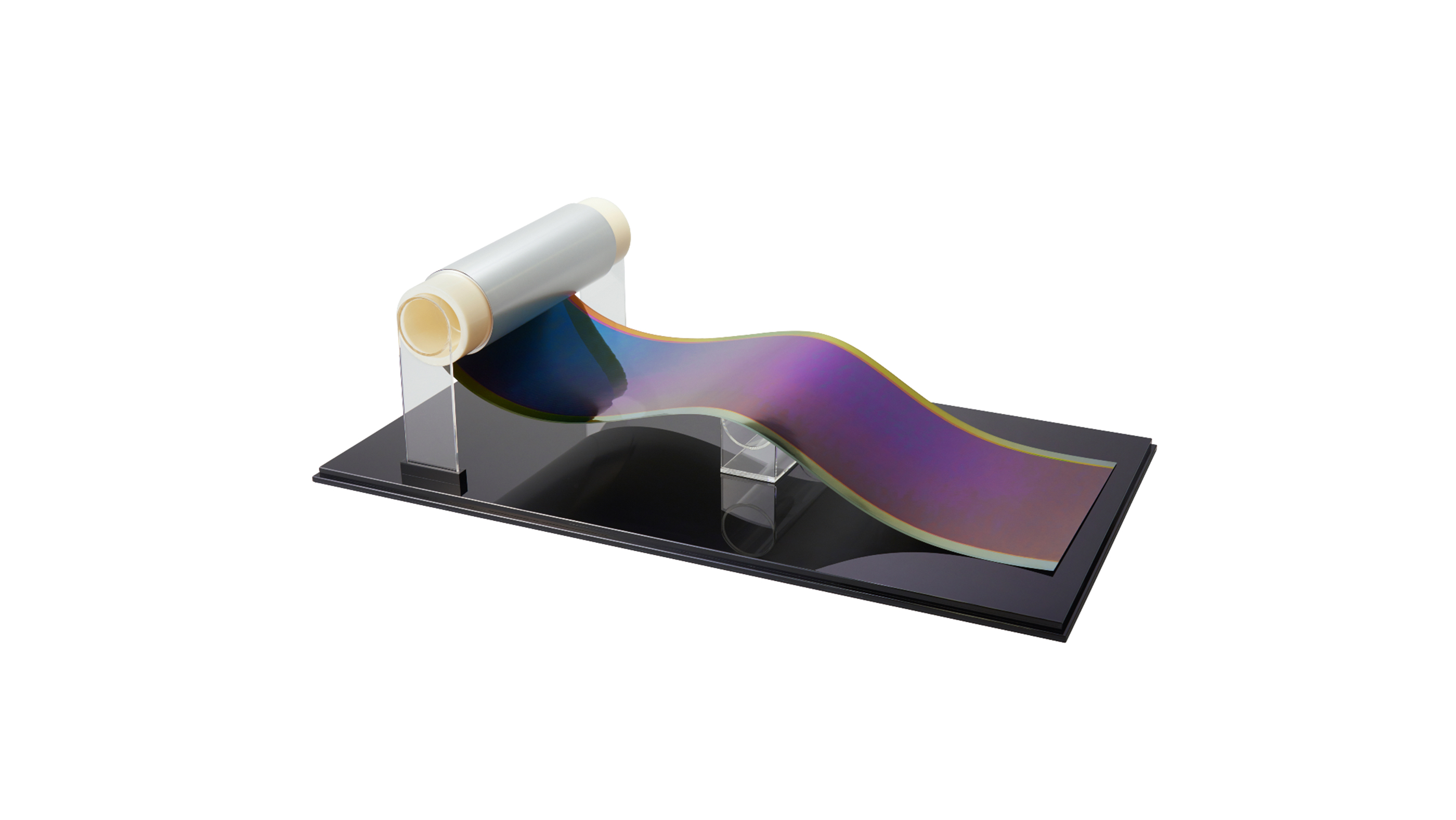
What thoughts and stories were behind its development?
How will that connect to the people and societies living on Earth?
"SEKISUI | Connect with" is a future-creating media platform that connects you with Sekisui Chemical.
- Sekisui Chemical's expertise will be utilized in film-type perovskite solar cells.
- Our strength, "sealing technology," prevents the weakness of "water intrusion."
- It can be installed in various locations, including curved surfaces, expanding the spread of renewable energy.
- We want this to be a model case for "new capitalism."
"Many of the successful technological developments in Japan are in niche markets. Most of the businesses end up overseas. I want to use this flexible solar cell as a model to develop a new way of fighting in capitalism."
These are the words of Kenji Morita, group leader of the Perovskite Solar Cell Group at Sekisui Chemical's R&D Center.
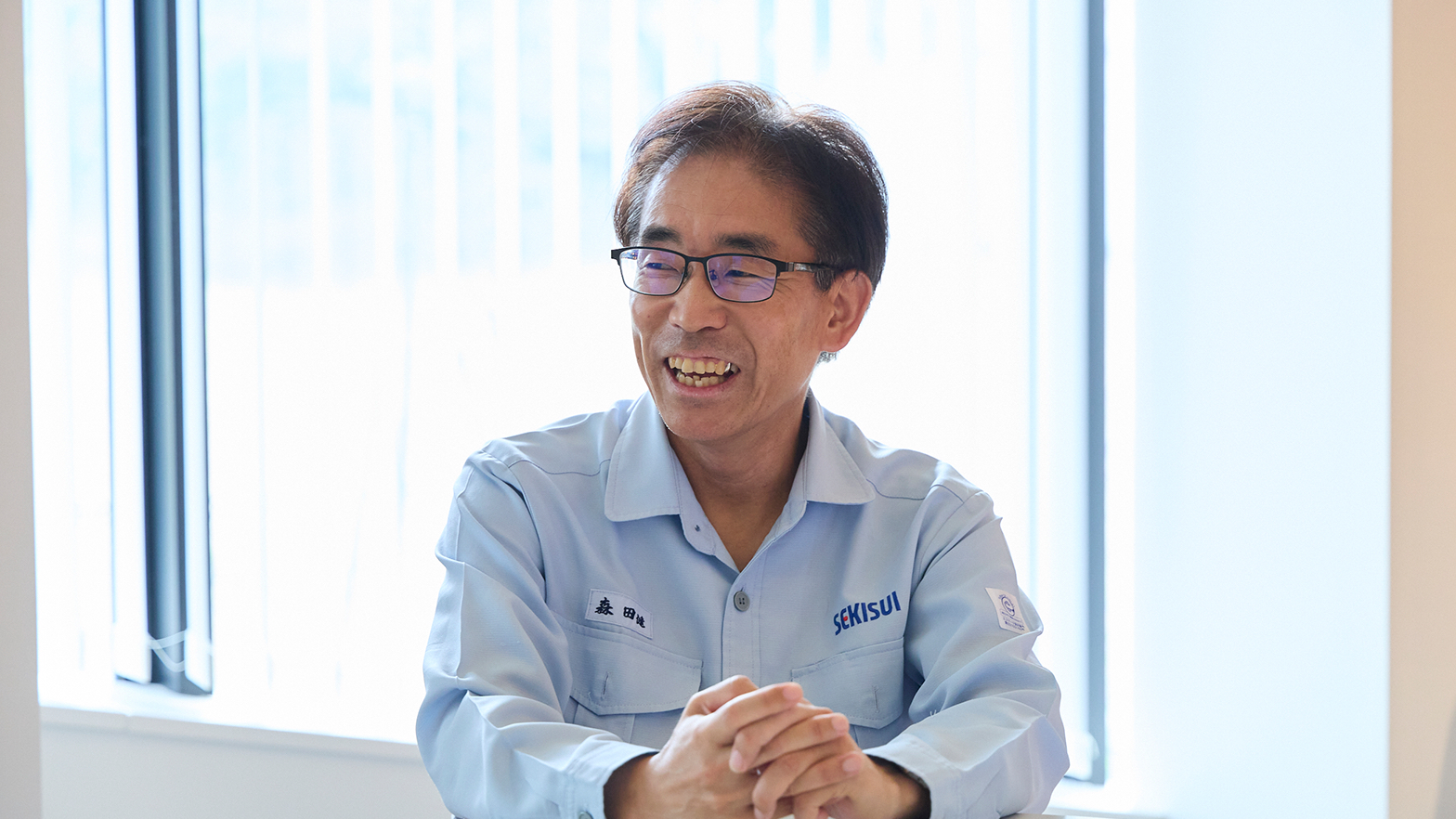
"Bendable solar cells" refer to "film-type perovskite solar cells." Compared to the currently mainstream silicon solar panels, they are about one-tenth the weight, about one-twentieth the thickness, and easily bendable. However, they were susceptible to moisture and had durability issues. Sekisui Chemical has applied technologies such as those used in liquid crystal encapsulants to prevent liquids and gases from entering the interior, achieving a durability equivalent to 10 years, which has attracted attention.
How did Sekisui Chemical's film-type perovskite solar cells come about, and what impact will they have on society? Let's explore this through the insights of Morita et al.
Sekisui Chemical's expertise will be utilized in film-type perovskite solar cells.
Perovskite is a type of oxide mineral also known as titanite. It does not require rare metals, and its main raw material is iodine. It is said that there are more than 100 combinations and proportions of chemical substances that make up the perovskite crystal structure. Japan is actually the world's second-largest producer of iodine, after Chile, and is attracting attention from the perspective of energy security.
Perovskite crystals containing organic matter have previously been studied as light-emitting materials that convert electricity into light. However, a Japanese research group has reversed this process, successfully converting light into electricity, making it possible to use them in solar cells. Perovskite solar cells are made by coating a substrate such as a film with this power-generating material, allowing them to be thin, light, and flexible.
Akinobu Hayakawa, the development team leader who is in charge of technical matters under Morita, said the following:
"We began exploring technologies related to perovskite solar cells around 2013. We believed that our development and manufacturing technologies would be valuable in the encapsulation and film deposition technologies required for film-type perovskite solar cells, as we hold the world's top market share in encapsulants for liquid crystals and interlayers for laminated glass, respectively."
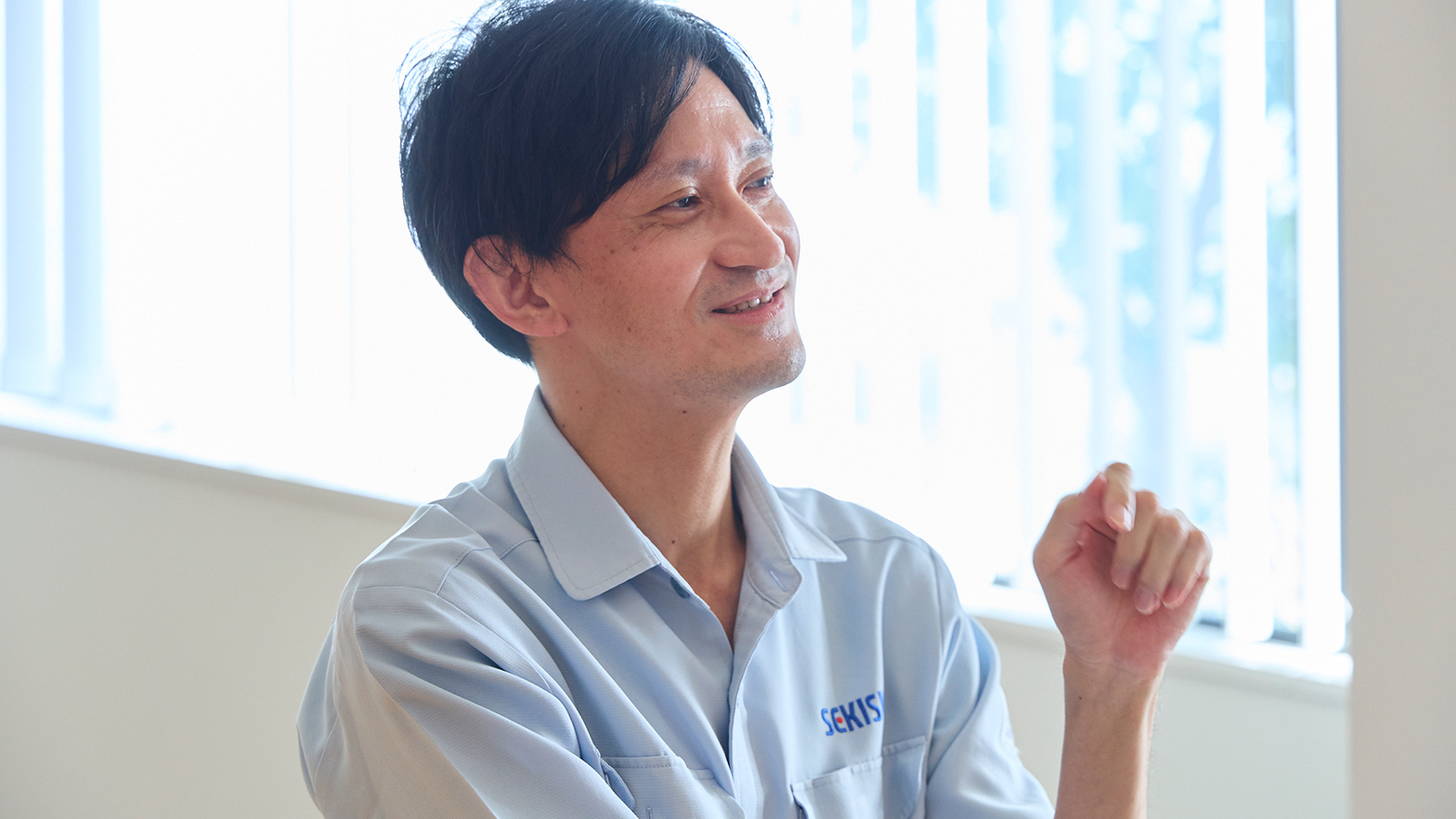
When they began their technology exploration, they had to choose between developing this type of solar cell and another type. Perovskite solar cells have high power generation efficiency, but they have durability issues. They chose perovskite solar cells because they thought they could solve this durability problem by using their own encapsulation technology.
Further exploration revealed that Sekisui Chemical's accumulated know-how could be greatly utilized. For example, their materials development technology was used in the development of perovskite solar cells, which combine a very large number of materials, and their process technologies, such as precision coating, were utilized to realize roll-to-roll production.
"For practical use, installation on buildings is necessary. Sekisui Chemical has a housing business, and we can leverage that know-how. Additionally, we are initially planning to deploy our products in large-scale public buildings, and Sekisui Chemical's environmental lifeline Divisional Company leverages its connections with public infrastructure that it has cultivated. This product truly embodies all of our strengths."
Our strength, "sealing technology," prevents the weakness of "water intrusion."
Sekisui Chemical's film-type perovskite solar cell project has been selected for the Green Innovation Fund program of the New Energy and Industrial Technology Development Organization (NEDO). NEDO's main function is the management of research and development projects related to industrial technology and energy/environmental technology. It aims to commercialize new technologies by bringing together the combined efforts of industry, academia, and government to research and develop industrial technologies that are the source of Japan's industrial competitiveness.
"The Green Innovation Fund project aims to create a fund of approximately 2 trillion yen over 10 years within NEDO (New Energy and Industrial Technology Development Organization) to work towards the national goal of carbon neutrality by 2050. It will share ambitious and concrete goals with industry, academia, and government, and then provide continuous support to companies and other organizations that are tackling these goals as management challenges, all the way to their social implementation."
This is according to Hiroyuki Yamada, head of NEDO's New Energy Department (PhD in Engineering).
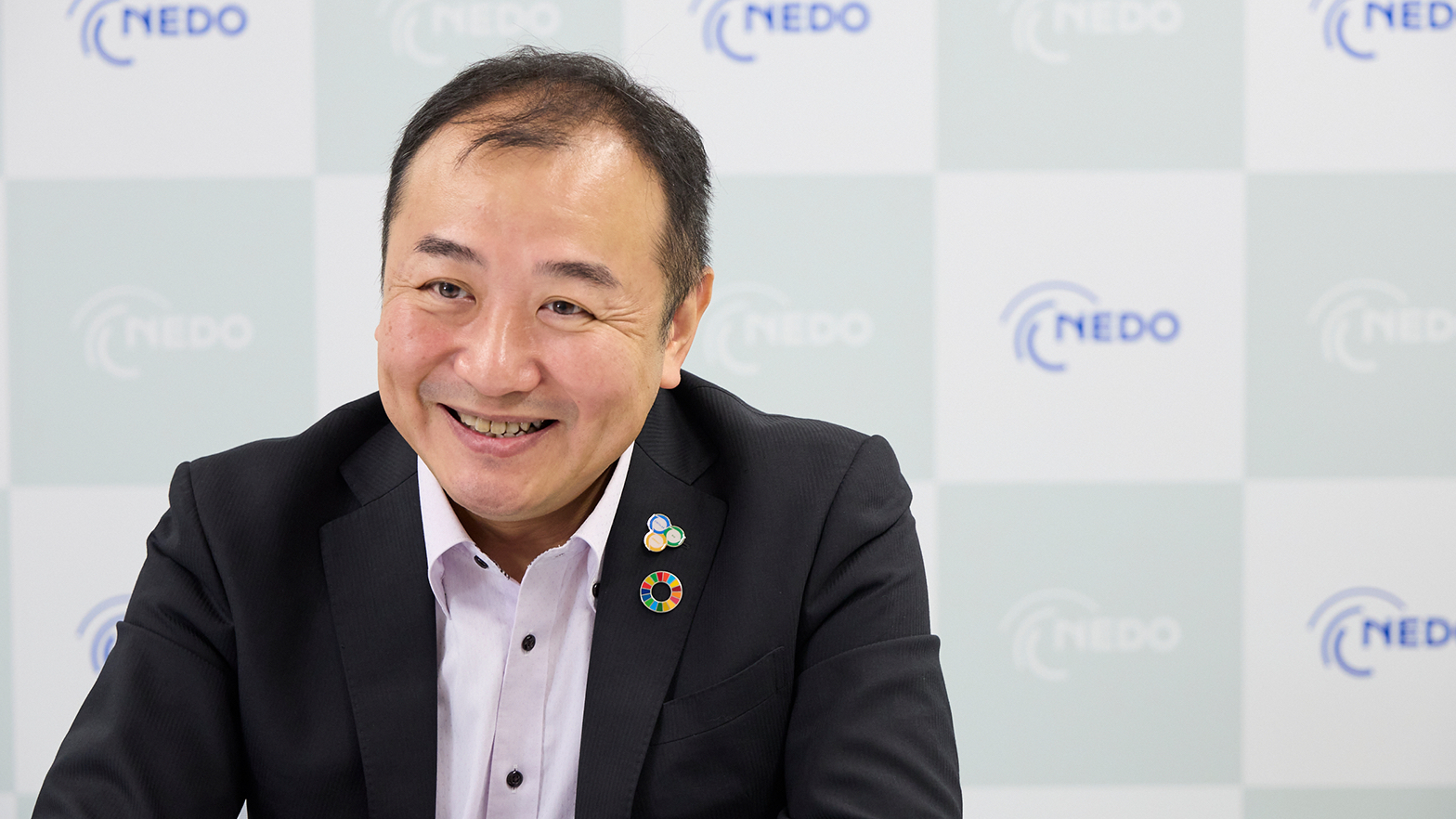
"This fund is not solely for supporting research and development; it aims to empower companies and other organizations that seek to transform their businesses and gain a competitive edge through research."
Sekisui Chemical has been selected for the "Next-Generation Solar Cell Commercialization Project," which is part of the Green Innovation Fund program.
"Approximately 90% of conventional silicon solar panels are manufactured in China. For Japan to gain a competitive edge, a different approach is needed. Film-type perovskite solar cells are expected to open up new markets due to their characteristics of being lightweight and flexible, unlike conventional types, and were selected as a project undertaken under the Green Innovation Fund. Sekisui Chemical had been working on the development of film-type perovskite solar cells even before the government and NEDO issued a message promoting their development. In past NEDO projects, we have also worked on the development of encapsulating materials, and have accumulated a wealth of encapsulation technology and know-how, which are important factors in improving the durability that is a challenge for film-type perovskite solar cells. We are supporting this project because of these achievements."
Sekisui Chemical's film-type perovskite solar cells are about 1 mm thick in total. Most of the thickness consists of the backsheet and barrier film, with the substrate being 100 microns and the perovskite power generation layer being only 1 micron. Within this 1 mm thickness, vacuum deposition, machining, precision coating, and sealing technology that acts like an adhesive are incorporated to prevent water intrusion.
Morita says that being selected for the Green Innovation Fund project by NEDO has made things easier within the company. "Initially, there were voices within the company saying, 'Why solar cells now?' But being selected has proven that our thinking was correct, and it seems to have made research and development easier."
Hayakawa recalls, "At the time, there wasn't a theme that could be commercialized if this technology was developed. In other words, no matter how hard we worked, we couldn't sell it. I wanted to do work where my efforts would be reflected, so I was looking for a new theme when I remembered that I had written a paper on organic solar cells during my university days. So I decided to focus on perovskite solar cells, thinking that I could do something here that only I could do."
Initially, this was a project undertaken only by Morita and Hayakawa, and later Tomohito Uno joined as a new employee. Uno joined the company after completing an internship at Sekisui Chemical. Morita and Hayakawa told me about Uno's internship experience.

"During his internship at our company, Uno was experimenting with a method of sealing to improve the durability of another solar cell project. At the end, when we put the products made by the students into a durability test, only Uno's product withstood the entire test. That's why we brought him into the team as soon as he joined the company."
Uno, upon joining Sekisui Chemical, said, "The relationship between superiors and subordinates was so frank that I thought it was more like a senior-junior relationship." "We could say what we wanted without any忖度 (忖度: unspoken consideration of others' feelings or expectations). I thought I could dedicate myself to research here."
It can be installed in various locations, including curved surfaces, expanding the spread of renewable energy.
Perovskite solar cells generally have the following four characteristics:
(1) Its lightweight and flexible nature allows for a wider range of installation locations.
(2) Production is possible using domestic raw materials such as iodine.
(3) Power can be generated even in low light conditions such as indoor lighting.
(4) Can be produced cheaply by roll-to-roll.
The film-type perovskite solar cell being developed by Sekisui Chemical has particular strengths in (1) and (2) among these.
"The development objective is to contribute to carbon neutrality by 2050. To address this social challenge, we are focusing our development on outdoor (sunny) applications, which are advantageous for energy conversion. For low-light conditions (3), perovskite solar cells adjusted to suit the environment are necessary, but the amount of electricity that can be generated is quite small, so it is not cost-effective at present. For (4), the cost of increasing durability is not yet at the mass production stage, so it is not inexpensive at present, but we are continuing development so that the power generation cost, including installation costs and power generation efficiency, will be comparable to that of silicon solar cells," Morita and his colleagues explain. "There is a good possibility that mass production will progress and production will become cheaper, and this may also expand applications from outdoor to indoor use, but (1) through (4) will not be put into practical use anytime soon."
Conventional silicon-based solar cells are limited to installation locations such as flat, expansive plots of land or roofs of buildings with high load-bearing capacity due to their weight and shape, which is a limitation in Japan, where mountainous terrain accounts for two-thirds of the land. Furthermore, facilities in urban areas where it is difficult to install large-scale power generation equipment utilize off-site PPAs and self-transmission systems to use renewable energy, but the cost of purchasing electricity and energy loss due to transmission loads are challenges.
"Our film-type perovskite solar cells are lightweight and flexible, allowing them to be installed in a variety of locations, such as roofs and building exteriors that do not bear weight, as well as curved surfaces like car bodies and chimneys. We believe this will contribute to expanding the adoption of renewable energy."
Currently, they have confirmed a 10-year outdoor durability and have established a 30cm wide roll-to-roll manufacturing process. Furthermore, they have succeeded in manufacturing film-type perovskite solar cells with a power generation efficiency of 15.0% using this process.
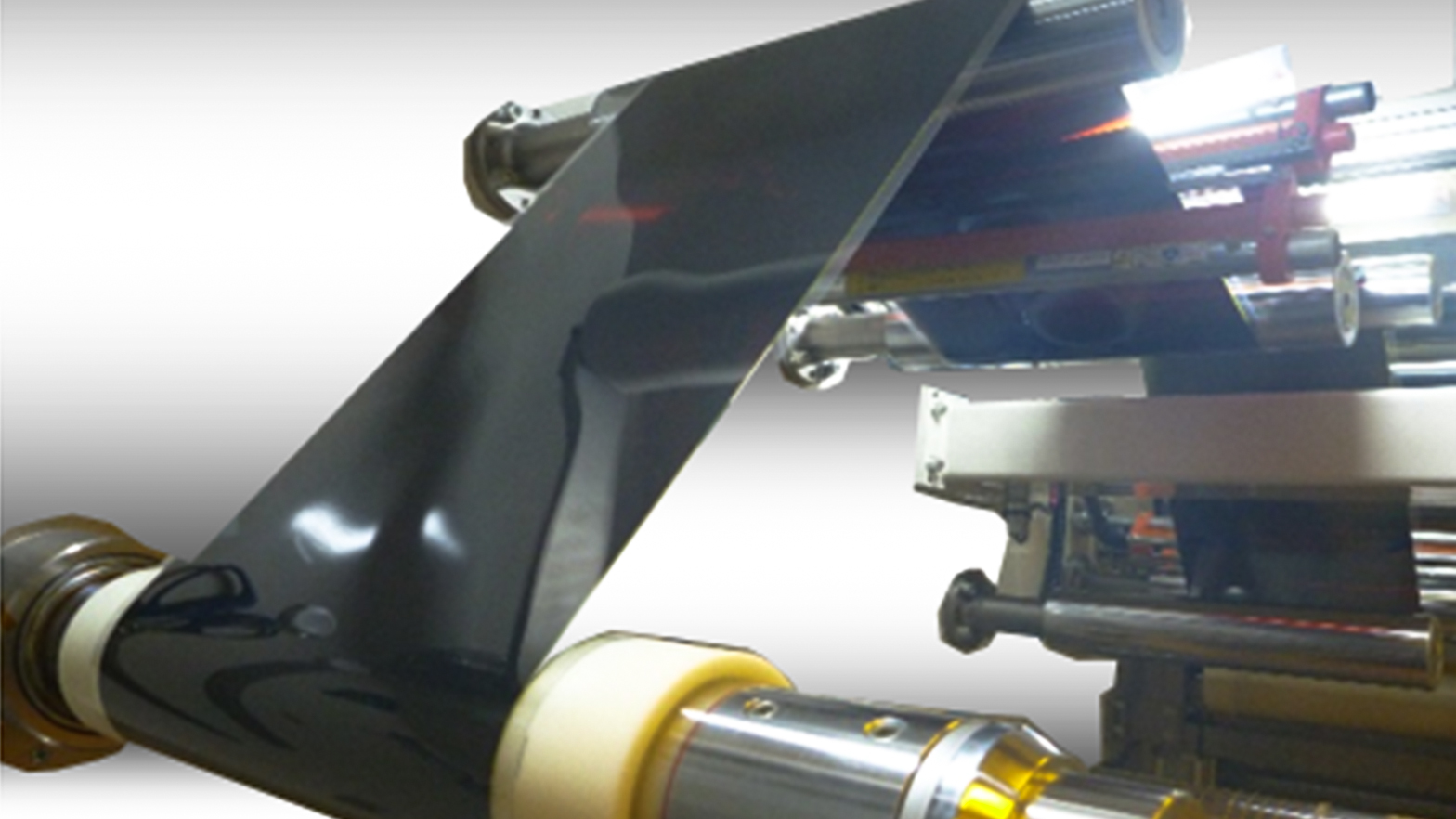
"Currently, we still have many challenges to overcome, such as establishing a manufacturing process for the 1-meter width we envision as a general-purpose width, and further improving durability and power generation efficiency. To address these challenges, we are working with the University of Tokyo, Kyushu University, and Kyoto University within the NEDO Green Innovation Fund Consortium to achieve both high efficiency and durability, and with Ritsumeikan University and the Kanagawa Prefectural Industrial Technology Research Institute to acquire a durability acceleration factor. In addition, we, along with other companies developing perovskite solar cells, are utilizing the common platform technologies possessed by the National Institute of Advanced Industrial Science and Technology."
In parallel with these efforts, we are working with partners such as JR West's "Umekita (Osaka) Station," Tokyo Metropolitan Government Bureau of Sewerage's Morigasaki Water Reclamation Center, JERA Thermal Power Plants (Yokosuka, Kashima), and NTT Data's "NTT Shinagawa TWINS Data Building" to conduct demonstrations toward social implementation, with the aim of establishing installation methods and construction procedures.
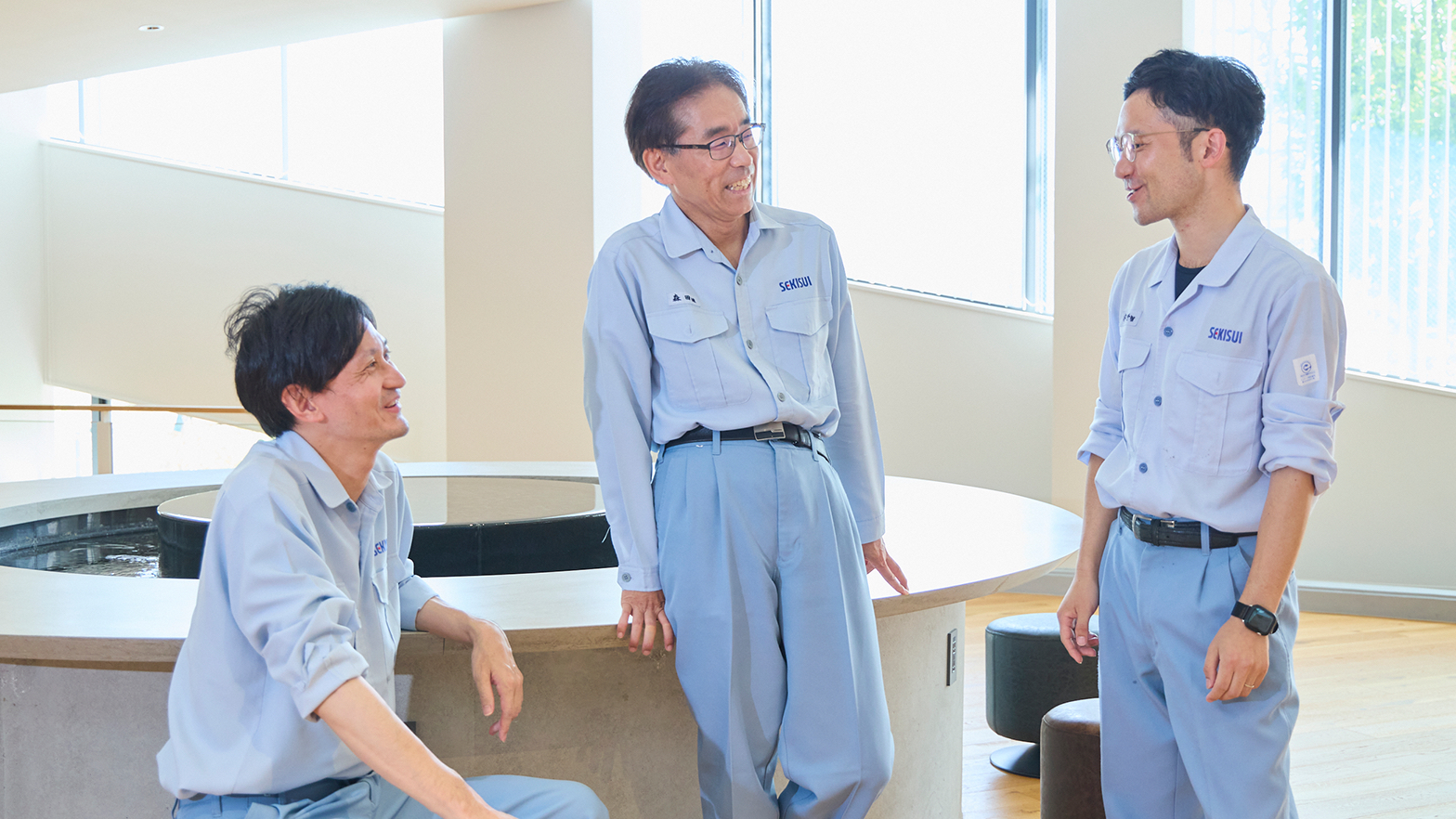
Recognizing the need for marketing in implementing these projects in society with various partners, Uno took on the role in 2022. "I knew it would be difficult because marketing activities themselves can't be done without someone who understands the technology, but I saw it as an opportunity to take on a challenge," he says.
We want this to be a model case for "new capitalism."
Perovskite solar cells are attracting attention worldwide. Regarding the current situation, Mr. Yamada, a department head at NEDO, said the following:
"New insights into perovskite solar cells are being discovered every day around the world. Although perovskite solar cells originated in Japan, a development race is now taking place globally. Development technology is evolving in every field, and the pace of development is accelerating. We want to support Japanese companies so that they can catch up and even surpass that pace."
What is the source of his motivation, given his involvement in various research and development management projects?
"I've always been interested in new energy sources, and I've long believed that if energy problems were solved, conflicts would disappear. Primary energy is the starting point of energy, it affects everything, and I'm excited because I can expect a big impact from it."
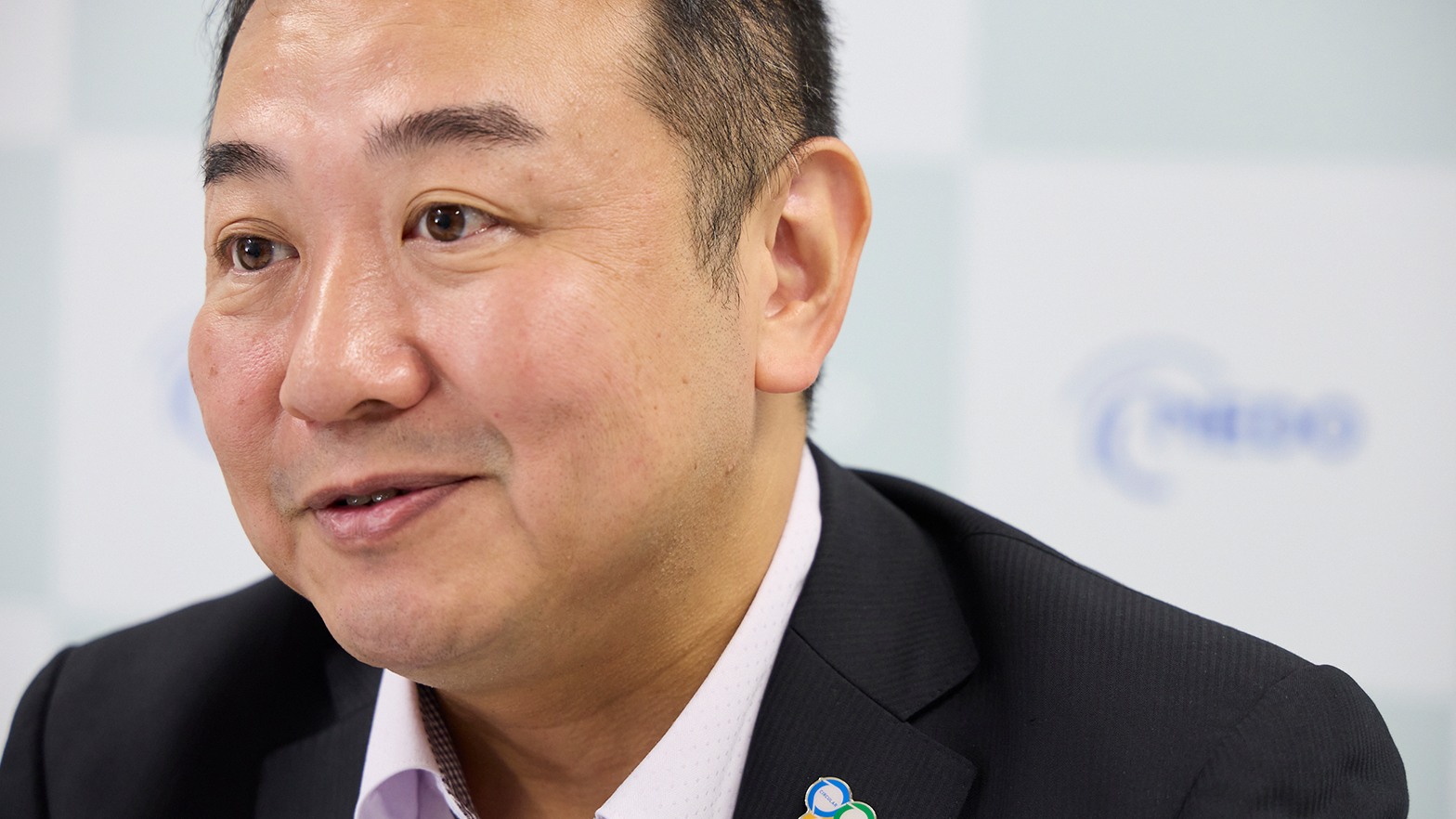
Morita, who was also seconded to NEDO, describes Department Head Yamada as "someone who will lead the development of renewable energy in Japan." "The fact that Japanese companies, including ours, have been among the world's top companies is largely due to government support. In particular, in our efforts to achieve carbon neutrality, NEDO has established a system to support everything from research and development to social implementation based on the Green Innovation Fund. As the world engages in a nationwide development race, we want to work together as a unified industry-academia-government team."
The cumulative market size for typical silicon solar cells in Japan is approximately 70 gigawatts. The potential market size for perovskite solar cells is estimated to be 1.5 to 2 times that amount in Japan alone, and more than 10 times that amount globally.
Morita smiled and said, "I want to connect technological development originating in Japan to commercialization and create a model case for a new form of capitalism that the government is proposing—that is, a way for Japan to grow by solving social issues through technology and innovation. There is still a lot that needs to be done. I will work on this with the involvement of not only the members but also colleagues inside and outside the company."
Sekisui Chemical has also invested in the Decarbonization Support Organization established by the Ministry of the Environment. In other words, they are working beyond their own framework to develop and disseminate cutting-edge technologies toward the realization of a decarbonized society. On August 31, the Ministry of Economy, Trade and Industry announced a new public offering of 15 billion yen, including a demonstration phase, as "additional initiatives toward the early social implementation of next-generation solar cells." With attention on the matter, the day may be near when Morita and his team's efforts will solve the world's energy challenges and show us a new world.


Related Links
- Film-type perovskite solar cells installed at Umeda (Osaka) Station (announced August 3, 2022)
- Joint research on film-type perovskite solar cells begins with the Tokyo Metropolitan Government (announced December 2, 2022)
- Japan's first demonstration experiment begins: Perovskite solar cells installed on the exterior walls of buildings (announced February 13, 2023)
- Joint demonstration experiment of perovskite solar cells begins with JERA (announced March 27, 2023)
- Regarding the verification of film-type perovskite solar cells with the Tokyo Metropolitan Government (announced May 25, 2023)
- Film-type perovskite solar cells exhibited at the G7 Hiroshima Summit 2023 (announced June 6, 2023)
- Minister of Economy, Trade and Industry Nishimura inspects manufacturing facilities for film-type perovskite solar cells (announced June 21, 2023)
- Regarding our sponsorship of the 2025 Japan International Exposition (Osaka-Kansai Expo) and the installation of film-type perovskite solar cells (announced July 21, 2023)
- Film-type perovskite solar cells were introduced and exhibited at the 5th CEFIA Public-Private Forum (announced August 31, 2023).
- Inquiries regarding perovskite solar cells