Supporting the future in the palm of your hand—creating the future with materials technology
公開日:
What thoughts and stories were behind its development?
How will that connect to the people and societies living on Earth?
"SEKISUI | Connect with" is a future-creating media platform that connects you with Sekisui Chemical.
Smartphones have dramatically changed our lives. From telephones to information terminals, and now to essential infrastructure. Behind this evolution lies an invisible innovation in "materials technology." Thinner and lighter devices, nearly bezel-less full-screen displays, improved water and shock resistance, environmentally conscious designs such as recycling, and flexible displays that can be folded, rolled, or extended are all within reach.
Supporting remarkable innovations have been sealants that protect LCD displays, shock-absorbing foam, and double-sided tape that supports disassembly and reuse. Tracing the history of smartphone evolution, we trace the path of material development that SEKISUI CHEMICAL Group has accumulated. We spoke with development and sales representatives from three business domains to explore the initiatives that support "cutting-edge technology in the palm of your hand."
The Dawn of Smartphones: Materials that Supported a New Lifestyle
The prototype of the smartphone was born in the early 2000s. In Japan, mobile phones evolved rapidly, with unique features such as color LCDs, cameras, and mobile payment functions appearing one after another. This was the heyday of so-called "feature phones." Meanwhile, in Europe and the United States, PDAs and PC-based devices such as BlackBerry and Nokia became popular, and a new lifestyle of "carrying information with you" began to spread globally.
Then, in 2007, the arrival of the iPhone, developed by Apple, created the global "smartphone" market. Capacitive touch panels, which could be operated simply by swiping a fingertip across the screen, became mainstream, and mobile phones evolved from those that relied primarily on physical buttons to full-screen devices where the entire screen became the operating area.
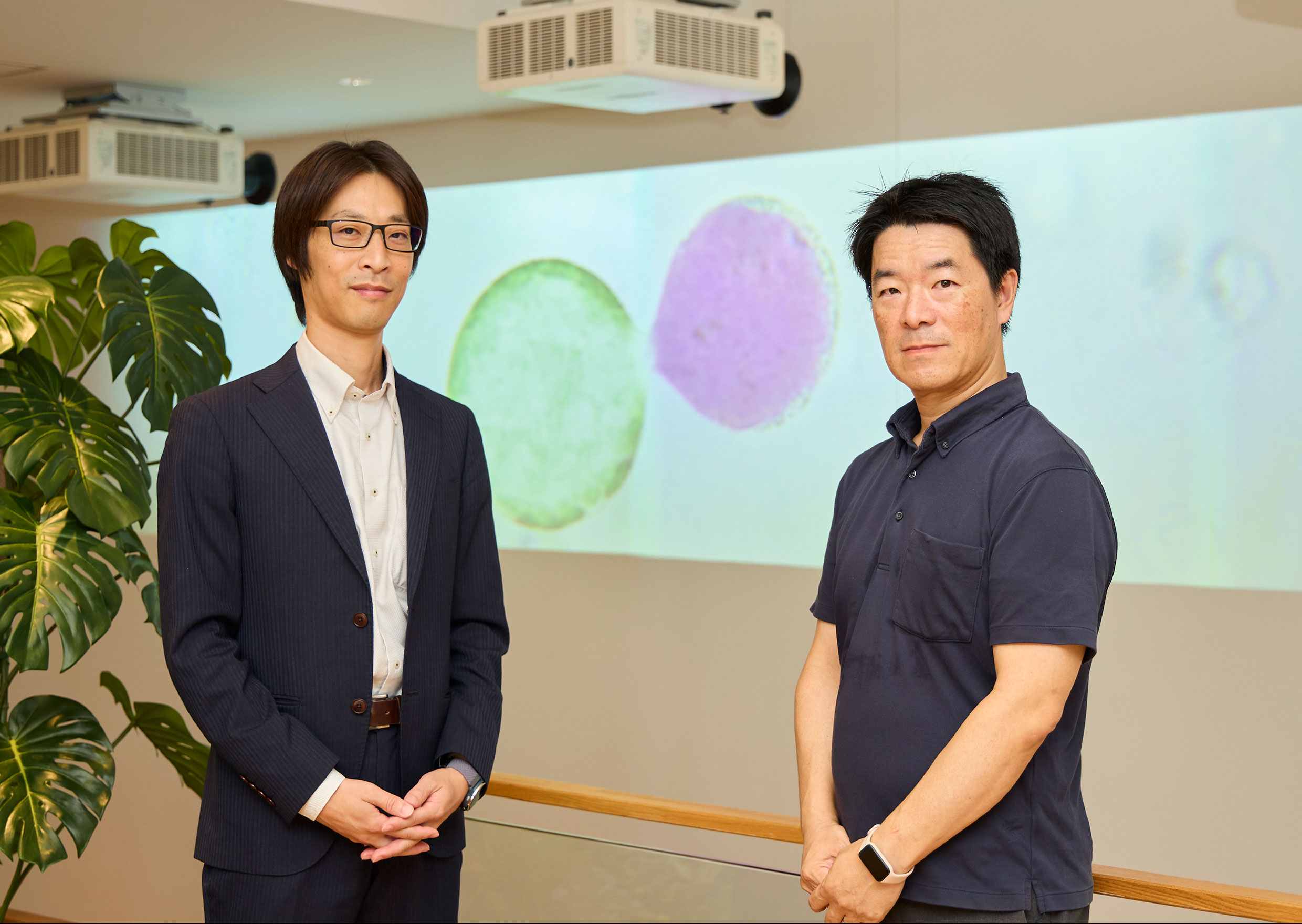
"Behind that megatrend are Sekisui Chemical's microparticle and adhesive technologies. They have become indispensable in realizing the high-definition and thin-screen capabilities of liquid crystal displays," says Hideka Nemoto of the Fine Chemicals Division.
Sekisui Chemical's "Micropearl" is used as a fine conductive particle in ACF (anisotropic conductive film) applications, while "Photrex S" is used as a sealant (encapsulant) for liquid crystal panels to prevent liquid crystal leakage, thereby improving the durability and reliability of displays.
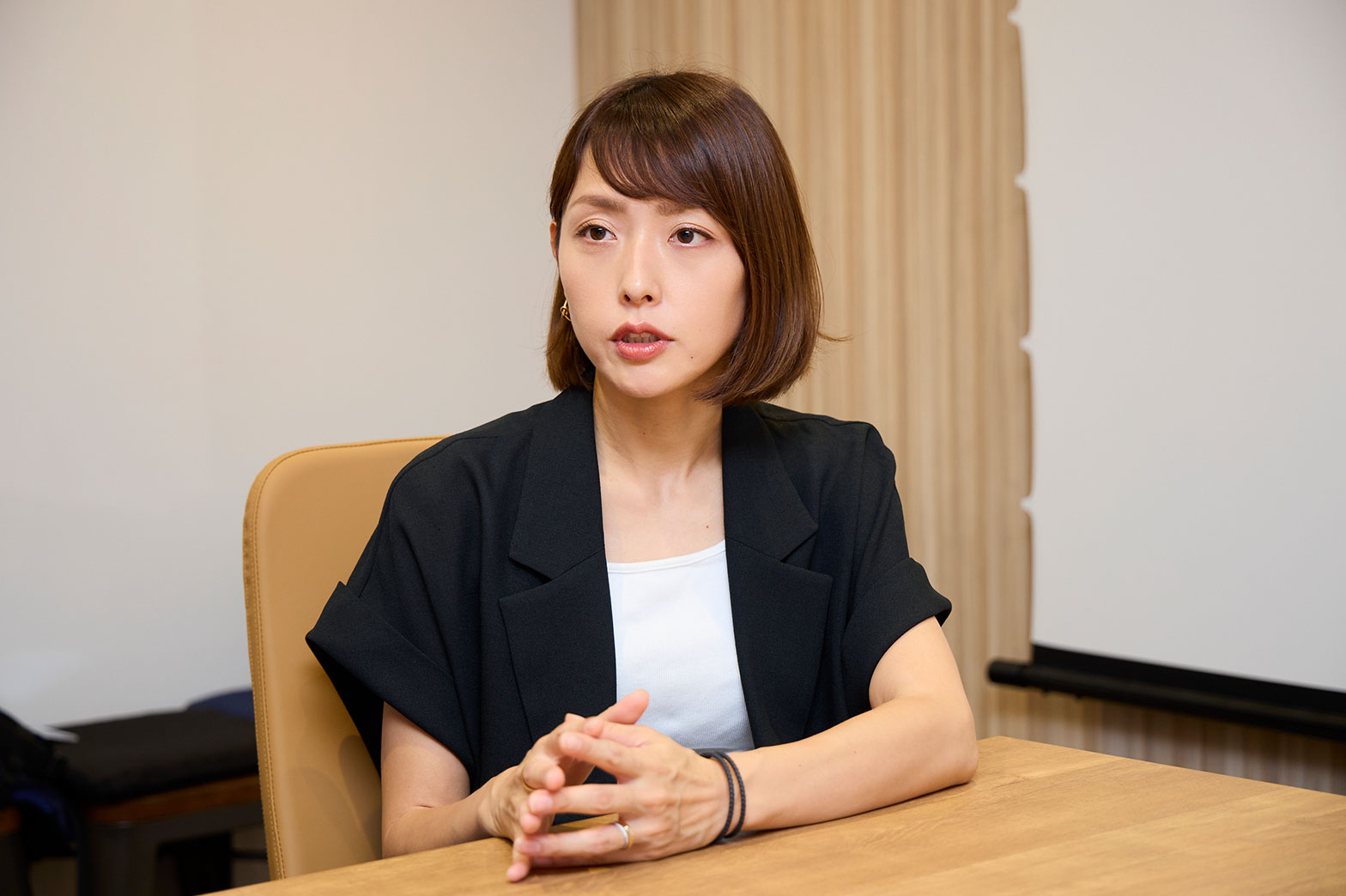
"When I joined the company, the demand for sealants for LCD displays was growing rapidly. In the early 2000s, our interactions were mainly with Korean manufacturers. I've heard stories of development secrets like flying to Seoul with samples, finishing meetings, returning home that night, adjusting the formulation that same day, and bringing them back the next morning. This accumulation of speed and customization has led to the trust we have today."
Development of "Photrex S" began in 2001, and its rapid response capabilities led to its adoption by a South Korean LCD manufacturer. From 2003 onwards, it spread to major display manufacturers worldwide, and by 2013, it had established a position with a global market share of over 70% for UV sealants for LCD displays and over 90% in the smartphone sector.
That technology has also been carried over to its successor, "Photorec B." "It's an adhesive that combines both the precision to apply thinly and the ability to finish softly, which also contributes to the narrowing of display bezels," says Nemoto.
"Narrowing the bezels on smartphones means making the edges of the display thinner. By occupying almost the entire display, videos and photos become more impactful, and the design becomes more refined. With conventional adhesives, it is difficult to design thin edges because they tend to spread when applied, but 'Photorec B' can suppress this spreading while maintaining high adhesive performance. As a result, it has become possible to make the bezels of the display as thin as possible, making the display area appear wider."
The flexibility of "Photorec B" is supported by the balance between acrylic and urethane. In particular, the Fine Chemicals Division has cultivated expertise in acrylics for many years, and this was created by combining that with urethane technology, which excels in flexibility and elongation.
"Its flexibility, which allows it to stretch by more than 900%, is a technology that no one else can match," Nemoto emphasized.
"With each evolution of displays, the required precision only increases. Anticipating what our customers want as far in advance as possible and developing solutions proactively—that's our culture."
And then, into the mature stage.
The evolution of "invisible materials" that underpinned lightness and strength.
In the 2010s, smartphones rapidly reached a period of maturity.
With the spread of Android, organic light-emitting diode (OLED) displays and LTE (4G) communication emerged, resulting in brighter screens and faster communication. OLED displays emit their own light, eliminating the need for a backlight and allowing for thinner and lighter devices. LTE is a communication technology that enables high-speed transmission of videos and photos. The combination of these two technologies transformed smartphones from "information terminals you carry around" to "partners in the palm of your hand."
To support this evolution, material technology is also moving to a new stage. Innovations are progressing in the "invisible materials" that support the structure, such as waterproofing, shock resistance, and weight reduction.

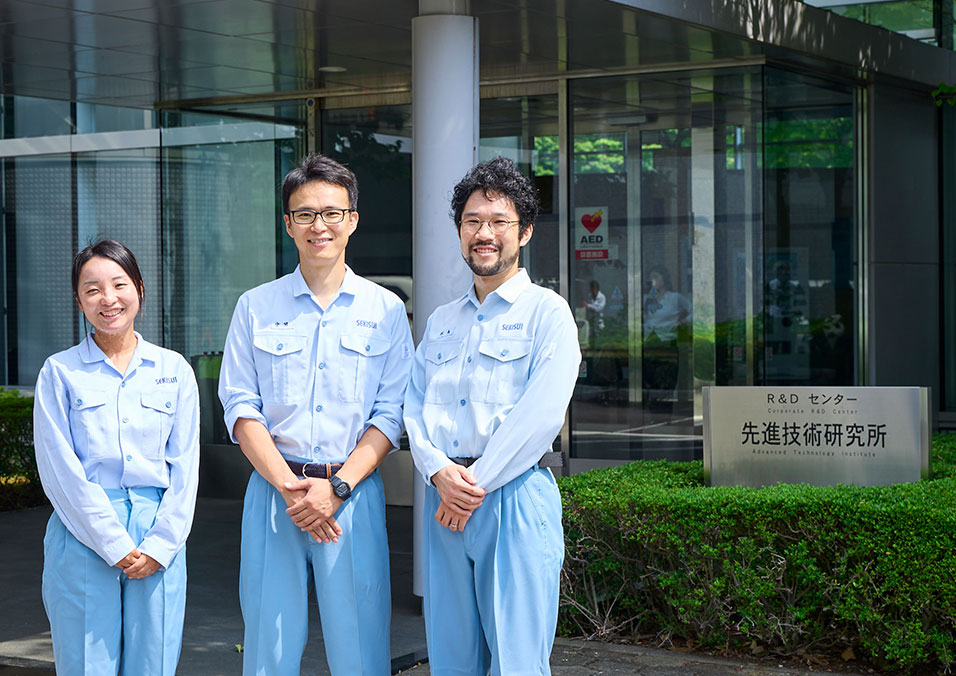
"I'm in charge of the foam material 'XLIM'. Its most distinctive feature is that it's strong despite being thin. It's only 0.04 millimeters thick, thinner than a human hair, yet it can effectively absorb impact," says Xu from the Foam Division.
Foam materials are porous materials with air bubbles dispersed within plastic. They are soft, lightweight, and offer excellent waterproofing and heat insulation. Among them, "XLIM" is a high-performance material that represents the foam division, achieving both the thinnest thickness in the industry and high shock absorption.
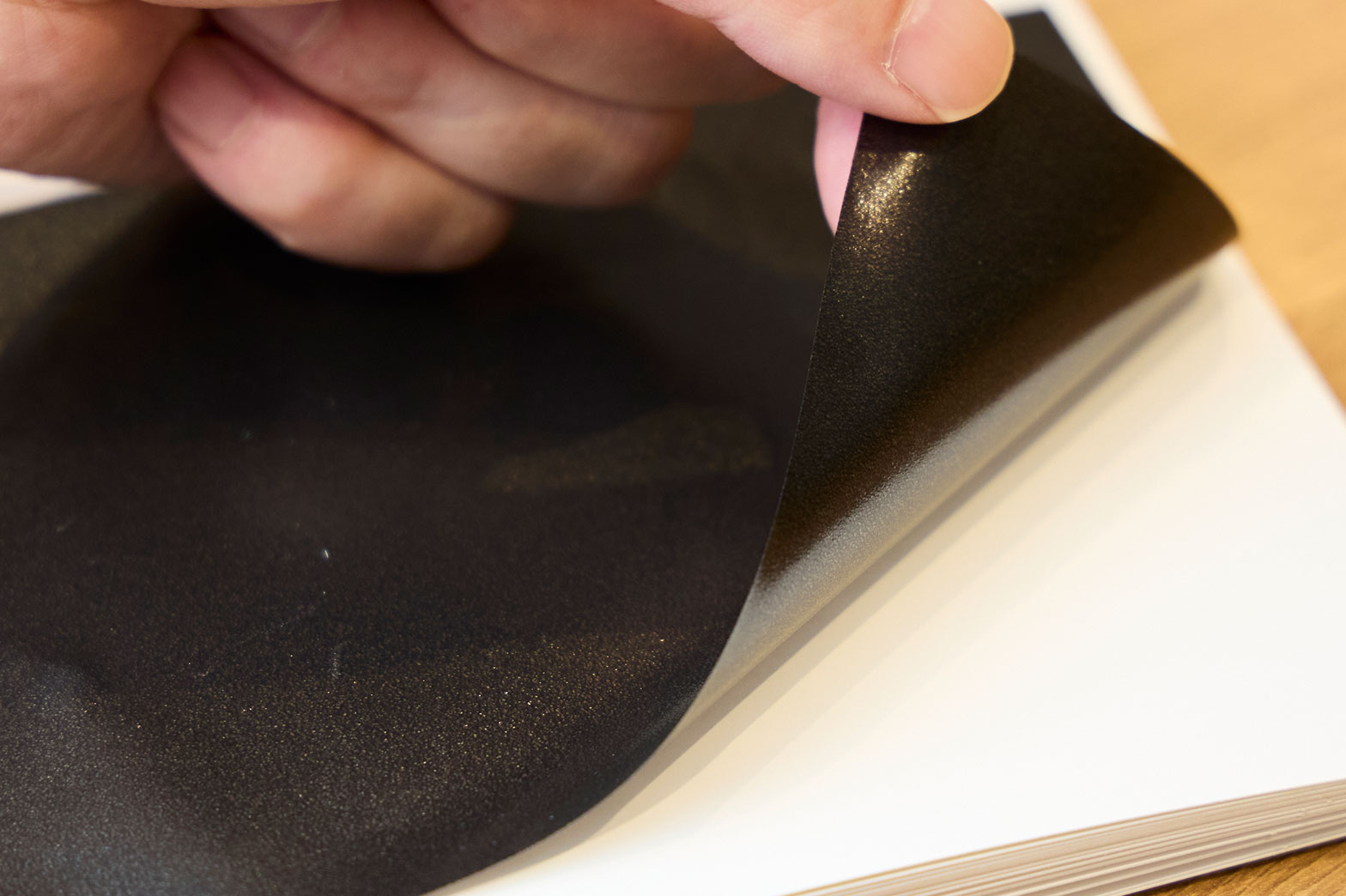
When smartphones first became widespread, a major issue was the fragility of their glass panels. Therefore, foam material was attached to the back of the display to absorb shocks and provide cushioning. Xu then goes on to explain its properties in more detail.
"The use of foam for shock absorption has gradually decreased due to design improvements and material enhancements. However, with the increasing importance of waterproofing, I feel that the role of foam materials is actually becoming stronger. When you hear 'foam material,' you might imagine a soft material that absorbs water. However, the foam we have developed has a closed-cell structure, which is waterproof. In other words, it's a material like a 'sponge that doesn't absorb water.'"
Taking advantage of this property, it can be applied in a donut shape around the connectors and small components of a smartphone to prevent water from entering. It's invisible from the outside, but it definitely works—"XLIM" is the "unsung hero" that protects your smartphone.
The ability to achieve both flexibility and strength, and to foam firmly even at an extremely thin thickness of 0.04 mm, is the result of years of accumulated know-how in material selection and foaming technology.
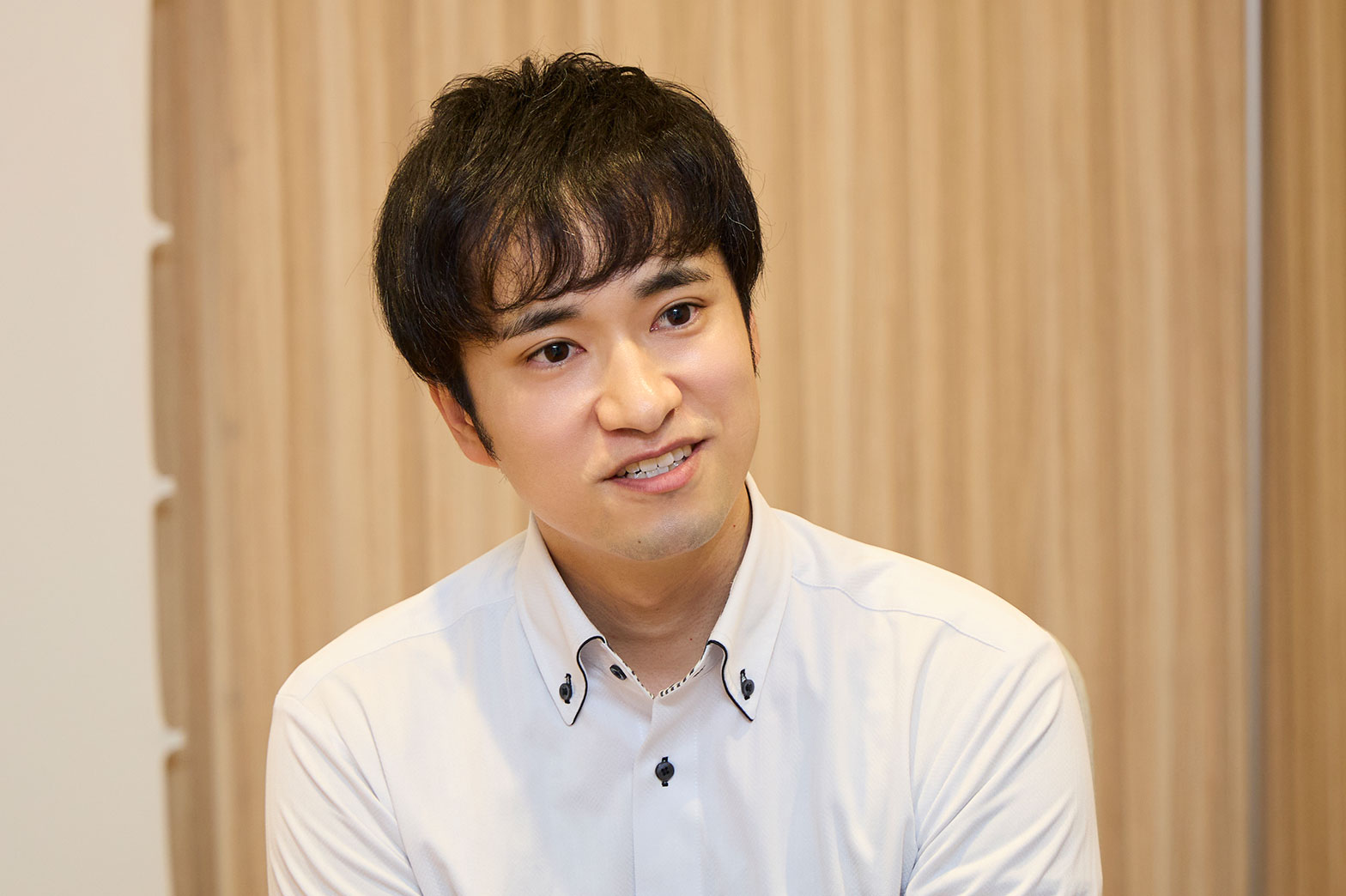
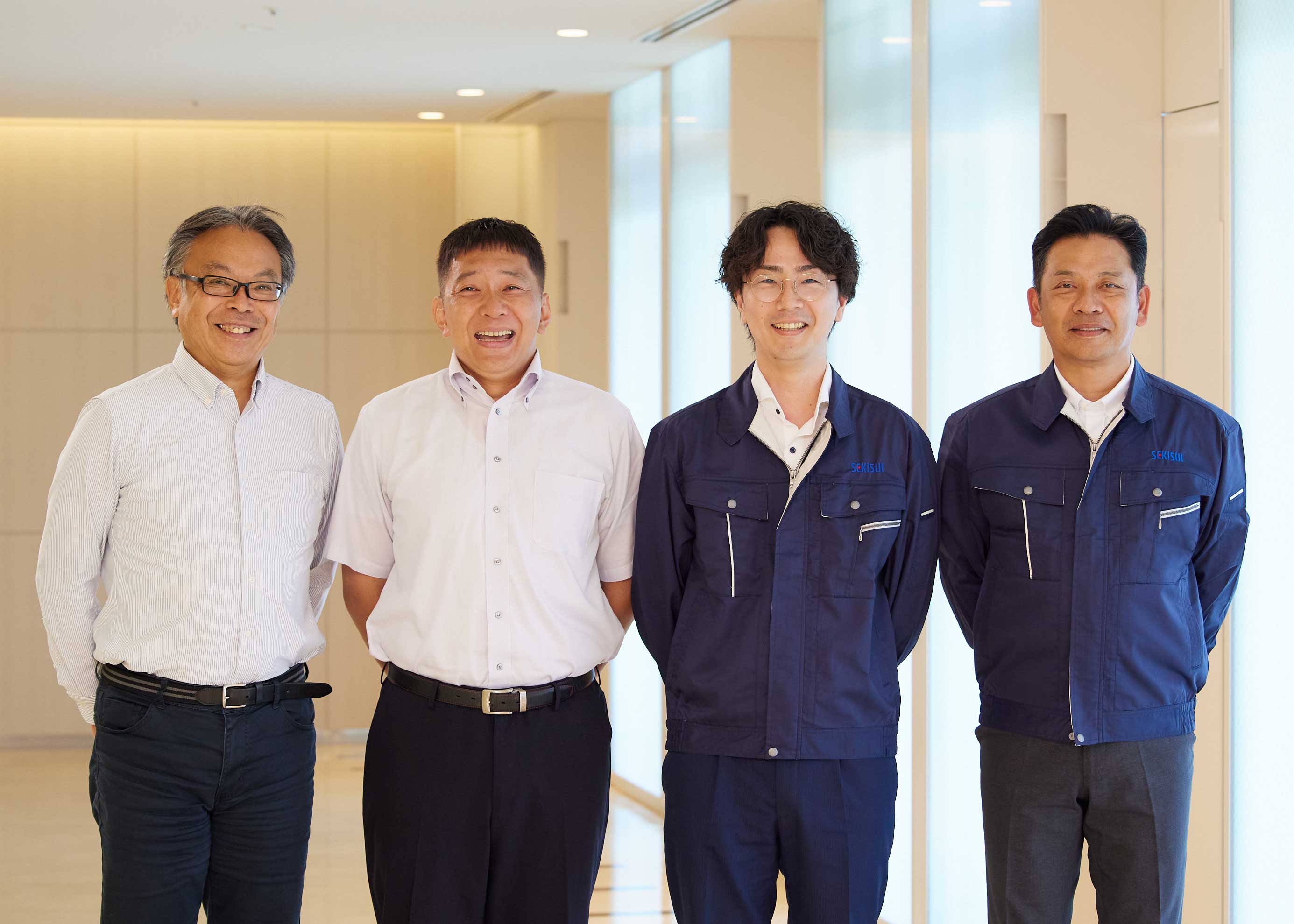
Akifumi Horio, who is involved in tape development at the Taga factory, is also playing a part in the materials that support smartphones.
"Many people might wonder, 'Where is tape used in a smartphone?' But actually, a lot of tape is used in them."
As he said this, Horio picked up the device and began to explain. Transparent double-sided tape to bond the touch panel, high-strength tape to secure the cover glass to the casing, and tape to secure the tiny parts that support the internal circuit board, camera, and sensors—tape is an important material that supports the framework of a smartphone, even though we don't see it in our daily lives.
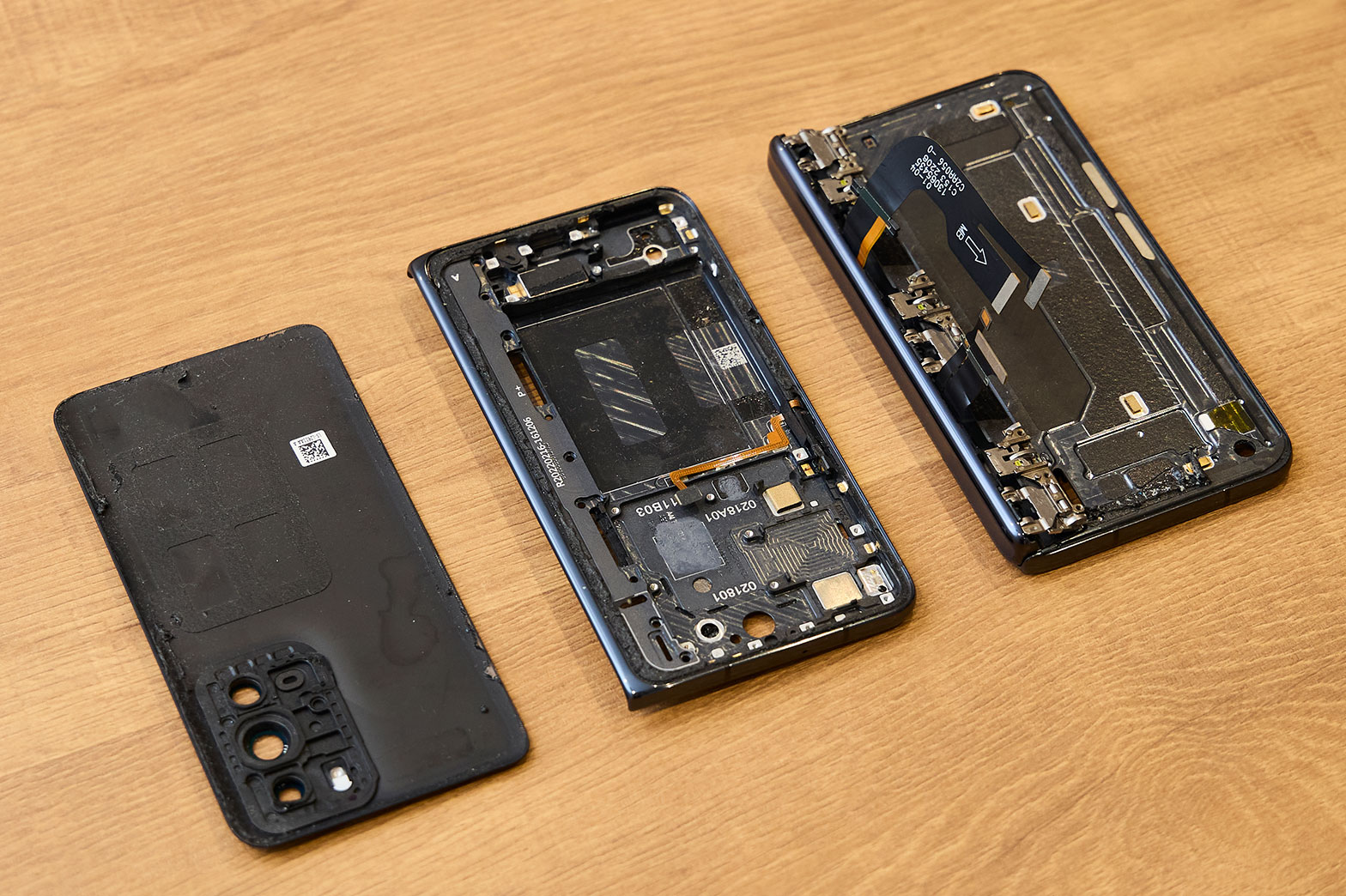
Horio continues, "Narrowing the bezels," which Nemoto mentioned earlier, is also one of the themes they have focused on.
"To make the screen appear as large as possible, we need to make the edges as thin as possible. Within that limited space, we need to ensure that it adheres securely while remaining inconspicuous. The thickness of the tape, the adhesive strength, and the ease of application—everything is put to the test in this development challenge."
Horio mentioned that in recent years they have also been working on developing "removable tapes" that are suitable for reuse and repair.
"The need to be able to reuse panels by reducing their adhesive strength using triggers such as heat or light began to emerge around 2020. We anticipated this and gradually developed the technology, which allowed us to respond quickly to actual adoption requests."
Horio stated that this forward-thinking development approach is "a culture of manufacturing that we have inherited." As the lifecycle of smartphones lengthens and the demand for reuse and repair increases, the tapes that Horio works on are also designed with the entire process in mind, from "sticking" to "peeling." They are no longer just adhesives, but materials that perform a variety of functions, such as fixing, protecting, and regenerating.
A challenge for the future—from foldable to beyond.
Evolving smartphones are now changing their very "form." Foldable models with screens that can be folded, rollable displays that can be rolled up—as the freedom of a device expands, the requirements for materials also become more sophisticated.
"When you have more moving parts, like in a foldable device, you need a more flexible and high-precision adhesive. Our 'Photrex B' is a material that has evolved precisely for that purpose," Nemoto says, looking ahead to the future.
In an era where the shape of devices themselves is changing, sealants that can be precisely applied to complex designs such as narrow bezels and curved surfaces will likely become even more important in the future.
The foam division is working on developing new products that aim to achieve both flexibility and strength, two seemingly contradictory properties. Xu says, "High-frequency compatibility, with an eye on the 5G/6G era, is also an important theme."
"In high-frequency communications, the performance depends on how well the material transmits radio waves. Foam materials, which contain a lot of air, have excellent radio wave transmission properties and can contribute to improving communication characteristics. This is precisely an area where the properties of foam materials can be utilized."
Furthermore, new challenges are underway from a sustainability perspective. These include developing products that reduce environmental impact, such as reusable and repairable adhesives and plant-derived biotapes.
"In addition to the 'stick, peel, and use again' functional design that we mentioned for reuse purposes, we are also working on utilizing bio-based materials that reduce CO2 emissions by reviewing the raw materials," Horio explains.
Even as display shapes change and communication technologies evolve, materials will continue to play a vital role throughout devices, expanding the possibilities of next-generation devices.
"Anticipating client needs and proceeding with development with ample time to spare—that will be the competitive advantage of the next generation," Horio says, emphasizing the importance of "continuously anticipating future trends" in a rapidly changing market.
"We have built relationships with our key clients where we share each other's development roadmaps. We propose our development themes with a view to technological trends two to three years into the future," Nemoto continues.
Xu then says, "Meeting with customers directly and listening to them is the starting point for everything. We have always strived to create presentations that are easy to understand, such as showing performance numerically using pressure sensors."
Going beyond simply creating materials, we connect people, technology, and society. Smartphones, which have emerged from the palm of your hand, will continue to change even more freely in form and existence.
The members are looking ahead to the era that will unfold from this device and are grappling with the question, "How will we support the next way of life?" Material technology quietly and surely shapes the future, behind the scenes.