Transforming carbon dioxide into a resource: CCU opens the way to mitigating global warming and the future of resource recycling.
公開日:
What thoughts and stories were behind its development?
How will that connect to the people and societies living on Earth?
"SEKISUI | Connect with" is a future-creating media platform that connects you with Sekisui Chemical.
"The Earth has entered an era of boiling,"—everyone is now feeling the impact of the warning sounded by UN Secretary-General António Guterres. In Japan, record-breaking heatwaves continue year after year, and climate change has become a very real and tangible crisis.
As efforts to reduce CO2 emissions progress across all industries, attention is being drawn to CCU (Carbon Capture and Utilization) technology, which takes a counterintuitive approach of not only "reducing emissions" but also "utilizing them as a resource." Sekisui Chemical is tackling this challenge head-on, despite the high technical hurdles and costs involved, which some considered unrealistic.
How can we implement this sustainable business model in society and create value? At Sekisui Chemical's R&D Center, researchers are working to develop and demonstrate CCU technology, taking steps toward practical application in collaboration with internal and external partners. Let's listen to the words of three individuals looking to the future at the R&D base in Tsukuba City.
- A new approach to combating global warming: CCU technology that transforms CO2 into a "resource"
- The core of the technology: CO2 conversion achieved through catalysts and processes
- Beyond the lab, into society. Advancing demonstrations and expanding the circle of collaboration.
- Is CO2 an enemy or a resource? Technology and will to change the future.
A new approach to combating global warming: CCU technology that transforms CO2 into a "resource"
Until now, CO2 has been considered a symbol of environmental burden. While various approaches to reducing CO2 emissions are being explored, such as introducing renewable energy sources that do not emit CO2 and "CCS (Carbon Capture and Storage)" which separates and captures CO2 and stores it underground, there is a growing movement to view CO2 as a new resource. That resource is CCU.
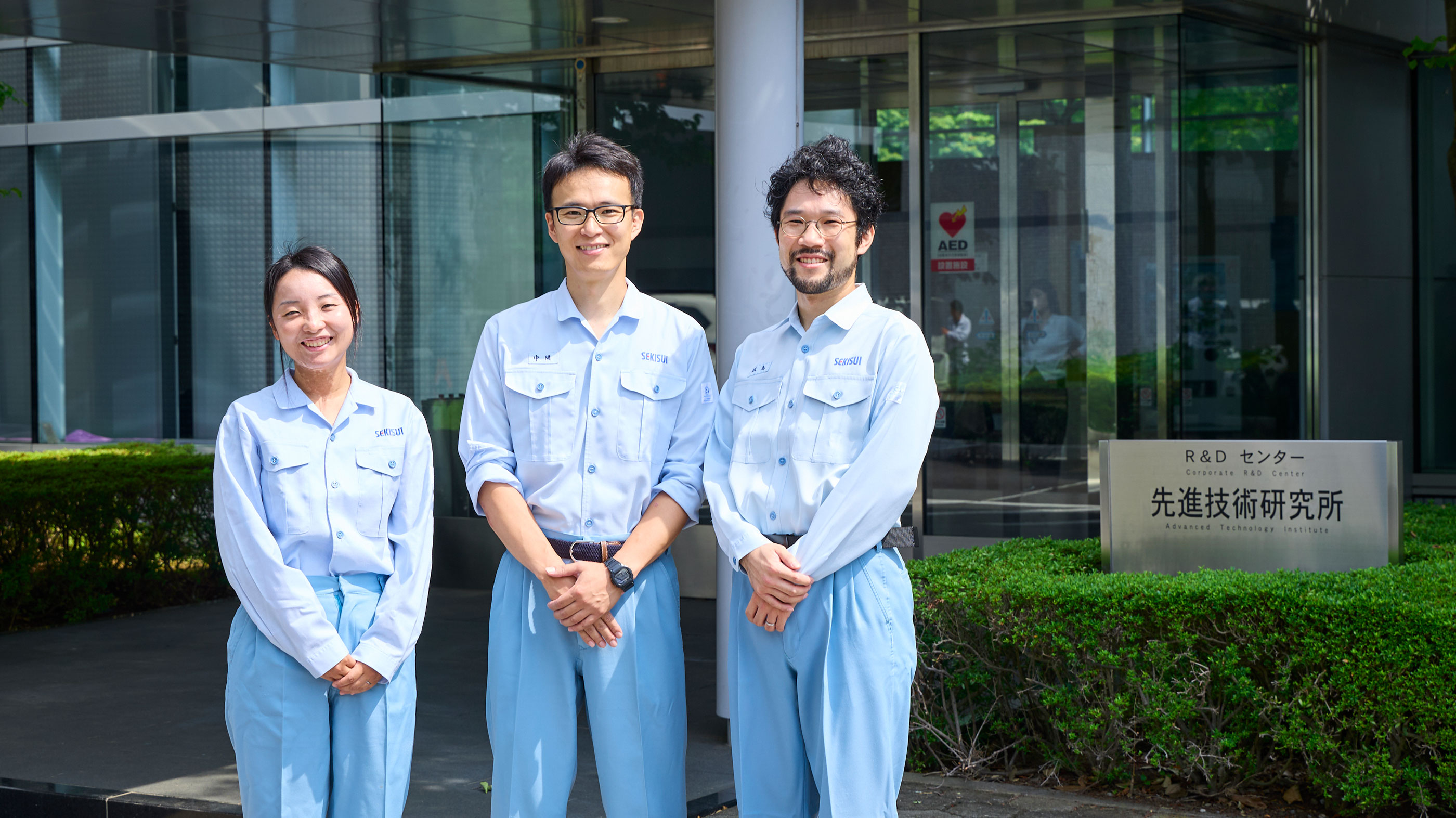
Located in a lush, green corner of Tsukuba City is Sekisui Chemical's R&D Center, the Advanced Technology Research Institute. Here, research is underway on an innovative technology that converts recovered CO2 into CO (carbon monoxide) with high yield. Tomoki Nakama, who is leading the project, explains the entire mechanism.
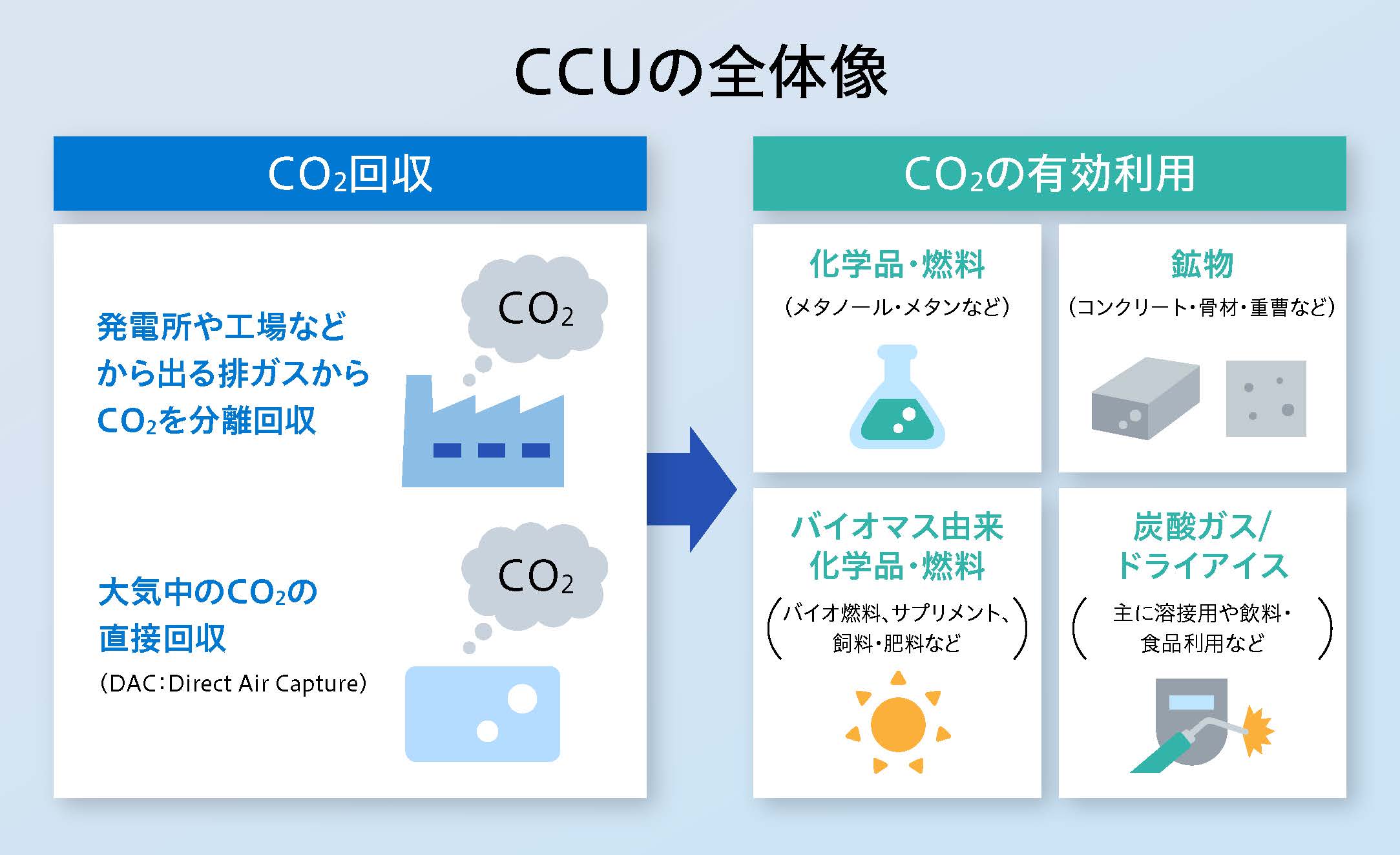
What is CCU technology?
This technology involves capturing carbon dioxide (CO2) from emission sources such as factories or from the atmosphere, and utilizing it as a resource. While CCS (Carbon Capture and Storage) is a technology that stores (accumulates) the captured CO2 underground or on the seabed without reusing it, CCU (Carbon Capture and Utilization) makes it possible to effectively utilize the captured CO2 and recycle it as a resource.
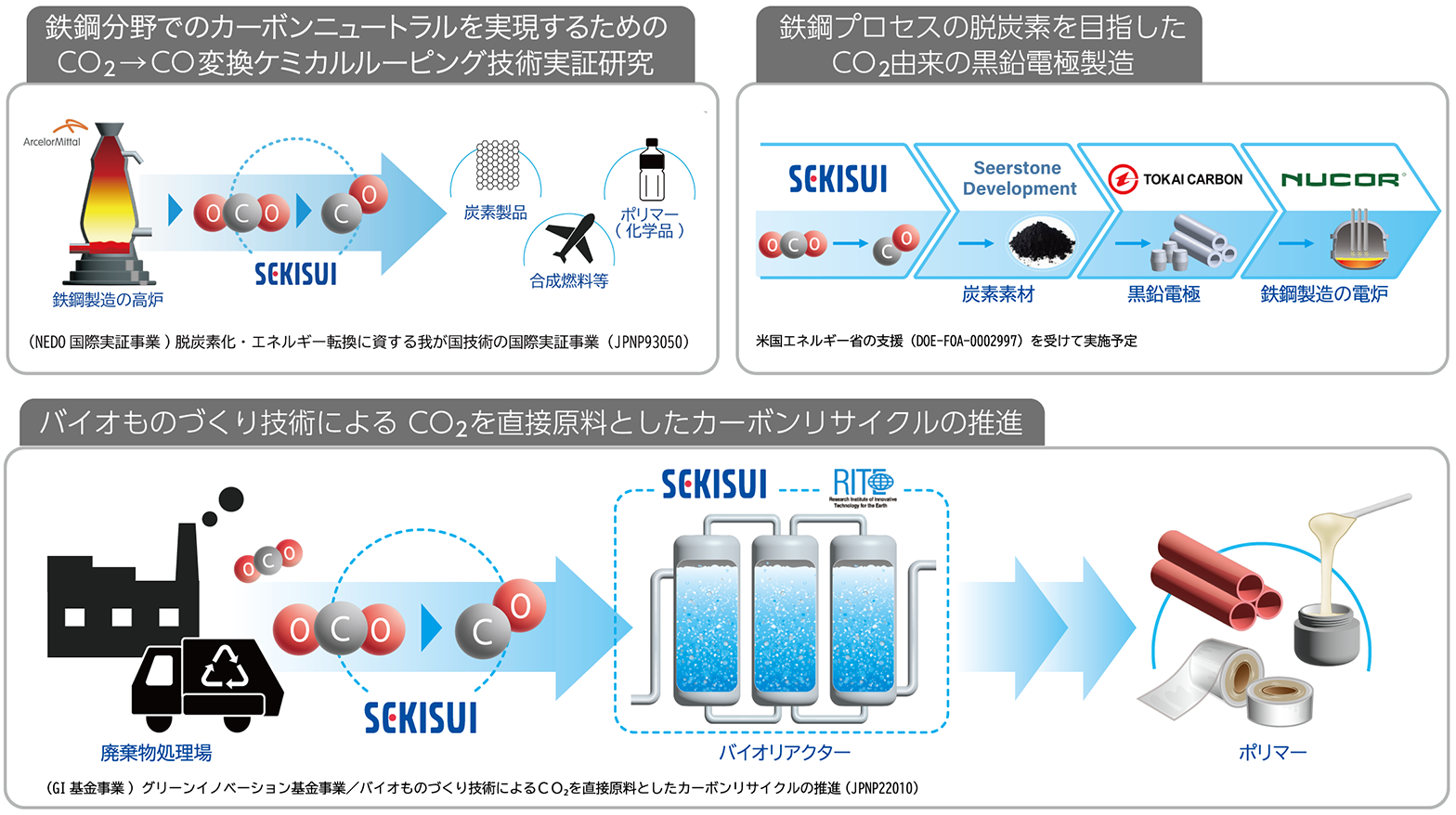
Sekisui Chemical's efforts in CCU technology development
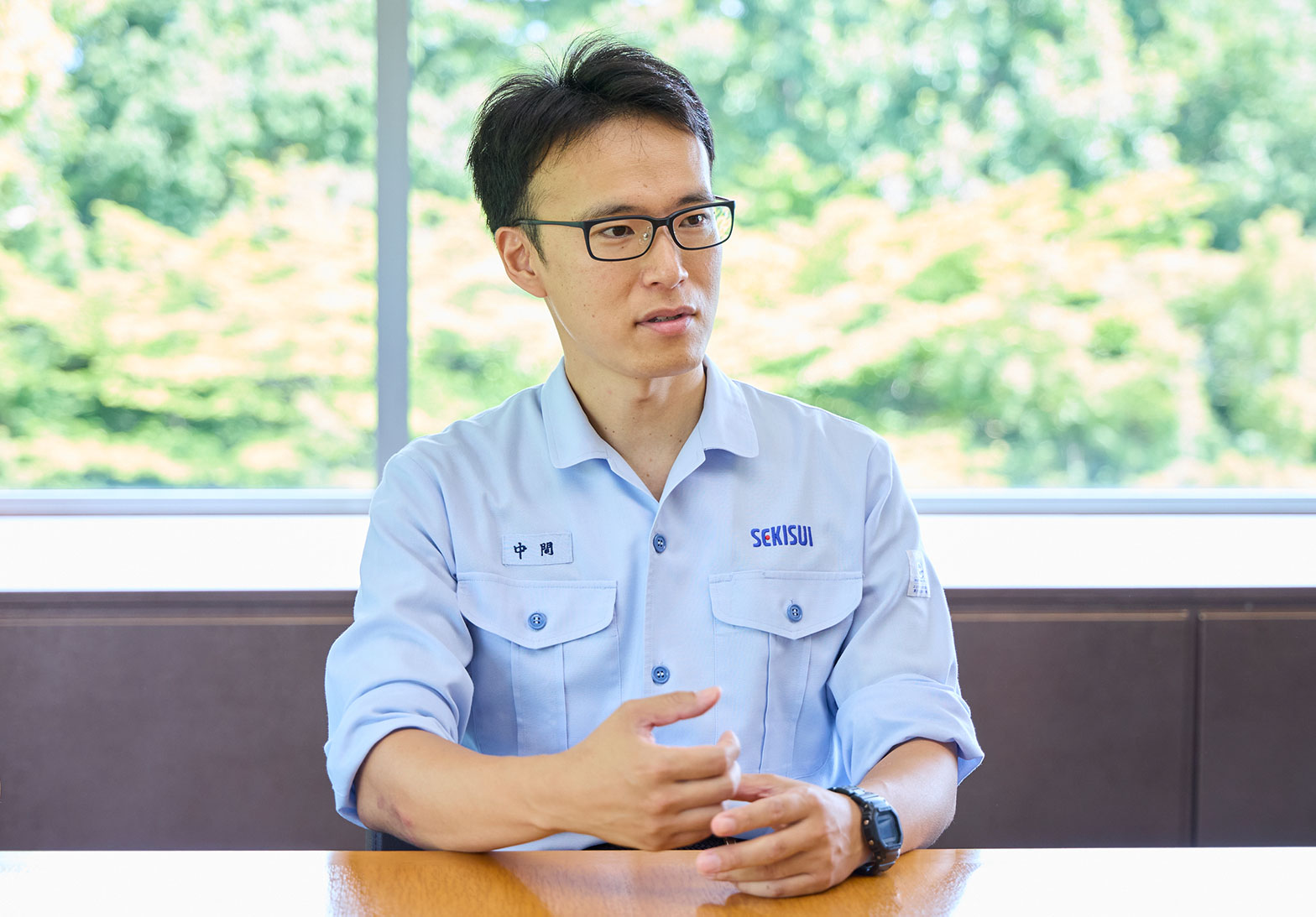
"CO2 is an extremely stable molecule, making it technically very difficult to convert it into other target substances with high yield. It's sometimes said that achieving carbon recycling through a CO2 utilization system is like traveling back in time in a time machine. Sekisui Chemical has dramatically improved reaction yields by redesigning the reaction system itself. The combined efforts of experts from various fields, leveraging the knowledge cultivated in the chemical sector, have propelled development forward at an astonishing speed."
As a chemical manufacturer, we have supported the convenience of society, but we also acknowledge that we have placed a certain burden on the environment. That is precisely why we have a responsibility to address this challenge through the power of chemistry.
While options like renewable energy and carbon capture and storage (CCS) are important, we aim to go a step further. By utilizing captured CO2 as a resource, we can add new value and give it back to society. This idea is the starting point of our technological development and we believe it is our mission as people working in the chemical industry."
The core of the technology: CO2 conversion achieved through catalysts and processes
To utilize CO2 as a "resource," the question is not simply whether it can be converted, but how to convert CO2 into the desired substance with as little energy as possible. This is because energy is limited, and depending on the energy source used, the conversion of CO2 may release a huge amount of CO2, potentially increasing the overall CO2 level. When considering social implementation, a technical challenge arises: achieving both high reaction yield and low energy consumption.
Converting highly stable CO2 into the desired product with a small amount of energy—how to reconcile these seemingly contradictory conditions—has been a major factor in determining the success or failure of CO2 conversion technology.
Many researchers have utilized the power of catalysts to convert highly stable CO2 with minimal energy. Sekisui Chemical focused on the "chemical looping process" to maximize the power of catalysts. By applying this process, which allows two different reactions to be carried out in sequence, they succeeded in first activating the catalyst with hydrogen to maximize its capacity, and then converting CO2 into CO without using enormous amounts of energy by acting on the catalyst with CO2. In addition to this technology, the lab has been working to efficiently verify the optimal catalyst and reaction conditions for this process in order to achieve a high reaction yield. Yu Nishiyama reflects on the process of trial and error.
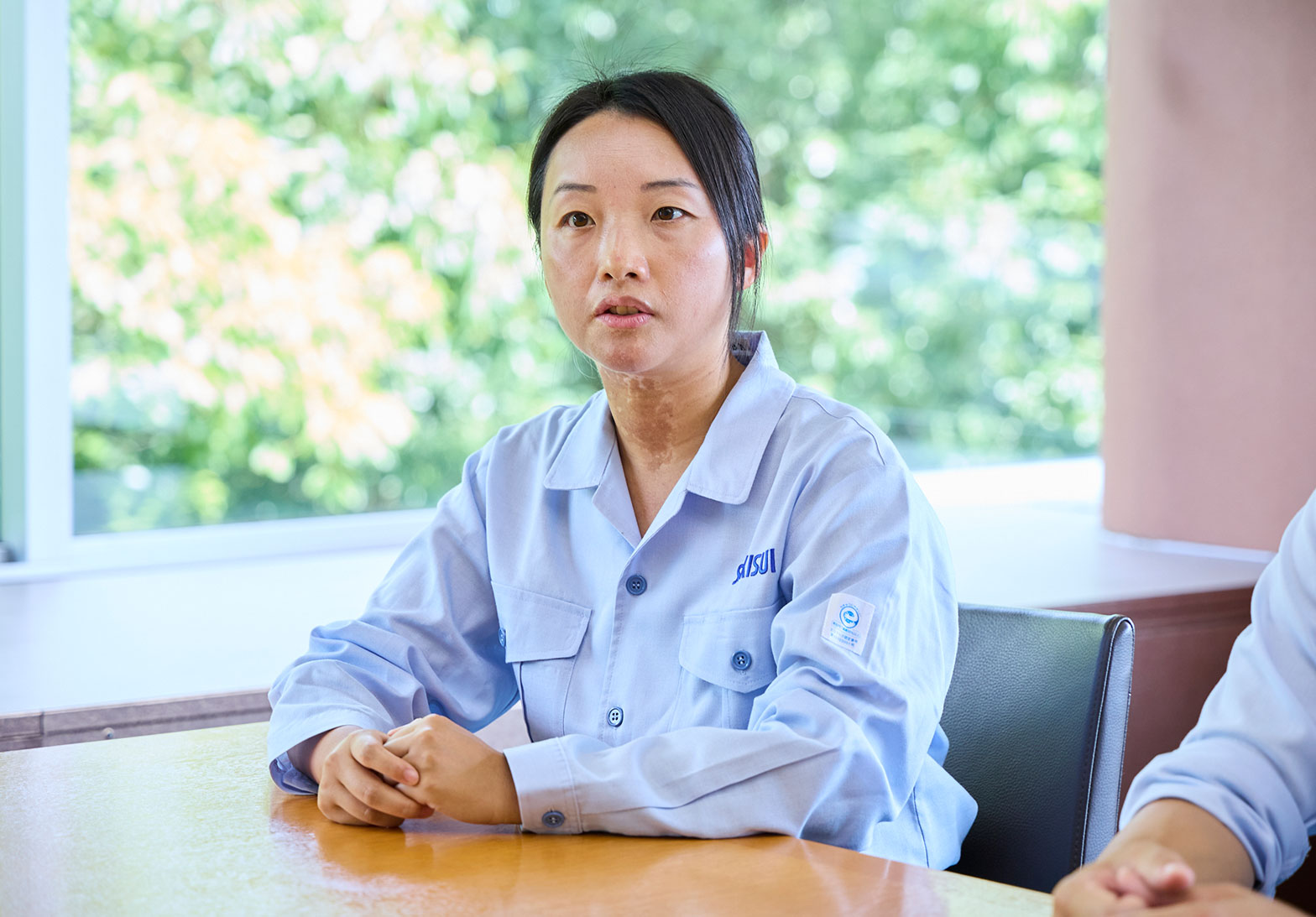
"One of the project's distinguishing features is the diversification of the metallic elements used. We needed to combine multiple elements from the various metals listed in the periodic table and derive the optimal combination. Since there are thousands, even tens of thousands, of possible combinations, it was crucial to efficiently find the best solution from a vast number of matching possibilities."
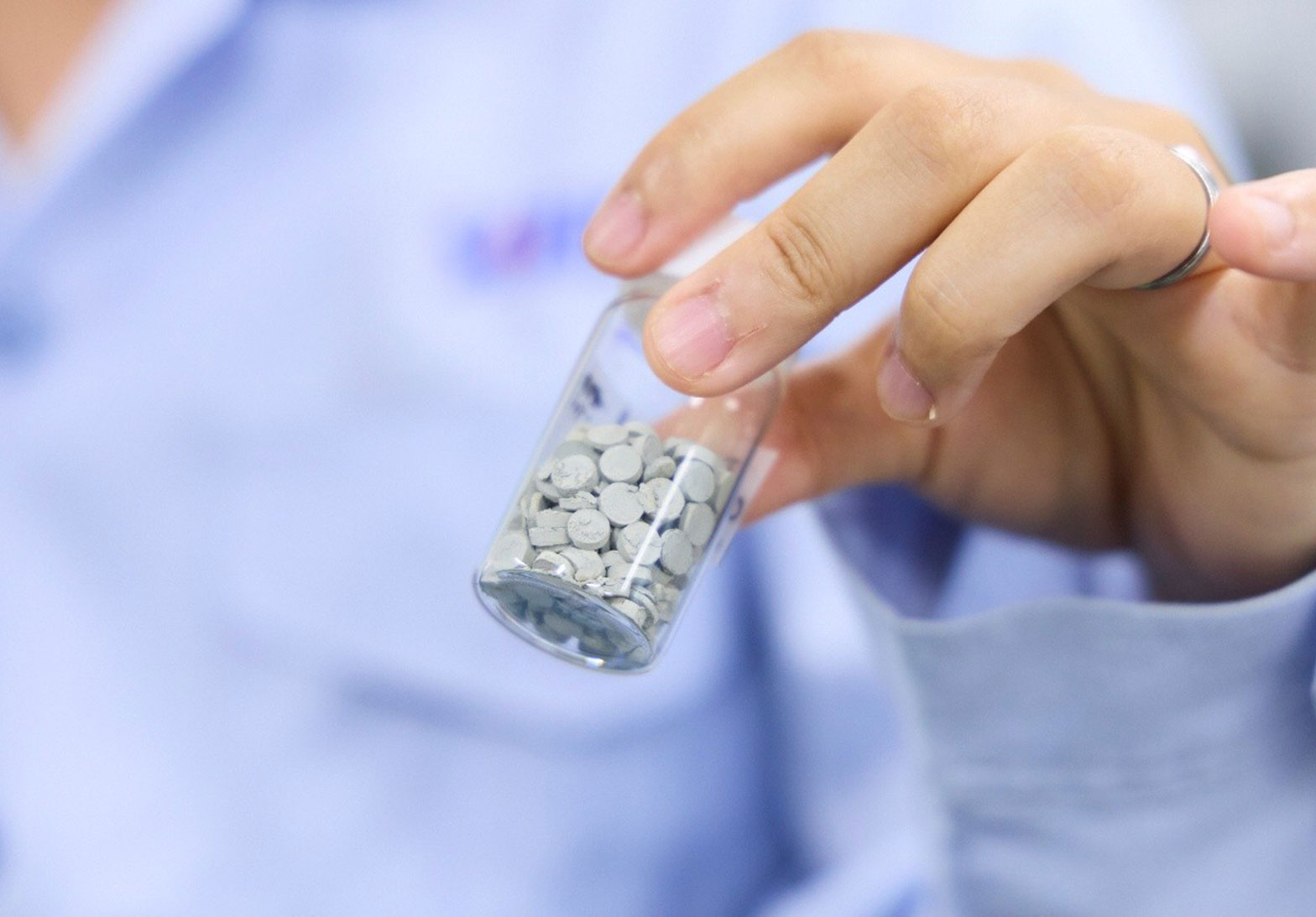
The key to quickly finding the optimal solution from a vast number of combinations was the introduction of "materials informatics." Working in collaboration with the Information Science Promotion Center, an organization within the same Advanced Technology Research Institute, this advanced method utilizes machine learning and data analysis to efficiently and highly advance catalyst development, dramatically speeding up the combination analysis process that previously required an enormous amount of time.
Beyond the introduction of advanced methods, the team structure, in which members with diverse expertise collaborate to solve problems, has also contributed significantly to the success. Sekisui Chemical's core technologies are "chemical looping process" and "catalysis." Young members took the lead in establishing a process model that maximizes the potential of this combination, refining each other's knowledge and ideas, and achieving high reaction yields. This clears the objective of converting CO2 to CO with high yield while using minimal energy, presenting a realistic process model. Nishiyama describes his satisfaction with the results as follows:
"In our process, the reaction yield of converting CO2 to CO is a crucial indicator. While it is generally considered to be around 50-60%, we have achieved a level exceeding 90%. Moreover, we have succeeded using cheaper and more sustainable materials, without using expensive precious metals such as palladium or platinum. This is a technology that offers a significant advantage in industrial applications."
While the technology is being refined, its practical implementation in society is steadily approaching. Keisuke Iijima explains its significance as follows:
"CO can be used as an intermediate raw material, so to speak, to produce methanol, synthetic fuels, and various chemicals. Viewing CO2 not merely as an emission, but as a resource that can be flexibly utilized—this perspective is at the core of our challenge."
As Iijima stated, the generated CO will be utilized in sectors supporting social infrastructure such as steel, petrochemicals, plastics, and synthetic fuels. By supplying CO derived from CO2 using the technology developed by Sekisui Chemical, CO2 can be used as a resource in various fields. In addition, the ability to expand into a diverse range of products according to market needs is a major strength of CCU, which targets intermediate raw materials such as CO. Sekisui Chemical's CCU technology is expected to make a significant contribution to the realization of a sustainable society as one of the core elements that constitute the circular economy.
Beyond the lab, into society. Advancing demonstrations and expanding the circle of collaboration.
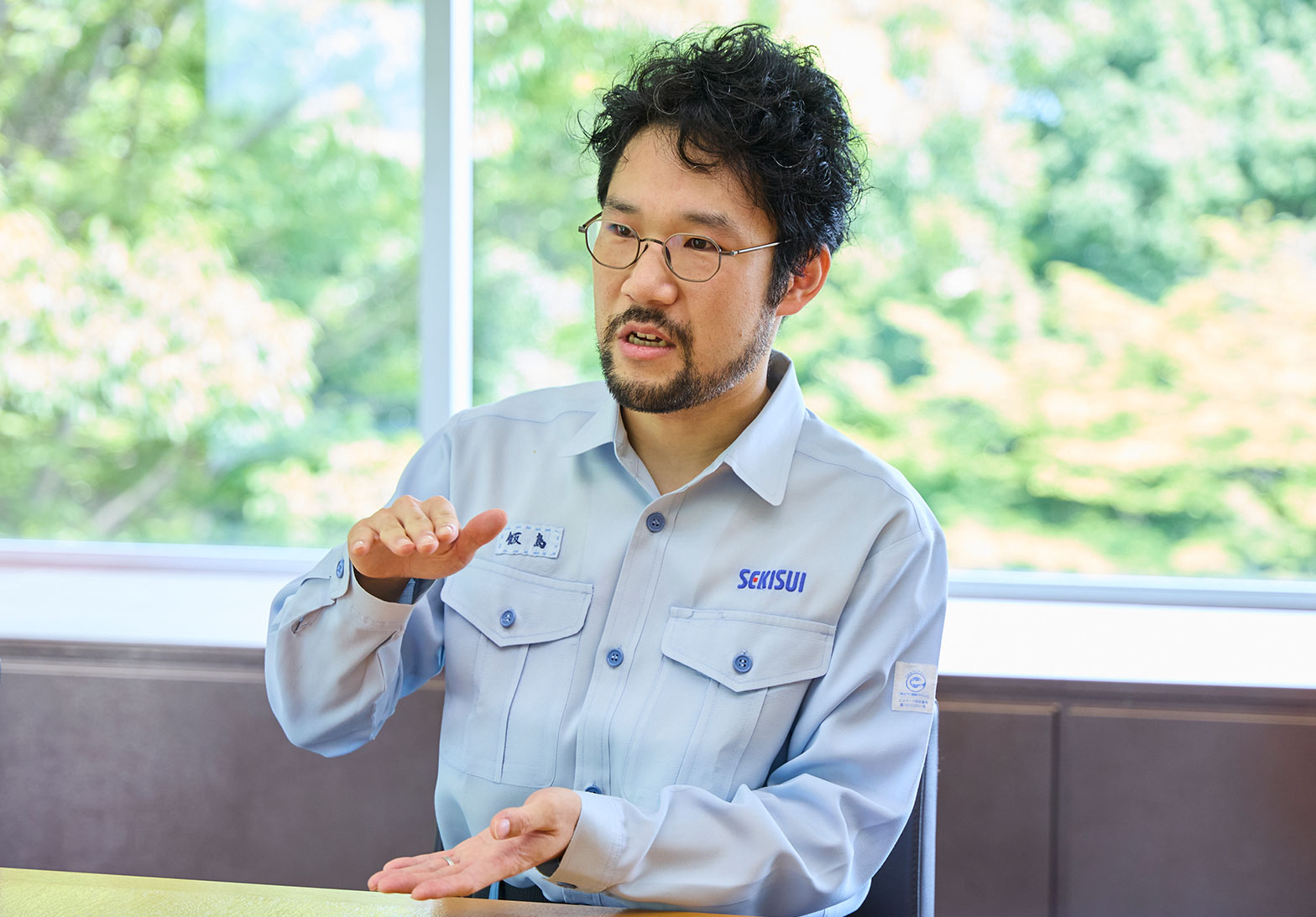
Based on its development technology, Sekisui Chemical's CCU is now moving into the demonstration phase. Using Sekisui Chemical's technology as a core technology, the company aims to implement the social use of CO2 resources in collaboration with companies that emit CO2 and companies that utilize CO2 as a raw material. Globally, a collaboration with the largest steel company has begun. Iijima, who is in charge of the demonstration part, talks about how it started.
"The strengths of CCU technology were clear, but when considering potential applications, we wanted an industry where CO could be reused. Among those, the steel industry, which has very high CO2 emissions and can reuse CO within the process, seemed ideal. When we actually started approaching them, ArcelorMittal, Europe's largest steel manufacturer, showed strong interest in our technology."
The development of a circular model that recovers and converts CO2 emitted in the steelmaking process and reuses it within the steelmaking process is expected to have ripple effects on the heavy industry sector. Iijima visited a demonstration plant in Spain and reflected on his impressions of witnessing firsthand how Sekisui Chemical's technology connects with other companies' processes.
"Watching the demonstration phase unfold has a different kind of reality compared to success in the lab. The moment you stand on-site, the phrase 'social implementation' truly becomes a reality. I felt the tension and the thrill of being an engineer firsthand."
Nakama also summarized, "The fact that we received a technical evaluation in Europe, where environmental regulations and technical standards are strict, was of great significance."
"The fact that our technology was recognized locally significantly boosted the morale of the entire team. Now, we are collaborating not only with the steel industry but also with various other industries, such as carbon manufacturers and oil companies. In the future, we aim to deploy our technology to all industries that emit CO2 and to turn any CO2, regardless of its origin, into a resource."
In Japan, progress towards social implementation is steadily underway. For example, in collaboration with Tokai Carbon Co., Ltd., a demonstration study is underway to convert CO2-derived CO into solid carbon. The carbon obtained is expected to be used in graphite electrodes for steelmaking and materials for lithium-ion batteries. Both are essential to our lives, and both companies are working together with high aspirations to realize a sustainable society. Furthermore, at the Hitachinaka-Tokai Clean Center, a new initiative is underway to convert CO2 recovered from the exhaust gas of the waste incineration plant into CO and manufacture high-performance chemicals using bio-manufacturing technology that utilizes microorganisms.
Collaboration with these locally-based emission sources connects domestic infrastructure with CCU technology, further increasing the feasibility of its social implementation.
The perspective of viewing CO2 as a resource is no longer merely a means of decarbonization. As an advanced technology with the potential to drive a transformation of the very structure of society, a network of co-creation through collaboration between industry, government, and academia is expanding both domestically and internationally.
Looking overseas, the accumulated research is steadily yielding results, progressing from demonstration to further scaling up. In a joint project with ArcelorMittal, a major European steel manufacturer, discussions are underway to expand from a 1 kg/day scale test to a 10 tons scale.
"Commercialization requires a processing capacity of 1,000 tons per day. The hurdles to implementation are still high, but we will continue our research and development towards that goal," Nakama said, outlining his outlook. He added, "We are by no means satisfied with the current reaction yield of 90%. We want to continue the challenge of getting as close as possible to 95%, and then 100%."
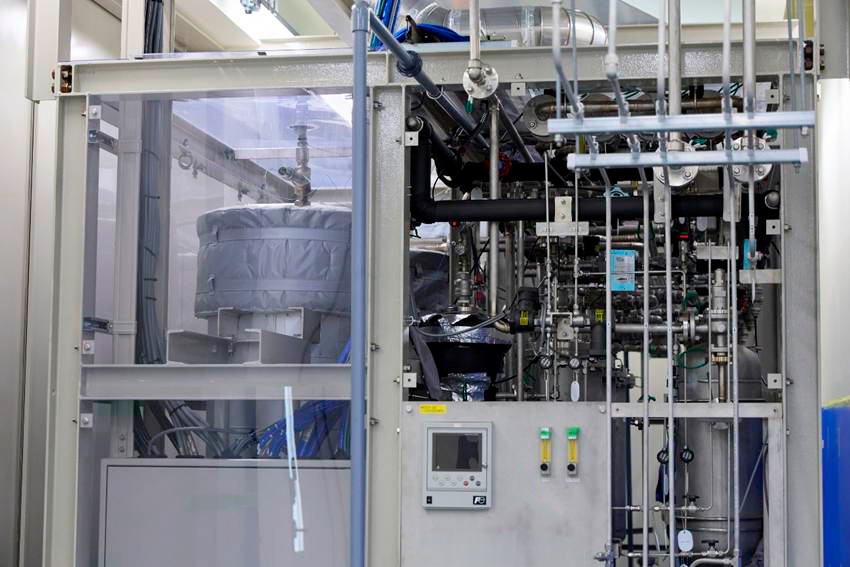
Furthermore, collaboration with academia is essential for deepening the technology and broadening its applications. In 2025, together with the University of Tokyo and Tokyo University of Science, they were selected for NEDO's (New Energy and Industrial Technology Development Organization) carbon recycling demonstration research project. A new challenge to manufacture conductive carbon materials using CO2 emitted from thermal power plants as a raw material without using hydrogen is underway, integrating the knowledge of industry and academia.
The conversion process involves applying Sekisui Chemical's chemical looping technology to the University of Tokyo's microwave heating technology to convert CO2 to CO without using hydrogen, and the conversion to carbon materials utilizes the plasma catalyst technology of Tokyo University of Science. Nishiyama spoke about the broader applications that this collaboration will bring.
"Collaboration with universities is further expanding the possibilities of our technology. And by making these research results visible through demonstrations, it becomes easier to build trust with corporate partners. We are currently working with chemical manufacturers and oil companies to launch new CO2 resource utilization projects."
Is CO2 an enemy or a resource? Technology and will to change the future.
As demonstrations and applications progress, the significance of CCU technology is expanding beyond mere "emission control." Converting CO2 into a resource is also a challenge to build a new industrial foundation that is relevant to energy issues and materials development. Nishiyama focuses on the "potential of this technology as a material."
"I see great significance in the fact that CO2 conversion technology can lead to materials development. For resource-constrained countries like Japan, I believe it can become a new area where we can gain international competitiveness. In the future, it's not unrealistic to imagine creating materials from CO2 that can replace petroleum."
Beyond simply generating CO2, Iijima also focuses on the value that lies beyond that, a value that reaches society—a vision for how technology can shape our lives.
"Our core mission is to develop technologies that reduce CO2 emissions and further utilize them as resources. However, we are always conscious of how to elevate that into social value. It is important to create a social system where the sustainability of products is made visible, and consumers feel that choosing environmentally friendly products is a rational choice. How do we depict the connection between society and technology? We want to cherish our attitude of continuously questioning the social value of environmental contributions."
Nakama responded to that by saying:
"The starting point for this technology should be a clear will—a vision of the kind of society we want to create and realize. We are promoting this project not merely as a matter of technical right or wrong, but as a declaration of our intentions regarding the future."
The team's mission lies in Sekisui Chemical's vision of full-scale implementation in the 2030s. 2025-2030 is a crucial phase for establishing the foundational technologies necessary for that. Nakama reflects on their progress so far as follows.
"The catalyst and process technology teams, while respecting each other's expertise, sometimes clashed in their opinions, but always sought the optimal solution towards a common goal. I am truly proud of the efforts of the teams that have raised the technological level to this point. We are determined to deliver this technology to society and share the sense of accomplishment that comes from having 'seen it.' That desire is our driving force."
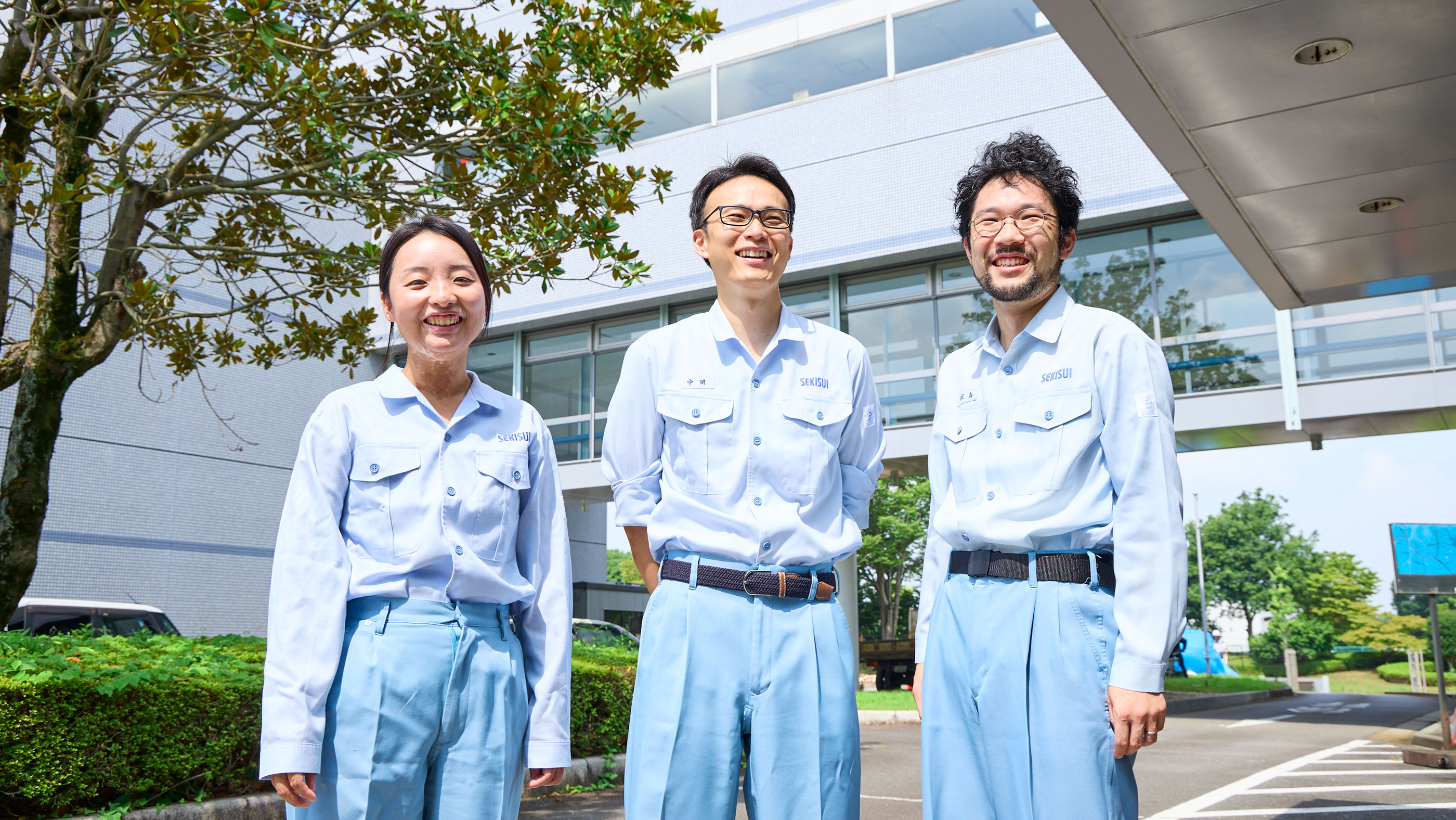
While we have previously collaborated with corporate organizations such as the Corporate Strategy Department, the ESG Management Promotion Department, and the President's Office Policy Research Group on commercialization strategies, a new organization responsible for commercialization strategies will be established within the Advanced Technology Research Institute from fiscal year 2025, accelerating preparations for social implementation.
"How we confront CO2 and what kind of future we envision—our individual beliefs are the driving force."
With each member holding their own ideals in mind, the research team, armed with technology and determination, continues to strive to realize a truly circular society that transforms CO2 into a "resource."


Related Links
- Sekisui Chemical and Velocys begin strategic partnership to build manufacturing technology for CO2-derived synthetic fuel (e-SAF).
- Selected for NEDO project: "Development of carbon recycling and next-generation thermal power generation technologies / Technology development at CO2 utilization bases / Technology development for CO2 utilization at research bases"
- An agreement has been signed to designate the Hitachinaka-Tokai Clean Center as the demonstration site for the NEDO Green Innovation Fund project, "Commercialization of high value-added chemical products using CO2 as a raw material through bio-manufacturing technology."
- We have begun a feasibility study to investigate the requirements for scaling up CO2 → CO conversion chemical looping technology and its application to CCUs.