Acrylic is for gymnasts, epoxy is for bodybuilders? Let's bring chemical technology closer to us.
公開日:
What thoughts and stories were behind its development?
How will that connect to the people and societies living on Earth?
"SEKISUI | Connect with" is a future-creating media platform that connects you with Sekisui Chemical.
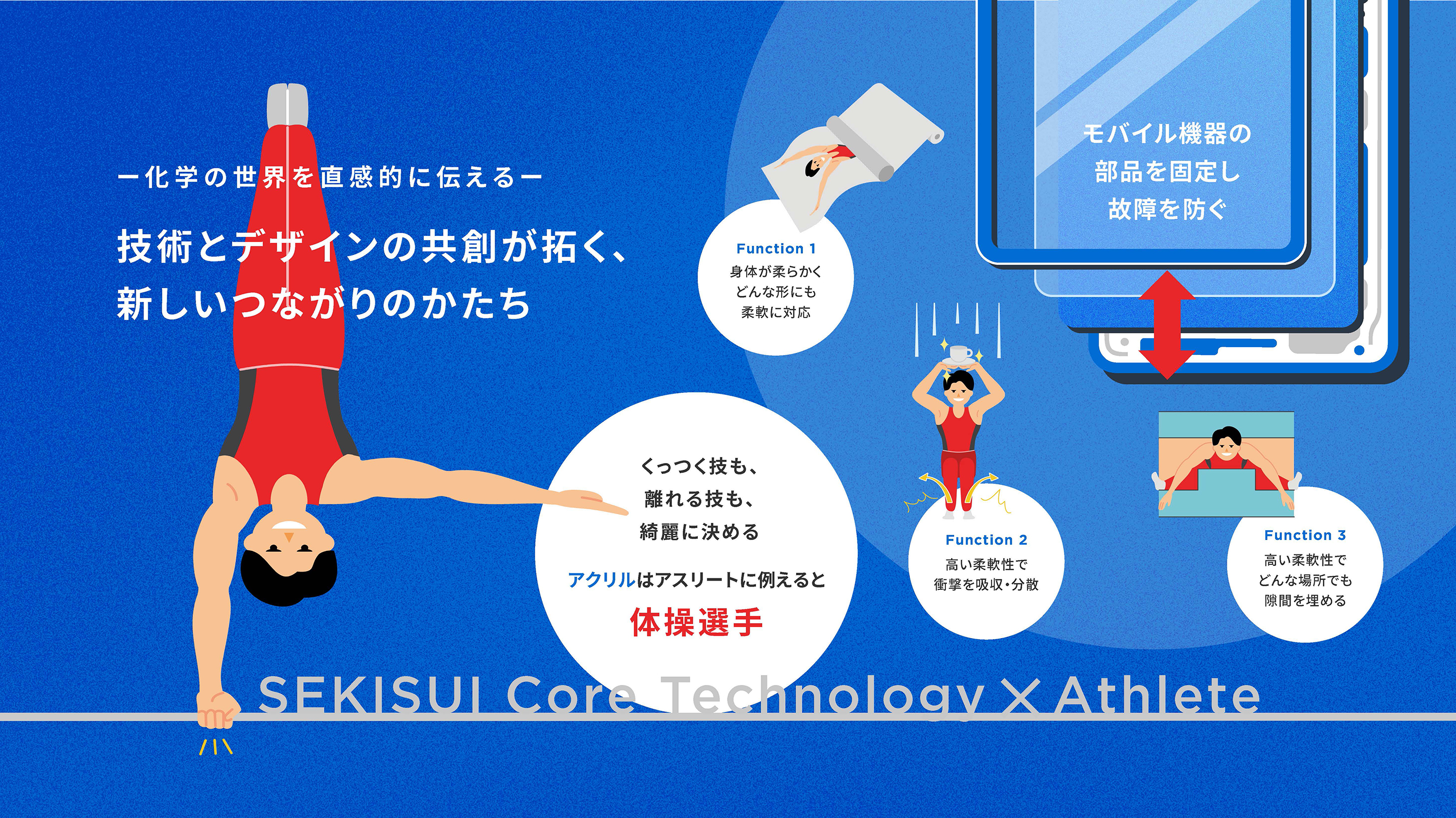
What if we likened chemical technology to athletes?
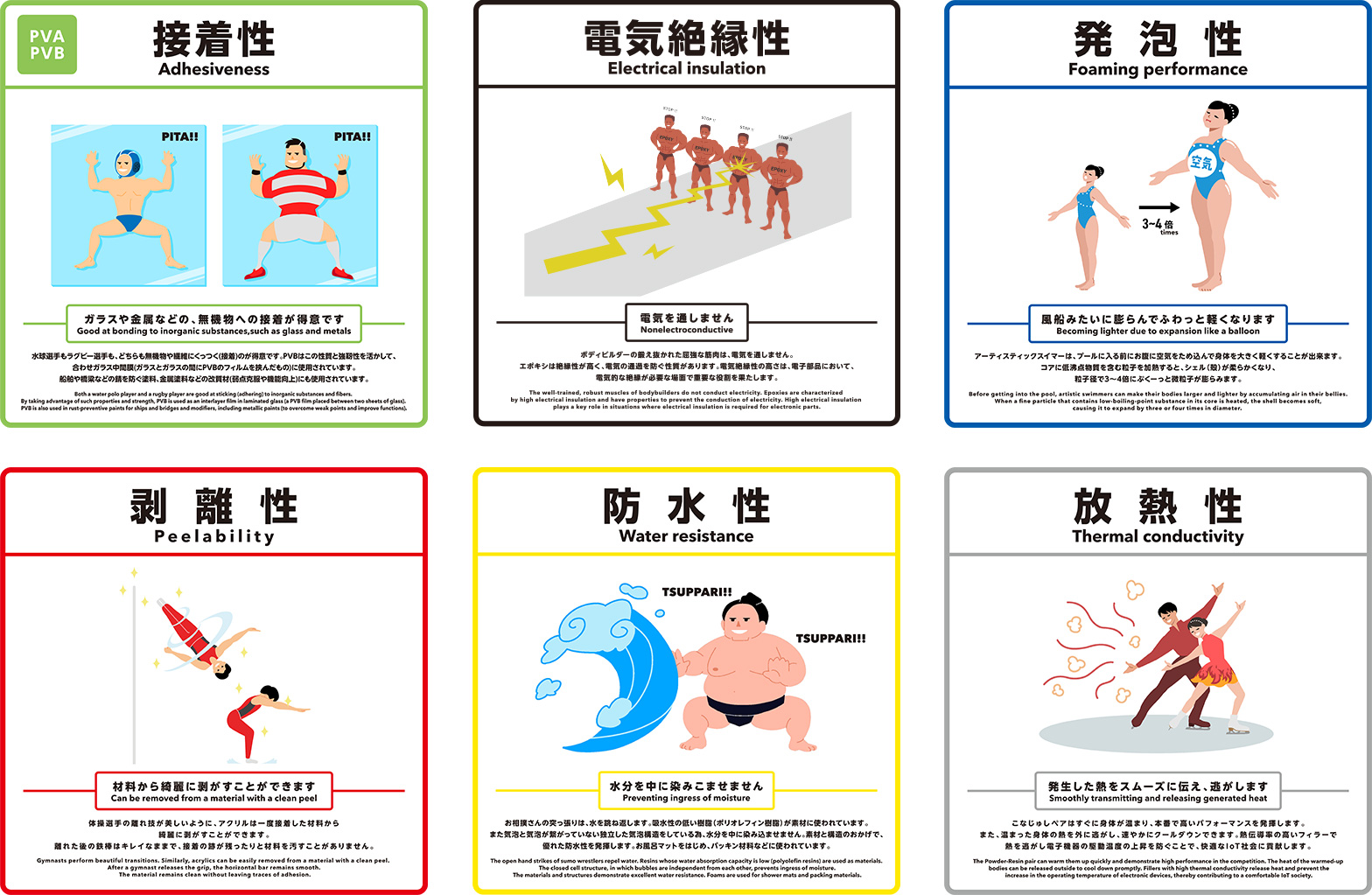
The "SEKISUI Core Technology Book," produced by Sekisui Chemical, is a technology introduction booklet born from such a unique idea. It likens the characteristics of each technology to sports, such as comparing acrylic to a gymnast and epoxy to a bodybuilder, creating a visual representation that is intuitively understandable to everyone.
This approach took shape through dialogue and trial and error between external designers and engineers from the R&D department. The project, which addressed the question of how to communicate technology, started at the Minase Innovation Center (MIC) and expanded into a space for co-creation both inside and outside the company.
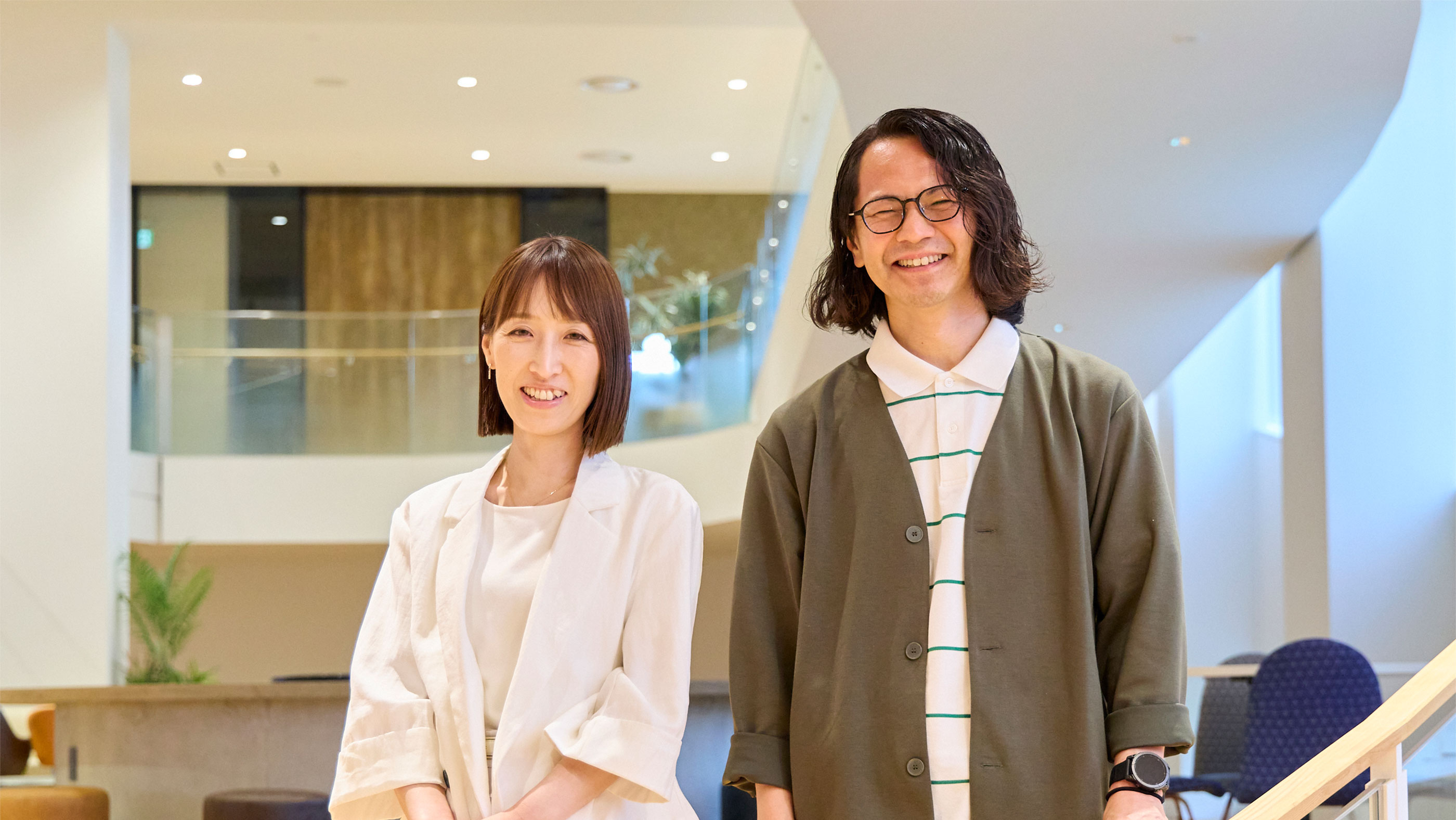
This article explores how the exploration of how to communicate technology culminated in the "Core Technology Book," drawing on the words of Kyosuke Aoki, who led the project, and Masae Kanamori, who is taking on the next step through the exhibition's renewal. We will unravel the process and meaning behind it.
Learn about Sekisui Chemical's technology: Enjoy learning about Sekisui Chemical's core technologies.
Chemistry in sports!? Technologies rising to the top as athletes
Minase Innovation Center (MIC) — Sekisui Chemical High Performance Plastics (HPP) Company 's research and development hub, established in 2020. This place serves as both a frontline for technology development and a "co-creation space" where internal and external knowledge exchange
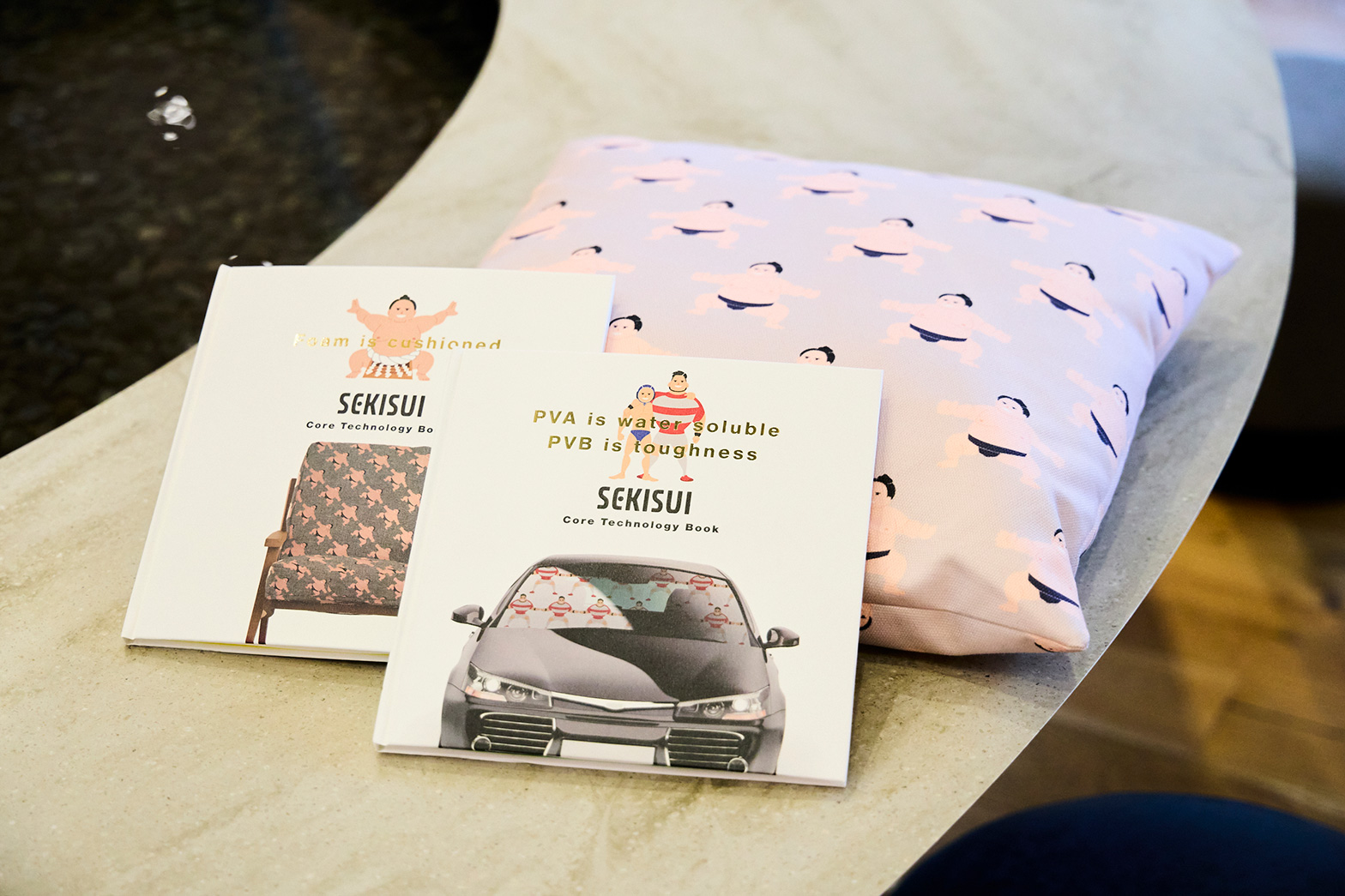
Upon entering the exhibition space, the first thing that catches the eye are several small booklets. The covers feature illustrations of athletes competing in various sports. The title is "SEKISUI Core Technology Book." Picking one up and turning the pages, you see acrylic depicted as a gymnast and epoxy as a bodybuilder. A story begins that makes the world of chemistry, which is generally difficult to visualize, easily understandable.
"We practice open innovation with both internal and external partners every day, utilizing exhibition spaces and meeting areas. The challenge we faced was how to communicate technology in an easily understandable way. That became our challenge."
These are the words of Kyosuke Aoki, who leads the innovation promotion group based at MIC. The challenge of rethinking how technology is communicated has culminated in the "Core Technology Book." Aoki explains PVA and PVB, which are depicted as water polo and rugby players, respectively.

"PVA (polyvinyl alcohol) is a white, powdery plastic raw material that has the property of being soluble in water. It's commonly used in laundry detergent films. Because of its dissolvable nature, it's also being increasingly applied in medical and agricultural fields, and is attracting attention as an environmentally friendly material."
And PVB (polyvinyl butyral) is a material created by chemically modifying PVA as a raw material. It becomes insoluble in water, but in return it has high toughness and is used as an interlayer to prevent glass from shattering in car windshields and laminated glass in buildings. It is resistant to breakage even when subjected to impact, and even if it does break, the fragments do not scatter. It is a 'safety-preserving material' that supports our daily lives."
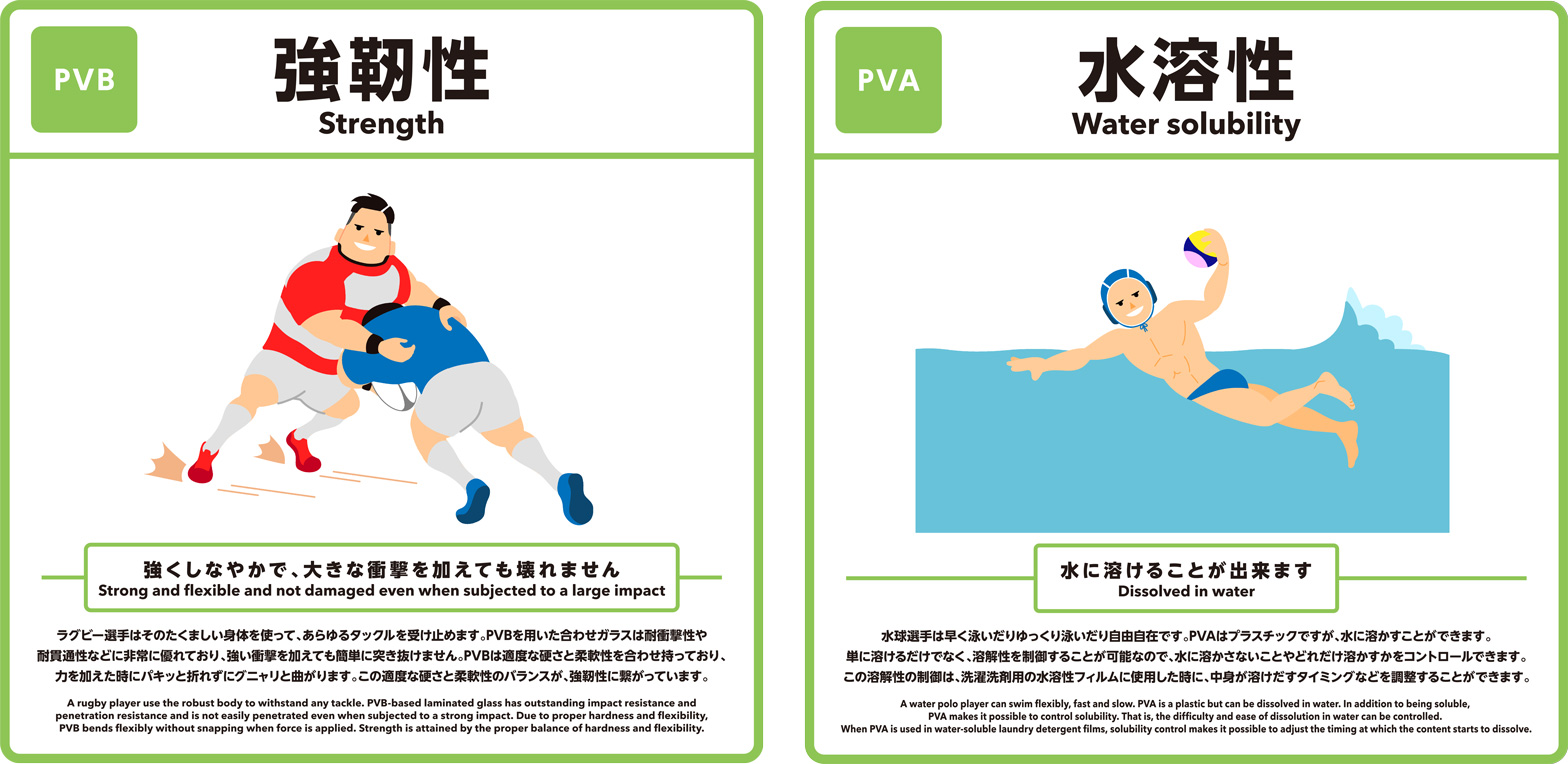
To clearly convey the differences, the "Core Technology Book" likens PVA to a water polo player who can move quickly in the water, and PVB to a rugby player who absorbs impact with their whole body. By drawing parallels to the easily relatable field of sports, the contrasting characteristics of the technologies and their respective roles become clearly apparent.
"Even though they share the same roots, their characteristics change so drastically through chemical reactions. By superimposing these two materials onto the characteristics of the sport, the individuality of each material becomes more memorable, and the abstract individuality of the technique becomes an expression that can be intuitively conveyed to anyone," Aoki reflects.
"Sekisui Chemical's technology is used in a wide variety of places around us. We want people to realize, 'Sekisui Chemical is involved in this too?' That's the starting point for technology communication, and we believe it will ultimately lead to the first step towards open innovation."
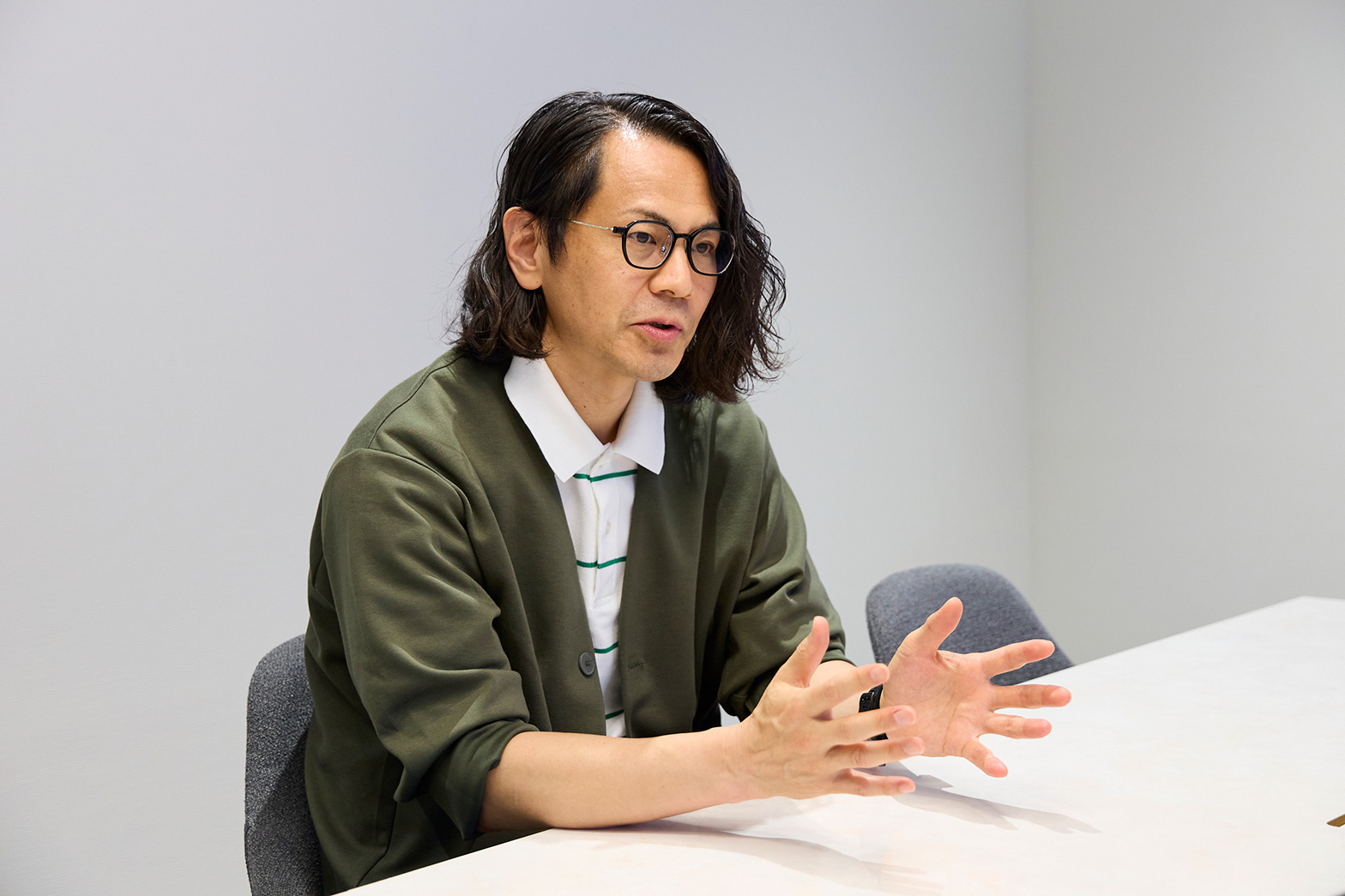
A form of communication woven from a session between engineers and designers.
Reaching this result involved an invaluable collaborative process where technology and design intersected.
While grappling with the theme of "how to communicate technology in an easy-to-understand way," the Innovation Promotion Group came into contact with Fujitsu's design department. Fujitsu's approach of viewing problems from the user's perspective, centered on design thinking, and the process of guiding problems toward resolution through a structural approach left a strong impression on Aoki.
"Honestly, I had the impression that designers worked primarily based on inspiration. However, in reality, they meticulously design processes according to their objectives and start by considering the user's perspective. As manufacturers, we tend to focus on how to sell what we've created, so we were strongly drawn to their logical approach."
"Design thinking can also be used to introduce essential technologies." Convinced of this, Aoki and his team began generating ideas to communicate the appeal of their core technologies. The project started with three teams, and a variety of ideas were brought together, such as a plan to trace the development of technology in the form of a board game, and a plan to liken confectionery making to a chemical process.
The metaphor that was ultimately chosen was "athlete." The selection process emphasized aspects such as "the material's characteristics being immediately apparent" and "the ability to translate functional differences into physical characteristics."
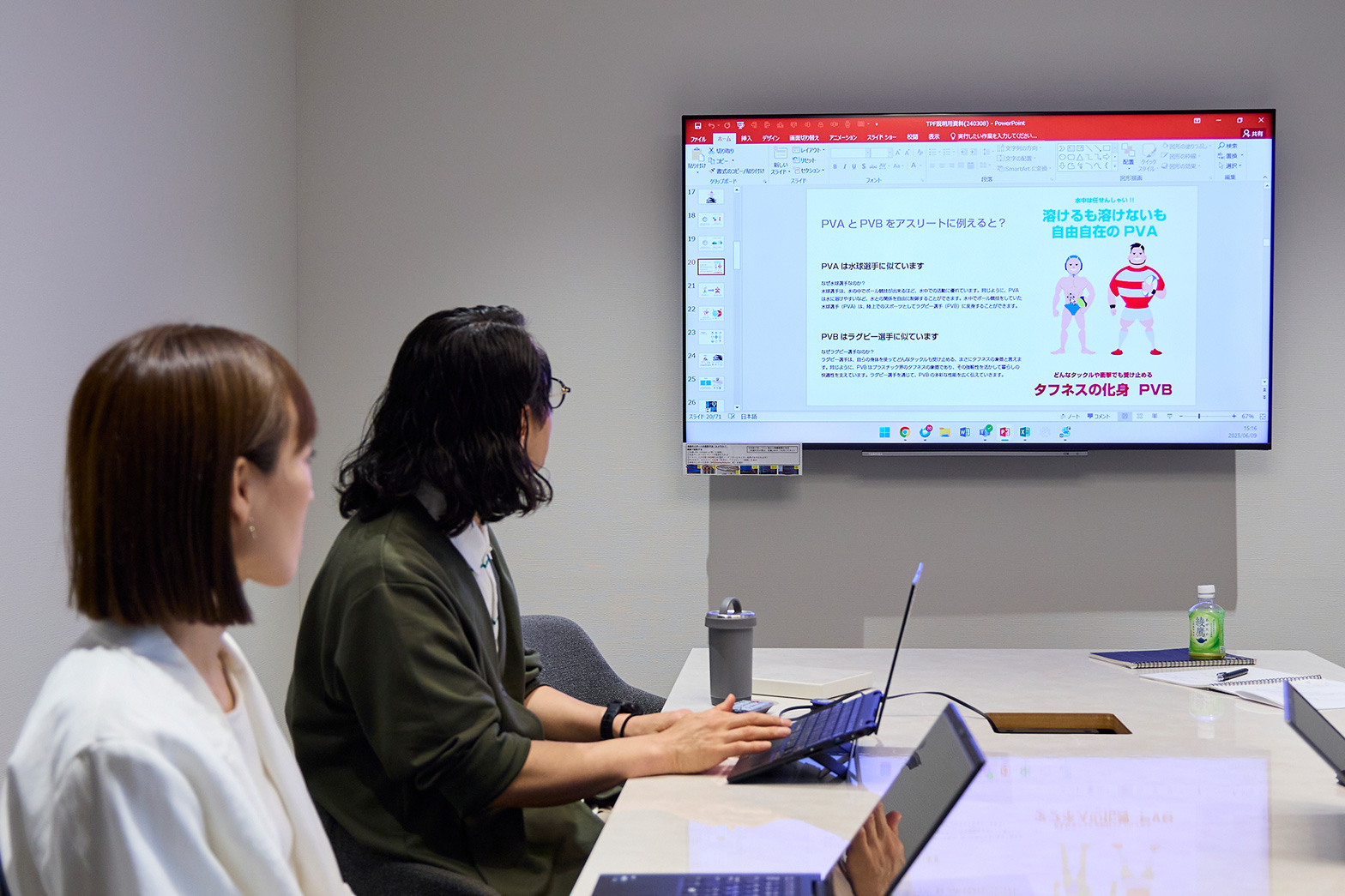
Based on this motif, the next phase saw the start of concrete production. Engineers and designers teamed up for each theme, holding weekly sessions. Masayo Kanamori, who participated in the project, reflects on the collaborative process as follows:
"We used a format sheet to fill in the uses and benefits, which helped us align our understanding. This increased the engineers' understanding of how the technology could be visually and intuitively communicated. And the opportunity for the designers to experience the technology firsthand was also a significant step."
The designers got to touch the acrylic adhesive, experiencing its stringy texture like syrup and its feel after drying. When they were told, "This is the material used on the back of packaging tape," they naturally reacted by saying things like, "Wow, it's stringy," and "Some parts are quite smooth."
"What is commonplace for engineers can be a source of surprise for those encountering it for the first time—that feeling is precisely the kind of experience that should be conveyed," Kanamori recalled, to which Aoki continued.
"The engineers and designers freely shared their opinions, but in the end, everyone was satisfied and worked together to create a final product. I think the process itself was an incredibly valuable learning experience."
They spent six months working on deciding "which athlete to use as a model," and then the next six months were dedicated to the actual production. The booklet was completed after a year. When asked, "What was the key to successfully co-creating technology and design?", Kanamori replied.
"MIC's engineers considered how to communicate effectively. The design team then delved deeper into how to get closer to the essence of that message. This compromise was key. The back-and-forth exchange of ideas, insights, and dialogue was the very essence of this project."
The future of communication technology: What lies beyond co-creation
The completed "SEKISUI Core Technology Book" is steadily expanding its use both inside and outside the company. First, it is being used as a first impression tool, which is picked up by almost every visitor to MIC. Regarding the response, Kanamori says:
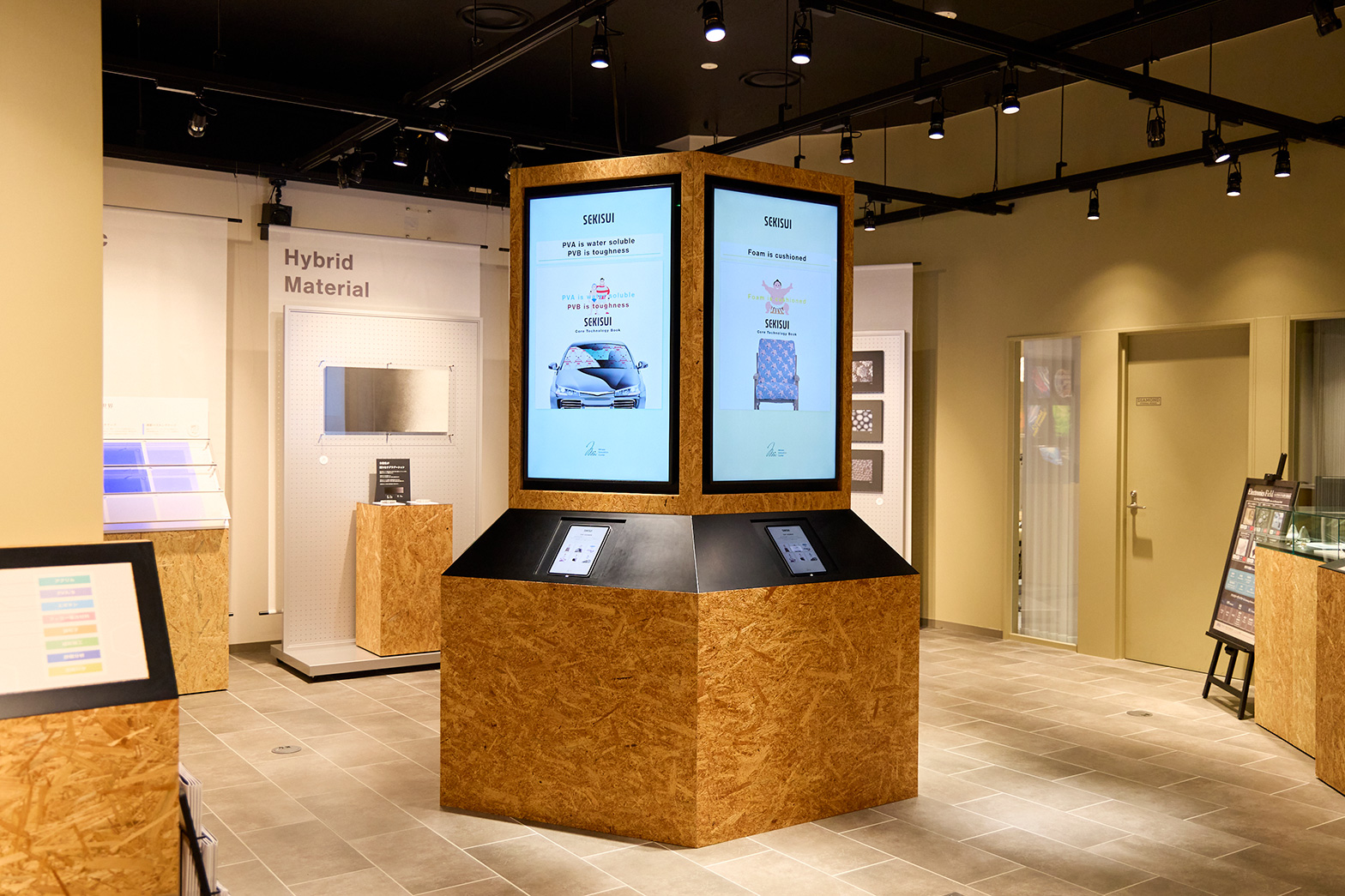
"The Core Technology Book was the first step in our efforts to focus on the technology of communication. Our second step, focusing on experiential technology, also progressed through co-creation with Fujitsu. The new exhibit, unveiled in June 2024, incorporates interactive elements that allow visitors to see, touch, and experience technology firsthand, with the theme of understanding technology through experience."
MIC is focusing on disseminating technology through its exhibition area and creating touchpoints with visitors. Aoki emphasized, "We've received requests to publish the book as a PDF on the web, but we want to stick to paper output."
"We want MIC to be a place not only to share technology, but also to allow people to encounter technology. That's why we want people to actually hold this book in their hands. We've put a lot of thought into the design, from the feel and color of the paper to the texture of the cover, things that can't be conveyed digitally. We believe that sharing the surprise, insights, and thoughts that arise from that will open up the possibilities for co-creation."
Within the company, it is used as an introductory tool for new employee training and transfer training, serving as a starting point for understanding the overall picture of the technology. In addition, there is a growing trend within business units to apply the motifs and expressive techniques featured in the book to sales materials and customer presentations.
"At our Innovation Promotion Group and within MIC, we are developing an attitude of considering how to communicate, and 'what we should communicate in the first place.' I think this has also become a breakthrough in changing the mindset of our engineers."
With these words, Aoki summarizes the project's achievements: "Communication" is no longer a peripheral task for engineers or manufacturers. It is a solid foundation for unlocking the potential of technology and connecting with society. "The technology of communication" is now quietly beginning to take root in the soil of co-creation.