Supporting the infrastructure of the future
Sekisui Chemical's vision of a sustainable society at the World Expo
公開日:
What thoughts and stories were behind its development?
How will that connect to the people and societies living on Earth?
"SEKISUI | Connect with" is a future-creating media platform that connects you with Sekisui Chemical.
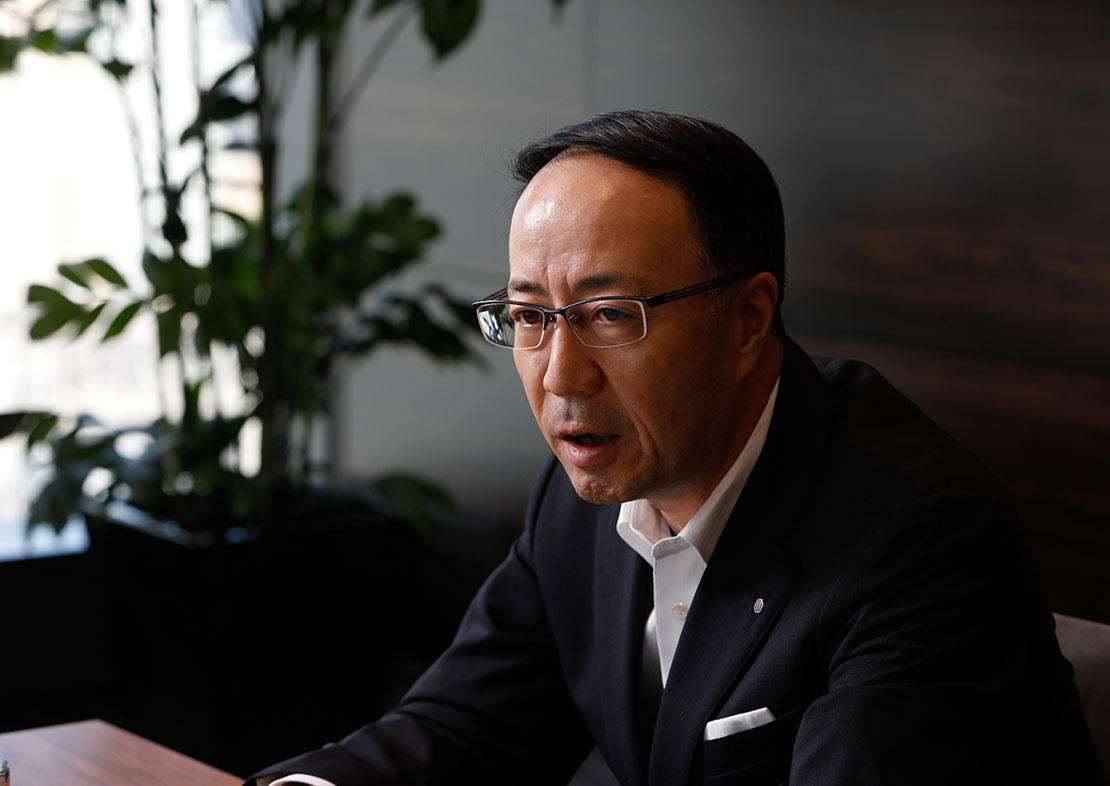
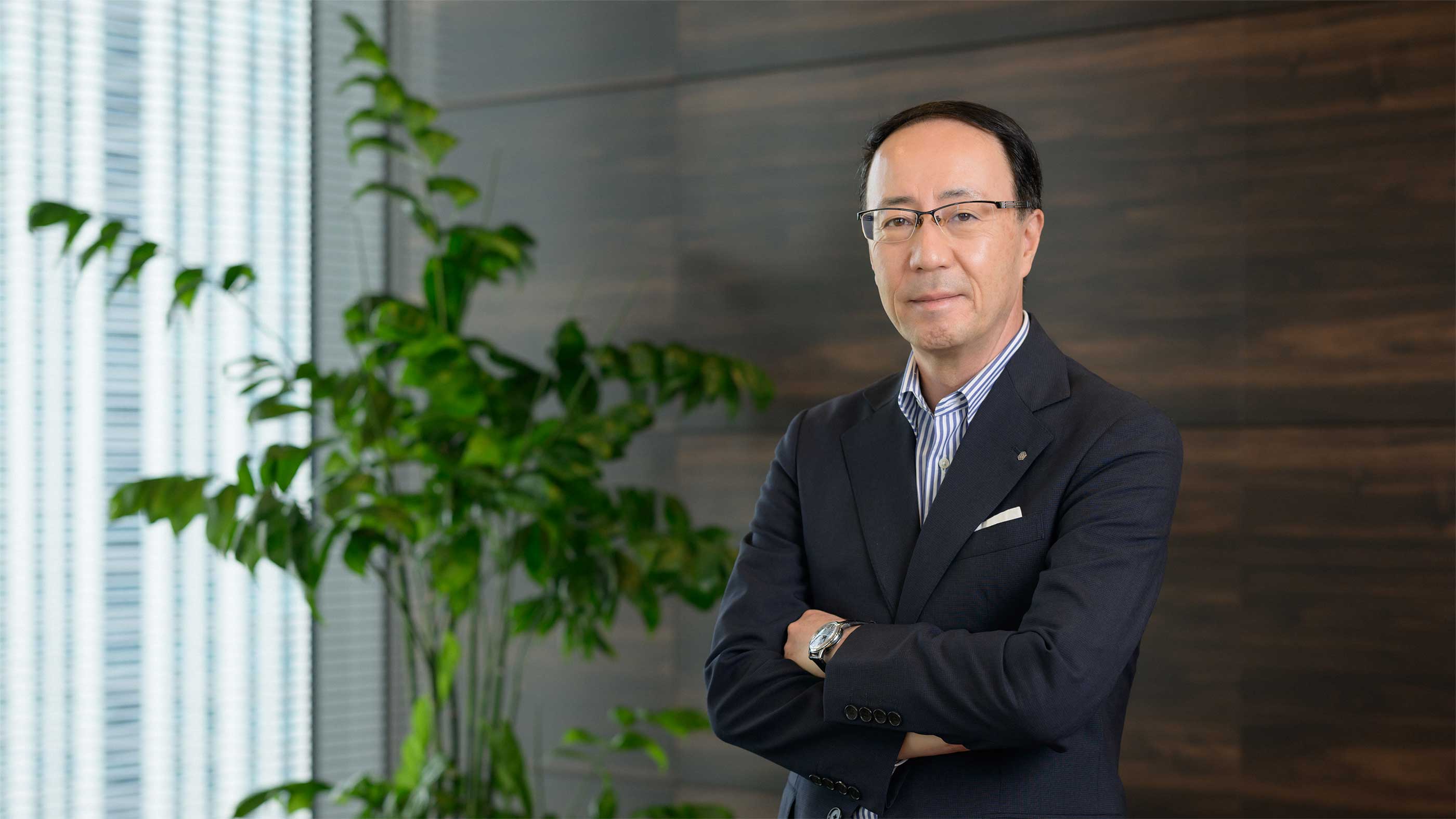
SEKISUI CHEMICAL Group, which will participate in the Osaka-Kansai Expo opening in April 2025, presented a vision for a sustainable future society through renewable energy, resource recycling, next-generation mobility, and more. Aiming to balance social issues solutions and growth through the power of technology—says Mr. Keita Kato, President and CEO of SEKISUI CHEMICAL CO., LTD..
- Perovskite solar cells attracting attention at the World Expo venue.
- A "no-waste society" that uses the power of microorganisms to turn food waste into resources.
- CCU technology opens up a future where CO₂ is utilized.
- Lightweight and strong materials support flying cars
- A challenge as a platform provider of processing technology that anticipates and addresses social issues.
Perovskite solar cells attracting attention at the World Expo venue.
"The Osaka-Kansai Expo is an opportunity for the whole world to gather on one stage and will be a place to showcase the design of the future society. Here, we want to show the world our group's challenge toward realizing a sustainable society through our technology," Kato said, indicating his strong determination to participate.
In the "Future Showcase Project," in which the group participates, the Expo venue is envisioned as a futuristic city, creating a space where visitors can experience next-generation lifestyles through cutting-edge technologies. There, our vision of the future society is expressed in a concrete form through exhibits of state-of-the-art environmental and energy technologies, as well as bio- and medical materials.
"SEKISUI CHEMICAL Group has adopted 'Innovation for the Earth' as its vision statement. This reflects our strong commitment to supporting the global environment and people's lives through the power of innovation to realize a sustainable society. At the Expo, we will introduce a variety of advanced technologies that balance solving social issues with economic development, and convey to visitors the vision of the future society our group aims to realize."
Installed on the roof of the 250-meter-long bus terminal at the West Gate of the Expo site are film-type perovskite solar cells developed by Sekisui Chemical. The electricity supplied by this installation, the world's largest of its kind, is used for the nighttime lighting at the Expo site. Because the company's perovskite solar cells are lightweight and flexible, they have also been installed on smart poles*, the ceiling of the Osaka Healthcare Pavilion, and food trucks within the Expo. This is a symbolic initiative that demonstrates that solar cells can be installed on curved surfaces and structures with low load-bearing capacity, making them usable even in urban buildings where the introduction of solar cells has previously been difficult.
*A smart pole is a pole such as a streetlamp, traffic light, or utility pole that incorporates IoT technology and advanced functions.
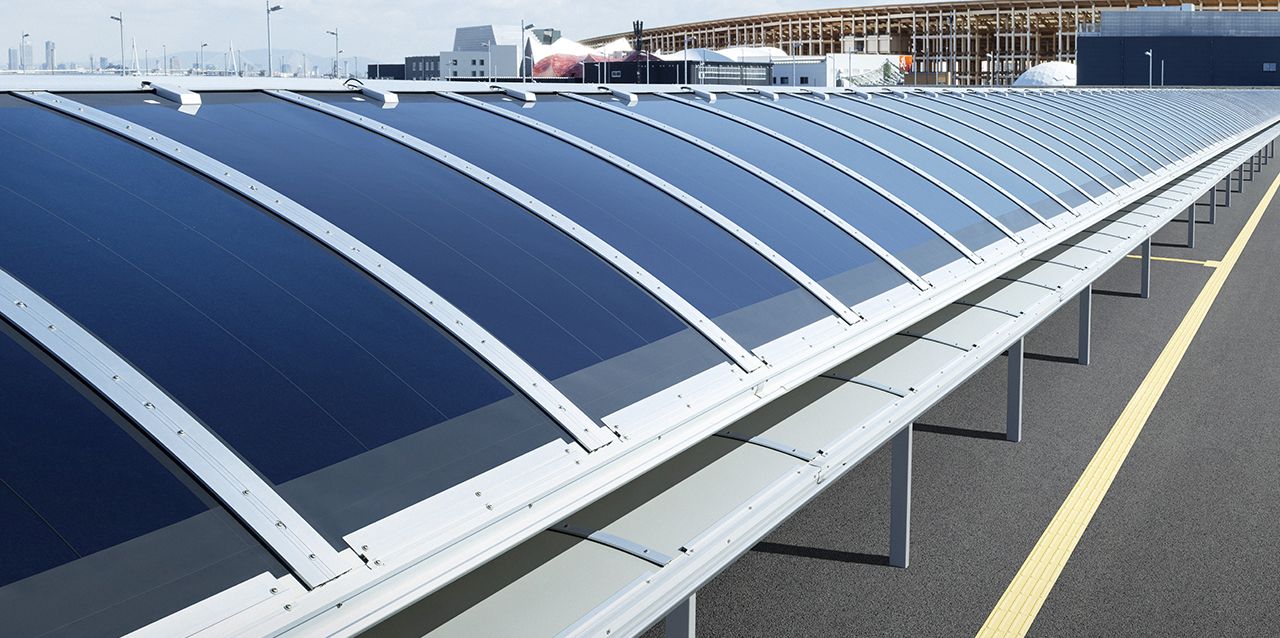
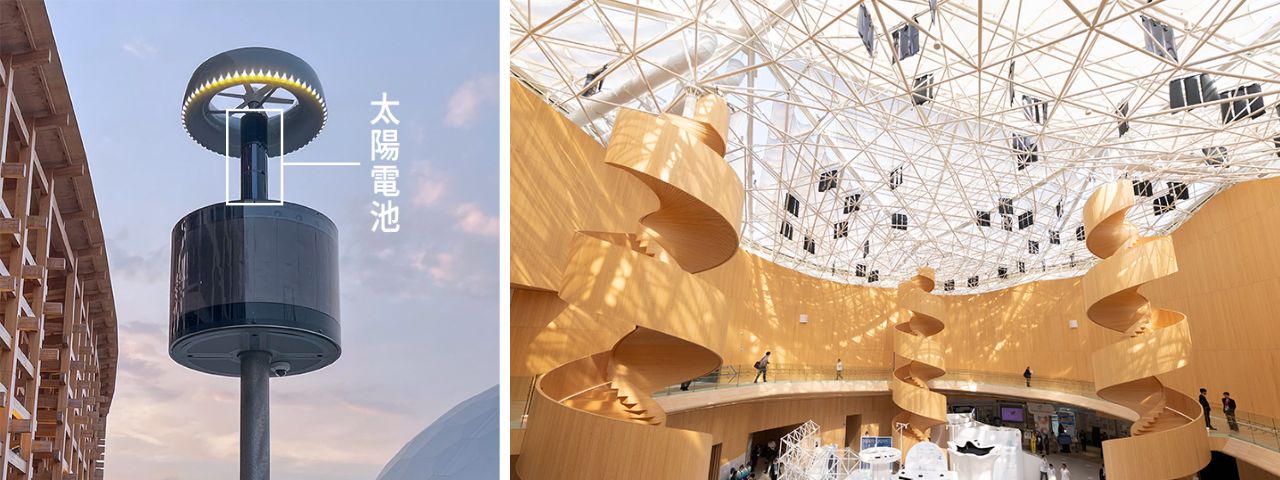
(Right) Film-type perovskite solar cells installed on the ceiling of a pavilion inside the World Expo (Photo courtesy of Osaka Pavilion)
Unlike conventional silicon-based solar cells, film-type perovskite solar cells offer the flexibility to be installed anywhere, supporting the introduction of locally produced and consumed renewable energy in urban areas. Increased adoption in urban areas will reduce transmission losses when transporting electricity generated in suburban areas to urban centers, and will also help curb deforestation for panel installation. Sekisui Chemical plans to launch this technology in fiscal year 2025, establish a manufacturing line with an annual production capacity of 100 megawatts by 2027, and further aim to establish an annual production capacity of gigawatts by 2030. They envision deployment in public facilities such as gymnasiums that serve as evacuation centers during disasters, as well as private factories, warehouses, and the roofs and walls of urban buildings, steadily advancing social implementation while reducing costs.
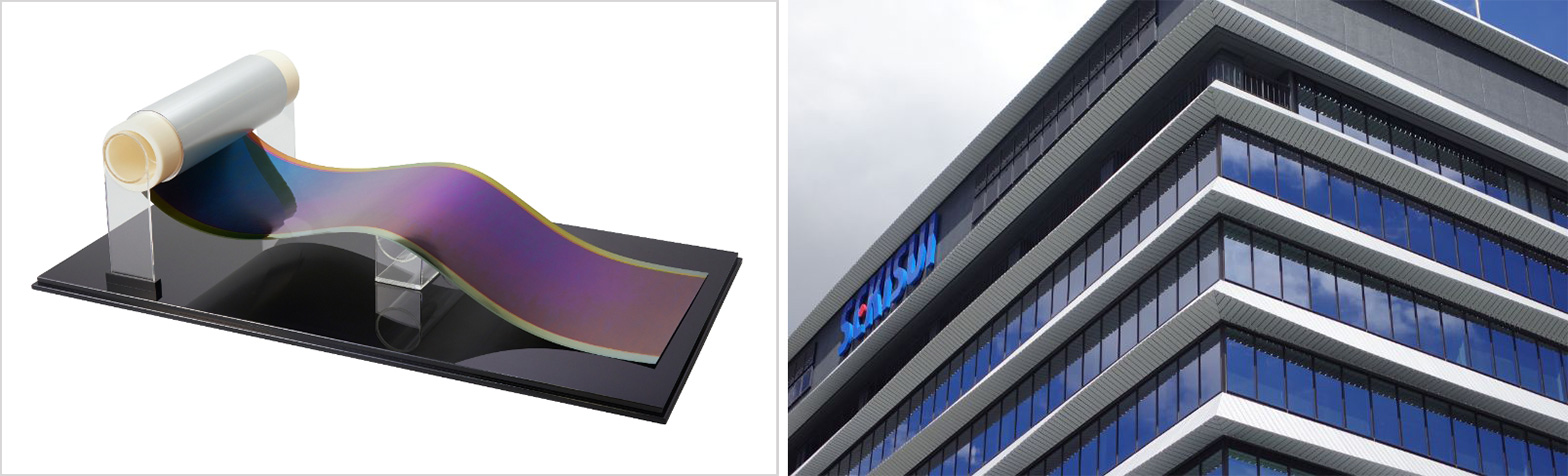
(Right) Film-type perovskite solar cells installed at the Osaka headquarters.
A "no-waste society" that uses the power of microorganisms to turn food waste into resources.
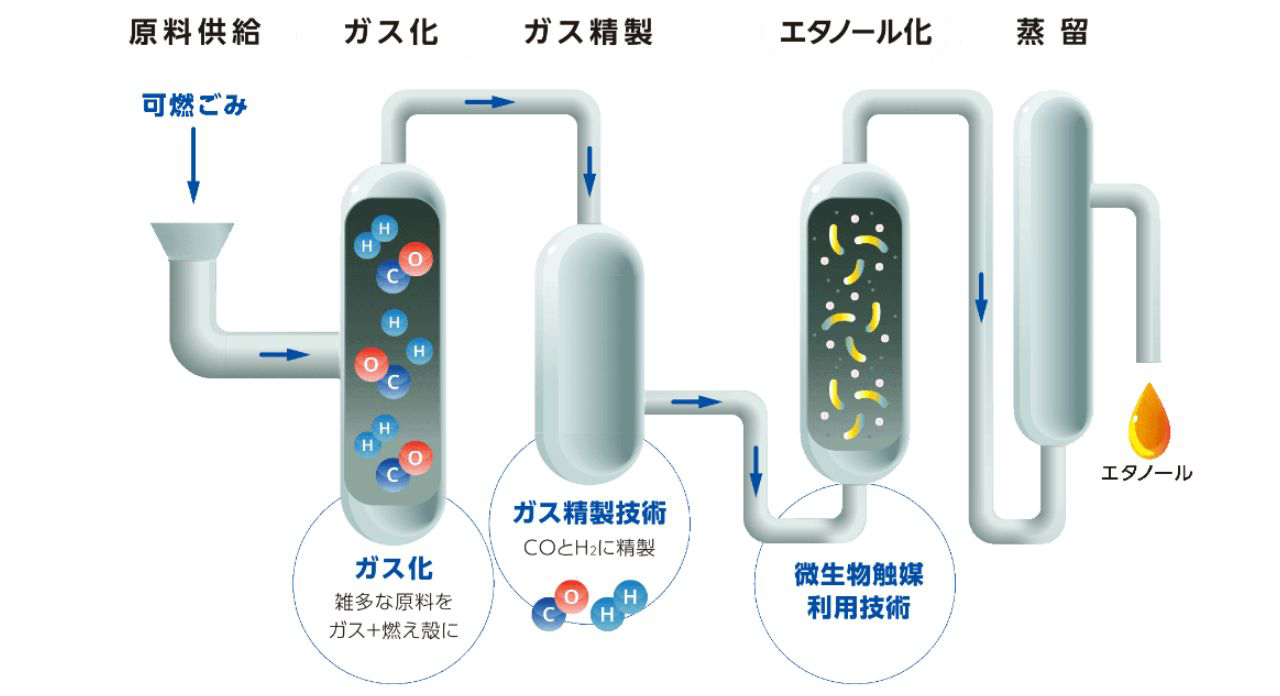
Another area of interest is initiatives toward a circular economy. At the Japan Pavilion of the Osaka-Kansai Expo, visitors can experience the resource recycling process where food waste generated on-site is converted into energy using the power of microorganisms. Sekisui Chemical Co., Ltd. was involved in the concept development of this project and is providing support utilizing its expertise.
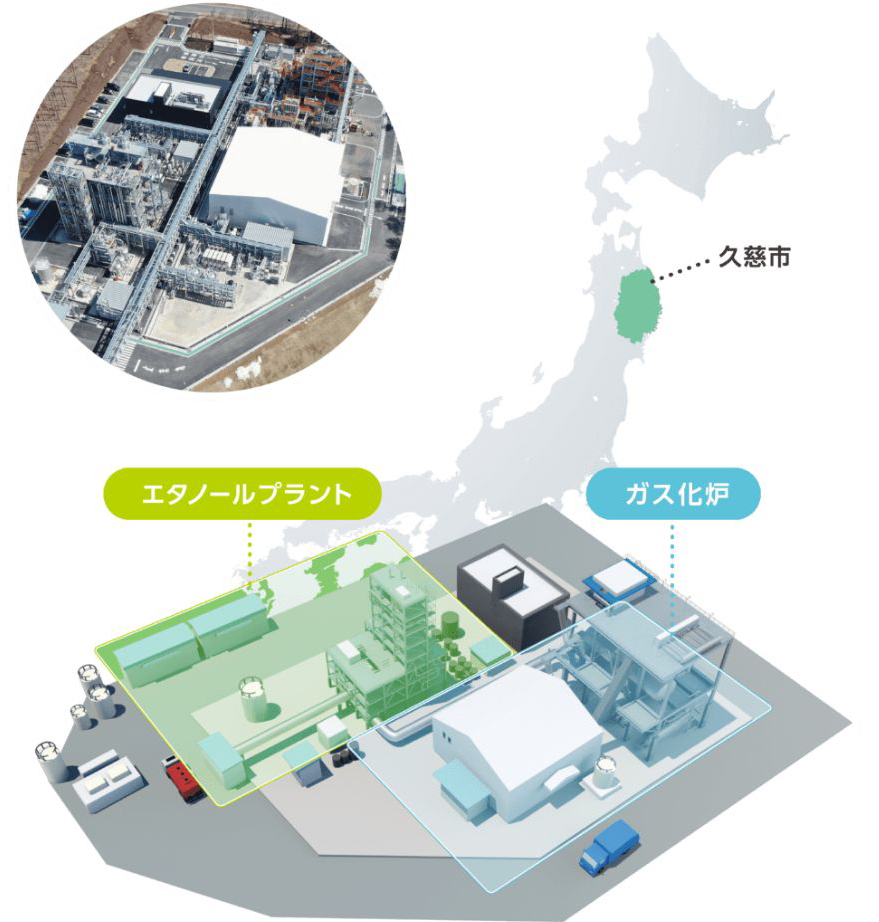
The company has long been working on recycling waste, and in 2017 established a production technology to convert combustible waste into ethanol, which can be used as a raw material for plastics and other products. In 2022, they built a demonstration plant in Kuji City, Iwate Prefecture, and are conducting demonstration experiments with an amount of combustible waste that is about one-tenth the amount processed by a standard waste treatment facility.
CCU technology opens up a future where CO₂ is utilized.
Furthermore, Sekisui Chemical's CCU (Carbon Capture and Utilization) technology, which plays a crucial role in the resource recycling process, is also attracting attention. Sekisui Chemical's CCU technology selectively separates and recovers CO₂ emitted from factories and waste treatment facilities, then converts it to CO with high efficiency. The resulting CO can then be reused in steel processes, petrochemical products, synthetic fuels, polymers, and other products, contributing to both carbon neutrality and resource recycling. The company's CCU technology is characterized by its extremely high conversion efficiency of over 90% and its unique catalyst technology that does not use precious metals. By eliminating expensive materials such as platinum and palladium, which are commonly used in conventional catalysts, it achieves low-cost manufacturing and long-term stable operation. The catalyst is resistant to degradation and possesses excellent performance in terms of both economics and sustainability.
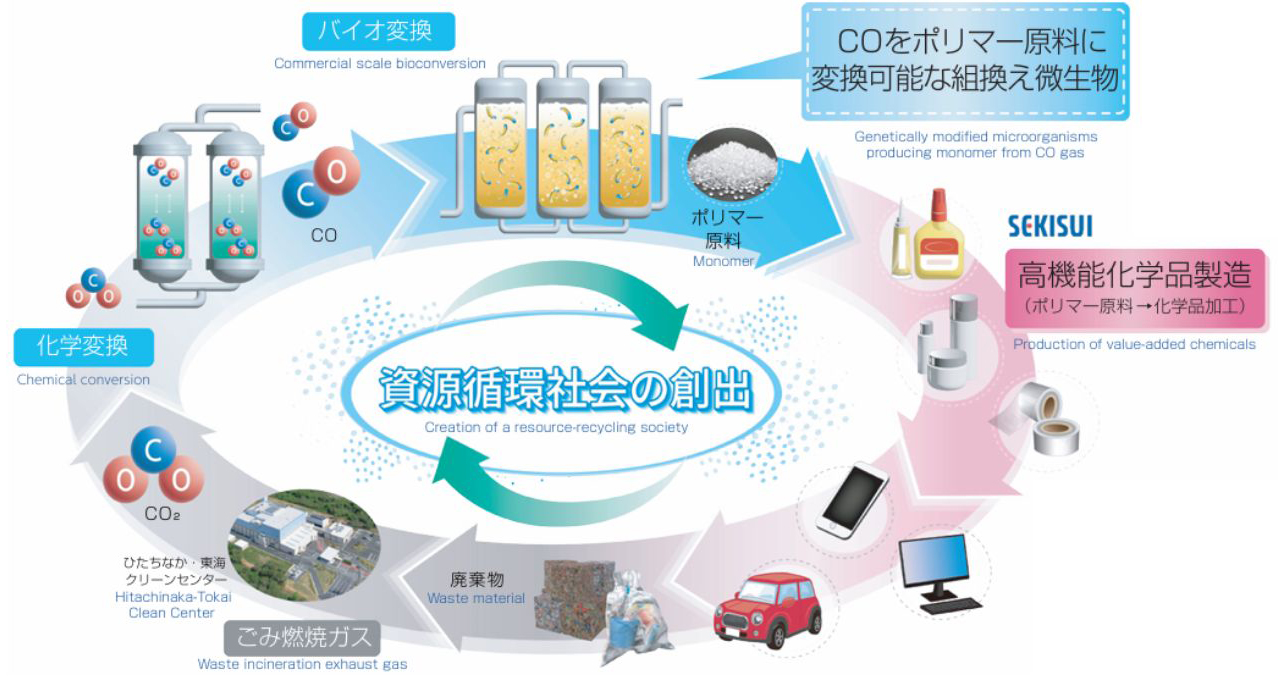
Demonstrations are already underway with the steel industry and carbon material manufacturers, and development is being accelerated with a view to practical application around 2030. In the future, the introduction of CCU systems co-located with CO₂ emission sources such as urban waste treatment facilities and power plants is also being considered, and expansion through collaboration with existing infrastructure is expected.
"The concept of resource recycling, which involves reusing CO₂ and waste, directly leads to a transformation of the social structure. Our CCU technology contributes not only to reducing CO₂ emissions but also to reducing petroleum consumption, achieving a double effect. We believe that by collaborating with countries around the world to develop and disseminate this technology, we can strengthen global measures against climate change," says President Kato.
Lightweight and strong materials support flying cars
Additionally, developing materials that support future mobility is one of SEKISUI CHEMICAL Group 's strengths. The company is also committed to developing CFRP (carbon fiber reinforced plastic), a material used in the 'flying car' aircraft that attracted attention at the Expo.

The biggest challenge for next-generation mobility vehicles like flying cars is weight. Weight greatly affects not only fuel efficiency but also travel time and safety. CFRP is about 40% lighter while having strength equivalent to aluminum. Furthermore, SEKISUI CHEMICAL Group acquired Aerospace in 2019 and acquired CFRTP (thermoplastic type) technology, which can handle complex shapes and be mass-produced.
"Our materials have already been adopted in fields such as aircraft, drones, and MRI, and we have built up a proven track record. We also feel great confidence in expanding into flying mobility, which will be mass-produced in the future."
A challenge as a platform provider of processing technology that anticipates and addresses social issues.
What is the driving force behind these diverse technological innovations?
"Since we don't own our own raw materials, our strength lies in how we create added value through processing. In other words, we combine procured raw materials with our own strengths in processing technology to create unique value. The key to this is our core group of technologies, which we call our 'technology platform.' We are confident that these are at a level that allows us to demonstrate a competitive advantage even against the world's top manufacturers."
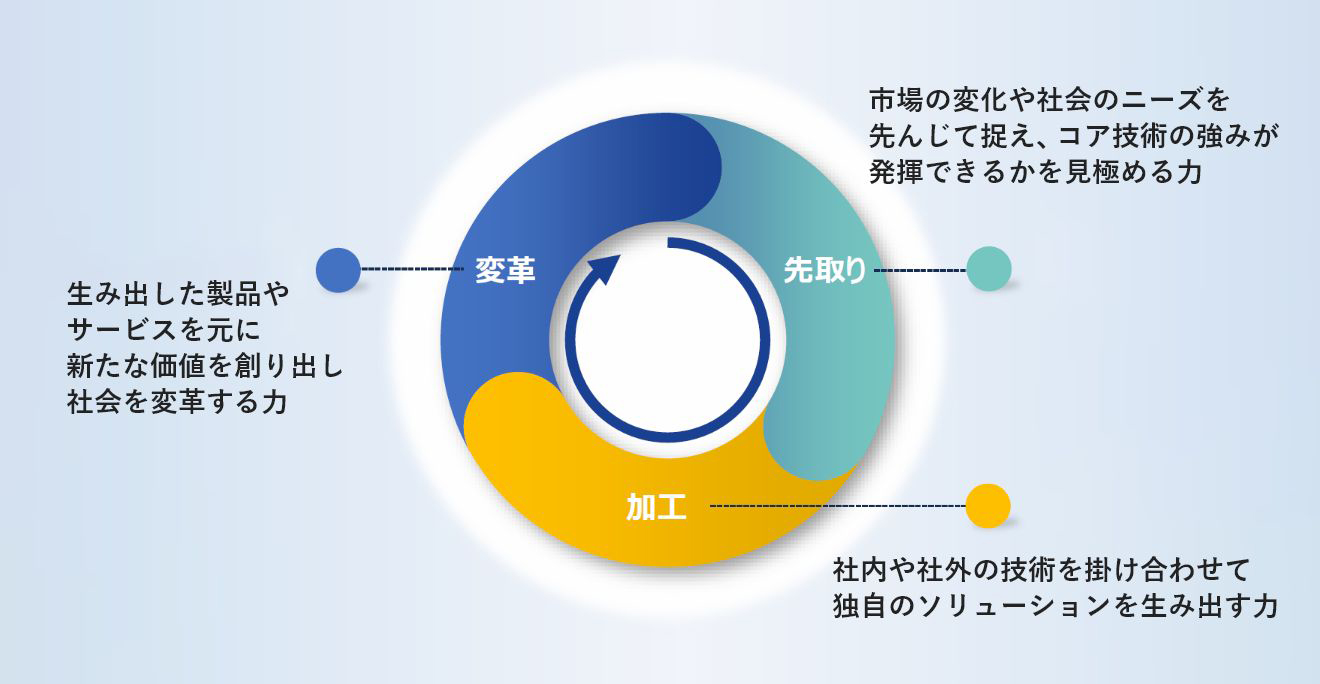
Kato says that based on this high level of technical expertise, they will create innovation through three forces: "anticipation," "processing," and "transformation."
The first aspect of "being proactive" is the ability to identify a match between social issues and their own technology. "Products that do not contribute to solving social issues will be eliminated, and it is difficult to win in areas where it is hard to demonstrate uniqueness," says Kato. He explains that they set an ideal vision and then consider what needs to be done now to achieve it, and that they are focusing on areas where their company's strengths can be utilized.
The second aspect, "processing," is the ability to create unique solutions by combining the material development, processing, and composite technologies that the company has cultivated over many years. Mr. Kato says, "For example, a perovskite solar cell contains core technologies that our group has cultivated, such as encapsulation technology, vacuum deposition, precision coating, and material development technology, all within a thickness of 1 mm." Furthermore, in challenging new fields, the company is actively investing management resources, such as M&A, to acquire technologies it does not yet possess, thereby strengthening its technological development. The M&A of Aerospace Corporation, a US company, as part of its challenge in the aerospace field, is one example of this.
The third key element, "transformation," is the power to create new value based on products and services and to transform society. "We will work with various stakeholders—government, business, and other sectors—to spread technologies that will significantly change the world," he emphasizes.
Backed by these three strengths, various technological developments are underway. In addition to perovskite solar cells and CCU technology, the company is also pursuing R&D based on a long-term perspective, such as the development of synthetic scaffold materials necessary for culturing iPS cells. While conventional scaffold materials derived from natural sources inevitably suffer from variations in quality and risks such as infection, the company has developed a new material made of 100% chemically synthesized resin that combines stability and safety. This material has the potential to become a foundational technology in regenerative medicine in the future.
Furthermore, to promote such cutting-edge technology development, the company has established an innovation center adjacent to its research institute in the Kansai region, actively promoting co-creation with diverse stakeholders such as customers, universities, and suppliers. Because the company's technology can be combined with the technologies of other companies to expand new possibilities, it is also actively pursuing collaborations with external parties such as M&A and corporate venture capital (CVC). Having a place to tackle complex social issues that cannot be solved by a single company through the power of collaboration is changing the mindset of researchers and accelerating the creation of innovation.
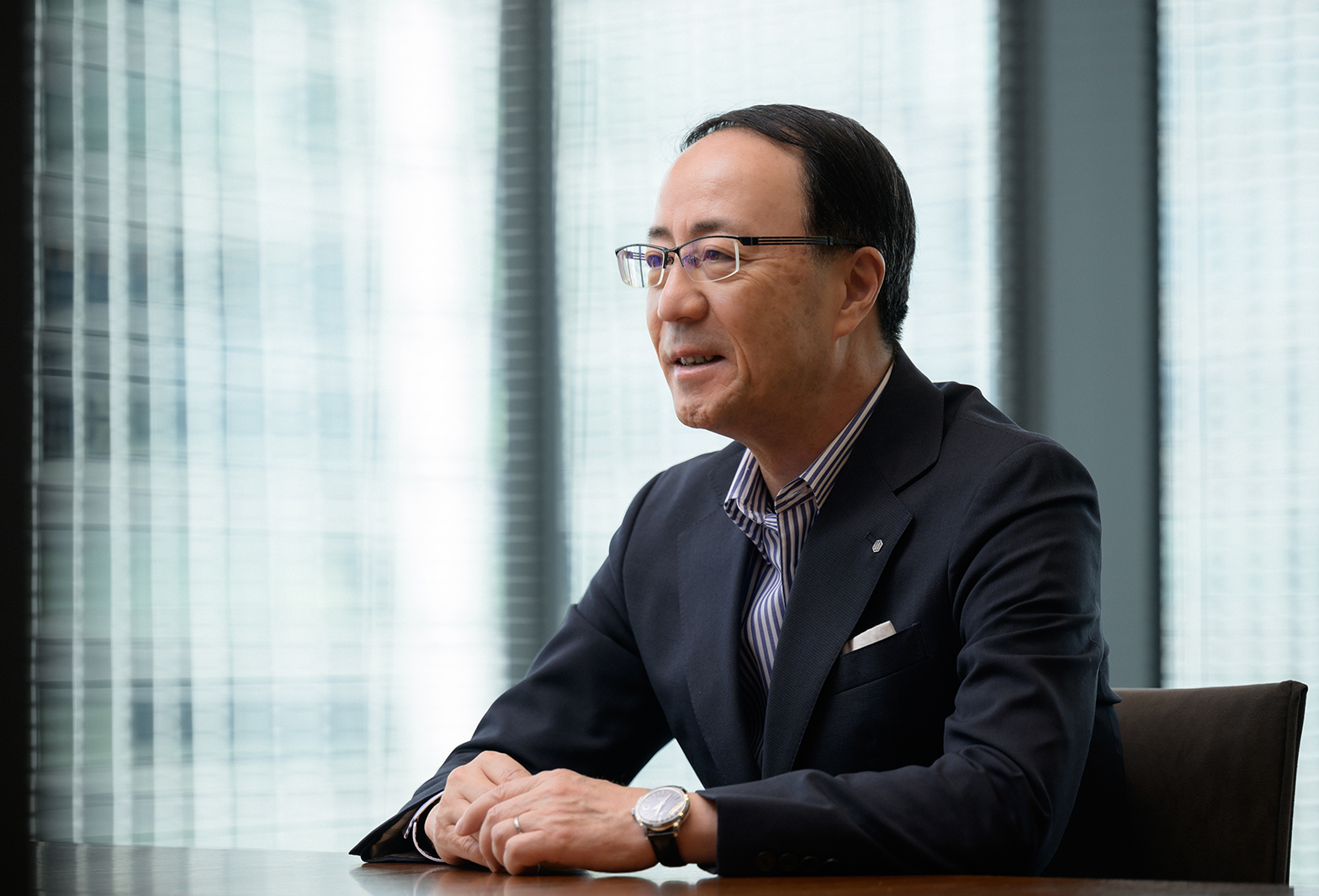
"Our vision, 'Innovation for the Earth,' is not just a slogan. We believe that our business can achieve sustainable growth only by solving social issues. We designate products that make a significant contribution to solving natural and social environmental problems as 'sustainability-contributing products,' and we are actively developing such products. The results of this effort are steadily increasing, and sales of sustainability-contributing products are now approaching 1 trillion yen. This accounts for approximately 77% of our total sales, but we aim to increase this ratio to 100% in the future."
As President Kato's words suggest, SEKISUI CHEMICAL Group 's stance remains unwavering on the international stage of the Expo. Through this exhibition, what the group is showcasing is not just technical prowess. It is both the "will" and the "responsibility" to realize a sustainable society.
"The future we envisioned has already begun. By looking at the Expo's exhibits, I think you can feel that technologies addressing social issues—such as renewable energy, resource circulation, next-generation mobility, and regenerative medicine—are already in motion. We will continue to take on challenges that change together with society and shape the future," says President Kato. True to his words, SEKISUI CHEMICAL Group 's initiatives demonstrate to visitors the potential for innovation that can change the very structure of society. The Expo is nothing more than a catalyst for that. SEKISUI CHEMICAL Group 's challenge is already moving through both social implementation and future vision.