

Exploring Sekisui Chemical's innovative power: the source of a succession of groundbreaking technologies such as perovskite solar cells.
公開日:
What thoughts and stories were behind its development?
How will that connect to the people and societies living on Earth?
"SEKISUI | Connect with" is a future-creating media platform that connects you with Sekisui Chemical.
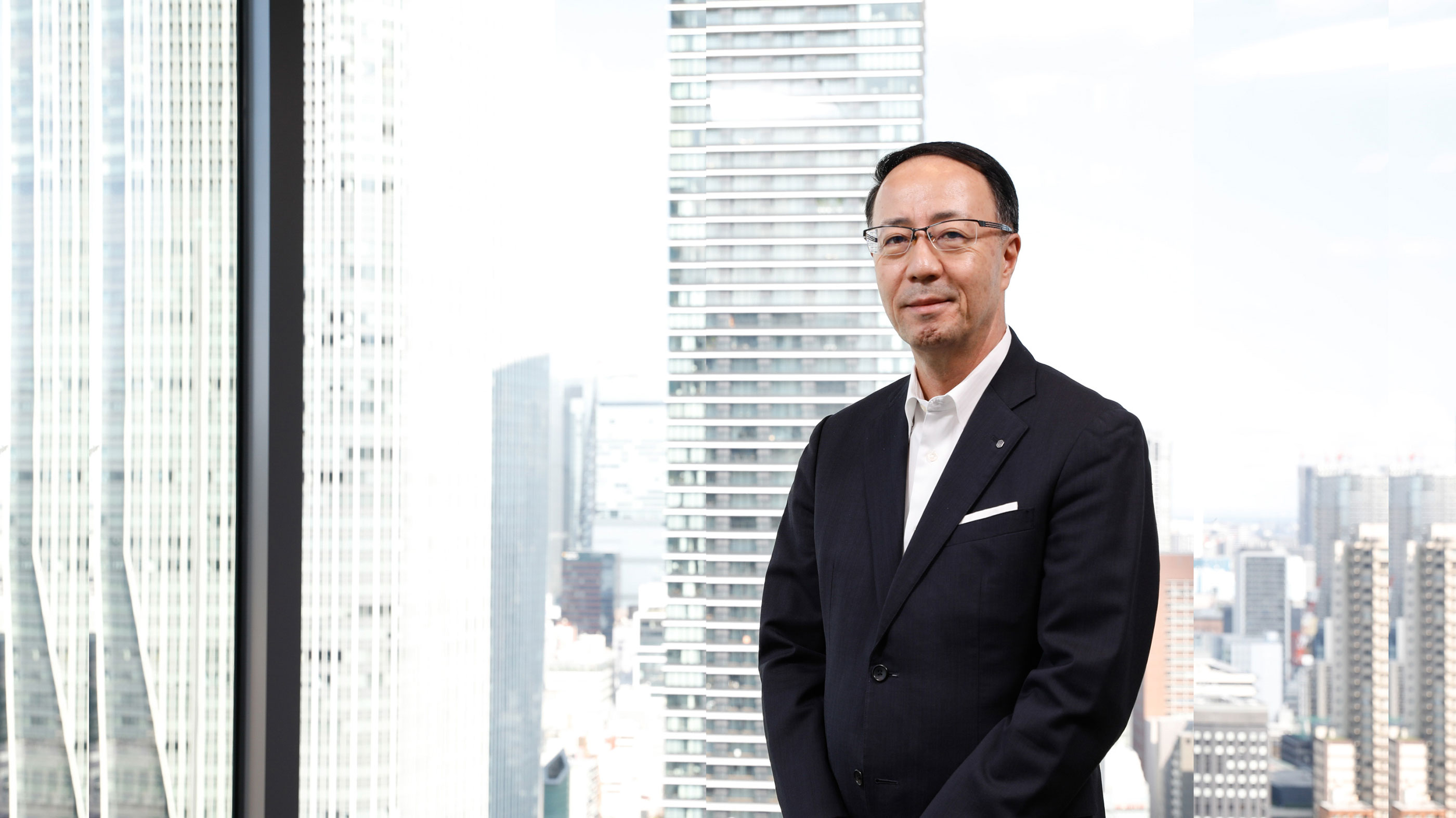
The history of SEKISUI CHEMICAL Group, founded in 1947, can be described as a history of innovation that solves the social issues at the core of daily life. We asked Keita Kato, President SEKISUI CHEMICAL CO., LTD., to discuss why SEKISUI CHEMICAL Group can continuously create innovative technologies and the source of its innovative strength.
Perovskite solar cells are a key solution to climate change challenges.
Since its founding, Sekisui Chemical has grown under its company motto '3S Principles' (Service, Speed, Superiority), taking on challenges to solve social issues through products and technology. Its origins trace back to the sale of plastic garbage containers called 'Polypail,' which began in 1961. At that time, Tokyo was rapidly urbanizing and household waste was increasing, making waste disposal a major social issue. Sekisui Chemical collaborated with Tokyo to develop products and proposed a collection system using garbage trucks. They carried out awareness activities aimed at beautifying the city for consumers. This waste disposal and collection method was called the 'Cleaning Revolution,' and it was expanded nationwide to beautify the city.
"Among the various social issues, we have consistently addressed 'fundamental issues concerning daily life,' such as the safety and health of people worldwide, or changes in the global environment that have a serious impact on the survival of society, such as climate change and natural disasters. From housing and social infrastructure that protects lives from natural disasters such as earthquakes and torrential rains, to high-performance materials and medical products that improve the quality of life and health, all of our diverse businesses are working to solve 'fundamental issues concerning daily life,' and we aim for 'peace of mind regarding people's lives to continue not only for those of us living today, but also for future generations and into the future.' Delivering this 'peace of mind that continues into the future' to society is our mission."
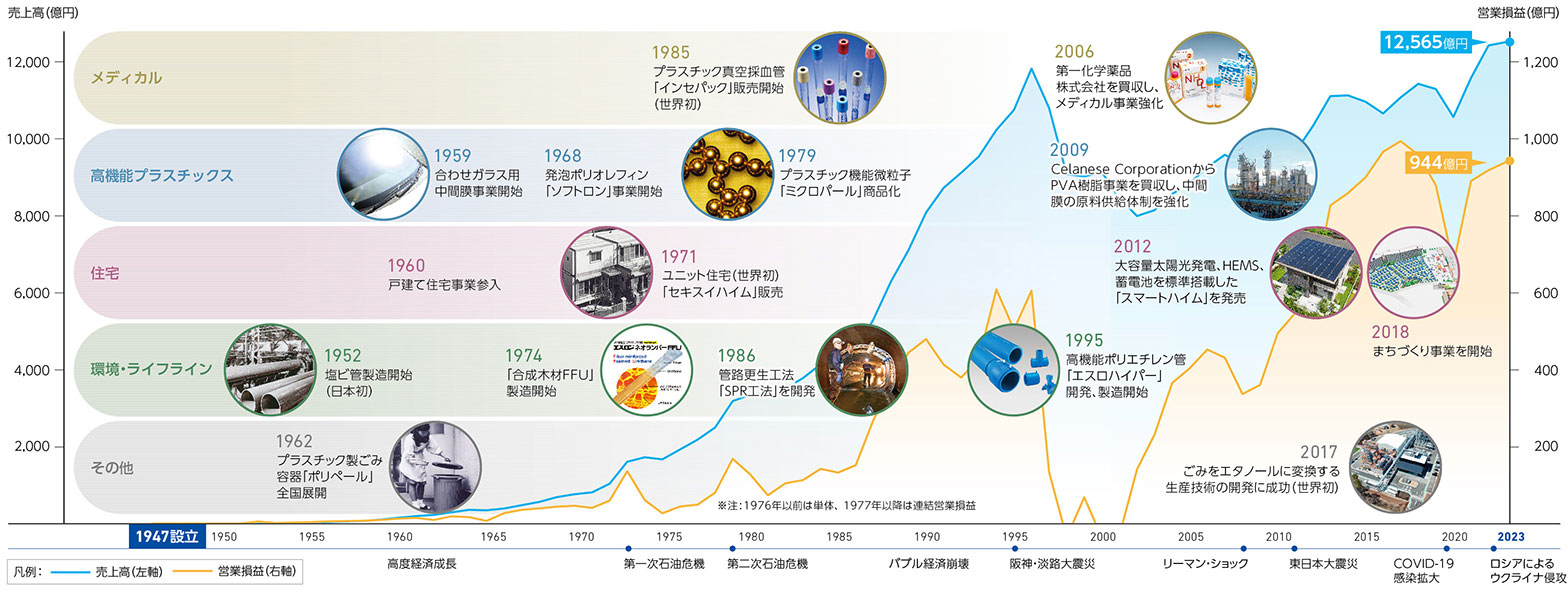
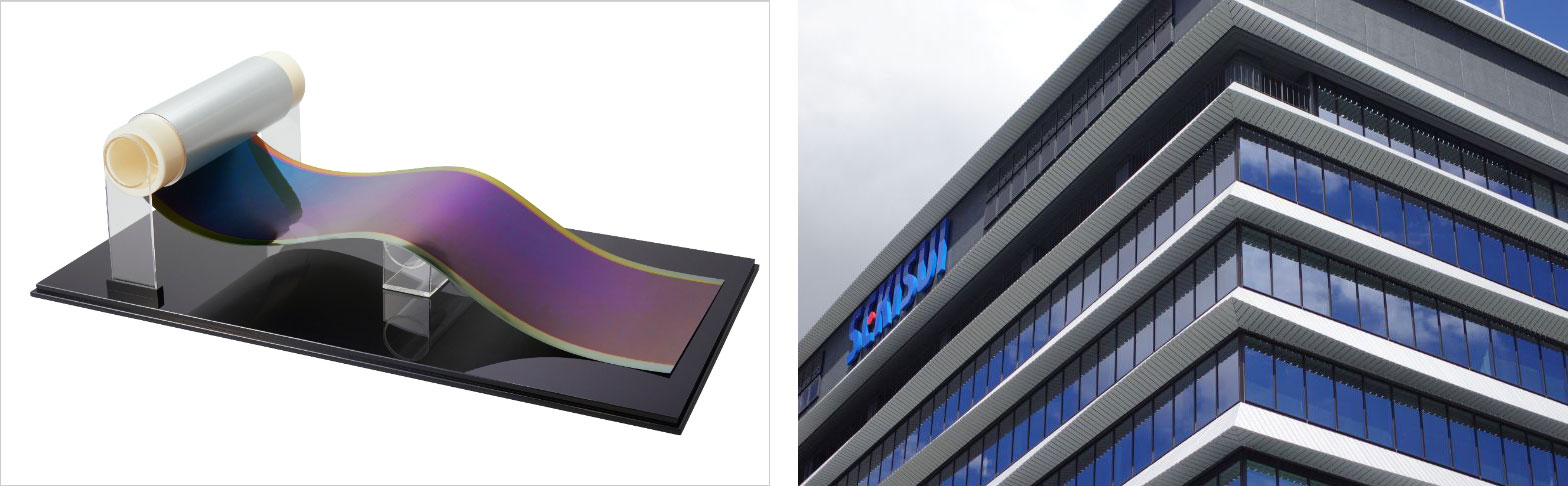
Perovskite solar cells are currently attracting attention for their potential contribution to addressing the worsening climate change. At last year's G7 Hiroshima Summit, they were introduced as Japan's most advanced technology contributing to carbon neutrality, and demonstration experiments are underway in collaboration with local governments and companies, considering a variety of installation locations, with the aim of social implementation in 2025.
"In order to achieve carbon neutrality, the introduction of renewable energy is required, but Japan has limited flat land area, so suitable locations for conventional silicon-based solar cells are limited. In this respect, film-type perovskite solar cells can be applied to places such as walls where installation was previously difficult. For this reason, they are expected to be a promising option for expanding the amount of renewable energy introduced. This utilizes our company's unique 'encapsulation, film formation, materials, and process technologies,' and is a culmination of technologies that we have cultivated over many years. We have confirmed outdoor durability equivalent to 10 years, which is the key to development, and have established a 30cm wide roll-to-roll manufacturing process. Furthermore, we have succeeded in achieving a power generation efficiency of 15.0%. Not relying on overseas raw materials is also important, and we are accelerating development to further improve durability and power generation efficiency in preparation for commercialization."
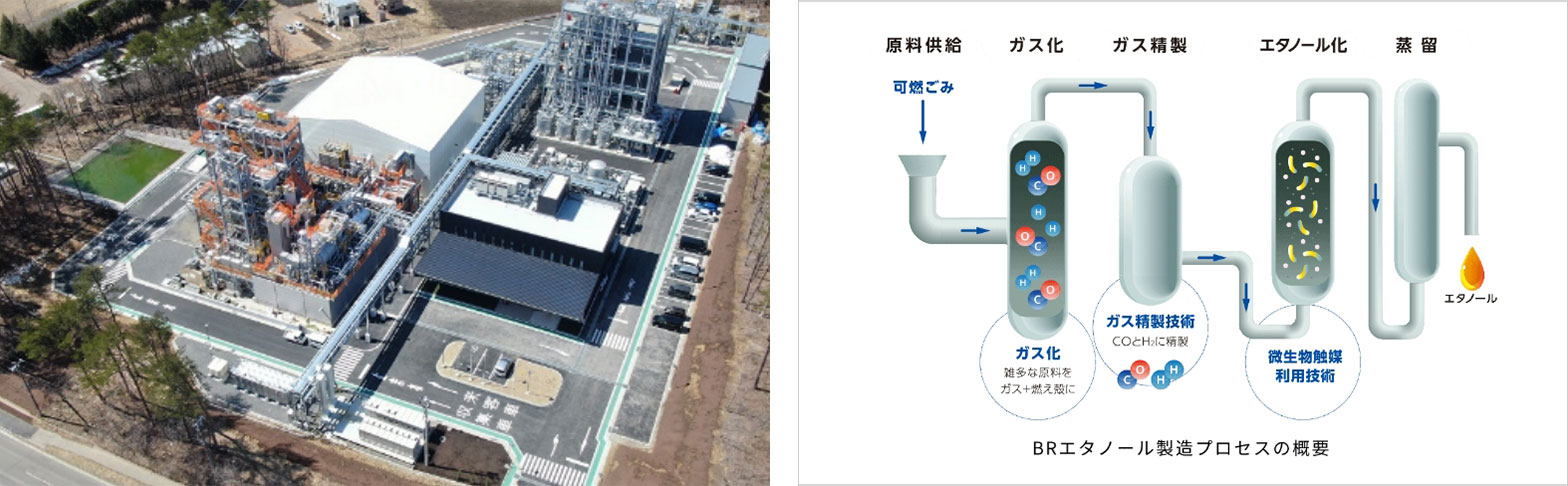
The biorefinery technology, which uses microorganisms to produce ethanol from waste, is also innovative.
This system gasifies combustible waste without any sorting and then converts it into ethanol using microorganisms. While various impurities are generated during the gasification process, the key to this system lies in its real-time monitoring and the technology to purify the gas to a level suitable for microbial growth.
"Biorefineries can produce plastic products and aviation fuel from waste without emitting large amounts of CO2. They not only turn waste into resources, but they are also a sustainable technology that contributes to solving social issues such as fossil fuel depletion, environmental destruction, and climate change."
From 2014 to 2017, research and development were conducted at a 1/1000 scale pilot plant in Yorii Town, Saitama Prefecture, establishing the necessary technology. Currently, technical verification is being carried out at a 1/10 scale demonstration plant in Kuji City, Iwate Prefecture. The goal is to begin operation of the first commercial-sized plant around 2028.
"This resource recycling cannot be achieved by our company alone. Collaboration with partners is essential at each phase, from the collection of combustible waste to the production of polyethylene from ethanol and the manufacturing of plastic products. As the first step, we have begun building a new recycling model for plastic cosmetic containers in collaboration with Shiseido and Sumitomo Chemical. Although it is yet to be fully operational, we believe that tackling the recycling of plastic cosmetic containers, which have traditionally been difficult to recycle due to the difficulty in sorting them, is of great significance."
In addition, development is underway to implement a series of groundbreaking innovations into society, including cell culture technology, which is expected to contribute to regenerative medicine and gene therapy, and CCU technology, which converts CO2, a greenhouse gas, into CO, a raw material for chemicals.
"Outstanding technology and quality" in areas where uniqueness can be demonstrated is the source of innovation.
"The source of our innovation lies in the 'outstanding technology and quality' cultivated over our long history of contributing to solving social issues with our products and technologies. We have defined 26 core technologies that are competitive and need further strengthening as technology platforms, and we are continuously working to enhance them. We drive the value creation cycle and generate innovation by anticipating market changes and societal needs, combining our expertise in technologies to create solutions, and creating new value to transform society. The uniqueness of our group, with its diverse business areas, is invaluable in driving this cycle. We can find new needs from a wide range of business areas, create solutions utilizing our core technologies, mainly intermediate materials, and directly implement them in social infrastructure such as housing and infrastructure."
SEKISUI CHEMICAL Group has created innovation by identifying areas needed by society and where unique core technologies can be demonstrated, specializing and boldly tackling them.
"Matching needs with seeds is crucial. Products that don't contribute to solving social issues are likely to be eliminated, and even if a product contributes to solving an issue, it won't survive the competition if it doesn't demonstrate uniqueness. Our strategic domain map defines these areas of specialization. Using this map as a compass, we are striving to strengthen our existing businesses and innovate in innovative areas."
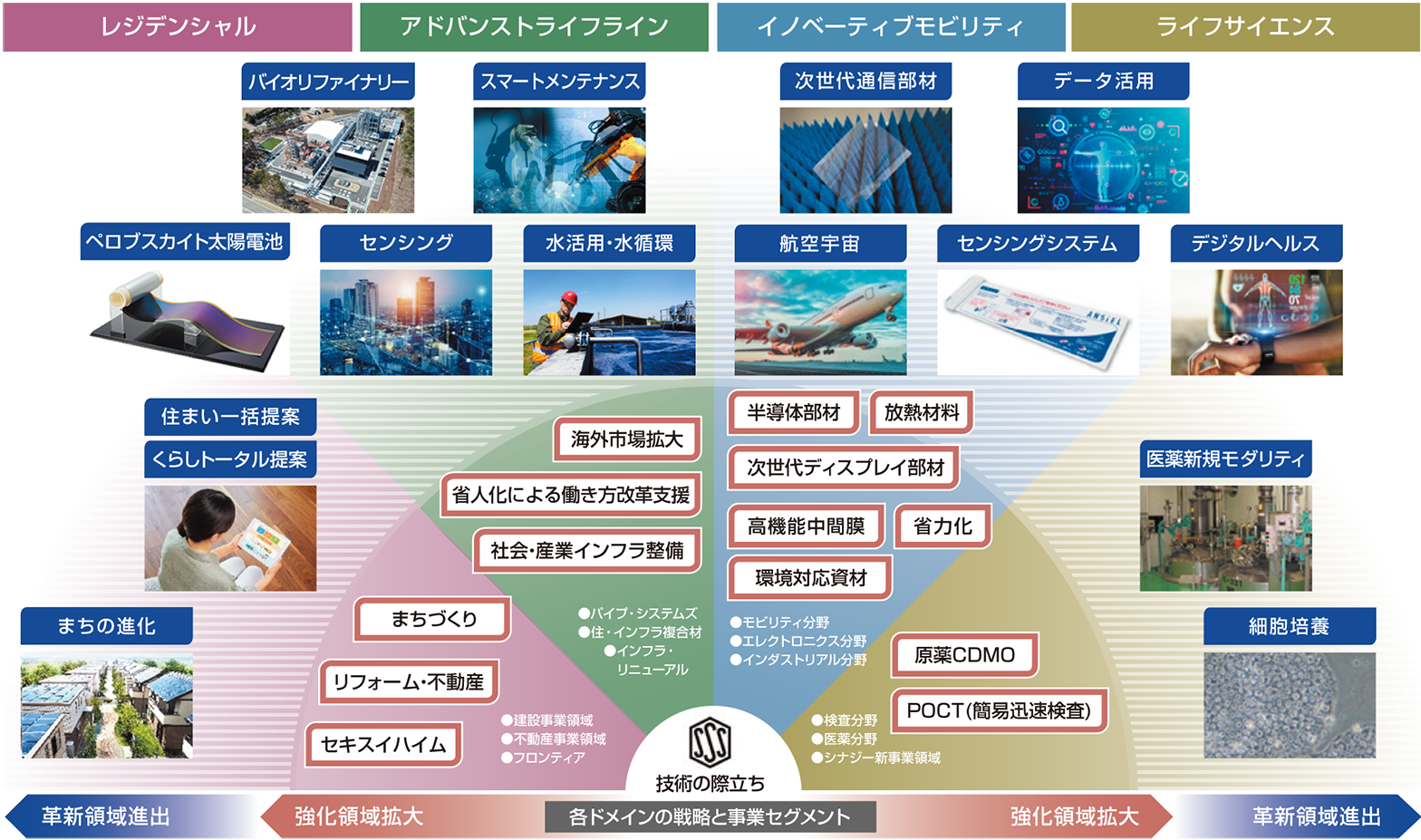
"Going forward, it will become increasingly difficult for a single company to solve these problems alone. Social issues are also becoming more complex, so we recognize the importance of open innovation. We are building an open innovation hub and exploring the needs of society. We want to create new businesses not as isolated ventures far removed from our core technologies, but by extending our core technologies slightly outside of them, or by combining them with external technologies."
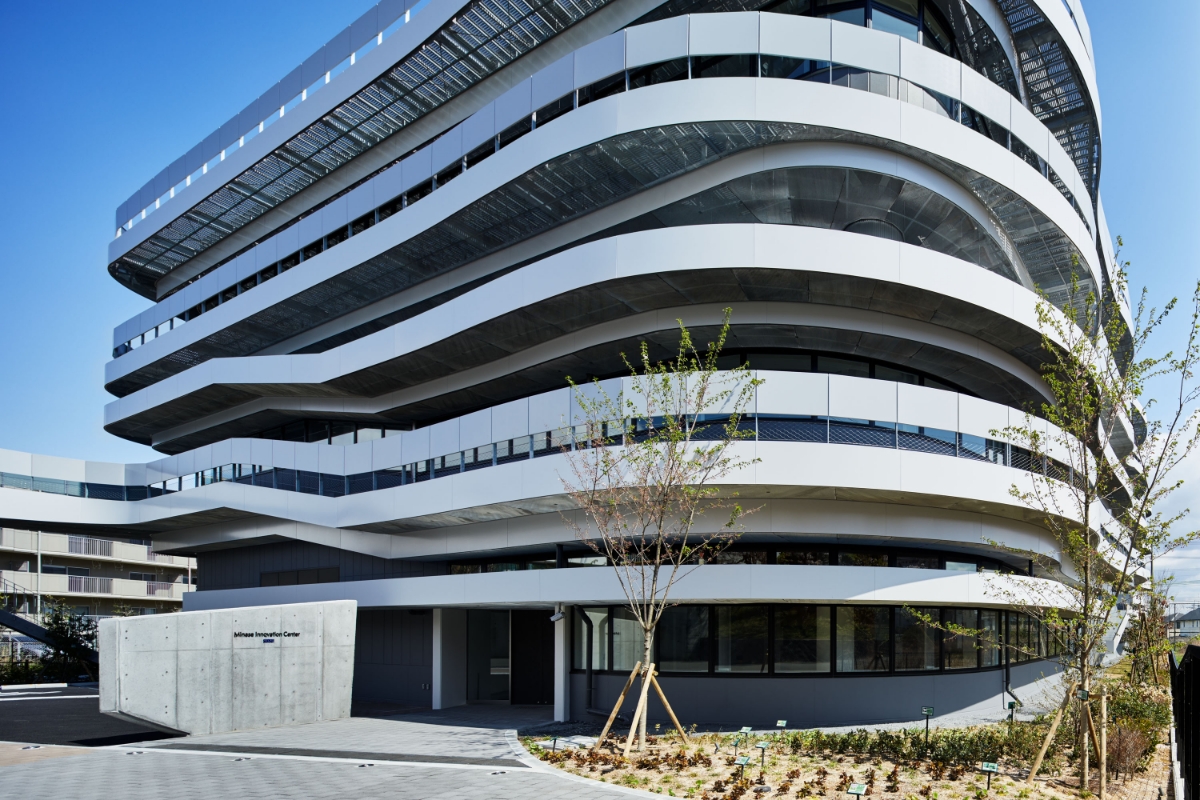
The "Sustainability Contribution Product System" is a product system designed to continuously generate innovation.
"This product system was established based on the idea that solving social issues and realizing a sustainable society will lead to the group's sustainable growth. In the development of new products, we promote their creation by reviewing them from the concept design stage with elements and perspectives of sustainability-contributing products in mind. Furthermore, we designate products with a particularly high degree of contribution to solving social issues and profitability as 'premium products,' and we focus our management resources—people, goods, and money—on expanding sales of these products."
"Furthermore, our product certification criteria consider not only the direct contribution to addressing social issues, but also the sustainability of society and the product, including governance and supply chain management. We ensure transparency in our standards and reliability of registration through dialogue with external experts during the certification process. By utilizing and evolving this product system, we will continuously create innovations that make a significant contribution to solving social issues."
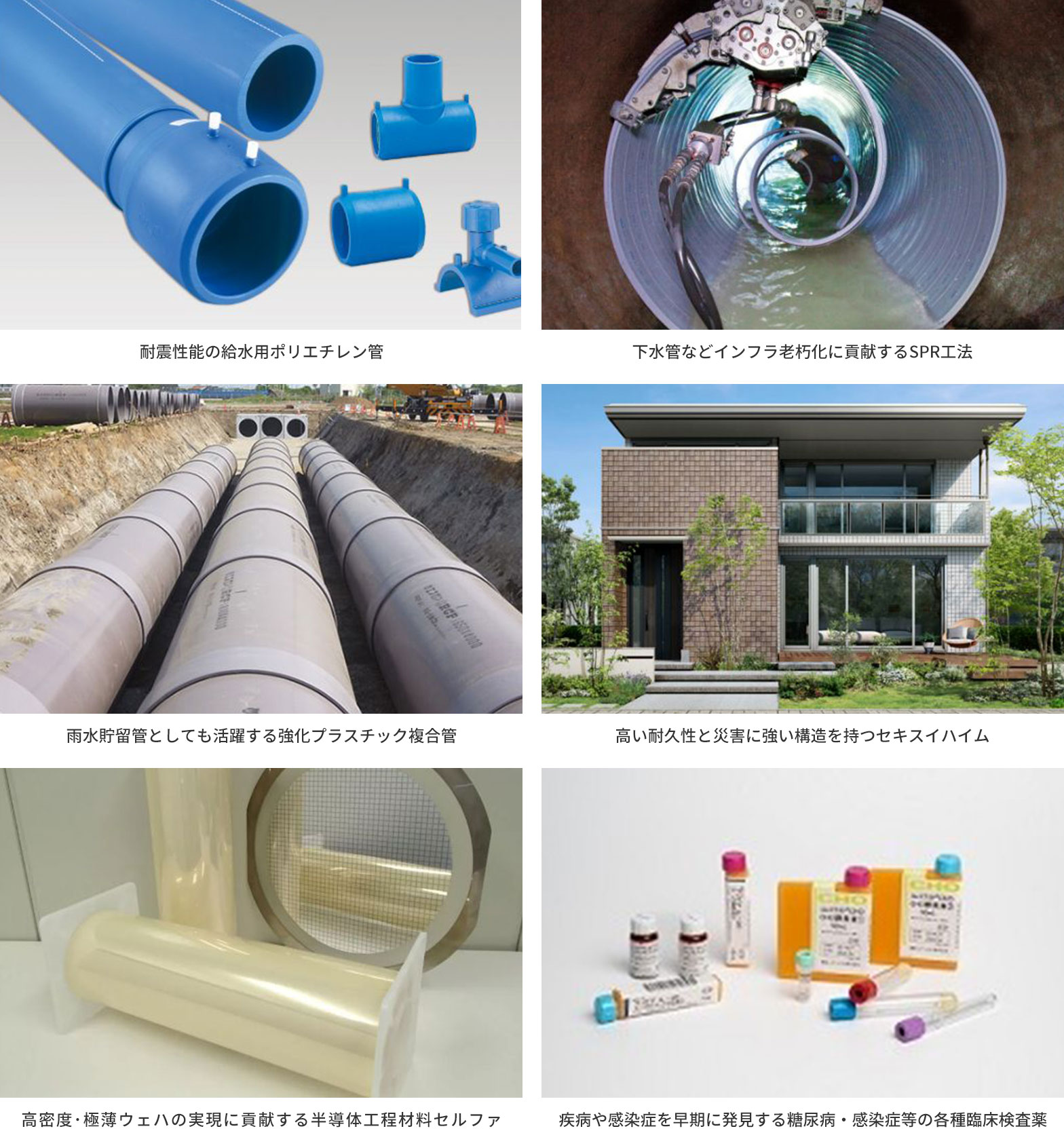
Sekisui Chemical's challenge to create "peace of mind that lasts into the future."
We asked President Kato what he values most in his management style when it comes to fostering innovation.
"We value not only 'generating profits' but also 'creating the future.' Sustainable growth is difficult with existing businesses alone; we must always keep in mind the continuous creation of innovation. The important thing is to have a 'healthy sense of urgency.' Growing businesses are always preparing for the future with technology. And what must never be forgotten is that the driving force behind innovation is people. To create new technologies and contribute to solving fundamental issues in daily life, the key is for each Prominent Human Resources with their expertise to take on challenges. Each person should continue to act with a healthy sense of urgency in their hearts, fully demonstrating their abilities. We also value creating a culture of challenge that does not fear such failures."
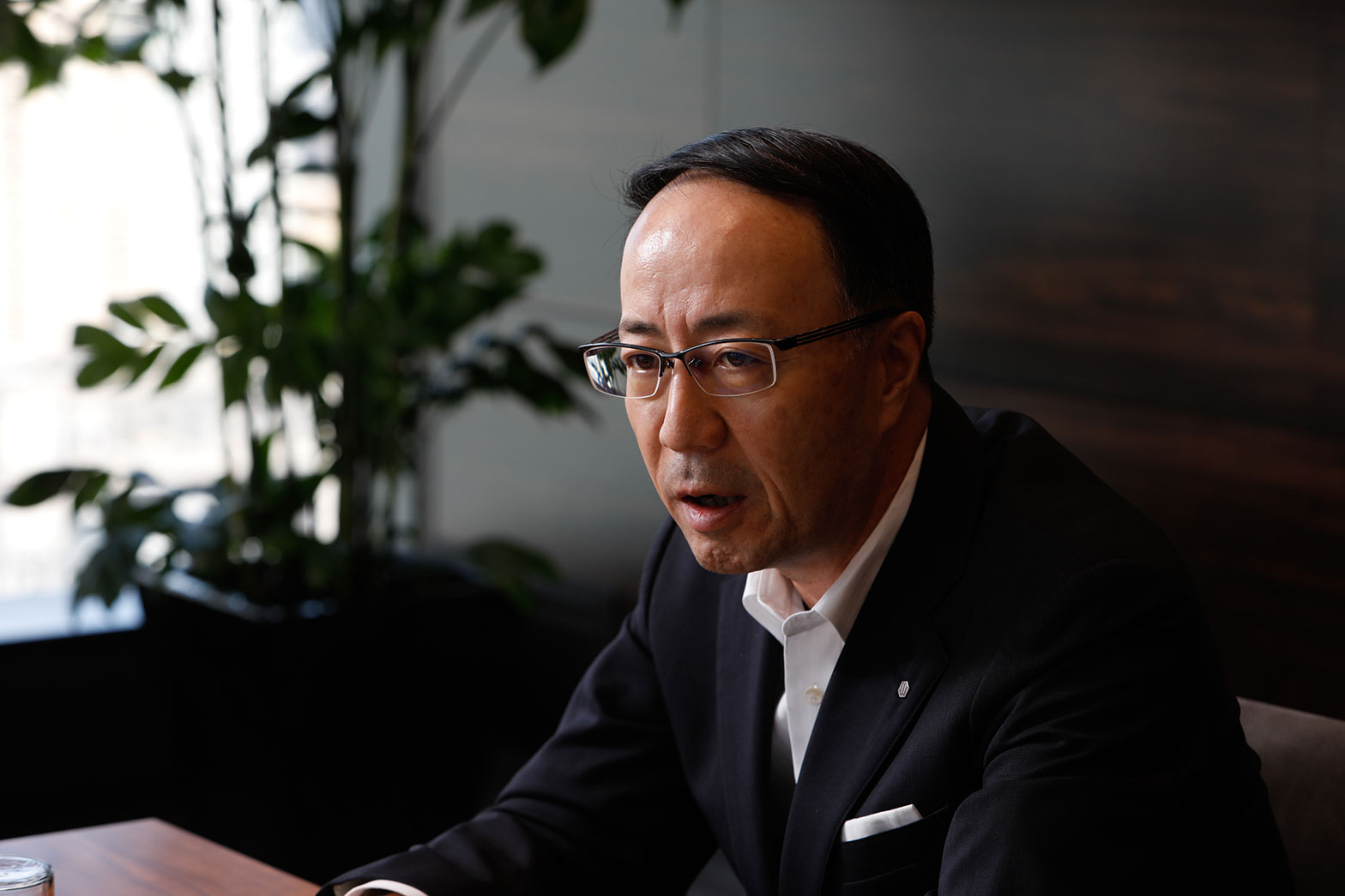
Finally, we asked them to share their future outlook on realizing "peace of mind for the future."
"Our long-term vision statement, 'Innovation for the Earth,' encapsulates our commitment to generating innovation and delivering 'peace of mind for the future.' We aim for profitable growth by addressing challenges through innovation and increasing both the quantity and quality of our contributions. We want to work with various stakeholders to tackle increasingly complex social issues and propose solutions while leveraging our strengths."


