Addressing both heavy rain and water shortages—What is Crosswave, the solution to protect society from flood damage?
公開日:
What thoughts and stories were behind its development?
How will that connect to the people and societies living on Earth?
"SEKISUI | Connect with" is a future-creating media platform that connects you with Sekisui Chemical.
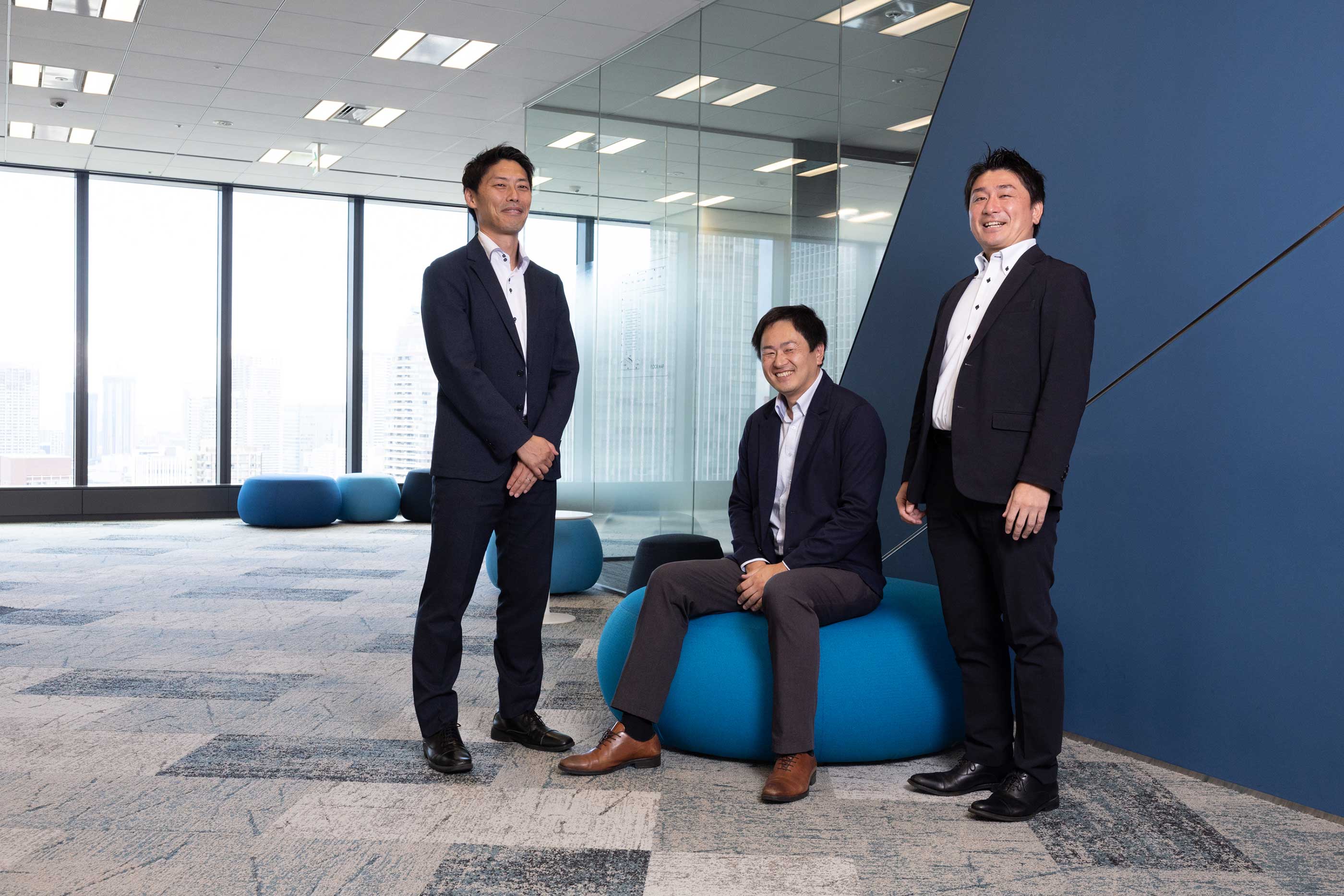
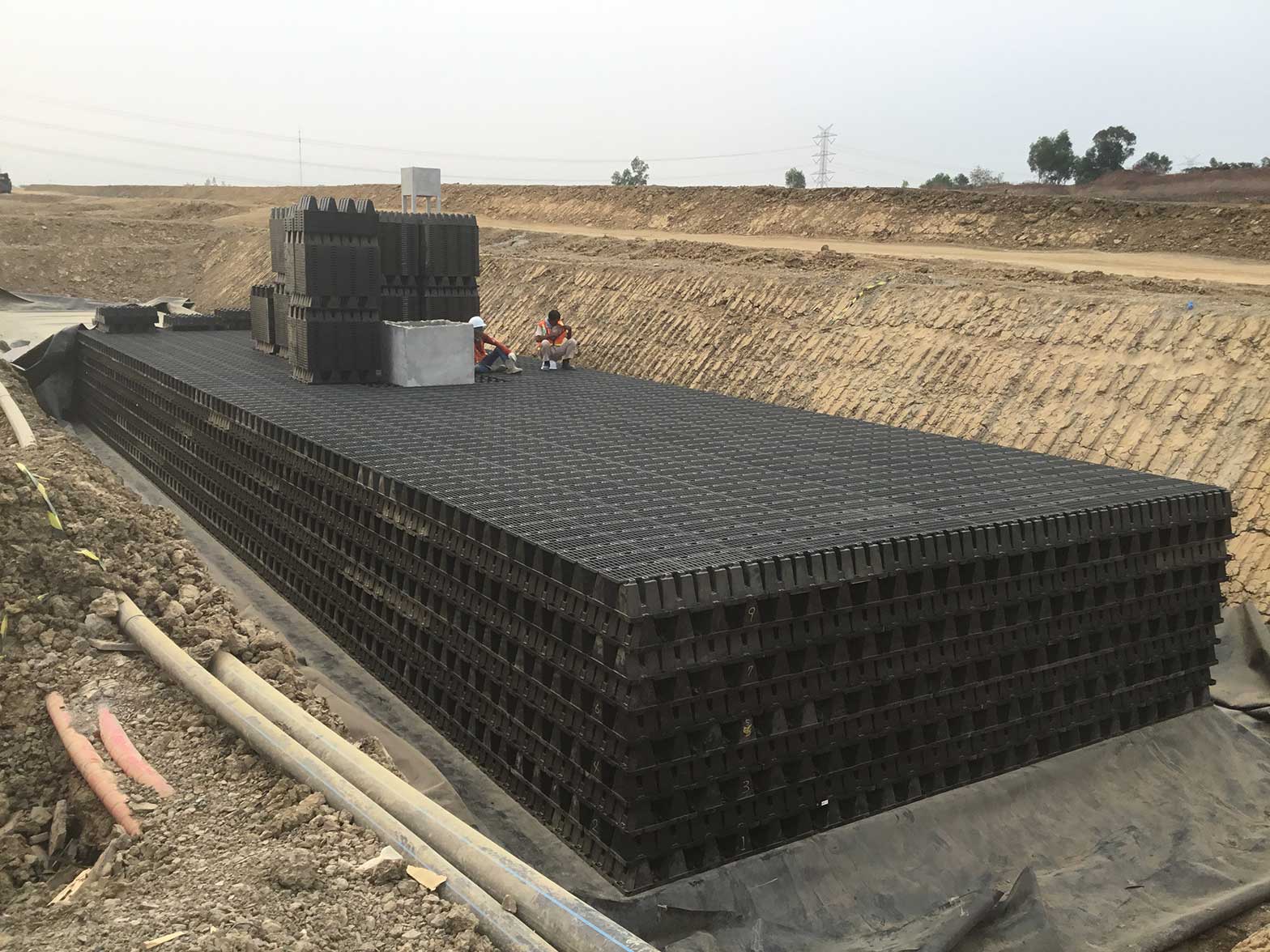
"Egg cartons in the city's underground?" This eye-catching structure is the "Crosswave" rainwater storage tank/rainwater storage and infiltration facility. With over 15,000 installations in Japan, it supports society's water infrastructure in a variety of settings, from urban flood control and wastewater utilization during disasters to water resource utilization overseas. Using recycled plastic, it achieves a 95% void ratio, high load-bearing capacity, and high ease of construction. As an infrastructure that functions in unseen locations, its adoption is progressing in both public and private sectors. Three people who continue to deliver Crosswave to various locations talk about the true value of this technology and how to address social issues surrounding water.
Building flood-resistant cities supported by underground structures.
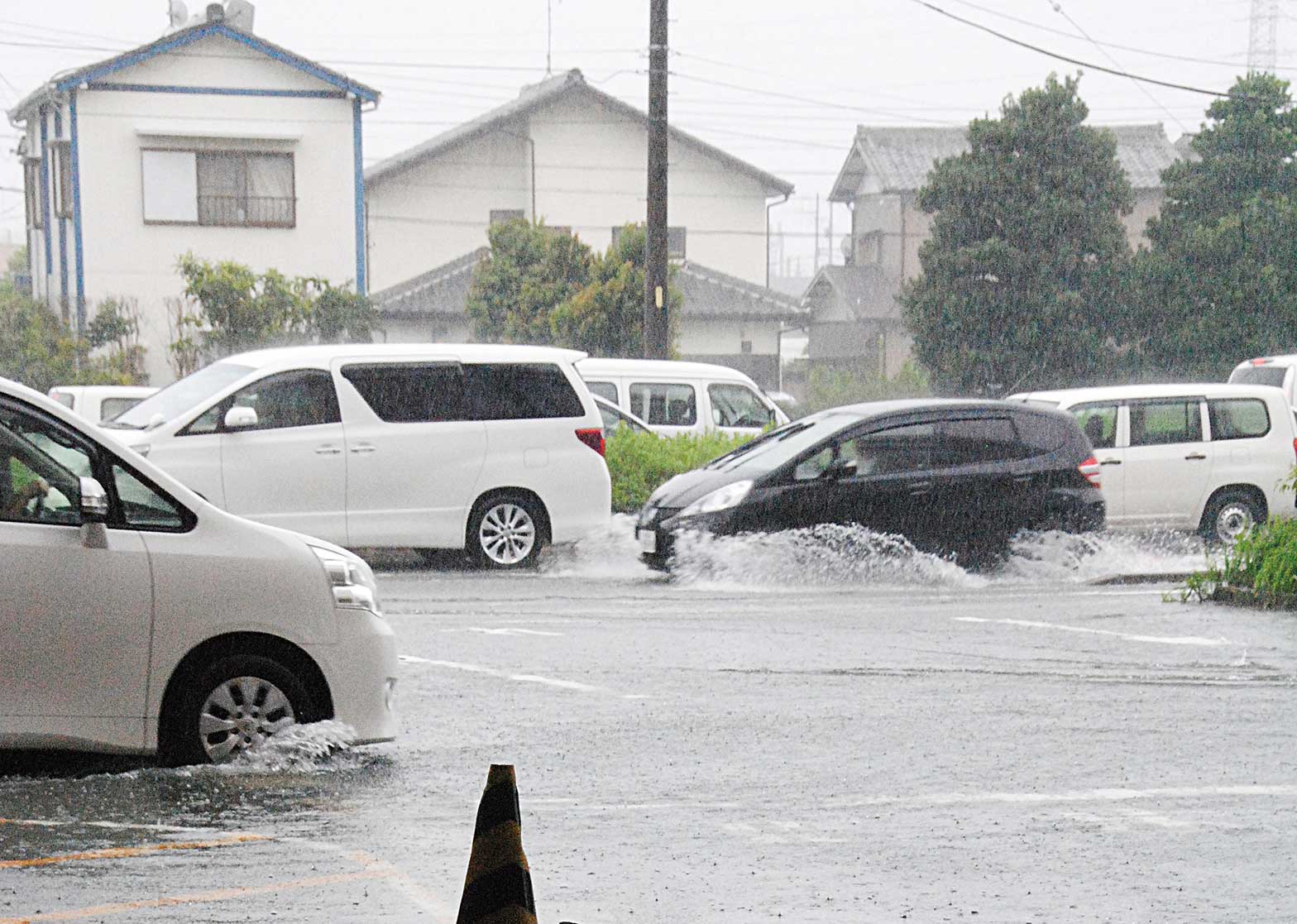
Familiar streets are quickly submerged in water, and roads that support daily life are flooded. As urbanization progresses, the risks from typhoons and torrential rains are increasing year by year. Japan is considered a country blessed with water, but due to the effects of climate change caused by global warming, the threat of floods is striking various parts of the country every year. In this context, one thing that is quietly changing the way infrastructure is built is rainwater storage and infiltration facilities that are buried underground.
When heavy rain falls in a short period, drainage channels and sewage pipes cannot keep up, and the city is suddenly flooded. Due to the effects of climate change, rainfall has increased in recent years, and rainwater that has lost its outlet overflows into roads and property, known as "inland flooding," has become an urban disaster problem.
As a measure to prevent such damage, the development of "rainwater storage and infiltration facilities" that temporarily store rainwater underground and slowly drain it is progressing. A prime example of this is SEKISUI CHEMICAL Group 's Crosswave. It is an "invisible infrastructure" that functions not only as a response to urban floods but also as an emergency water source during disasters.
"Sekisui Chemical began developing Crosswave after Typhoon No. 9 in 1997. The resulting large-scale flooding led to a widespread realization that the open retention ponds and concrete storage tanks that had been the mainstream until then had limitations."
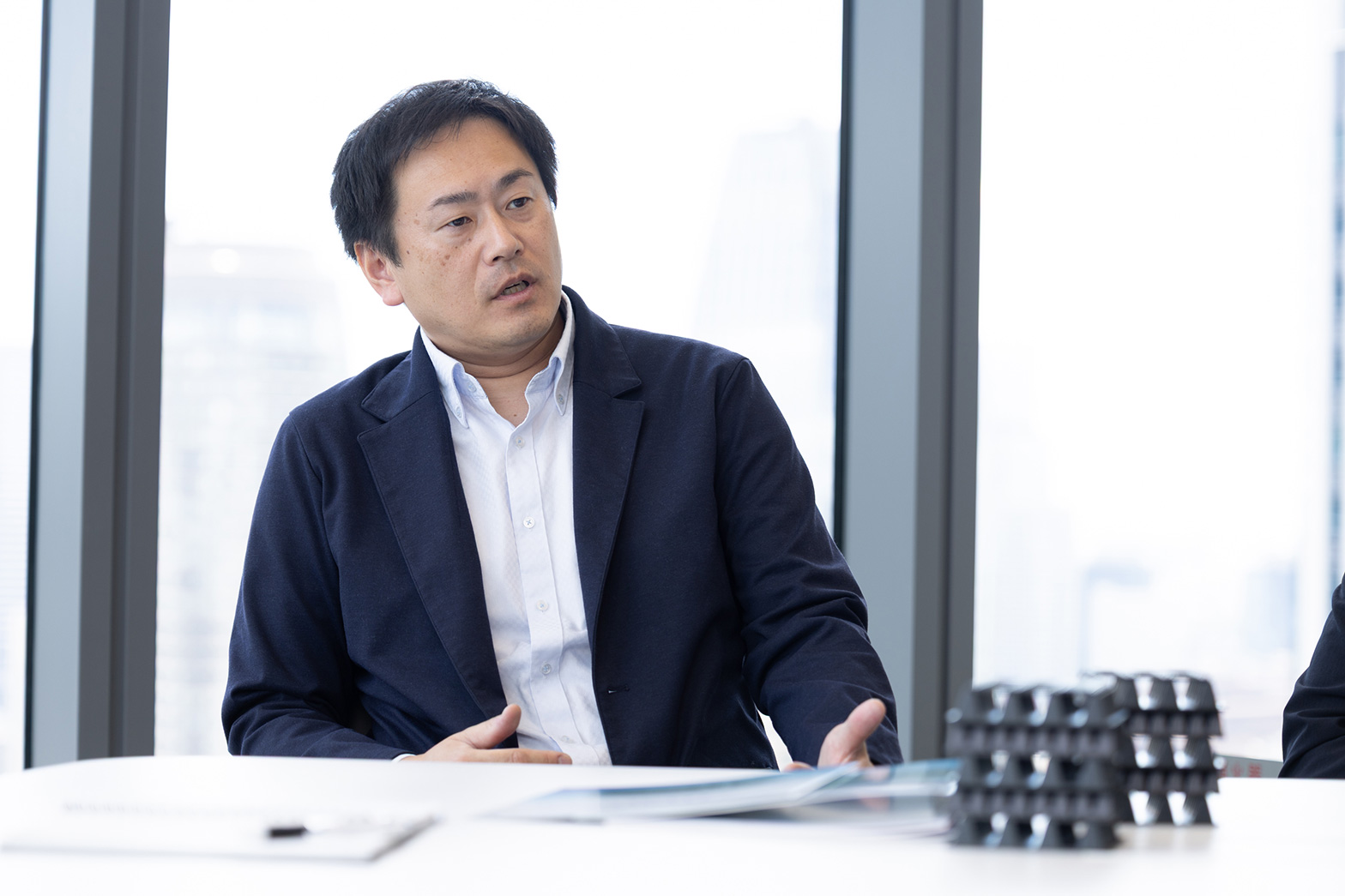
Ariyama, who leads the Crosswave sales team, looks back on the product's 30-year history.
"At the time, the very idea of temporarily storing and treating rainwater was not yet common. As there was a demand for a faster, cheaper, and easier installation method, plastic water-retaining materials began to attract attention, and Crosswave was developed within that context."
Imagawa, who is in charge of sales in the Kanto area, will explain the structure and features of Crosswave.
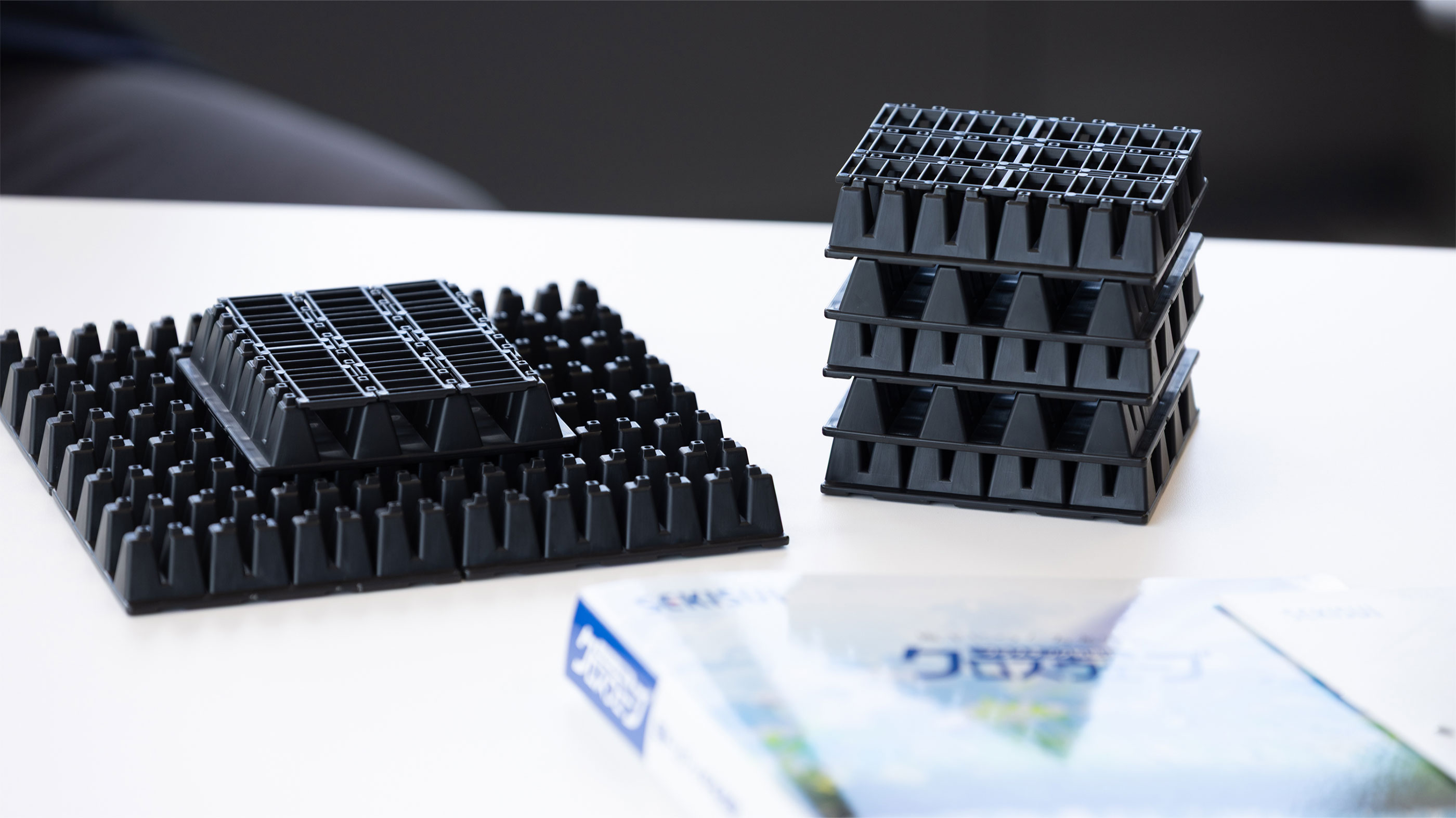
"The void ratio is 95%. This means that 95% of the unit is space for storing water. In storage facilities with crushed stone structures, the void ratio is about 30%, so this means that water can be stored with more than three times the efficiency. This is a particularly significant advantage in urban areas because it allows for sufficient capacity even on limited land."
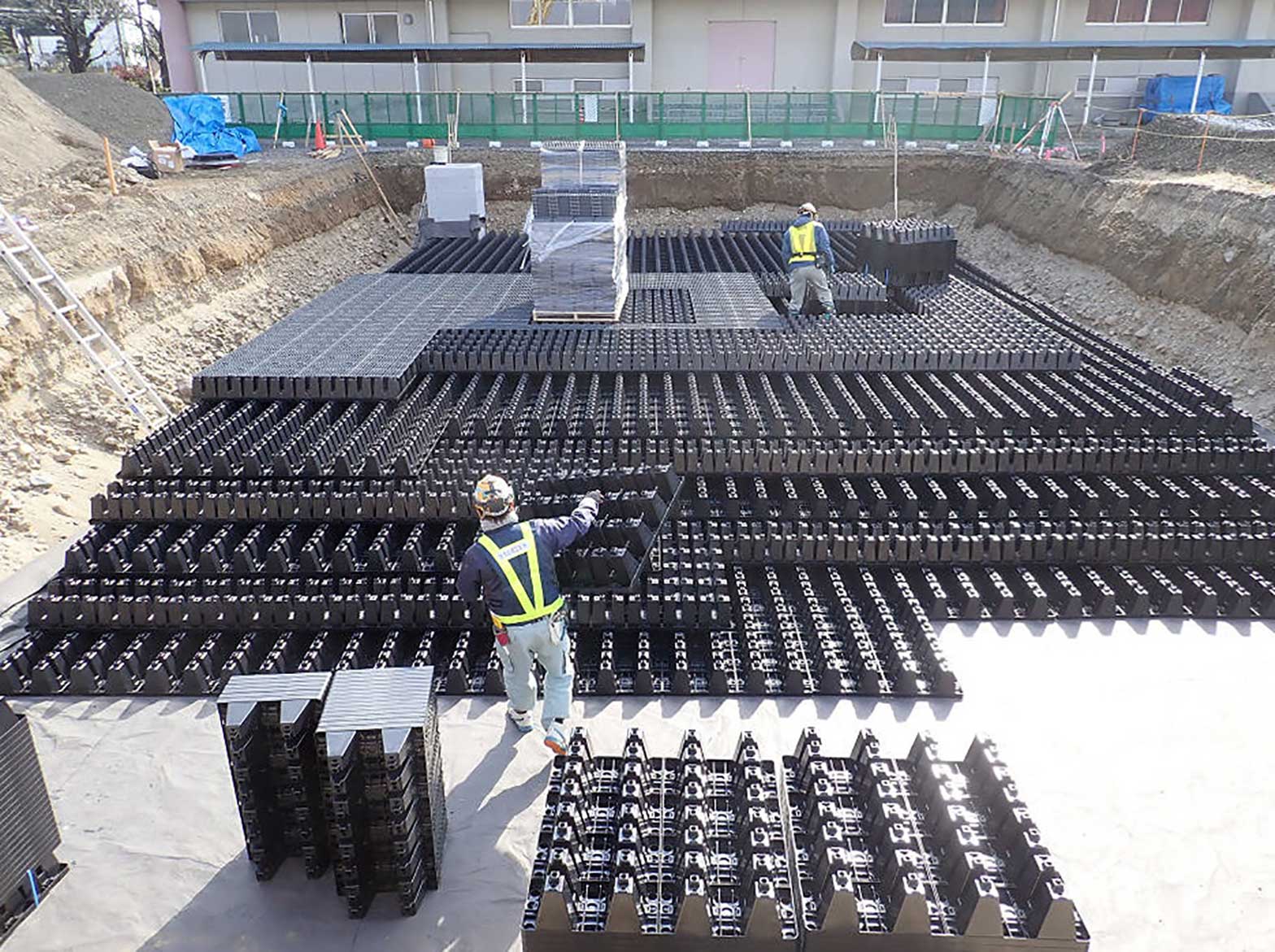
The structure consists of 1-meter square units, which are stacked in a staggered arrangement, rotated 90 degrees each during construction. The components interlock securely, maintaining strength even without connecting members. In fact, it has enough strength to withstand large trucks driving over it, and its performance is comparable to concrete. In addition, it is designed to withstand major earthquakes and has obtained construction method certification, including seismic evaluation from a third-party organization. It is a highly reliable facility that can be used stably underground for a long period of time, even though it is lightweight."
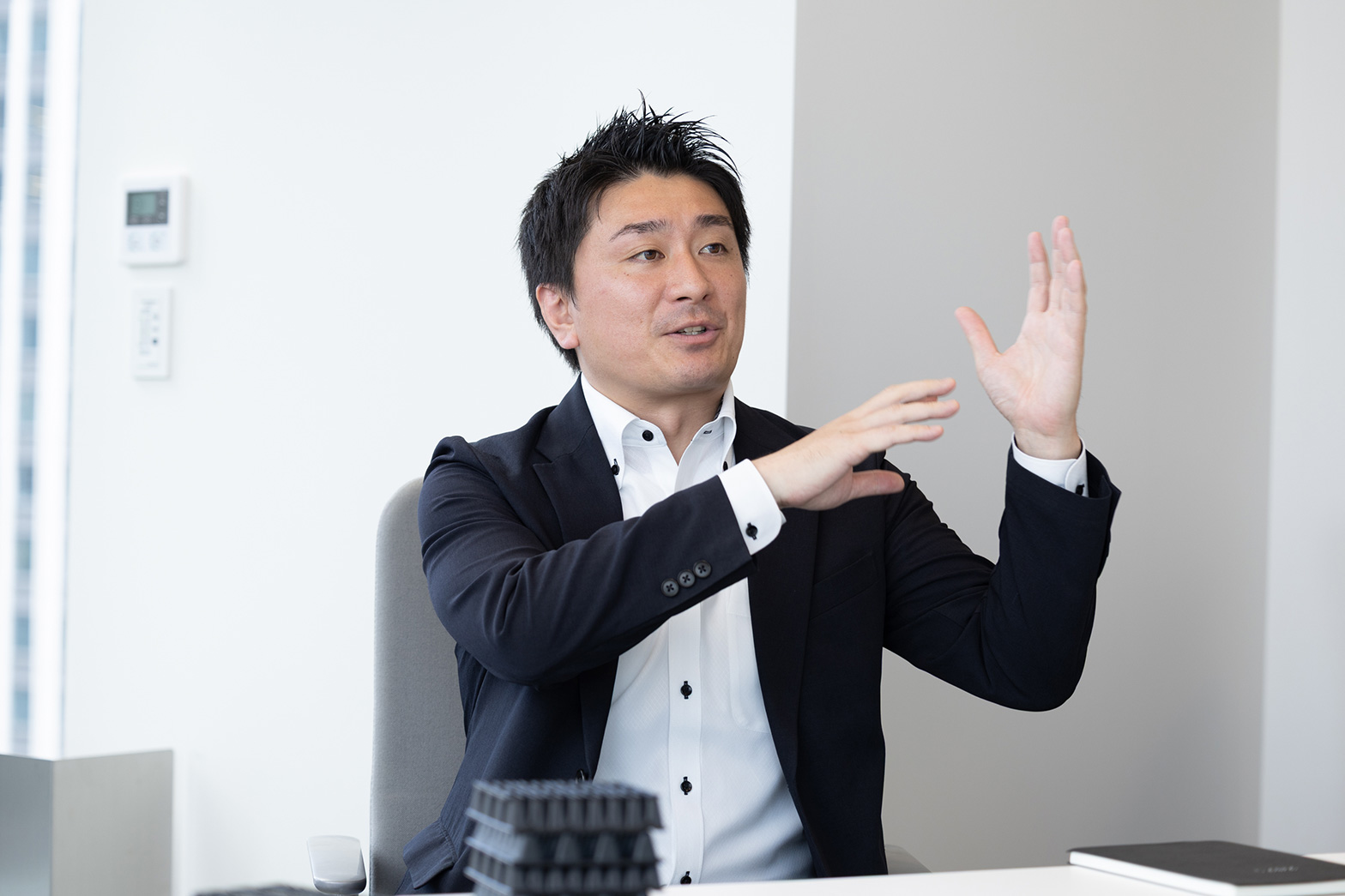
Each unit is lightweight, weighing only 7-8 kg, and can be assembled manually. During transport, they can be stacked in the same direction for compact storage, resulting in excellent transport efficiency. The advantages of this structure extend beyond just water storage efficiency. Ease of installation, or speed, is also highly valued on-site. Harada, who is involved in sales, shares his experience:
"The construction period is about half that of concrete. A project that would normally take three months can be completed in one to one and a half months with Crosswave. This is a huge advantage, especially for projects like schools where construction can only be done during summer vacation."
The main body uses recycled polypropylene and is certified as Environment-Contributing Products of SEKISUI CHEMICAL Group. In 2017, it was presented as a case study of good adaptation practices by Japanese companies at a side event of COP23 (the 23rd Conference of the Parties to the United Nations Framework Convention on Climate Change). Combined with compliance with LCA (Life Cycle Assessment) and high transportation efficiency, CO₂ emission reductions are also expected. It is a next-generation rainwater storage and infiltration material that responds to the sustainability of society as a whole.
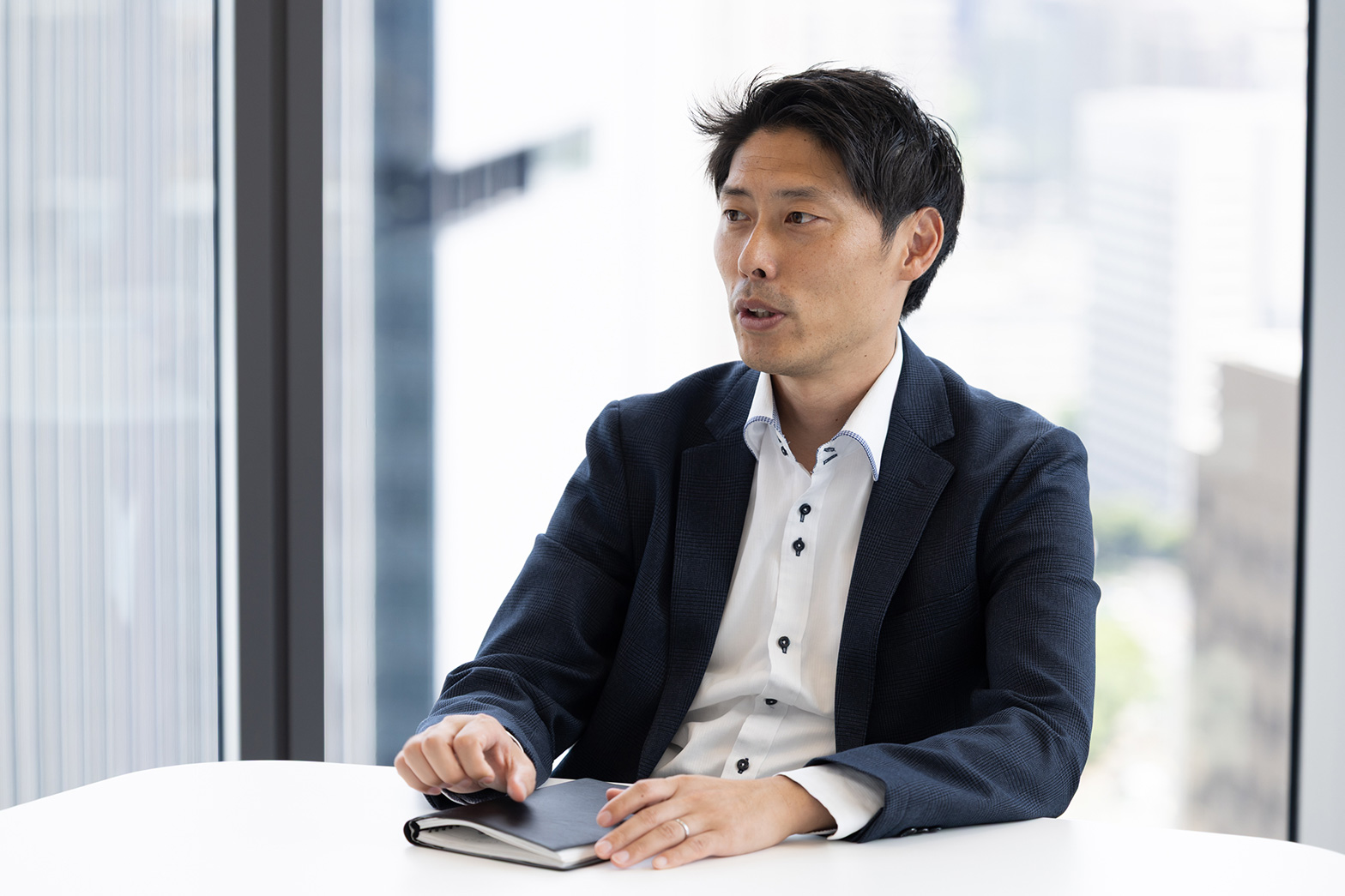
Trust and collaboration create reliable construction and speed.
Crosswave was launched in 1998. Since then, the cumulative number of installations in Japan has exceeded approximately 15,000, and the total storage capacity has surpassed 3.3 million m³, with a penetration rate of 97% across all prefectures. Its use has spread to public facilities such as schools, government buildings, parks, and hospitals, as well as to private sector facilities such as convenience stores, logistics warehouses, and commercial facilities, and it has taken root in various places as an "invisible infrastructure" that protects cities from flooding.
"At the local government level, we often receive direct feedback from residents, and when we hear that flooding damage has disappeared after implementation, we truly realize the value of this product. This kind of positive feedback is also what makes my work as a salesperson rewarding."
Harada, who has been dealing with the problems and needs of local governments, describes his experience on the ground as follows: In recent years, consultations from the perspective of "disaster prevention" have increased, and Crosswave is also expected to play a role as emergency infrastructure, such as providing water for toilets during disasters.
This level of trust is extending to infrastructure sectors where even higher hurdles are required. For example, a demonstration test was conducted to install Crosswave's "CW Trench SS" between railway tracks, marking the first time this has been done for railway infrastructure.
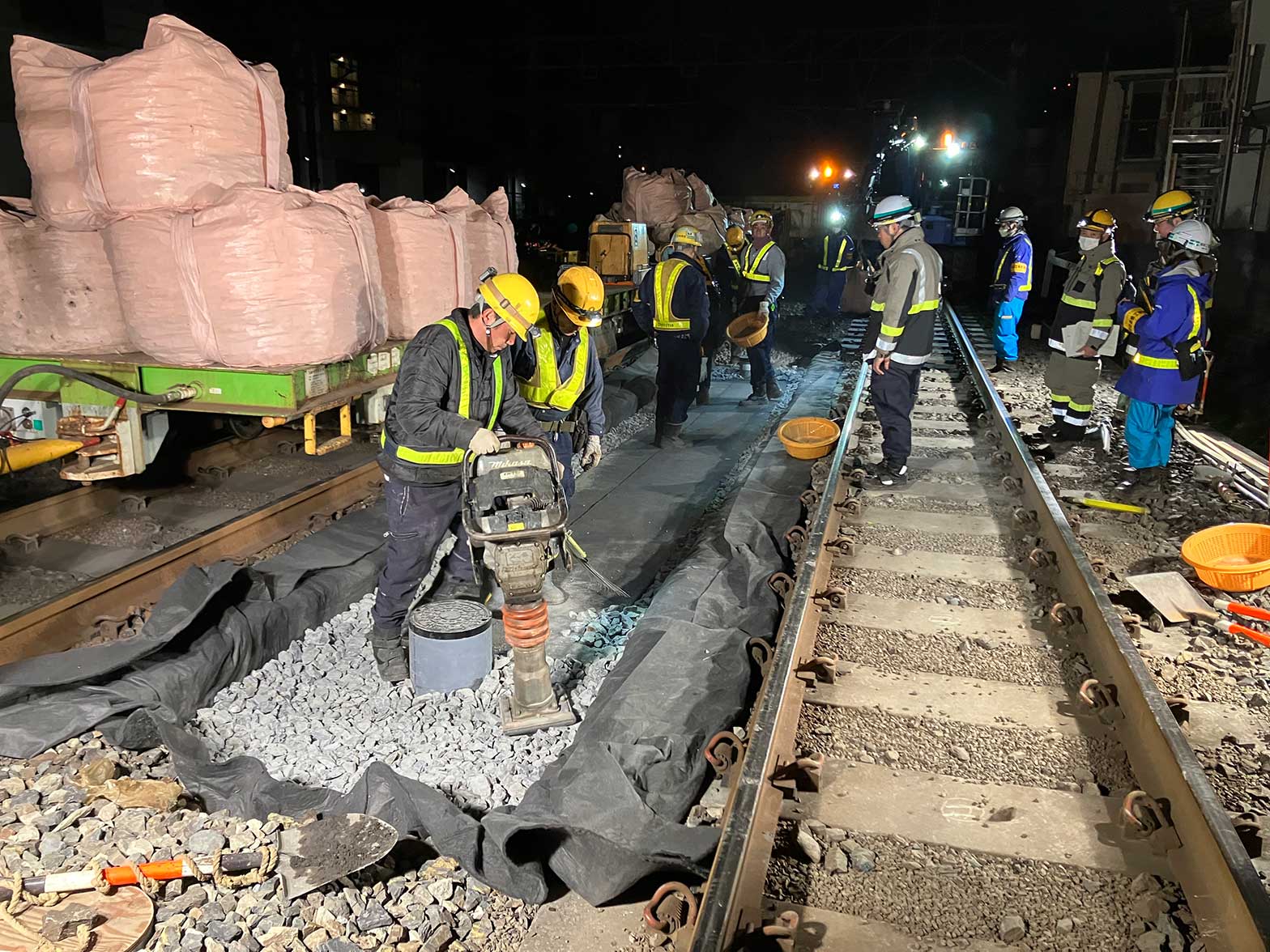
"With train services suspended at night, we only had four hours to work. Within that time, we had to complete everything from excavation and foundation crushing to the assembly of the crosswave structure and backfilling. The railway company, the construction company, the agency, and our construction team at Sekisui Chemical held numerous meetings and worked on a project with a schedule planned down to the minute."
Ariyama reflects on the time when everyone involved worked together as one. He says that at the site, the functional features such as the structure that does not require connecting members and its lightweight nature, along with the extensive track record of implementations and construction know-how across the country, were put to good use and resulted in solid achievements.
"We prepared the installation of management piping and the wrapping of permeable sheets in advance, as a single integrated unit like a 'furoshiki' (traditional Japanese wrapping cloth), so that it could be unfolded and installed immediately on site. This kind of ingenuity in preparation made it possible to complete the work within the limited time."
As Ariyama explained, the installation was completed in 1 hour and 15 minutes, 15 minutes ahead of schedule. This demonstration project, which combined the product's inherent performance with the responsiveness of the on-site team and the high level of coordination among all parties involved, provided a solid indication that Crosswave's application areas will be further expanded.
Crosswave's future: Responding to countries that "store" water and countries that "utilize" water.
Crosswave's success extends beyond Japan. Ariyama, who oversees overseas projects, will introduce some representative implementation examples.
"In Asia, it's also being used as a way to 'recharge' rainwater by returning it to the ground. For example, at temples in Indonesia, thousands of worshippers gather all at once for religious ceremonies in what is normally a quiet facility. As a result, the wastewater treatment system, including toilets, can't keep up, leading to a shortage of capacity."
At this temple, approximately 800 tons of crosswaves were buried underground on the adjacent site. A system was established to pump the stored water to a tank on the roof, and to replenish it from the underground reservoir when needed.
"The system is being implemented with a different approach than in Japan, and flexible responses to local needs are required," says Ariyama. Beyond Asia, the system is also being considered for expansion to other regions for purposes such as water resource conservation and flood control.
Turning our attention to the domestic market, the members are working to expand the "points" of achievements they have accumulated in various regions into "lines" and then into "planes." Imagawa, who is focusing on the communication power of the Tokyo metropolitan area, feels a strong sense of confidence in creating a starting point for nationwide expansion.
"In our group, the track record built by our predecessors over more than 20 years forms the foundation of trust. We believe that successful case studies in major cities, such as schools, hospitals, and logistics facilities, will serve as a catalyst for nationwide adoption."
That's why I'm always mindful of what's happening in my assigned area. Lately, every time I hear news about heavy rain in a particular region, it makes me realize that I need to take action. I want to focus my efforts especially on those areas."
Harada, too, has strong feelings about his experiences working in local governments.
"I believe that steadily accumulating concrete results in each region will create a ripple effect. In Hokkaido, where I am in charge, the risk of flooding is increasing due to the effects of climate change. In particular, the Ishikari River basin has been designated as a 'specific urban river' with a high risk of flooding in urban areas, making it an area where countermeasures are increasingly necessary. The need for Crosswave is steadily increasing, and I would like to make a solid contribution to its introduction and help strengthen the country's resilience."
Ariyama, who leads the team, is hopeful for further expansion within Japan, while also looking to expand its applications overseas.
"The value and perception of water vary greatly from region to region. In Japan, the challenge is 'how to deal with overflowing water' as a flood control measure, but in areas where water is scarce, there is also a need to 'store water.' In other words, water can be a nuisance or a blessing depending on the location. Crosswave is a product that can flexibly change how it is stored, used, and even its role itself to meet these diverse needs. The areas in which it is expected to thrive will surely expand even further in the future."
Crosswave is more than just a product. It continues to adapt to societal changes, providing flexible solutions that address the challenges of each region, as well as maintaining urban functions and responding to disasters. A structure quietly installed underground—it is a "proposal" that supports the sustainability of urban infrastructure and the "answer" itself to confront the impending climate risks.