Responding to the current needs of the medical field. Customer support provided by a diverse team of collaborating staff.
公開日:
What thoughts and stories were behind its development?
How will that connect to the people and societies living on Earth?
"SEKISUI | Connect with" is a future-creating media platform that connects you with Sekisui Chemical.
Clinical testing is essential for diagnosing illnesses and determining treatment plans. Malfunctions in the analytical instruments used in these tests can directly lead to delays in treatment and potentially increase the risk of serious complications. As a pioneer in clinical diagnostic reagents, Sekisui Medical's testing division also manufactures and sells its own analytical instruments to meet the diverse needs of medical institutions. This article explores the strengths and unique initiatives of their customer support center, which ensures that medical services are never interrupted by a robust backup system and extensive knowledge.
- We are not dealing with analytical equipment; we are dealing with patients' lives.
- All issues can be resolved by phone. Our call center is the key to our support.
- We are one team, including our partner companies. Our organizational structure is solid.
- We need to resume testing as soon as possible. Speed is of the essence on this frontline.
- In the evolving field of medicine, what changes and what remains the same
- Voices from the medical field
We are not dealing with analytical equipment; we are dealing with patients' lives.
Clinical laboratory technologists are required to deliver test data to doctors accurately and promptly. Since test data is the basis for treatment decisions, such as understanding a patient's health status, deciding whether surgery is feasible, and determining medication dosages, delays can disrupt the entire medical timeline.
Watanabe, who leads the equipment service group, says, "When I was actively going out to make repairs, doctors would press me, saying, 'Aren't the results in yet? We're keeping the patients waiting,' and each time I was acutely aware of the weight of the products we were handling." Based on that experience, he has told his group members to always think about "who they are repairing for." "Needless to say, it's not for the company, but for the patients and healthcare professionals. Even when there's an urgent call, I want them to keep in mind their mission as people whose lives are at stake through the products they are working on," he says.
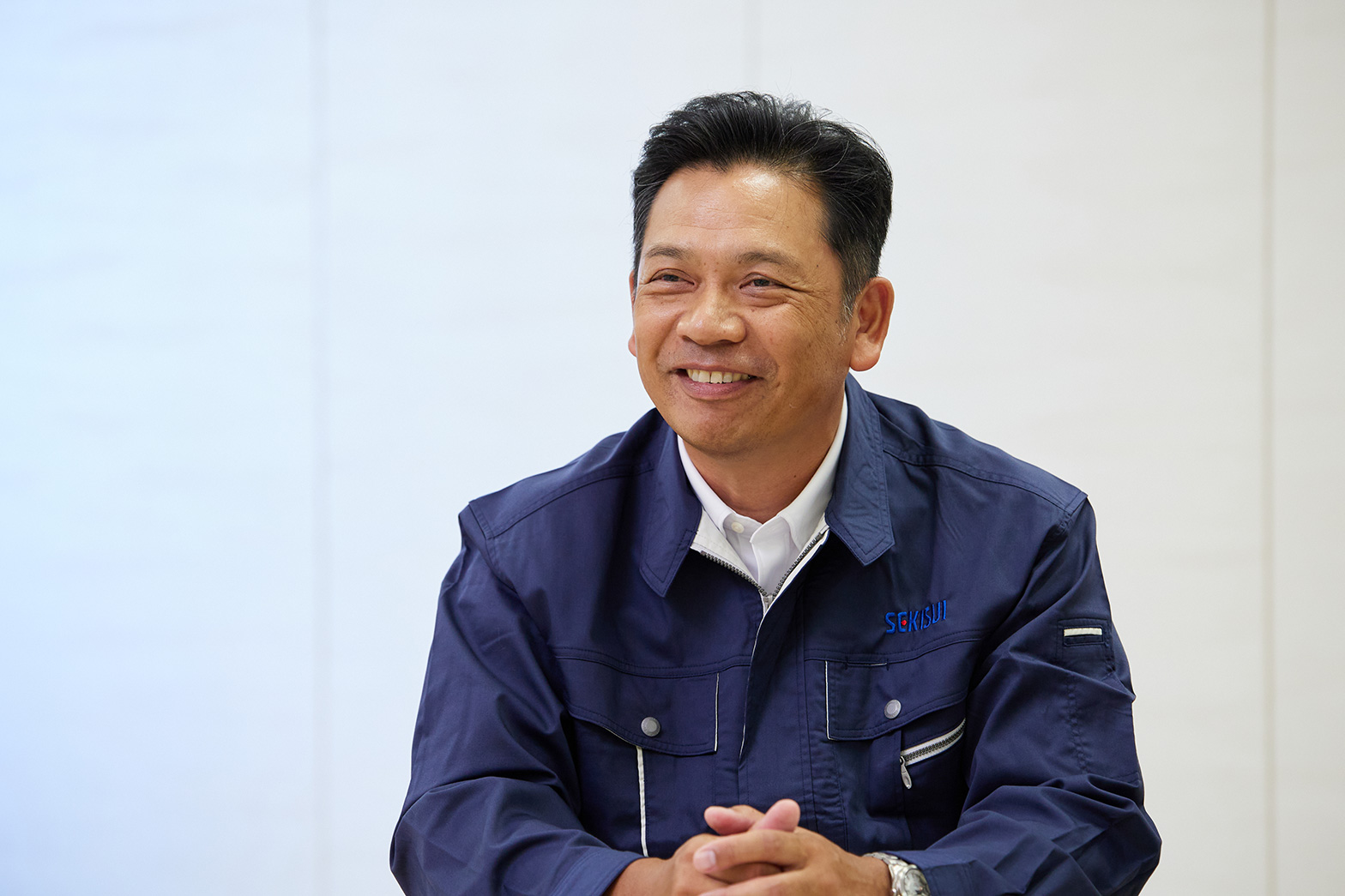
Ichiaki from the call center group shares the same sentiment. "Even though we're dealing with people in the testing lab, there are patients on the other side. Especially in today's testing labs, 'TAT' (Turnaround Time), an indicator that shows how quickly results can be delivered to doctors after a test request is received, is becoming increasingly important."
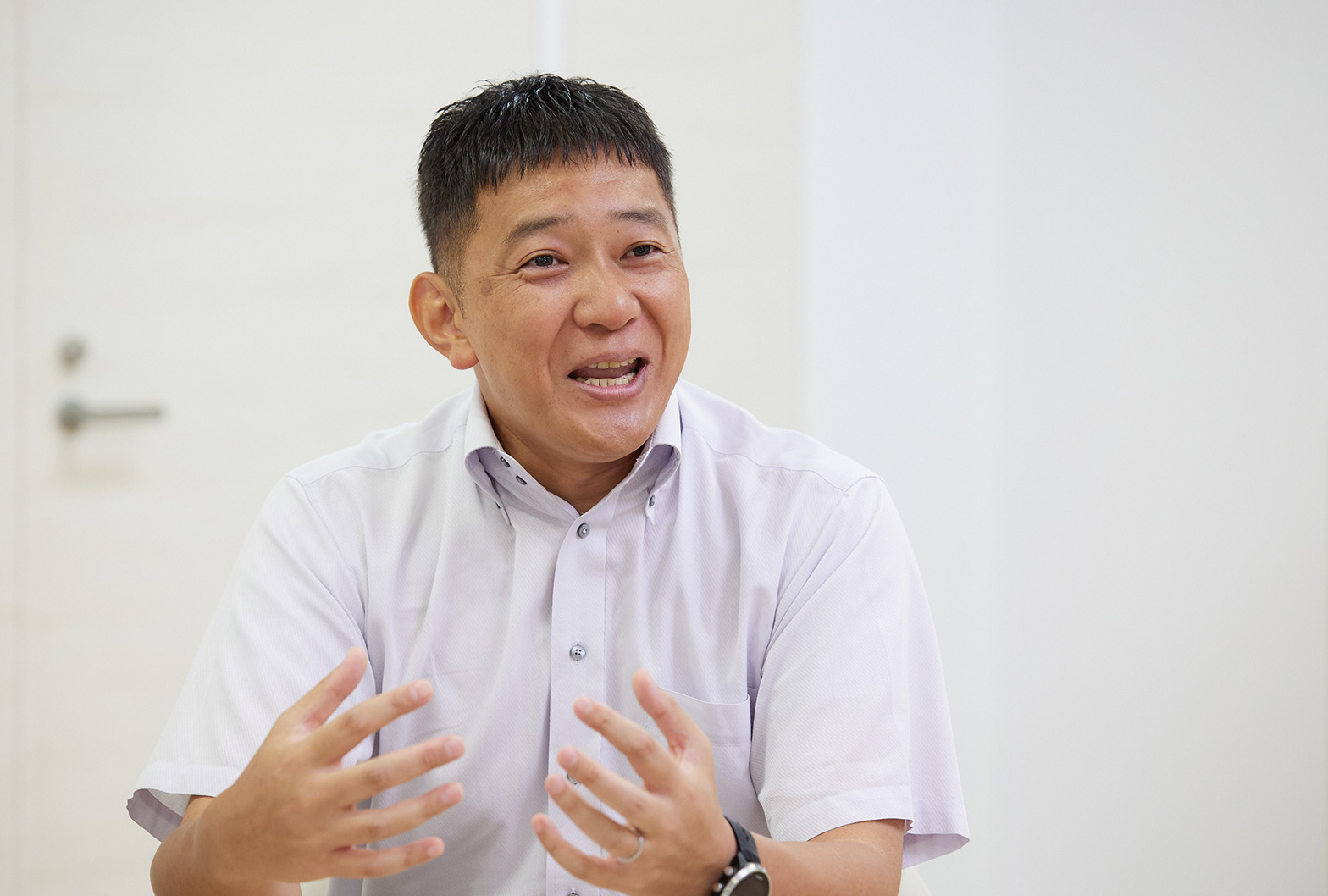
In recent years, the wave of work-style reform has also swept through the medical industry. Responding to this has become an important responsibility for Sekisui Medical, says Horiuchi of the equipment service department. "Previously, repairs done outside of regular hours were often tolerated with the attitude of 'it's OK as long as it's fixed,' but now the request is stricter, with demands to 'finish the work by 5 PM.' We are required to shorten two timeframes: from responding to inquiries to making visits, and from visits to completing repairs."
Keep the laboratories running, keep medical care going. That's the mission of our customer support center.
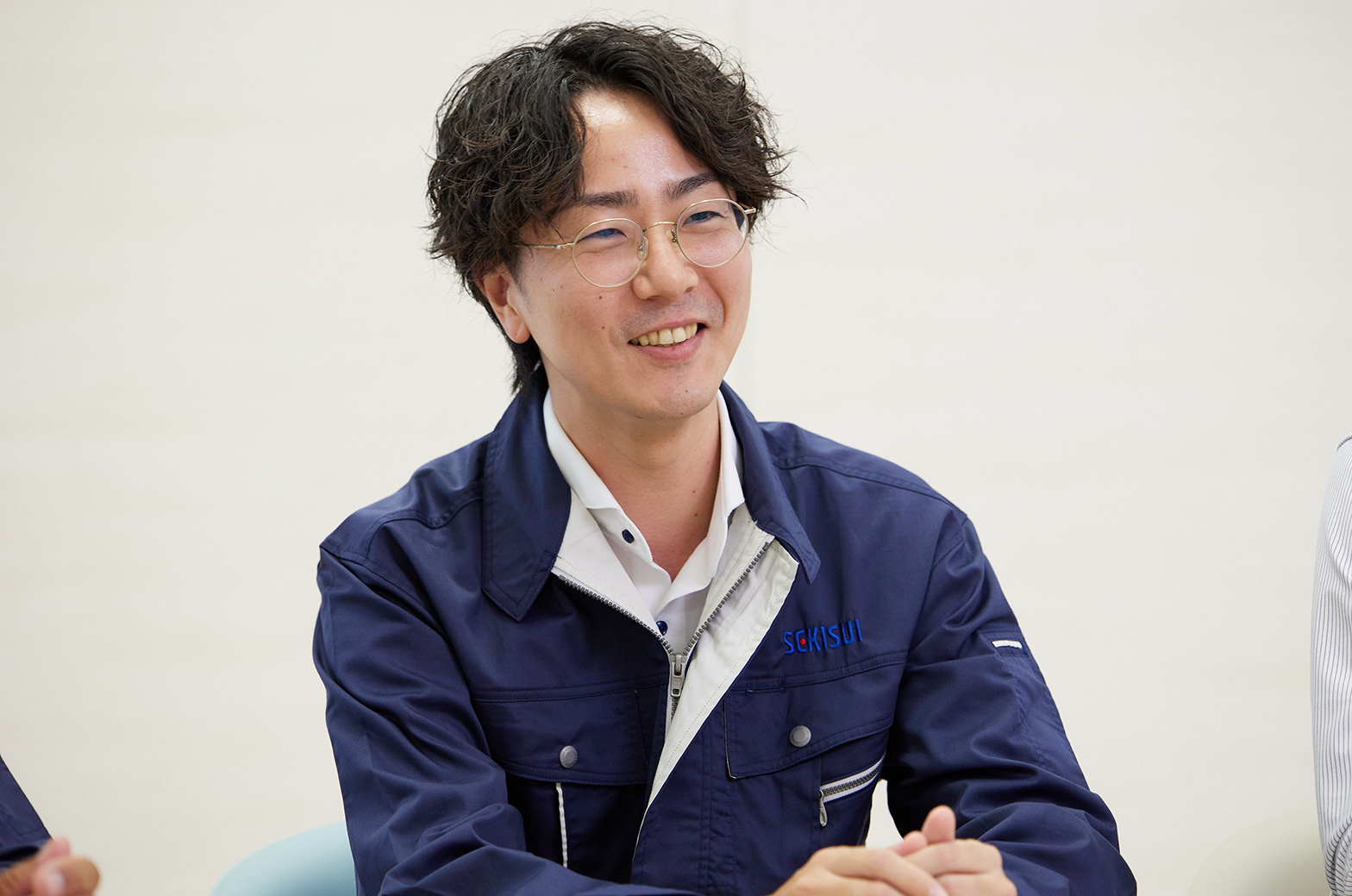
All issues can be resolved by phone. Our call center is the key to our support.
One of the key factors supporting the rapid recovery and safe operation of analytical instruments is the collaborative system centered around the call center. To maintain test quality and minimize problems in medical settings, the customer support center is composed of five groups: "Call Center," "Equipment Services," "Academic," "Technical," and "Analysis," and they collaborate on a daily basis.
Sekisui Medical manufactures various clinical diagnostic reagents and also manufactures and sells the analytical instruments used with those reagents. "Our product range can be broadly divided into three areas: blood coagulation, biochemistry/immunology, and point-of-care testing (POCT). Blood coagulation accounts for the largest proportion of inquiries and repair requests because we handle both reagents and instruments in that area," says Hoshino of the call center group.
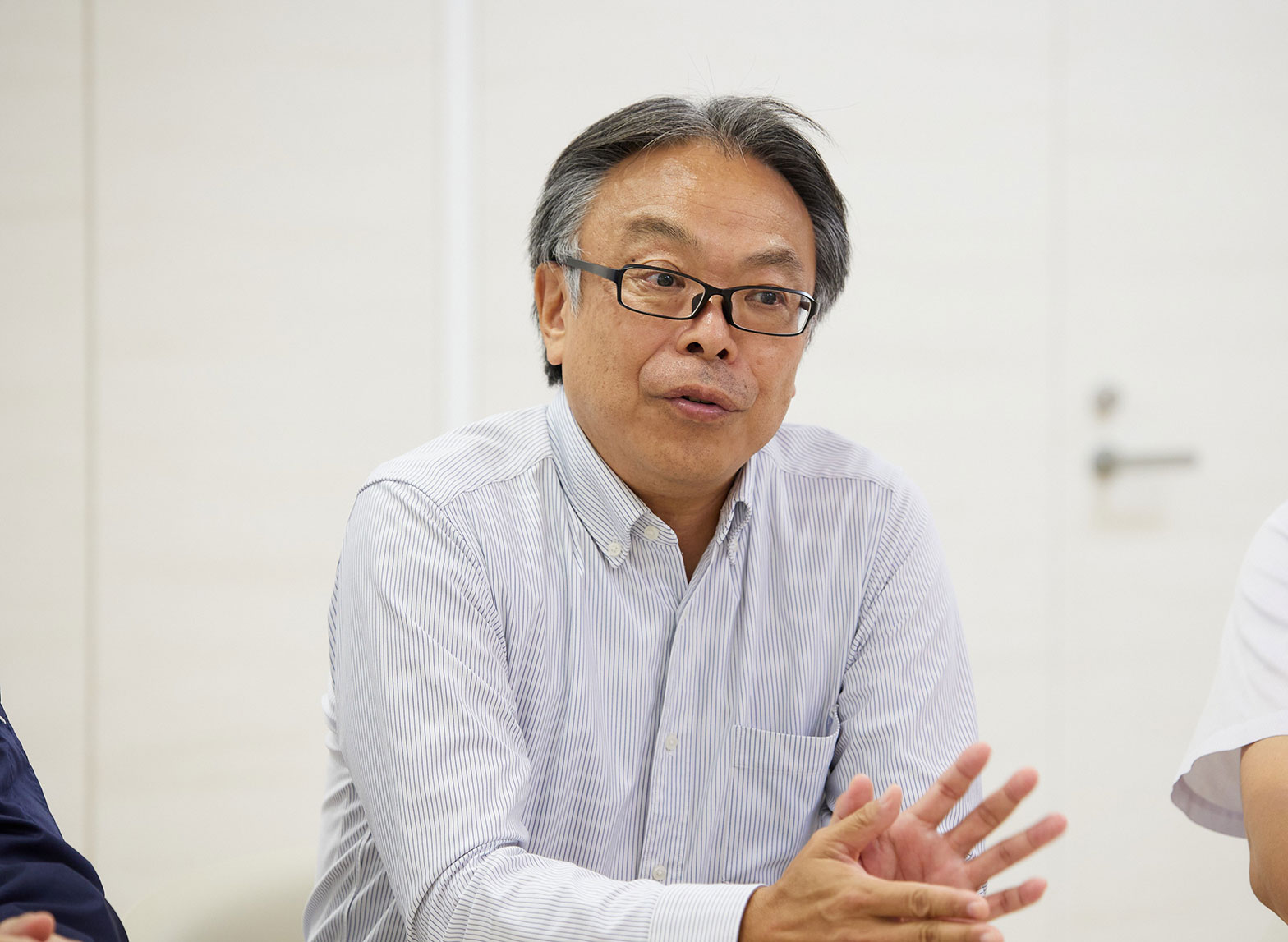
The initial point of contact is the call center. Inquiries regarding equipment problems, usage, data interpretation, etc., come in, and the equipment service group is dispatched depending on the situation. However, in reality, about 60% of cases are resolved by the call center alone over the phone, without ever needing to connect to the equipment service group.
Hoshino says, "To determine the cause of the trouble, we carefully inquire about how the reagents are used, the installation environment, and the display screen of the equipment, and we strive to resolve the issue over the phone." Watanabe emphasizes the importance of the call center as follows: "It is extremely stressful for medical professionals when a machine is down until equipment service arrives. In the worst case, lives that could have been saved may not be saved. The call center, which is at the forefront of this effort, is in an extremely important position. It is a team of members with diverse expertise, including those with practical experience in medical institutions and equipment service personnel."
Sekisui Medical's strength lies in the fact that phone calls don't end with simply transferring the call. Basically, the person who answers the phone handles the customer's case from start to finish. This thorough "one-stop solution" minimizes downtime. It has been highly praised, with customers saying, "It's so helpful that the person who answers the phone guides us through to a solution." This is due to the comprehensive in-house training program, where knowledge is constantly updated through study sessions led by experts. In fact, some call center members can explain things at a level comparable to academic staff, and it's not uncommon for customers to be pleasantly surprised, saying, "It's really helpful that an academic staff member always answers the phone when I call." The call center group is comprised of individuals who are both specialists and generalists.
We are one team, including our partner companies. Our organizational structure is solid.
In addition to comprehensive in-house training, the company is also proactive in cross-assigning personnel. Before being assigned to the call center, Hoshino spent six years in equipment service. His explanations, even over the phone, are specific and easy to understand, thanks to his experience in actual equipment repair. This, too, is highly valued.
Information gathered by call center and equipment service staff is simultaneously shared with members in their respective areas. This thorough system reduces the burden on busy doctors and technicians, as they don't have to repeat the same explanations multiple times.
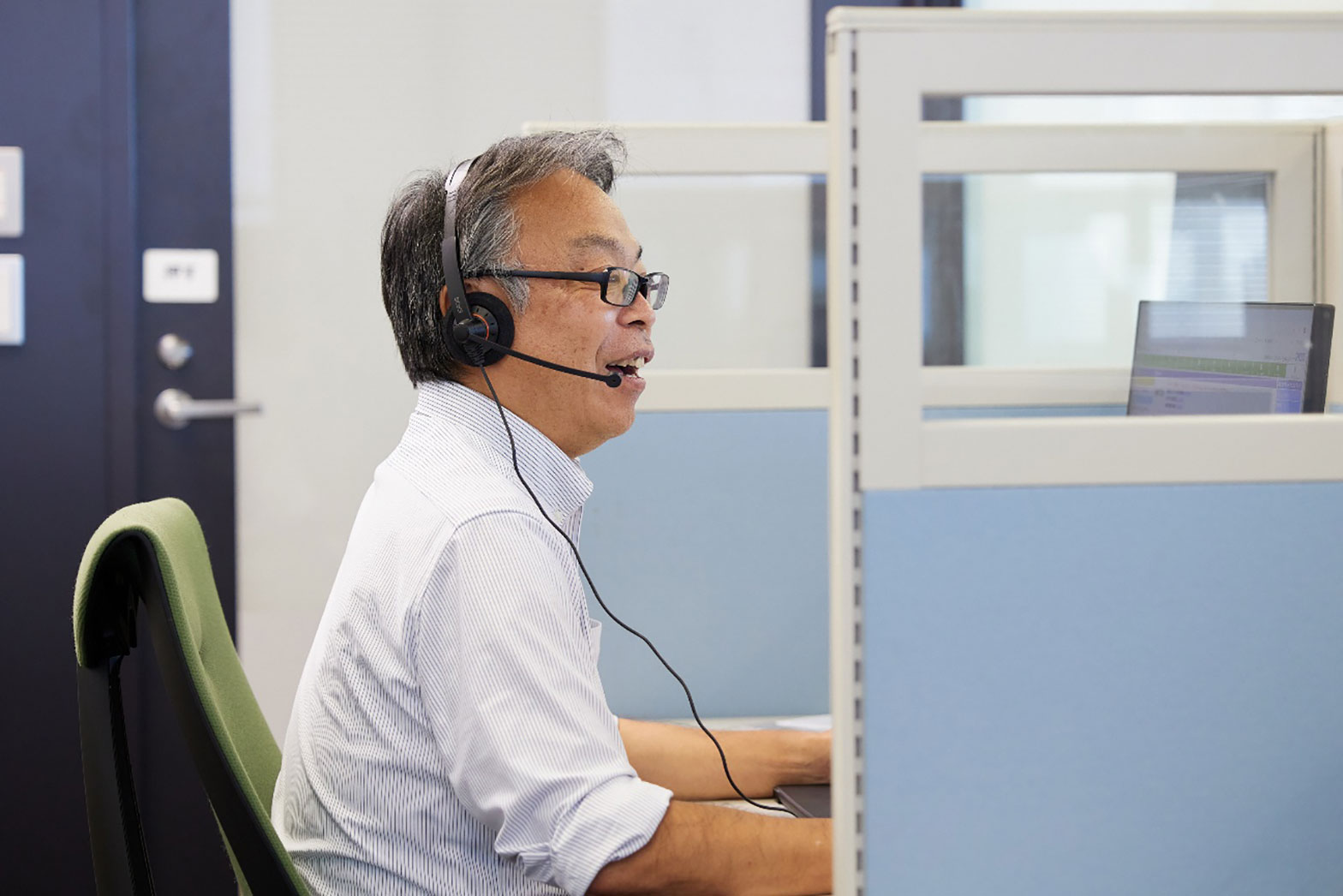
When troubleshooting on weekends and at night, it is our partner company, Nippon NCR Service (hereinafter NCR), that works in close cooperation with the equipment service department. NCR undergoes extensive training and on-the-job training until it reaches the same level as Sekisui Medical, and also conducts level checks and equipment-related response capability tests. Together with NCR, they form one team. They are an indispensable partner for the customer support center.
Another major advantage is the establishment of an "analysis group" within the customer support center. This is a specialized team that analyzes the cause of abnormal values in patients' test data by changing reagents or analytical methods. Watanabe emphasizes, "We have incorporated sample analysis technology that requires special equipment and cannot be handled by ordinary laboratories into our customer support system. This allows us to provide advanced analytical capabilities and reliability, which is one of the reasons why doctors and laboratories choose our products." Sekisui Medical's customer support team is comprised of highly experienced personnel from various fields, tackling a wide range of challenges in the medical field.
We need to resume testing as soon as possible. Speed is of the essence on this frontline.
Horiuchi describes a typical day of maintenance and repair work as follows: "I arrive at the office at 9:00. I spend about an hour preparing reagents and parts in preparation for facility visits in the afternoon. A repair request came in, so I left earlier than planned at 10:00 and spent an hour repairing the equipment at the client's location. In the afternoon, I traveled to collect reagent data for a new measurement item and made rounds to other facilities. On this particular day, I visited three locations and finished work at 17:30."
Horiuchi finds his work rewarding when he receives comments like, "Thank you for finishing earlier than planned. You've been a great help." In facilities with only one analytical instrument, speed of response is especially crucial because inspections cannot be performed while work is being done. He plans the repair process before going out and repairs efficiently. This job is a race against time more than one might imagine.
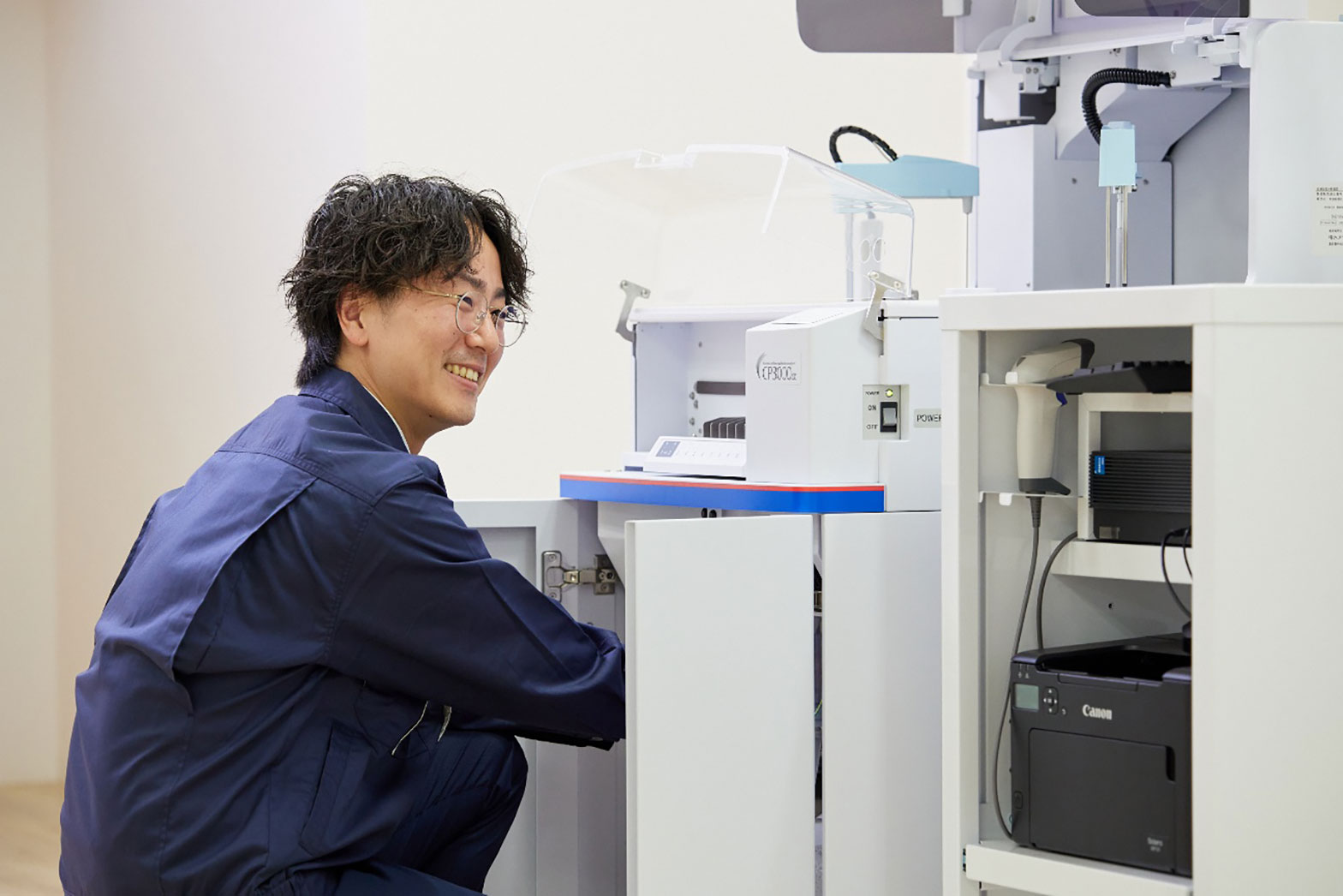
Watanabe continues: "As part of our efforts to improve the efficiency of repairs, we have NCR's sales offices nationwide stock maintenance parts to prevent delays in parts supply. In the event that a repair is prolonged due to a problem, we conduct a thorough review to prevent it from happening again."
In the evolving field of medicine, what changes and what remains the same
The Japanese government has announced a policy to reduce hospital beds as part of a healthcare structural reform to address population decline, aging, and rising medical costs. As the healthcare delivery system restructures along with the reduction in large hospitals, the field of point-of-care testing (POCT), which can be easily performed at clinics or in homes, is expected to grow. This transformation will likely arrive in about 10 to 15 years.
As a result, direct interaction with patients increases, and homes and other locations become medical bases, making it urgent to increase customer support staff and establish systems that utilize AI. For call centers, they have already adopted BIZTEL (a PC-based telephone system). This system allows remote staff to use the same phone number as the office, and they quickly built the system when the need to go to the office was restricted during the COVID-19 pandemic. This has made it possible to expand their bases and is also effective as a BCP (Business Continuity Plan) measure in emergencies such as typhoons and earthquakes.
No matter how much medicine evolves or how healthcare is delivered, our commitment to saving patients' lives and our customer-first philosophy will never change. We will deliver peace of mind and trust to the healthcare field through reliable quality. Today, tomorrow, and into the future.
Voices from the medical field
They respond quickly to requests, provide information on seminars and new reagents, and their sales and technical staff are very helpful.
(Aomori Workers' Accident Hospital, Japan Organization for Occupational Health and Safety)
I appreciate that when I contact the call center, I'm immediately connected to an academic affairs representative.
(Kawasaki Saiwai Hospital, Ishishinkai Social Medical Corporation Foundation)
With other companies, the first person you speak to might not be familiar with the equipment, but with Sekisui, you're assigned someone who knows what they're doing, so things go smoothly.
(Konan Medical Center, Konan Foundation)
Even technicians who don't normally handle the equipment can provide clear and accurate explanations through phone conversations alone. Furthermore, the fact that the phone lines are basically open 24 hours a day provides peace of mind.
(Nippon Kokan Fukuyama Hospital, Medical Corporation)
When a problem occurs, they come with an idea of the cause beforehand, so the recovery is quick.
(Funabashi Municipal Medical Center)
*These are comments received from facilities through the "CP Support Questionnaire" conducted from August to September 2024. Permission has been obtained for publication, and the content reflects the opinions and impressions of the users. The comments and opinions are listed in alphabetical order by facility name.