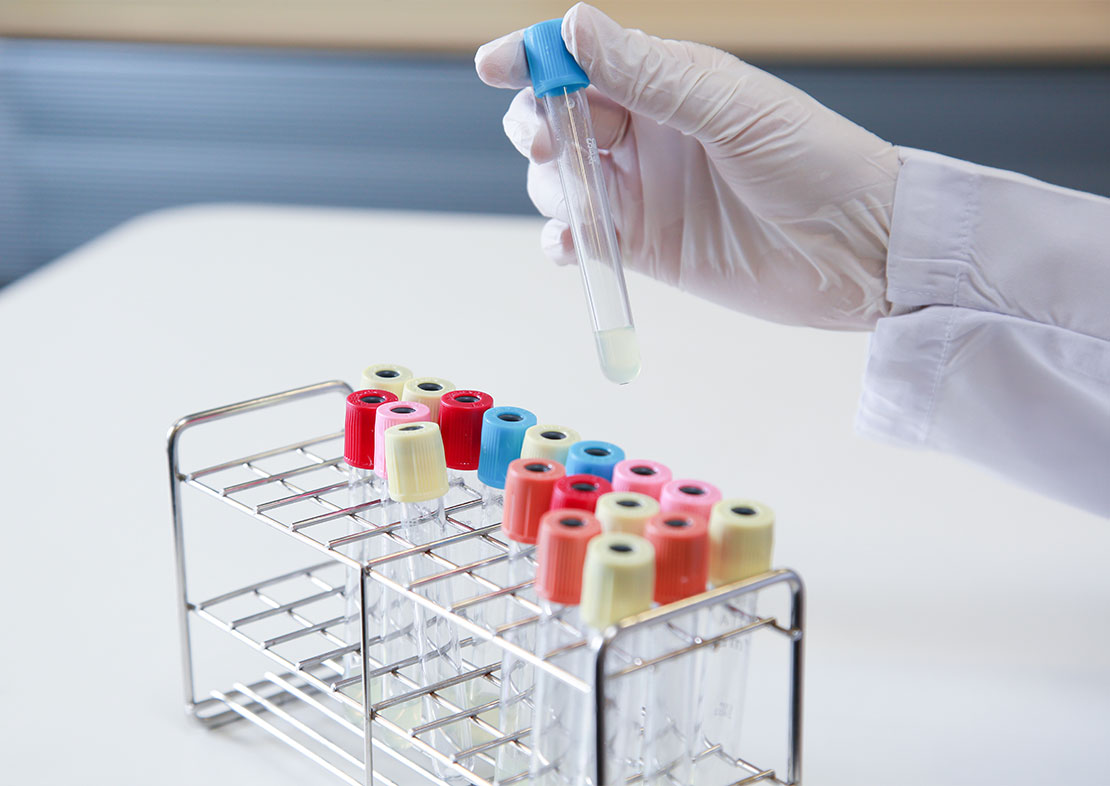
A single drop of innovation that will transform the medical field
~The future woven by Sekisui Medical's latex technology~
公開日:
What thoughts and stories were behind its development?
How will that connect to the people and societies living on Earth?
"SEKISUI | Connect with" is a future-creating media platform that connects you with Sekisui Chemical.
"The test results will be available by the time of your consultation," the patient, who had just finished having their blood drawn, said, and a look of relief spread across their face. Previously, patients had to return to the hospital to hear their test results. But now, the results are available during the consultation, and the treatment plan can be decided at that time. This reduction in waiting time is made possible by Sekisui Medical's "latex technology."
Latex technology is a technique that uses fine particles to detect specific substances in blood. While collected blood contains various components, these latex particles bind to specific substances and react, enabling rapid and accurate measurement. This technology has made it possible to measure many blood test parameters quickly without the need for specialized equipment. In 2024, the "SP-D measurement reagent," based on latex technology and compatible with general-purpose automated analyzers, received the Japan Society of Clinical Chemistry Technology Award. How was this technology realized? We traced the trajectory of the developers' challenges.
The moment the two technologies meet
Sekisui Medical was formed in 2008 through the merger of Sekisui Chemical's Medical Division and Daiichi Chemical Co., Ltd. This merger held great potential for the fusion of two different technologies.
Prior to the merger, Daiichi Chemical Co., Ltd. was a company that developed, manufactured, and sold clinical diagnostic reagents, providing a variety of diagnostic reagents. Meanwhile, Sekisui Chemical Co., Ltd. specialized in chemical products such as plastics, and utilized its advanced organic synthesis technology to manufacture high-quality latex particles.
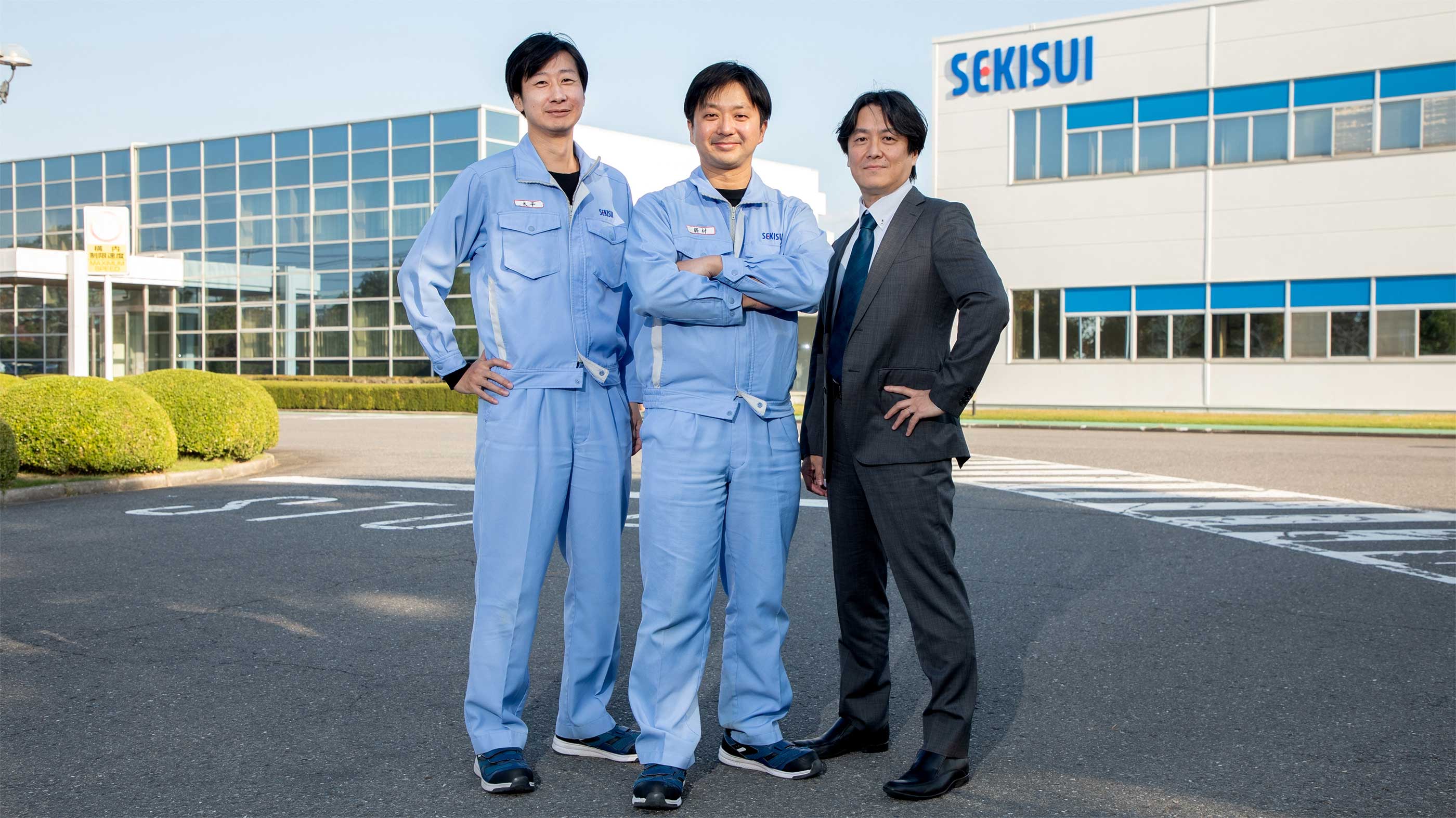
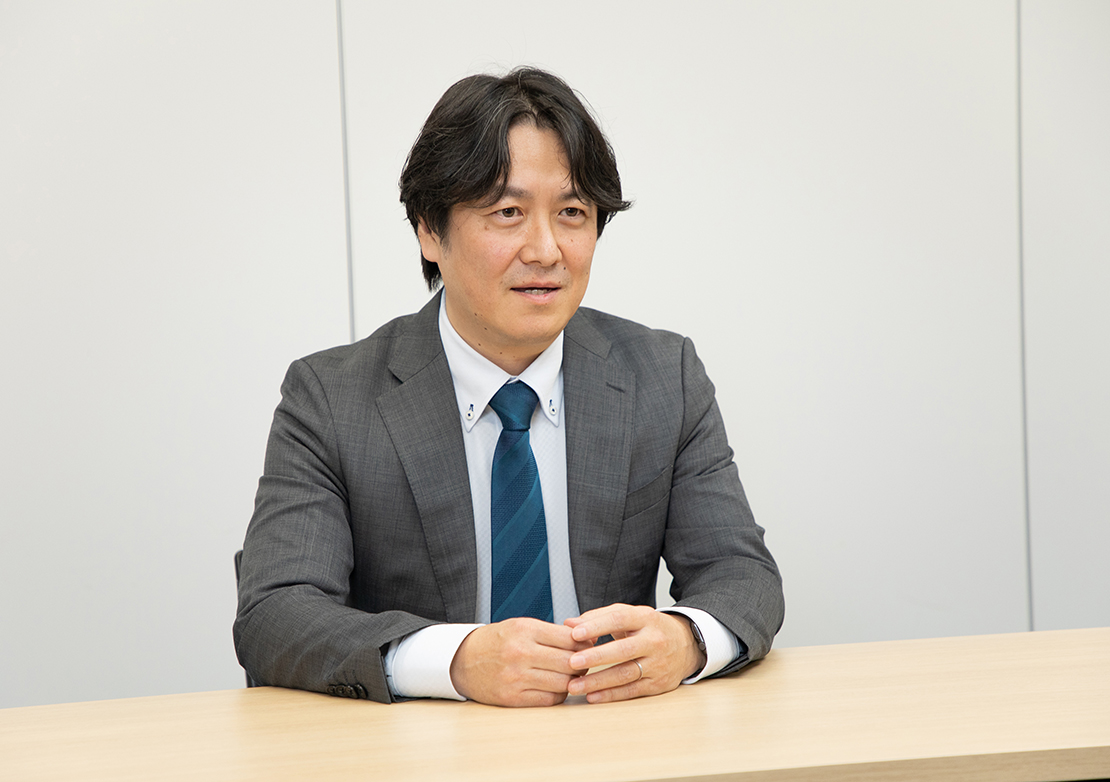
"Before the merger, Daiichi Chemical Co., Ltd. purchased latex particles from Sekisui Chemical Co., Ltd. and used them to develop diagnostic reagents. However, after the merger, we are now able to handle everything from particle development to the commercialization of reagents," says Fujikawa of the Development Strategy and Promotion Department.
The reason this integrated system is important is that, in order to achieve both accuracy and ease of use in the testing, it is necessary to meticulously prepare the properties of the particles and the formulation of the reagents.
"Our strength lies in the fact that, while we are a clinical diagnostic reagent manufacturer, we also possess organic synthesis technology, allowing us to handle everything from particle development to reagent commercialization within the same organization," Fujikawa emphasizes.
However, the technologies of both companies did not seamlessly integrate immediately after the merger.
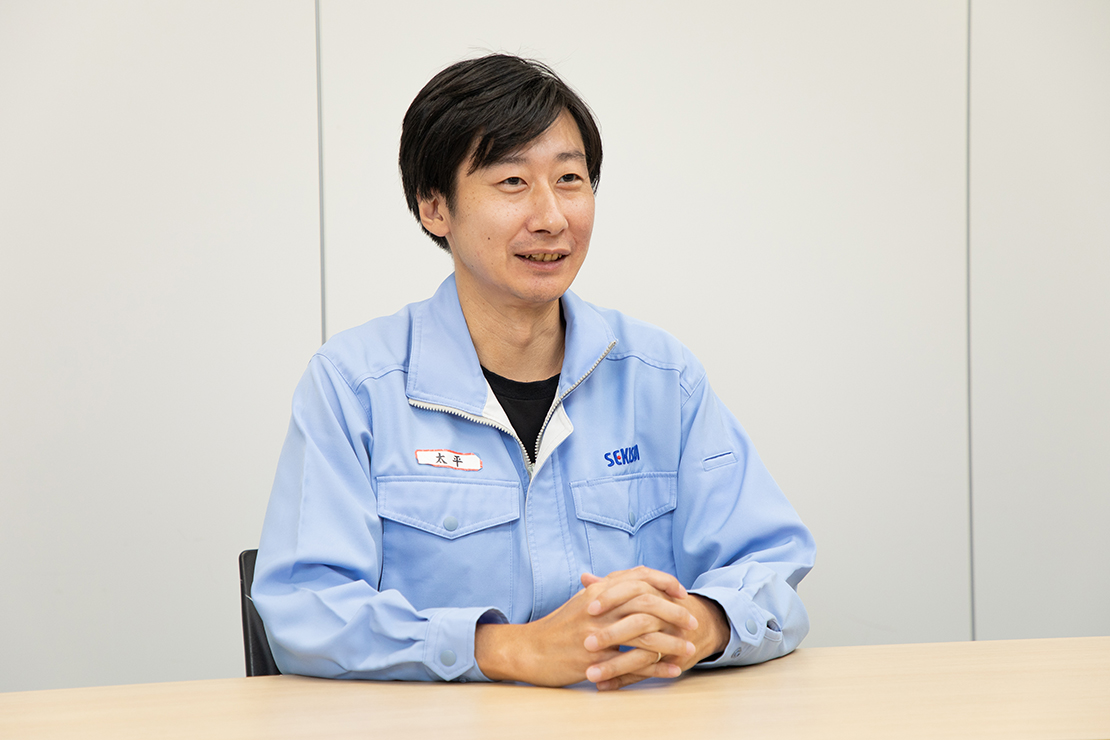
"Initially, the understanding of particle synthesis wasn't very widespread among the development team, and there was a weak awareness of synthesizing and evaluating various particles during product design to select the optimal particle for clinical diagnostics," recalls Taihei of the Tsukuba Research Institute.
What changed that situation was the steady, persistent dialogue at the development site.
"With particles like these, we can expect this level of performance improvement."
As the particle development team made repeated proposals, mutual understanding gradually deepened, bringing them closer to realizing a unified system.
Innovation born from hundreds of trials and errors.
"The core of our technology is the stable production of uniformly sized microparticles, and then imbuing those particles with various functions," explains Fujimura of the Tsukuba Research Institute.
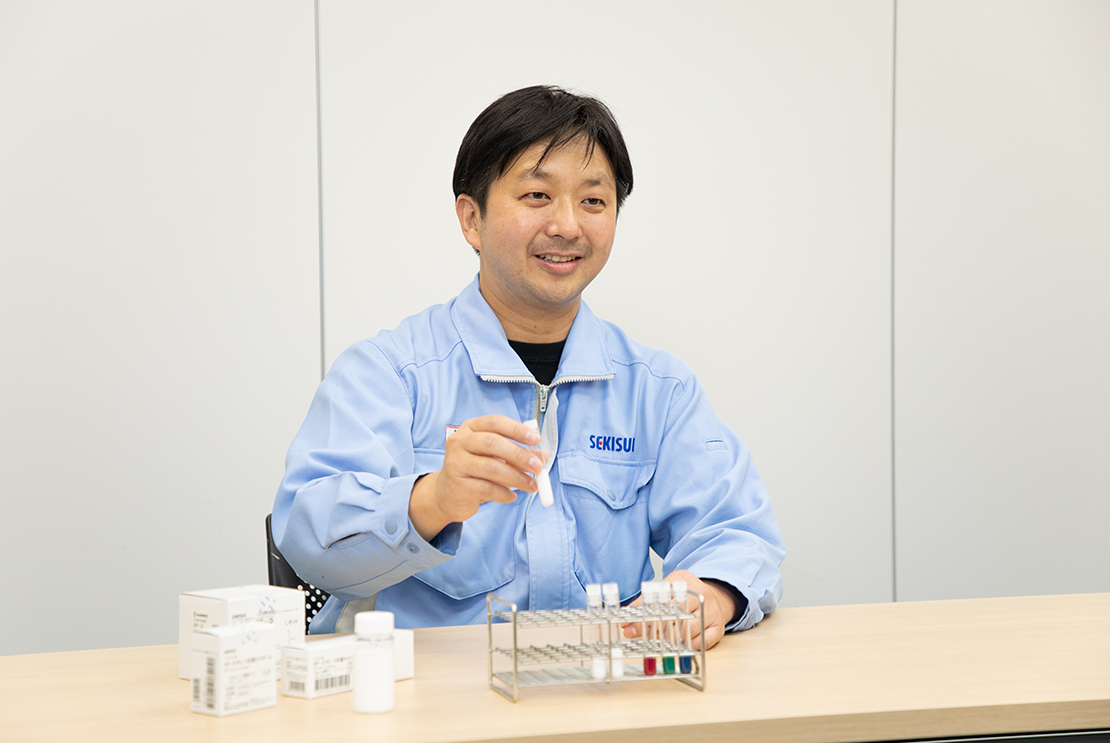
The mechanism of latex technology utilizes a specific reaction, much like a lock and key. Antibodies bound to latex particles specifically bind to the substance to be measured (antigen) in the blood, causing an agglutination reaction. By optically measuring this reaction, the concentration of the target substance can be accurately determined.
"At this point, the uniformity of particle size and the control of surface properties are crucial. If there is variation in particle size, the accuracy of detecting the agglutination reaction will decrease. Also, depending on the surface properties, there is a possibility that the particles may react with excess components in the blood," says Taihei.
The development team considered hundreds of material combinations, in addition to 20 to 30 types of latex particles. They continuously searched for the optimal combination by changing every element, including particle size, surface properties, and reactivity.
Furthermore, conventional blood tests required a washing step to remove excess components from the sample.
"However, because of this process, many medical institutions had to either introduce specialized equipment for that measurement item or outsource the testing. As a result, it took a long time to get the test results," Fujimura explains.
"By standardizing the size of latex particles and optimizing the properties of the particle surface, we can now accurately capture only the target substance in the blood without a washing process and without compromising accuracy," Taihei says, describing the value of latex technology.
A representative product that utilizes this technology is the "SP-D measurement reagent." SP-D (pulmonary surfactant protein D) is an important test item for assisting in the diagnosis of interstitial pneumonia and predicting the prognosis of idiopathic pulmonary fibrosis, but conventionally, its measurement required specialized equipment, making it time-consuming as tests had to be outsourced.
In developing the "SP-D measurement reagent," a challenge arose because the properties of blood vary from patient to patient, sometimes resulting in measurements higher than the actual value. To overcome this challenge, the development team considered various scenarios that could occur in actual medical settings and thoroughly evaluated the reagent using clinical samples during the initial stages of design. By feeding these results back into the reagent design, they succeeded in developing a reagent that enables more stable measurements.
Verification using testing equipment from various manufacturers was also essential.
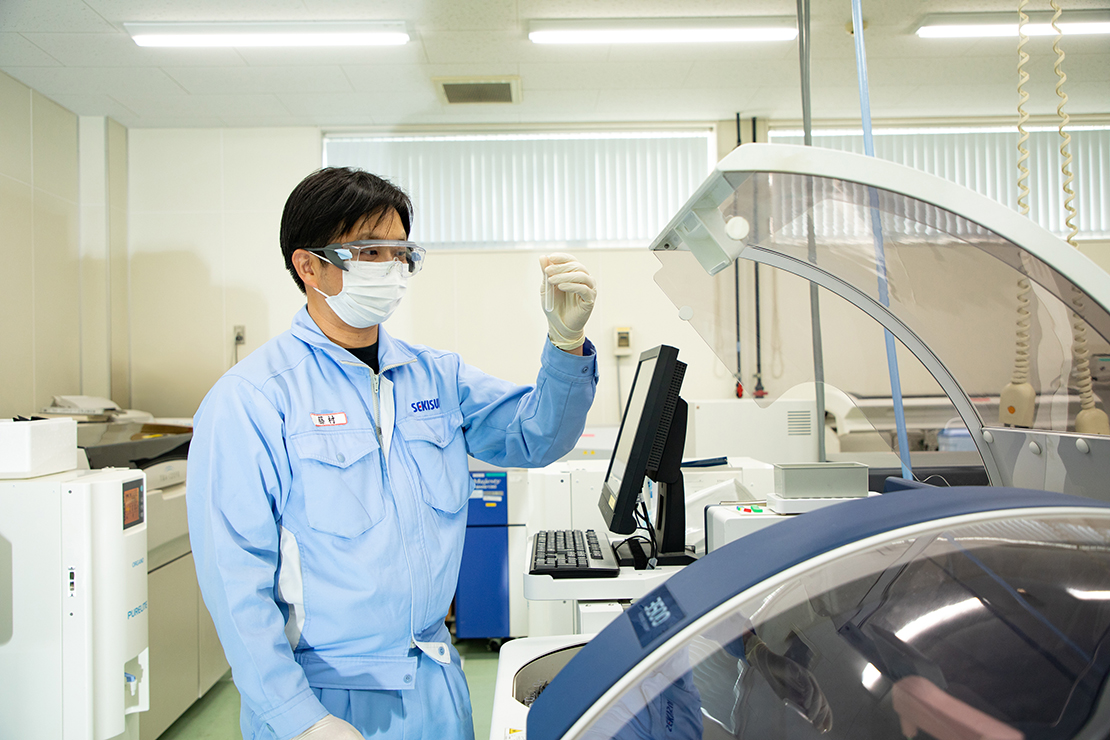
"Each testing instrument has its own characteristics, and even with the same reagent, the measured values can differ depending on the model," Taihei explains. "Therefore, we have focused on designing reagents that can perform stably with any instrument, and we have been tackling this challenge in particular by utilizing particle technology."
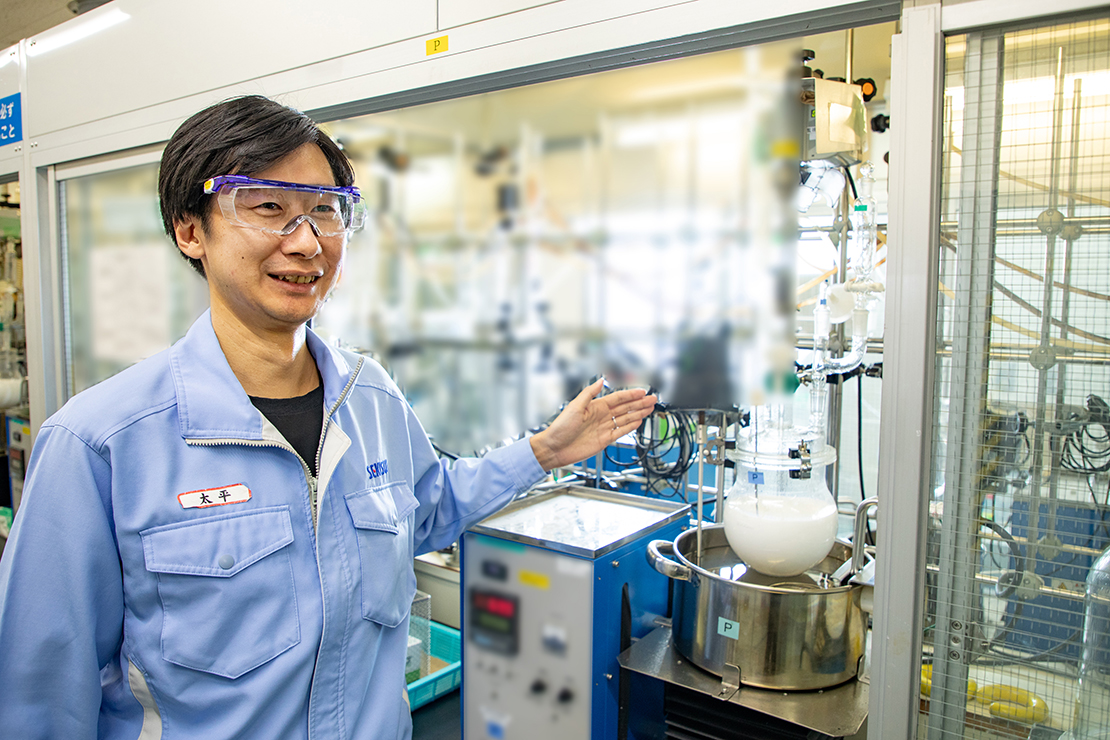
These efforts bore fruit, and a product was developed that allows for SP-D testing, which previously could only be measured with specialized equipment, to be performed using general biochemical analysis equipment in about 10 minutes.
Fujikawa explains the significance of this technological innovation as follows:
"Shortening the testing time not only reduces the burden on patients, but also greatly contributes to doctors' diagnosis and treatment plan decisions. By the time patients finish their blood test and return to the examination room, the results are already available."
Challenging further possibilities
The development team is striving for even greater heights. "There are still many areas where our technology has not yet reached," says Fujimura. This includes expanding into testing that requires the detection of even minute amounts of substances.
"In the world of medical testing, achieving both accuracy and speed is an eternal challenge," points out Professor Maekawa, a specially appointed research professor at Hamamatsu University School of Medicine. "Sekisui Medical's latex technology has achieved both at a high level. This is groundbreaking."
New needs have emerged from the medical field, such as "smaller medical institutions need long-term storage of reagents because tests are performed infrequently" and "we want to reduce the burden of daily quality control." In response to these requests from the field, the development team is working to improve storage stability and develop more user-friendly products.
"There's still so much potential in areas of testing where latex technology hasn't been used before," the three said, their eyes shining. "There's so much we can do for patients and healthcare professionals. We'll continue to strive for further technological innovation while meeting the expectations of those on the front lines."
The technologies that support medical care are not always conspicuous. However, each and every innovation is undeniably improving patients' quality of life (QOL) and paving the way for the future of medicine. More accurately, faster, and to more people—Sekisui Medical's challenge will continue in order to realize better medical care.
Voices from the medical field
"10 minutes" can change the future of healthcare.
Sekisui Medical's latex technology enables faster and simpler testing, allowing for immediate responses in medical settings. This allows even small medical institutions to obtain rapid test results, improving services for patients. Furthermore, immunological measurements using latex technology can be performed with general-purpose automated biochemical analyzers, resulting in numerous benefits such as reduced testing equipment costs and lessened burden on laboratories. We expect that further technological advancements will lead to the realization of patient-centered healthcare. Latex technology, which can simultaneously provide the speed and accuracy required in the medical field, is truly a pioneering force for the future.
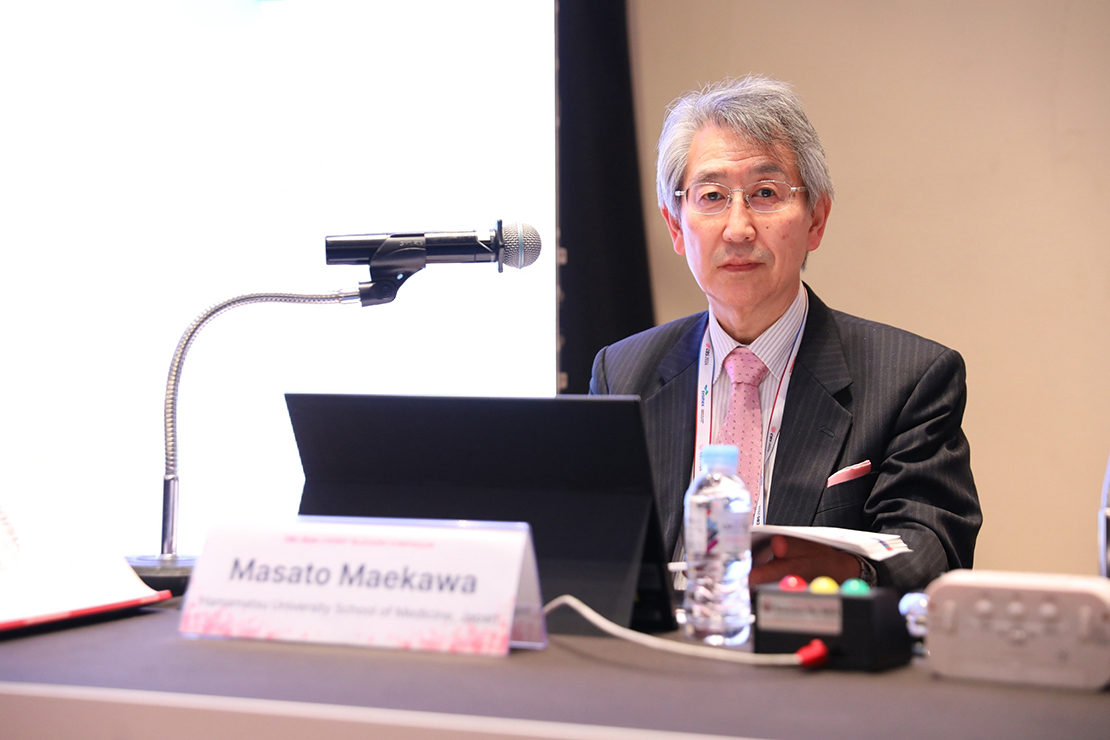
Professor Masato Maekawa, Specially Appointed Research Professor and Professor Emeritus, Faculty of Medicine