ANSIEL tackles the challenges of a super-aging society with Sekisui Chemical's unique sensor technology.
公開日:
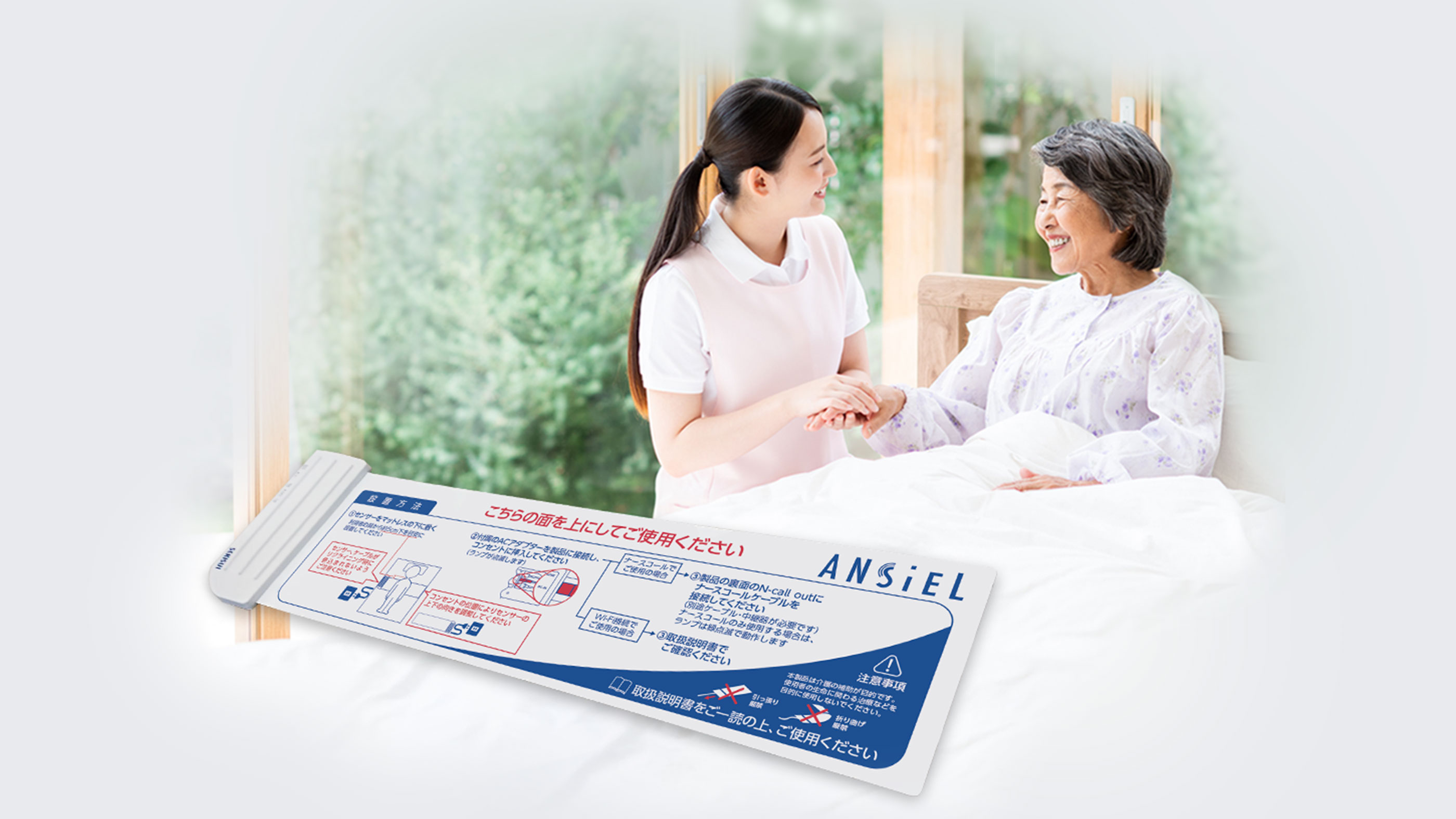
What thoughts and stories were behind its development?
How will that connect to the people and societies living on Earth?
"SEKISUI | Connect with" is a future-creating media platform that connects you with Sekisui Chemical.
The nursing care industry is facing a severe labor shortage. According to estimates by the Ministry of Health, Labour and Welfare, an additional 690,000 nursing care workers will be needed by 2040.
The challenge lies in finding ways to reduce the burden on caregivers and ensuring the safety and well-being of those receiving care.
In nursing care facilities, due to staff shortages, it is common for regular nighttime rounds to be conducted by only one staff member *1.
"One staff member is responsible for the regular nighttime patrols, often at a pace of once every one to two hours. This involves not only a physical workload but also a mental burden of worrying about what to do if something happens."
This is said by Ryo Aranami, Head of the SD Project at Sekisui Chemical's High Performance Plastics (HPP) Company Development Laboratory. Nighttime regular patrols are conducted to ensure residents are sleeping peacefully and to respond immediately if any abnormalities occur. If there are residents with dementia or other conditions, sudden wake-ups can also prevent rest. Also, since residents are checked every 1~2 hours, there are cases where deep sleep is not possible.
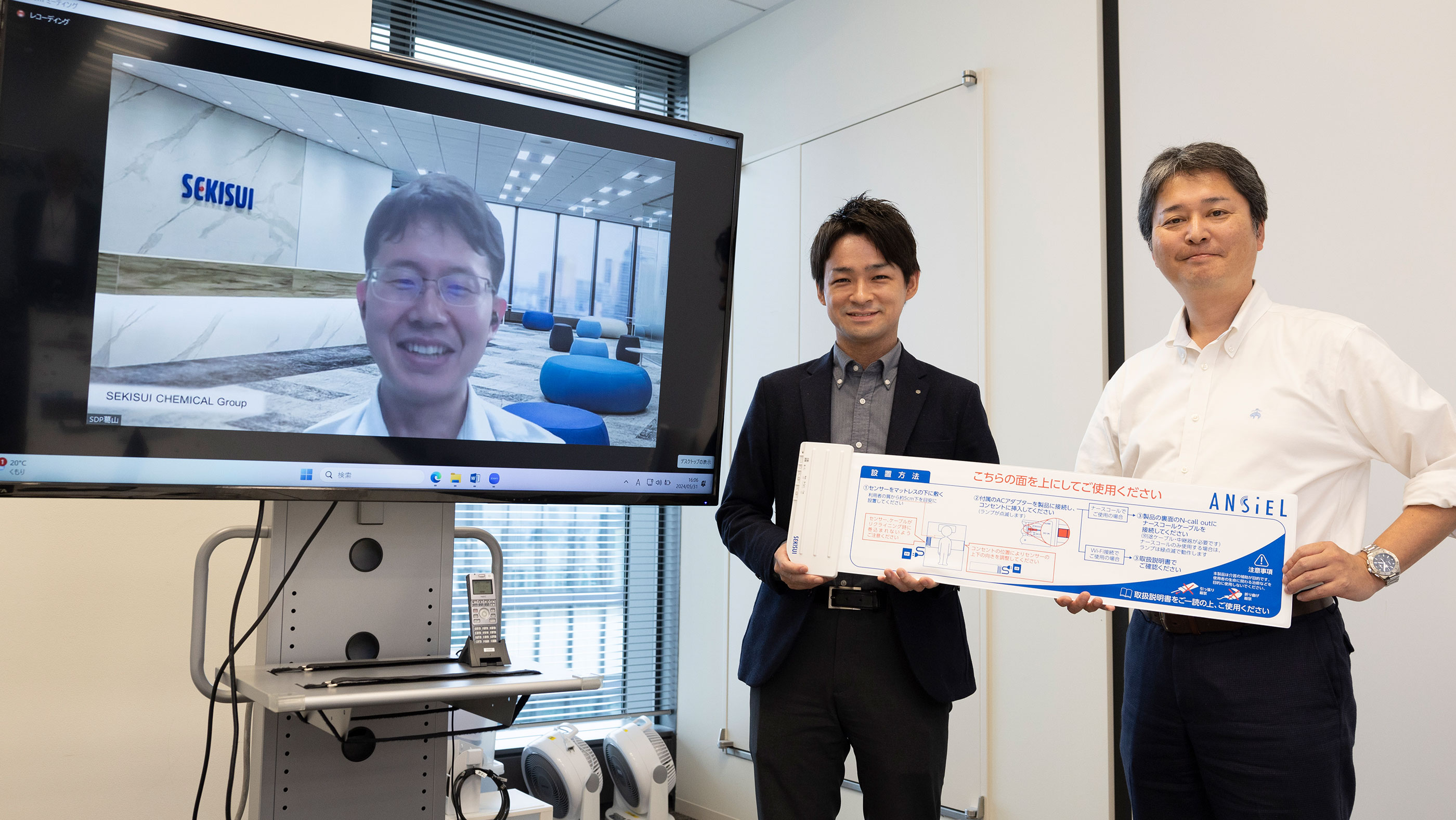
Therefore, Aranami and his colleagues developed ANSIEL. ANSIEL is a care support device that is installed under the mattress of a bed to detect and analyze the movements of the person requiring care in bed and notify the caregiver's smartphone, computer, or other terminal. The SD Project (SD = Sensing & Data), to which Aranami and his colleagues belong, is a department created specifically for this new business, ANSIEL.
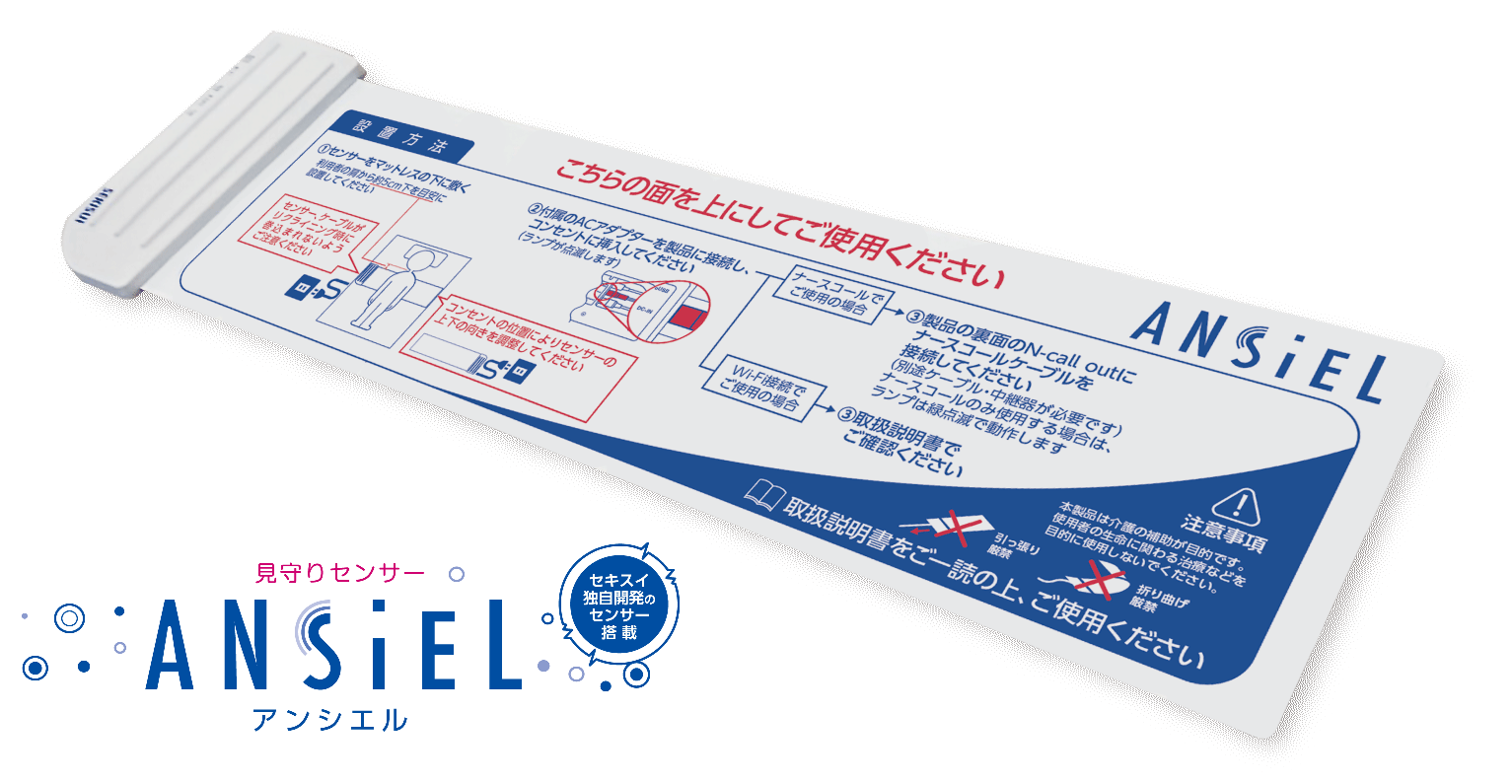
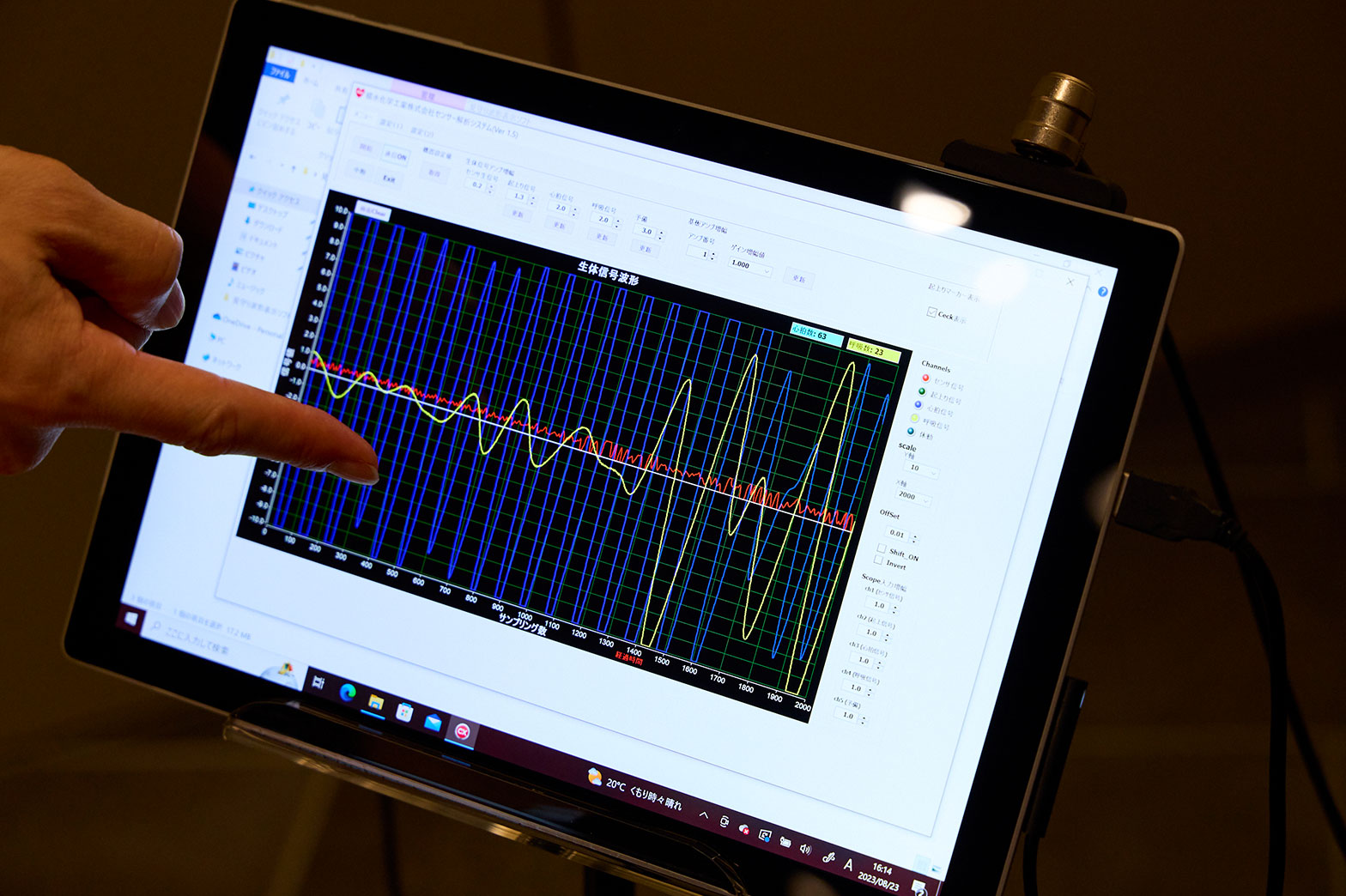
ANSIEL incorporates a proprietary high-precision piezoelectric sensor that detects and analyzes 10 types of movements and conditions of a person requiring care in bed, including body movement, getting up, and standing up. If the person stands up, the caregiver can be notified in about 5 seconds.
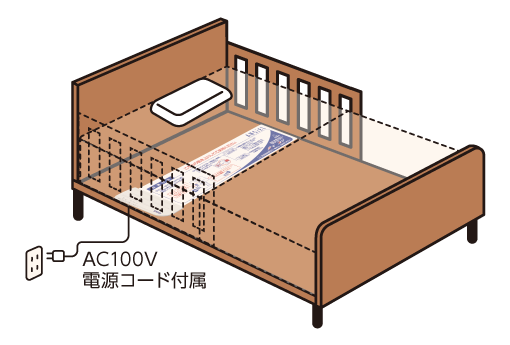
"ANSIEL contributes to supporting the health management of elderly individuals requiring care by reducing the risk of injury associated with walking alone at night and standing up, while also reducing the burden on caregivers."
Because it allows for centralized management of nighttime monitoring of dementia patients, as well as monitoring how much sleep they are getting and whether they are getting up, the burden is greatly reduced. How did ANSIEL, which now receives daily inquiries from nursing homes, come into being?
*1 In the case of unit-type special nursing homes for the elderly, one caregiver is often responsible for 20 residents.
Design the entire system as a service to enhance the convenience of the sensors.
"Everything was a first for us," says Yuta Katsuyama, the development manager for ANSIEL. The sensors used in ANSIEL are the result of proprietary technology. By applying pressure to an electrically charged foam material, it can detect and display the electrical signal. Sekisui Chemical can create thin foam materials using thin-film technology, and by charging them, they can create piezoelectric sensors that can extract electrical signals when pressure is applied.
"We started planning and developing this with the idea that it could be used as a monitoring sensor, but as Sekisui Chemical, we mostly supply materials and have never manufactured a final product before. I heard that there was a lot of opposition to developing it because the ANSIEL project was something that no one in the company had any experience with."
However, one Executive Officer strongly supported it, saying, "This is something society needs." It is said that the development was approved. The road to completion was difficult because of the lack of experience.
"First, the monitoring sensors needed to be managed using ICT, which required development incorporating a wide range of technologies, from hardware and software to servers and applications. The key was how to interpret and display the signals obtained from the thin, highly sensitive sensors that can measure pulse and respiration when placed under a mattress. One of ANSIEL's strengths is its fast response time, and we struggled to develop and tune the interpretation method to achieve this."
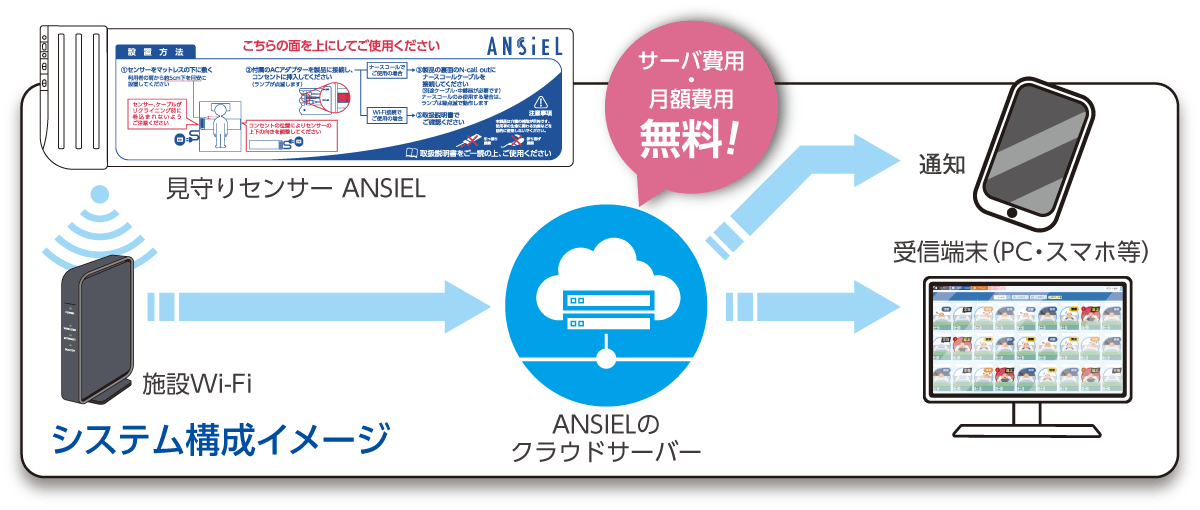
While digital transformation (DX) is being called for in the nursing care industry, analog tasks such as handwritten records remain deeply entrenched in practice, and in some cases, staff members are not comfortable with ICT. Therefore, Kuzuyama and his team focused on ease of operation and user-friendliness.
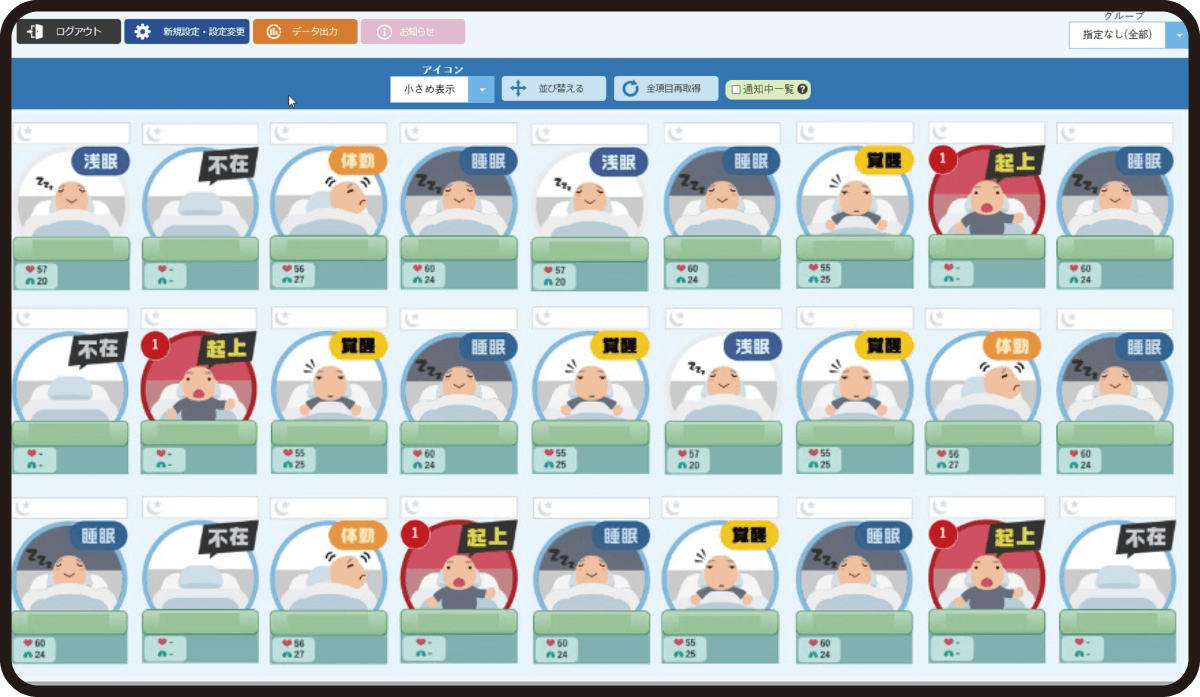
"Our approach aims for ease of use above all else, so we've limited the functions to the bare minimum. We've also used illustrations to make the screen easy to understand. From the very beginning of development, we've carefully designed it from the perspective of people who will be using ANSIEL as a new ICT service in the nursing care industry."
Just as Katsuyama and his team had hoped, this system received high praise from nursing homes. The screen display is easy to understand, using illustrations and other visuals, much like an app on a smartphone that users normally use.
The software development was challenging, but it earned us trust.
ANSIEL was launched on May 20, 2020. This was precisely when the first state of emergency was declared in Japan due to the COVID-19 pandemic. "We had never created a product like this before, and we were fumbling in the dark about how to sell it," recalls Atsushi Wada, who was in charge of sales planning, reflecting on the difficulties at the time.
"The team, including Aranami, gathered together a list of care providers and started calling them one by one from the top of the list. However, given the timing, we were sometimes met with responses like, 'Now?' But then, when we called a major care facility operator in Kyushu, one of their executives answered the phone. We were able to explain our solution to him and give him a demonstration. After seeing the demonstration, he realized that it was something he needed for his business."
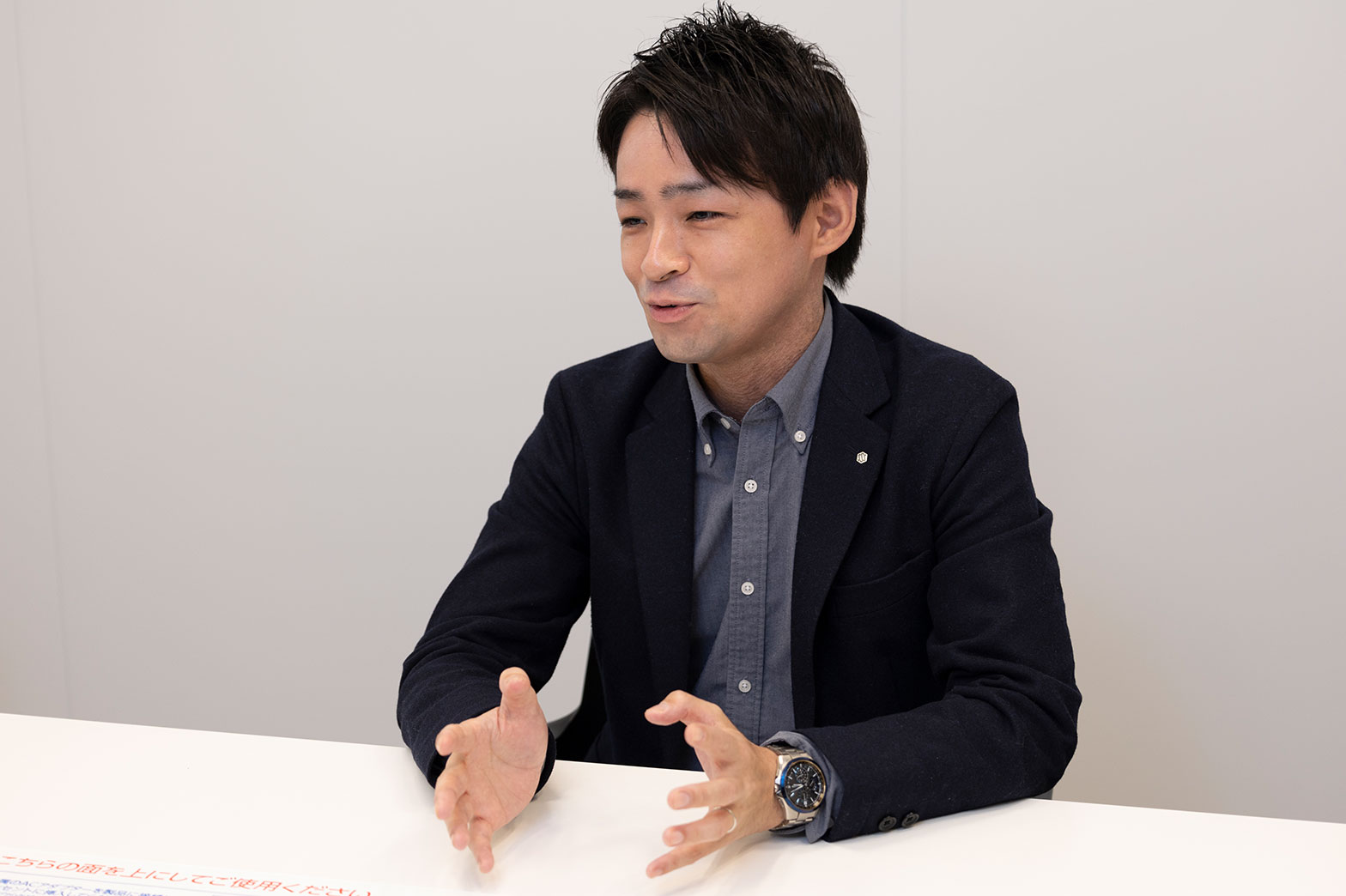
There was indeed a need for it. The company was also praised for its flexibility and speed in responding to requests from care facility operators, including improvements to the system.
"Since he manages everything, not just the hardware but also the software, I can consult with Kuzuyama immediately, and I can see how he and his team are discussing things, which gives me peace of mind in terms of both speed and quality. This is something that our clients also appreciate."
Wada is now responsible not only for sales but also for sales planning, including strategizing how to convey the appeal of ANSIEL and what kind of partners to collaborate with.
"The nursing care industry has many challenges. The staff members are also under a lot of pressure and sometimes don't have the opportunity to learn about ANSIEL. I want to let more people know about it through seminars and other means, and help alleviate their burden," he says, but then smiles wryly and says, "My initial telemarketing was the most difficult thing I'd ever experienced."
Kuzuyama also empathizes with Wada, saying that through ANSIEL he was able to gain an "unbelievably wide range of experiences." Kuzuyama, who had no prior experience in software or network development, laughs, saying that this experience gave him "a mind that is not easily fazed by most things."
Solving social problems with sensors and data
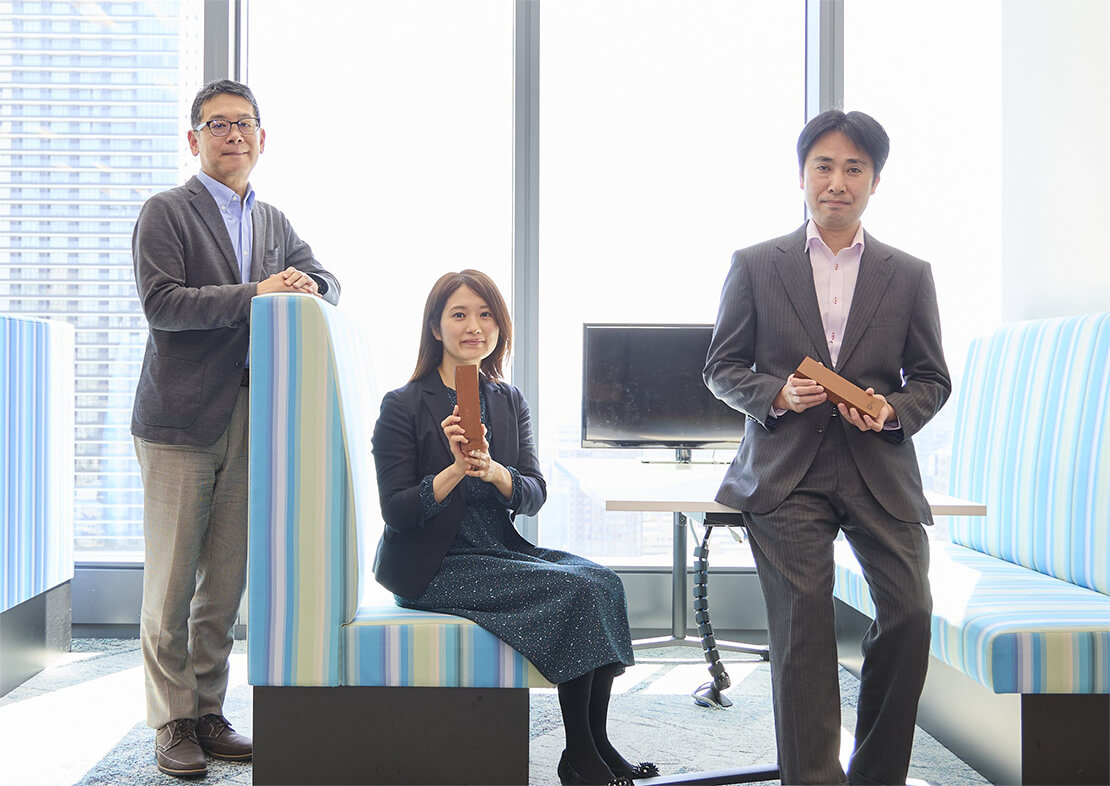
Aranami smiles, saying that Wada and Katsuyama's performance was "just as planned." "We need to give people in their 30s a sense of responsibility and encourage their growth." Aranami says that even before ANSIEL, companies need new businesses in the first place. "After studying the history of various companies, I've come to the conclusion that companies that are able to revitalize themselves are the ones that grow. We must continue to have a challenging spirit towards new businesses."
ANSIEL is eligible for various subsidies and grants, including the Ministry of Health, Labour and Welfare's "Support Project for the Introduction of Care Robots." This government support makes it easier to take on a new business venture. This is because, when adopting something new, recipients feel more secure knowing that the government is providing support. If ANSIEL is easy to implement and improves productivity after implementation, its reputation will naturally rise. Furthermore, with the government promoting scientific care, ANSIEL's data will likely contribute to optimal care and support for independent living in the future. Based on these social trends, Aranami formed his own project team.
"It's absolutely essential to include sales and development teams within the project team, like Wada and Katsuyama did. A new business can only succeed when communication between these two departments is smooth. And, promote young people whenever possible."
During the interview, Aranami encouraged Wada and Katsuyama to talk as much as possible. "The only thing left is to have superiors who support our challenges," he said, and recalled that the support from the aforementioned Executive Officer was a big factor for ANSIEL.
With this promotional system in place, ANSIEL is experiencing rapid growth. They are receiving many inquiries and orders, and their sales are steadily increasing.
"It seems that word of mouth within the industry is spreading about the positive results achieved by implementing the system."
In fact, when ANSIEL was installed in a 65-bed assisted living facility, the number of nighttime rounds was reduced from five to one, overtime work for night shift staff was reduced by 65%, and the number of steps taken by night shift staff was reduced by 20%. This not only reduced the burden on staff but also improved operational efficiency, resulting in the provision of high-quality care. The challenge undertaken by Aranami and his team, who developed ANSIEL from scratch and handled its operation, has yielded concrete results.
Aranami and his team are also working to expand sales of "Smart Level," aiming to make it the next pillar of their business after ANSIEL. This is also a sensor-based product that can be attached to the inside or top of a waste container to remotely monitor the amount of waste. The information is sent to the administrator's smartphone or computer. This makes it possible to change from regular patrols to collection at necessary times, contributing to reduced workload by eliminating unnecessary patrols and maintaining the aesthetics of the area around the waste container.
Their approach extends beyond the nursing care industry; they are using sensing technology and data to address the labor shortage problem caused by Japan's overall population decline. I could sense this challenging spirit from the way Aranami and his colleagues spoke. And their efforts are leading to "peace of mind that continues into the future."