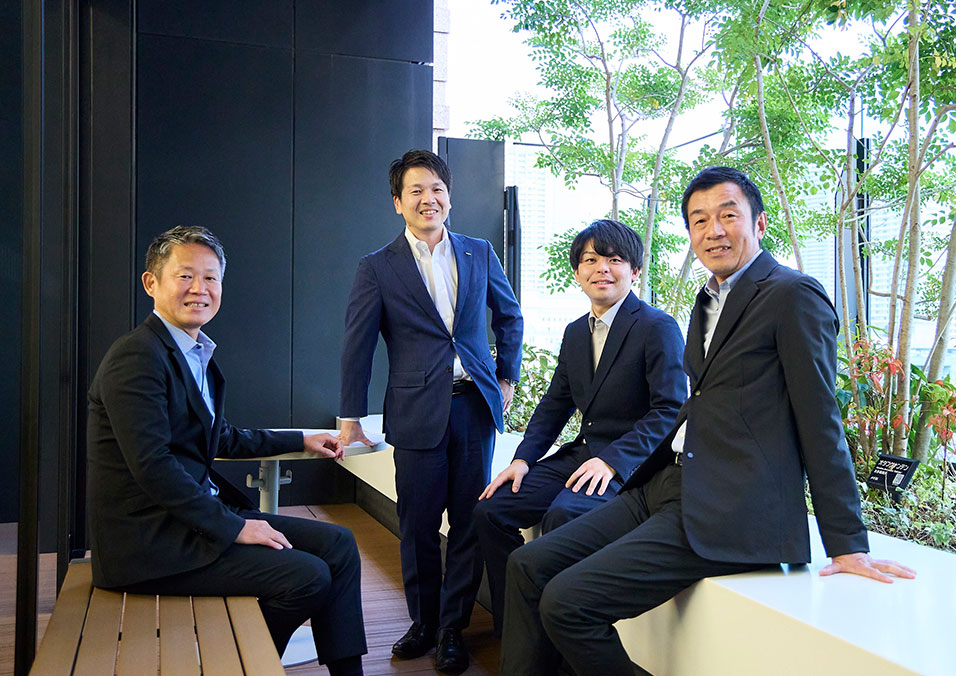
DX Roadmap Towards 2030: Human Resources Learning and On-the-Ground Implementation Will Open Up the Future
公開日:
What thoughts and stories were behind its development?
How will that connect to the people and societies living on Earth?
"SEKISUI | Connect with" is a future-creating media platform that connects you with Sekisui Chemical.
Digital transformation (DX) is no longer a fleeting trend, but is becoming a major, surging force. In this VUCA era, where predictions are difficult and uncertain, the methodologies and ways of thinking built up through past business practices are no longer sufficient. This is why it is essential to drive DX (digital transformation) based on a long-term vision.
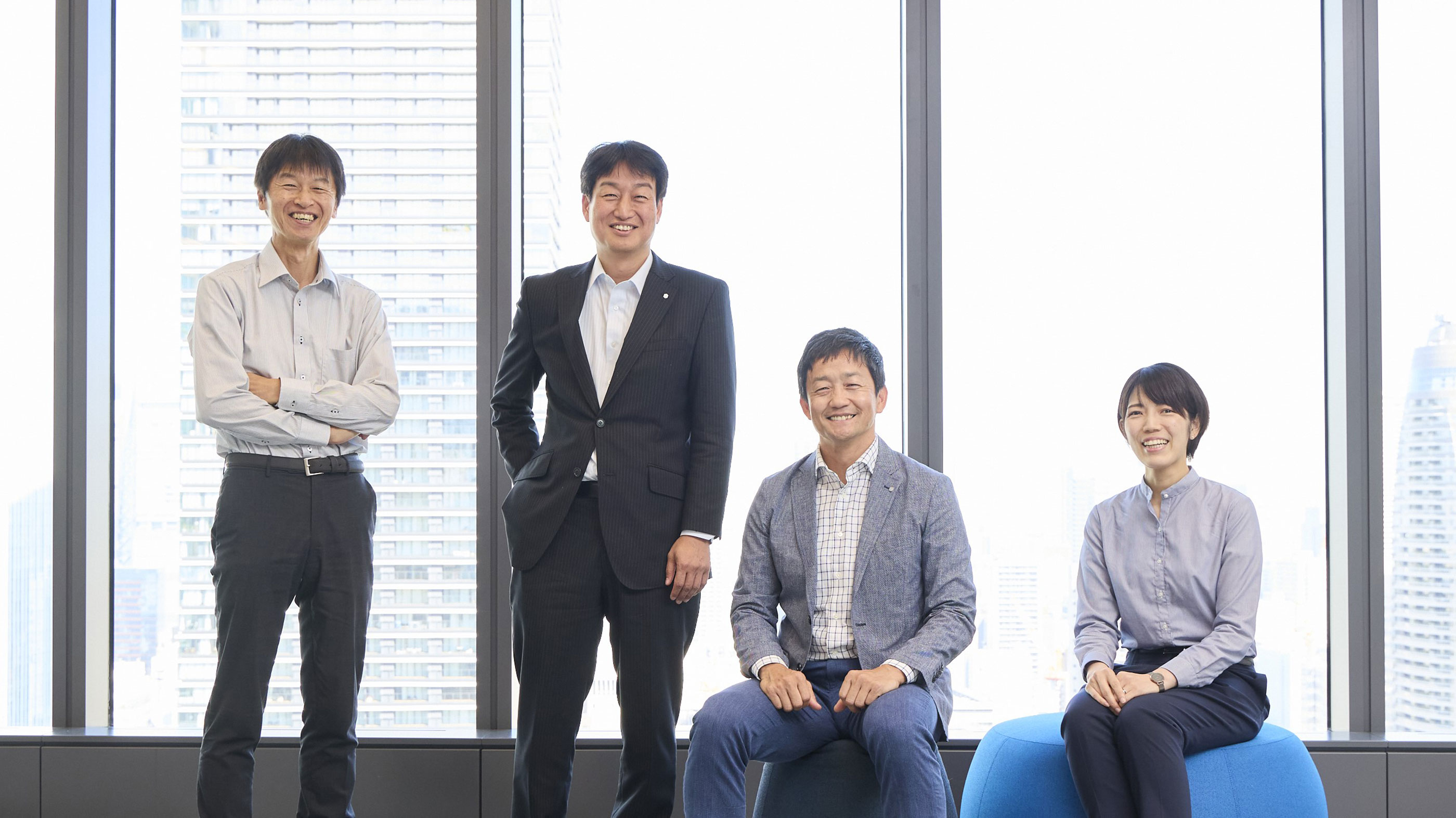
SEKISUI CHEMICAL Group began full-scale DX efforts in 2019. To promote company-wide DX, the "Digital Transformation Promotion Department" was newly established in April 2020. To solve on-site business challenges digitally, five DX practical courses were launched in fiscal 2023. Looking ahead to 2030, we will advance the development and training of DX talent from the field. How did the group take the first step toward DX with a long-term roadmap? We will feature two members leading transformation in the Digital Transformation Promotion Department and two who have worked on solving and implementing business challenges through the course to take a look at the current timing of DX.
- DX began with a sense of crisis—a step towards the challenge of 2030.
- We will use the power of digital technology to solve problems on-site and produce results.
- DX reform driven by a tripartite partnership of students, instructors, and support—the future brought about by the challenges of the first cohort.
DX began with a sense of crisis—a step towards the challenge of 2030.
"At this rate, growth is out of the question, and even sustainability will be difficult—this sense of crisis became the driving force behind our promotion of DX. DX is essential for realizing Vision 2030."
Naoki Maeda, who leads the reforms as the head of the Digital Transformation Promotion Department, reflects on the origins of the DX strategy.
Sekisui Chemical has set forth its long-term vision, "Vision 2030," aiming to double its business by solving social issues and providing security for the future. To realize this long-term vision, it is essential that each and every employee continues to take on challenges with honesty and without being bound by conventional methods.
"To achieve our Vision 2030, we cannot rely solely on traditional business processes and methods. While our past approaches have many merits, transformation is essential to continue growing while fulfilling our social responsibilities. Furthermore, with the increasing difficulty in securing labor, improving productivity is a top priority. To survive in this environment, we will accelerate our growth strategy and structural reforms through digitalization. This is the starting point for our DX (Digital Transformation) initiatives."
Since 2020, we have been implementing data infrastructure and business systems, laying the foundation necessary for digital transformation. However, digital tools and data do not create value simply by existing. Whether they can be utilized and directly lead to transformation depends on the existence of people who can use them effectively and the number of challenges they take on."
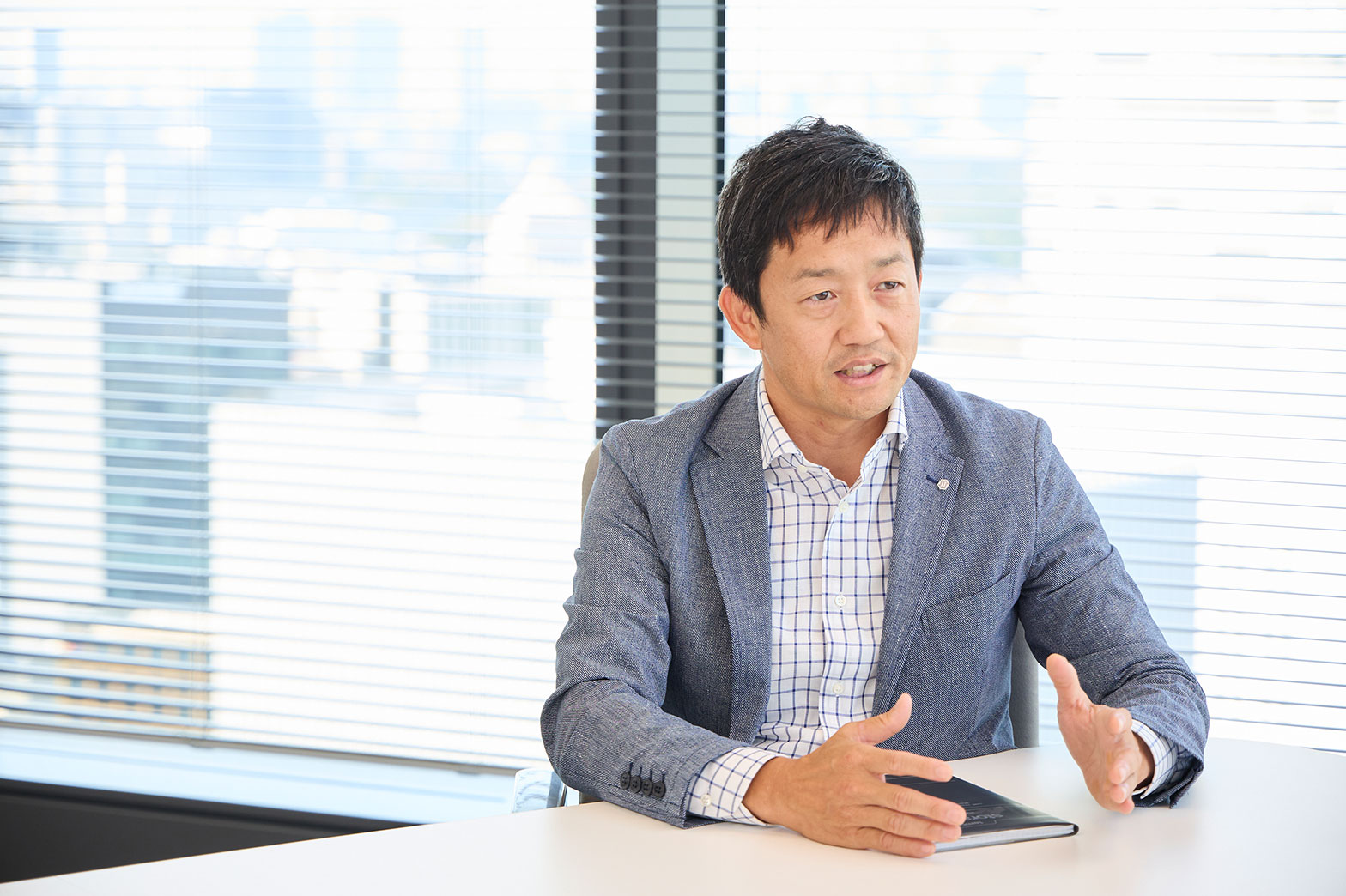
Sekisui Chemical's mission in promoting DX is to accelerate and support growth strategies and structural reforms to realize its Vision 2030. As part of this, the "DX Practical Training Course" is being launched. The purpose of this course is for employees to learn digital skills, use digital tools to solve business challenges, and take on challenging actions. Planning began in the first half of fiscal year 2023, and 64 first-year students have gathered. What Maeda hoped for from the students was that "they would use the knowledge and skills they learned to improve their own work, and then expand on that to play a role in improving the productivity of the organization."
"What's important in promoting DX isn't simply increasing the number of people who are digitally savvy or can use tools. The essence lies in developing personnel who can solve the specific challenges faced on the ground. We placed particular emphasis on this point in this program."
Aiming for a practical course that goes beyond simply acquiring technical skills and connects them to solving real-world problems, Hasegawa, who was in charge of planning and developing the course, explains further.
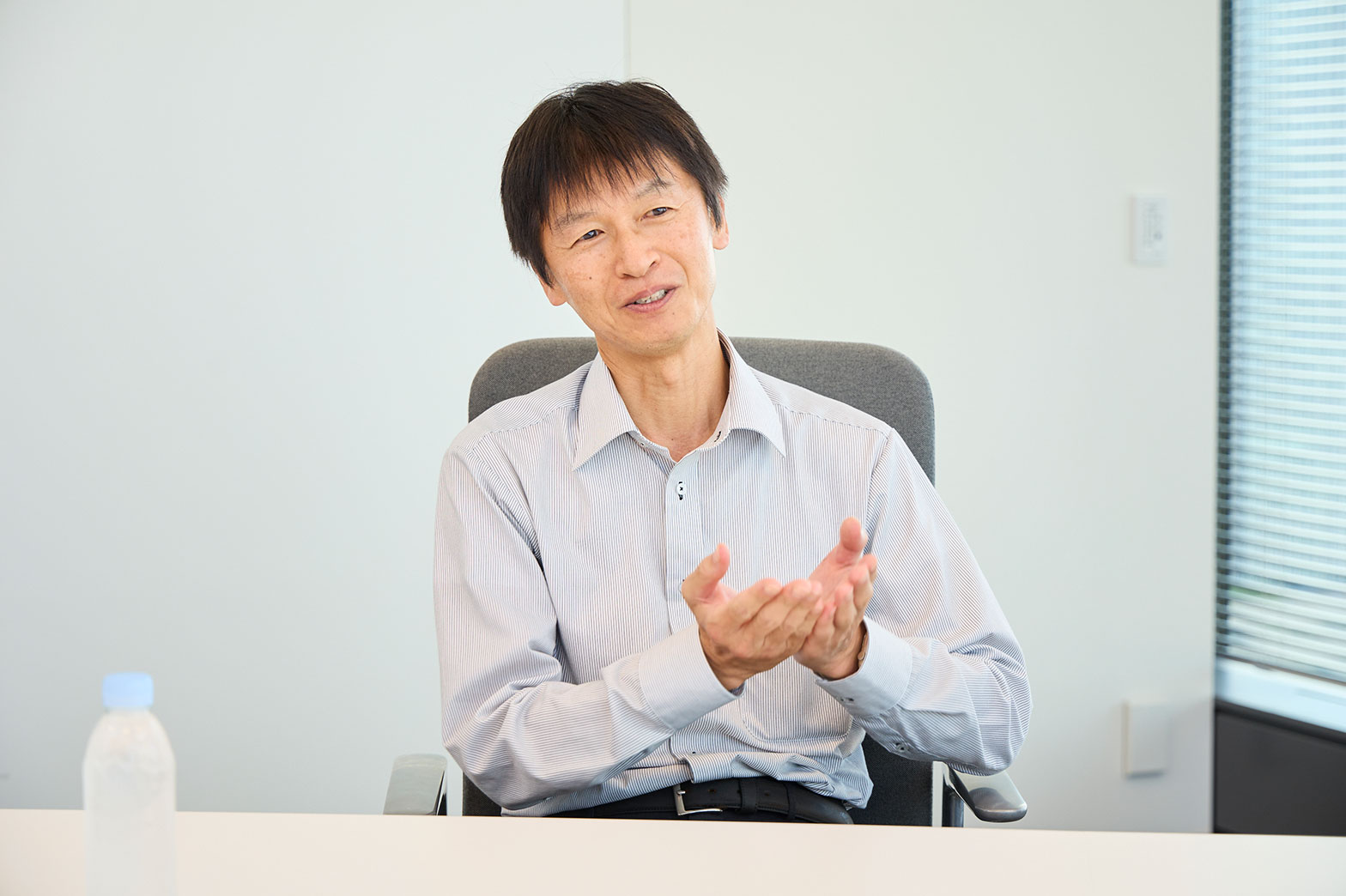
"Before the DX reform, training was conducted using pre-determined menus and data. While technical skills could be acquired, the challenge was how to apply them to actual work. In this DX practical training course, the aim was for participants to solve individual work challenges they faced using their own data. The significance lies in confronting challenges that were difficult to solve in the past and overcoming them by leveraging the power of digital technology. Supporting the resolution of individual challenges is not easy, but we have established a detailed follow-up system, including providing a community where external instructors and participants can contact each other. As a result, all 64 participants were able to tackle their own work challenges and achieve concrete results."
We will use the power of digital technology to solve problems on-site and produce results.
While selecting tools, Hasegawa and his colleagues narrowed down the content of the five courses. The lineup consists of two courses each on AI*1 and BI *2, and one course on RPA *3. "I feel that we were able to concentrate the content to be useful for the participants," says Hasegawa, reflecting on the practicality of the course content.
"While the course included lectures on how to use the tools, the core approach was one-on-one guidance from instructors proficient in AI and BI, utilizing data used in their own work. It wasn't just a rote learning program; we created an environment where participants could get their hands dirty and implement solutions, and ask questions in a timely manner whenever they arose."
*1 AI (Machine Learning): An artificial intelligence technology that uses past data to learn patterns in order to predict future events and outcomes.
*2 BI (Business Intelligence): A technology that visualizes what is working well and what needs improvement in the collected data.
*3 RPA (Robotic Process Automation): A technology that uses computers to automatically perform repetitive tasks.

Among the 64 first-term students, Tomoya Nakamura, who oversees the Seki Systems Sales Office at Urban Infrastructure and Environmental Products (UIEP) Company, has had a significant impact and insights on the sales field. What Nakamura faced as a challenge was visualizing the most important numbers for the sales office. Nakamura explains the background.
"At our sales offices, we calculated the projected end date for the month by looking at the average sales up to that day, the number of contracts, and the remaining days. Each person in charge spent a lot of time on calculations and analysis, and there was no standardization of know-how, so the accuracy varied. Also, when there was a difference in understanding of the projected end date between superiors and subordinates, there were qualitative exchanges such as, 'The numbers are too conservative. Can't we increase them a bit more?' or 'Are we really going to reach that much? What's the basis for that?' We were wondering if we could solve these problems by creating a common standard... That's when we learned about the DX Practical Course and decided to take it to solve our problems."
The project Nakamura tackled was creating a "monthly sales forecast database" for the sales office. He incorporated all the necessary elements for making monthly forecasts into the database and visualized the figures that changed daily. Not only did this improve the accuracy of the final forecast, but it also enabled timely instructions and countermeasures by creating a common standard among subordinates. Nakamura deepened his knowledge of BI tools through one-on-one sessions with the instructor, and utilized his network of sales office managers nationwide to incorporate various requests and refine the system so that it could be used from a manager's perspective. Reflecting on the increased practicality of the system in his work, Nakamura said the following:
"I took the course not to master the tools, but to solve practical challenges, and I was able to deliver the results exactly as intended. I feel that features are easy to use at the director level. Additionally, by developing it so that other departments can check the list at once, even higher-level sales division heads and business units can instantly get a comprehensive overview of the numbers, making it extremely useful. Currently, this dashboard has become the most widely used dashboard in the Divisional Company. Learning implementation through a three-hour one-on-one session with an instructor was tough, but by leading by example as a manager, I believe we were able to contribute to promoting organizational DX."

Akika Nakamura worked on the "Management Indicator Dashboard" in the Housing Company Technology and CS Division. At the Sekisui Heim factory she manages, massive amounts of data are generated daily for production management. However, this data is scattered across various locations, and obtaining the necessary information required requires significant effort and time. Furthermore, data analysis is not easy, making it difficult to make quick decisions. Nakamura talks about the actual situation on the ground.
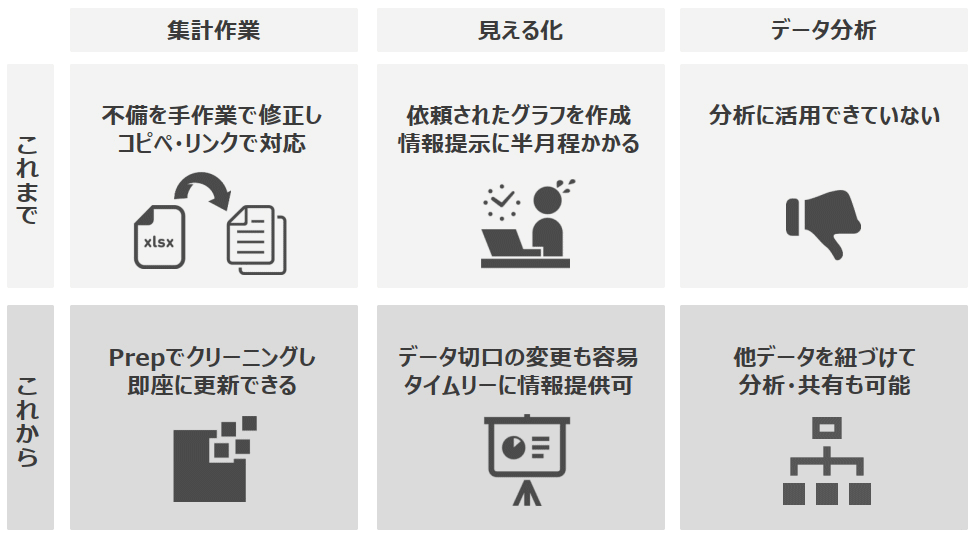
"The data certainly exists, but because it's dispersed, it takes a very long time to extract and integrate information from each system. As a result, the process of using and analyzing the data tends to stall. We wanted to speed up this process to contribute to improving production efficiency and decision-making for improvement. That was our motivation."
Nakamura, who took the course, aimed to consolidate management indicators into a dashboard using BI tools, making it possible to visually grasp data that can be used to inform management decisions. When he actually created a dashboard and presented it to his superiors, he received high praise, with comments such as, "This is easy to understand," and "This is a practical interface that helps in decision-making." Nakamura delves deeper into the positive results he received.
"While we have achieved concrete results such as reducing document creation time by 8 hours per month, the most important thing is that this dashboard has enabled us to make management decisions more quickly. Although it may be a less visible aspect, I am confident that it will lead to the creation of significant value, such as improved management efficiency and higher quality decision-making."
DX reform driven by a tripartite partnership of students, instructors, and support—the future brought about by the challenges of the first cohort.
Hasegawa monitored the progress of the participants' proficiency with the tools and their instruction, providing meticulous follow-up not only during the course but also afterward. He reflects with deep emotion on the efforts of the two individuals who transformed the workplace.
"Despite his position as the head of the equipment systems sales office, Tomoya Nakamura volunteered to take on this challenge. I believe his influence on his subordinates and those around him is immeasurable. Copy-pasting in spreadsheet software, like the work Akika Nakamura was facing, does not create value. Streamlining such processes and increasing productivity is the essence of DX reform. Value is created in subsequent decision-making and in moments when it benefits the customer."
Maeda also expressed his hope that "these implementations progressing on the ground will further advance DX reform," summarizing the challenges faced by the first cohort of participants.
"The participants actively tackled problem-solving and achieved results through 1-on-1 sessions. They were also very proactive in spreading what they learned within their organizations, and I am truly grateful for their enthusiasm. This course was a zero-to-one initiative. The participants, instructors, and our internal support team worked together ideally, creating a unified force that produced results. From my position as a promoter of DX reform, I have a very positive impression of the results and timing of this first cohort."
The DX Practical Training Course will begin its second term in 2024, and further progress is expected. Hasegawa says, "The success stories built by the first and second cohorts will serve as a foundation for reaching the future. We will continue to offer attractive programs and pass them on to the third cohort and beyond."
Maeda emphasized the outlook for future DX strategies. His expectations for and commitment to driving digital transformation within the group suggest a roadmap extending to 2030.
"By 2030, DX talent will no longer be special but will naturally exist within organizations. In 2025, including other training sessions, we aim for half of our employees to become DX professionals who can master digital technology in their work or promote DX transformation in their operations. It is important to achieve results together with the first and second cohorts so that the five years starting in 2025 will become a new phase. I believe that reform measures, including DX practical courses, will bear fruit one after another. With anticipation and excitement for that future, I want to move forward toward 2030. I want to watch how graduates expand their learning and thrive in the field. SEKISUI CHEMICAL Group The spirit of DX spreads throughout the entire organization and spreads. Beyond that, the success of DX strategies becomes visible."