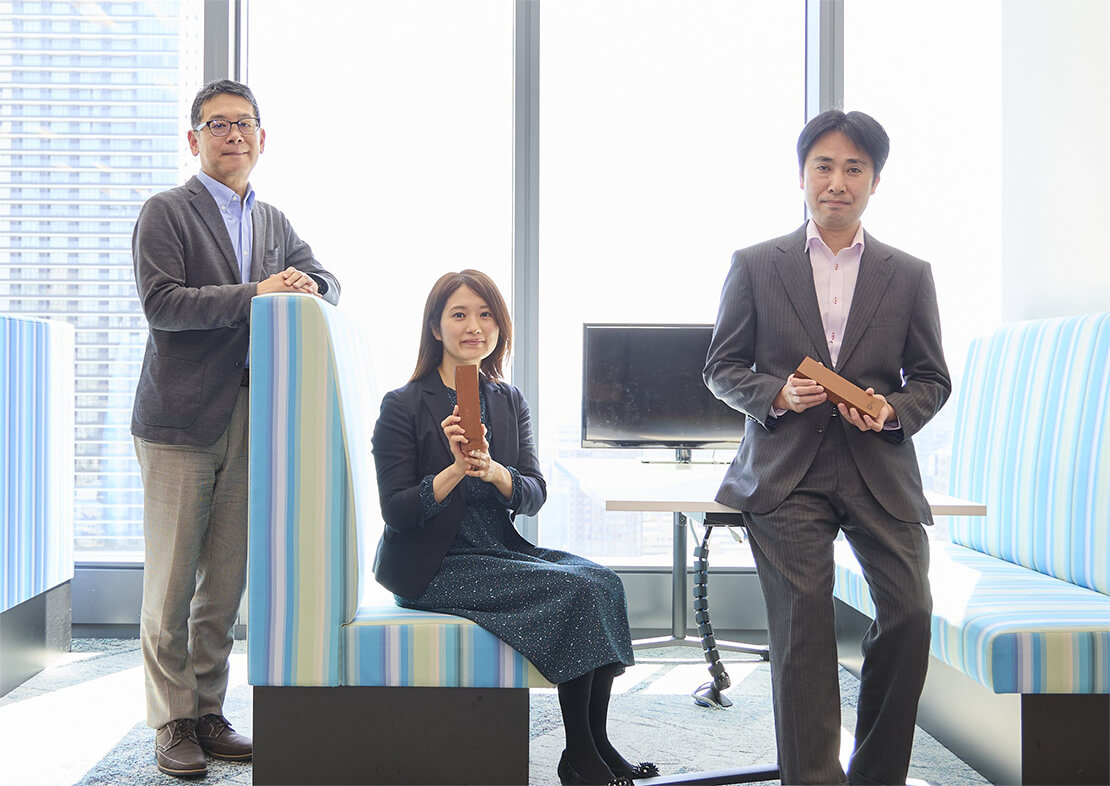
The Omega Liner construction method, which saves infrastructure from crisis, is being inherited and further developed by young employees.
公開日:
What thoughts and stories were behind its development?
How will that connect to the people and societies living on Earth?
"SEKISUI | Connect with" is a future-creating media platform that connects you with Sekisui Chemical.
In recent years, infrastructure such as roads and bridges are rapidly reaching the end of their service life. The same is true for sewage systems, with approximately 2,600 road collapses annually caused by damage to sewer pipes, indicating a quiet crisis creeping up beneath our feet. The total length of sewer pipes laid throughout Japan is approximately 490,000 km. Approximately 30,000 km of pipes have exceeded their standard service life of 50 years, representing 6% of the total length. In 10 years, this will reach approximately 90,000 km (about 19% of the total length), and in 20 years, it will reach approximately 200,000 km (about 40% of the total length). As the number of aging pipes increases, problems are more likely to occur.
Against this backdrop, construction work related to infrastructure maintenance, renewal, and life-extension support is rapidly increasing nationwide. In addition, the construction industry will face a serious labor shortage in 2025 due to a large number of retirements caused by an aging population. The construction workforce is unbalanced, with 35.9% being 55 years or older and 11.7% being 29 years or younger, and will likely suffer from a chronic labor shortage even after 2025. How to maintain and manage social infrastructure is an urgent issue.
This is where the need for "pipeline rehabilitation," or in other words, the renewal of sewer pipes, is increasing. This method does not require excavating the ground during construction, resulting in shorter construction periods and reduced costs. Taking advantage of these benefits, pipeline rehabilitation is progressing in various locations, and the "Omega Liner method" is attracting attention in this context.
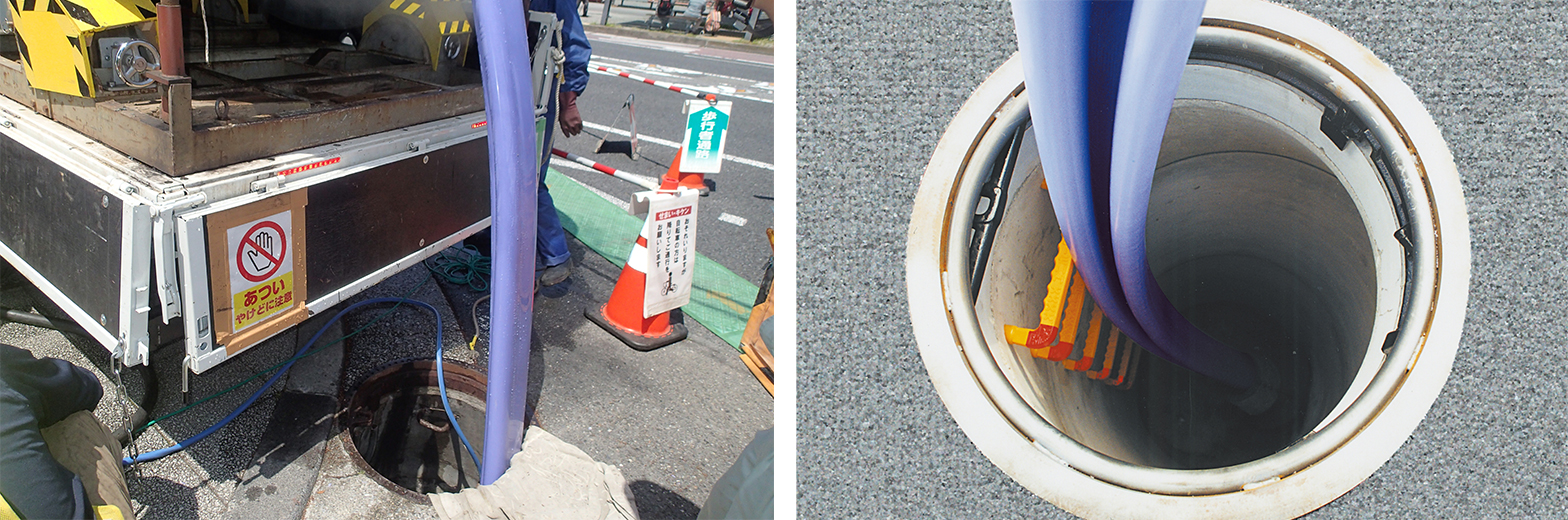
Sekisui Chemical has been collaborating with Tokyo Metropolitan Sewerage Service and Adachi Construction Industry on the development of pipeline rehabilitation technology. They have been involved in engineering from surveys and diagnoses to planning and detailed design, as well as the sale of pipeline rehabilitation materials and the development and promotion of rehabilitation construction equipment. With the need for sewer pipeline rehabilitation increasing nationwide, what advantages does the Omega Liner method have, and how is it proving effective at rehabilitation sites across the country? Members involved in engineering, production, development, and sales will share their insights.
The strong point of the construction method that makes full use of shape memory is
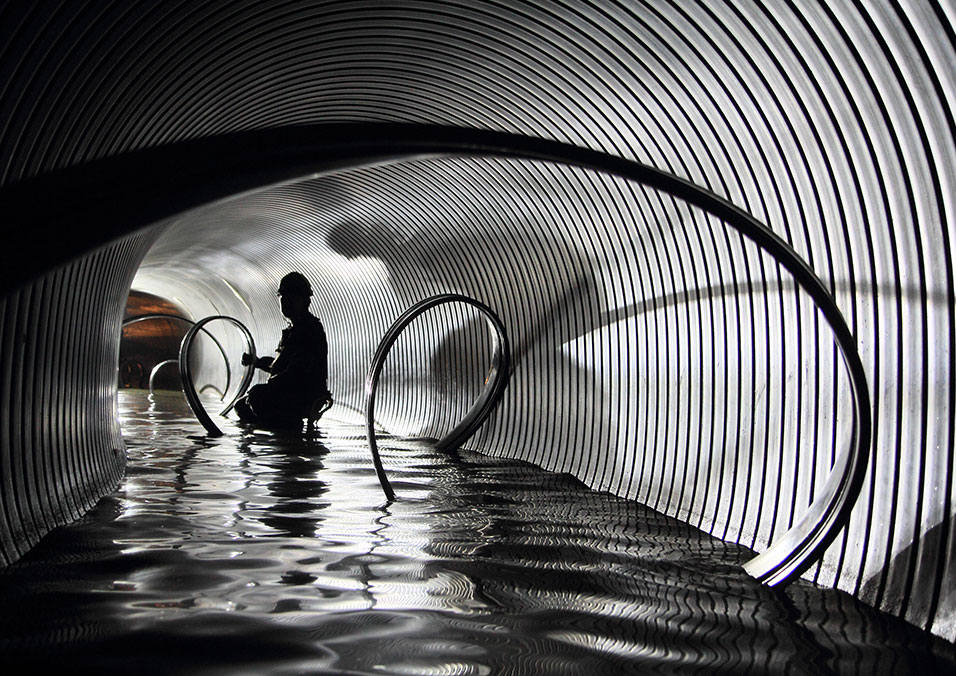
The Omega Liner method is a pipe rehabilitation method that uses PVC pipes (rigid polyvinyl chloride pipes) with shape memory function. It is a method for small to medium diameter pipes with an inner diameter of φ150 to 450 mm and has a track record of over 20 years. An omega-shaped PVC pipe is inserted into the aging pipe through the manhole and heated with steam. This action restores the shape-memory PVC pipe to its original circular shape and adheres tightly to the existing aging pipe. This is how the sewer pipe is renewed with a new PVC pipe.
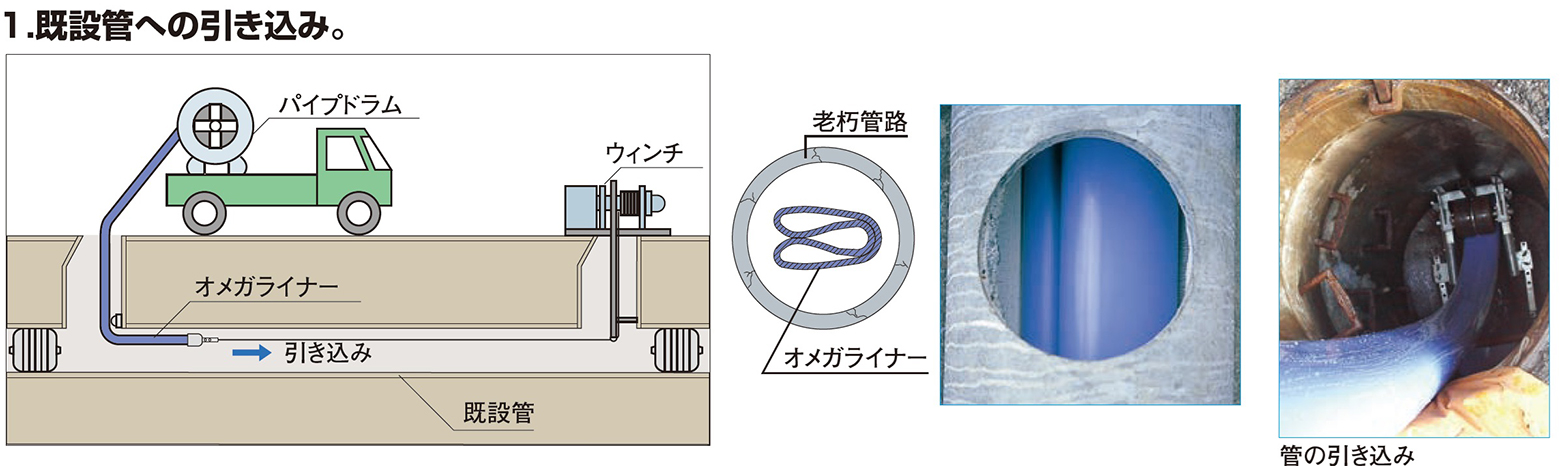
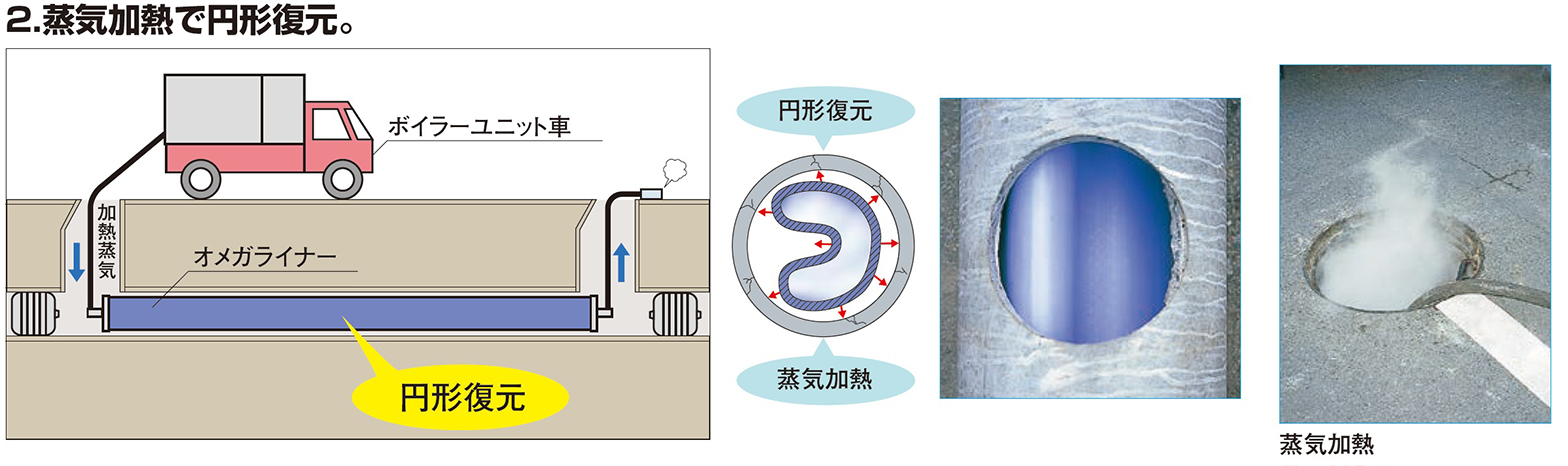
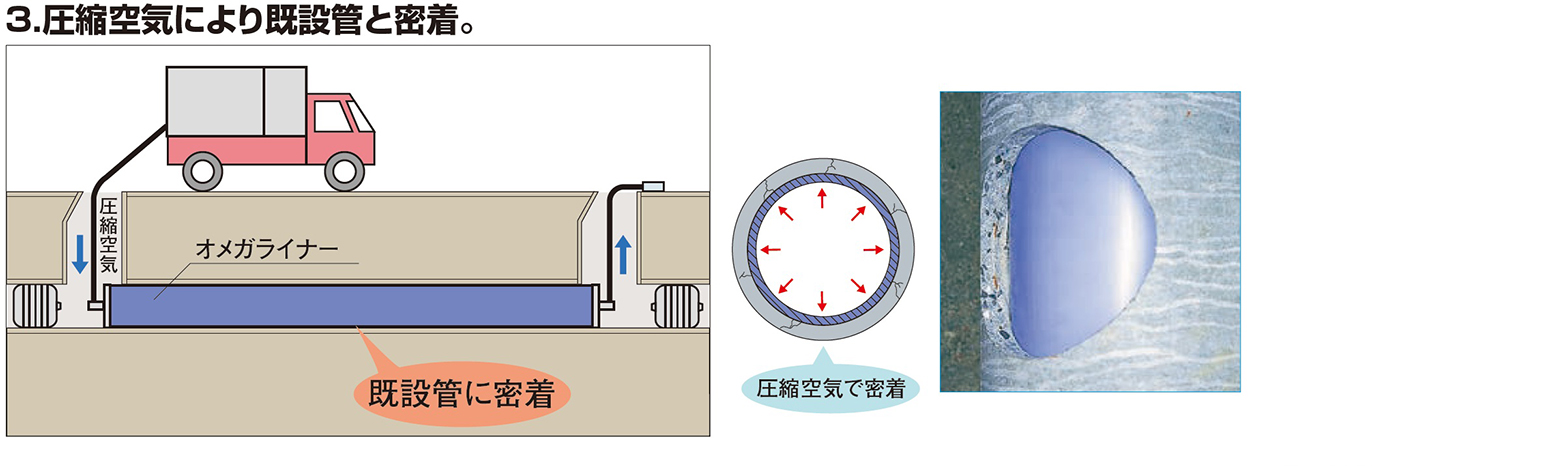
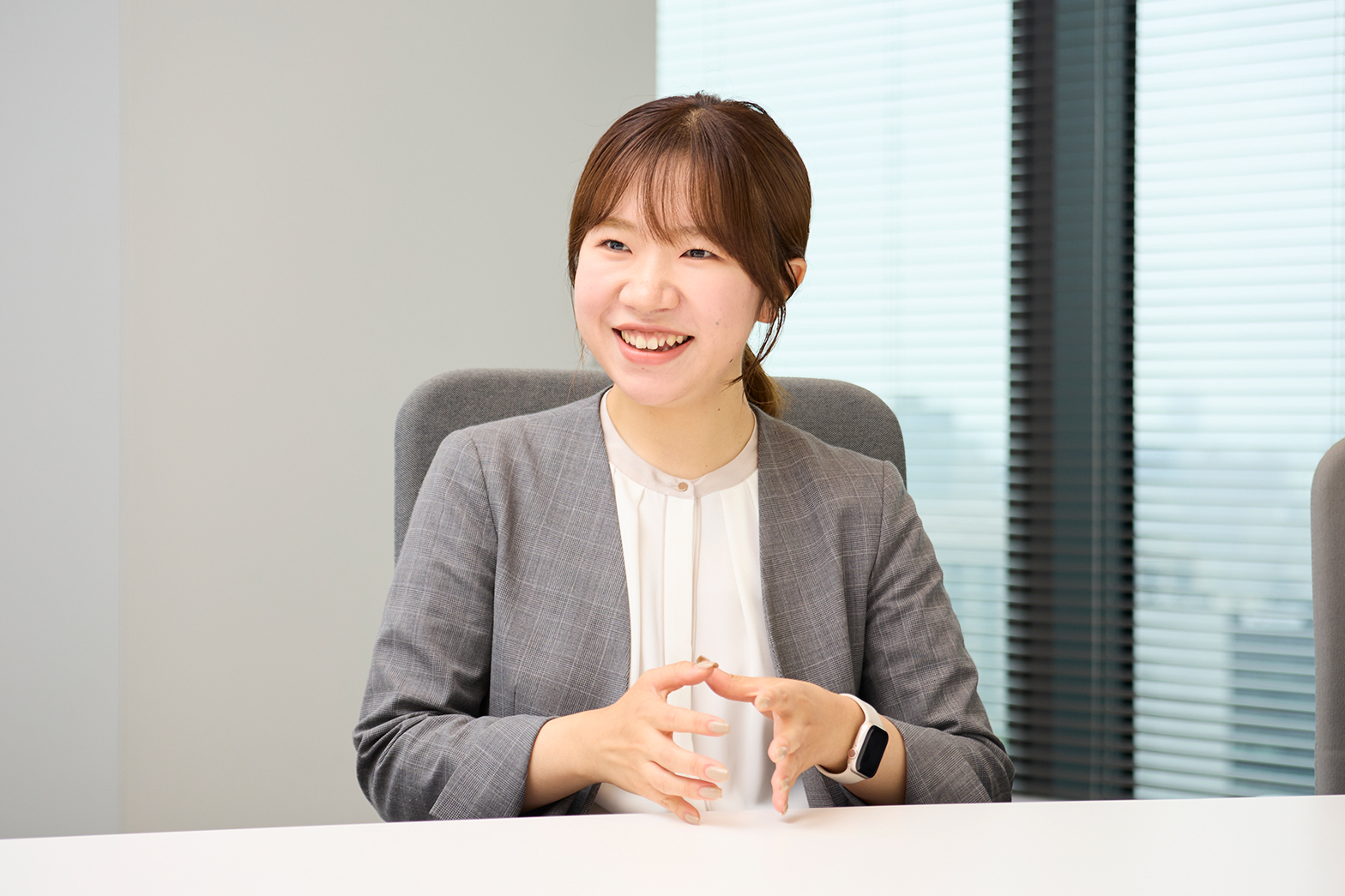
There are various methods for pipe rehabilitation. Some rehabilitation methods involve creating new pipes by causing chemical reactions at the construction site, but the Omega Liner method is a method in which pipes manufactured in a factory are heated with "steam" and then restored to a circular shape and expanded in diameter at the site to create a tight seal. Makiko Toyoda, who is in charge of sales and is responsible for promoting the product to clients such as local governments, emphasizes that "that is a major selling point."
"Because it doesn't cause chemical reactions at the construction site, it doesn't produce any odor. This makes it easy to use in densely populated urban areas and at sites with high foot traffic, such as universities. Furthermore, it's the first PVC rehabilitation material in the industry to receive the 'Class I Equipment' certification from the Japan Sewerage Association. It has strength equal to or greater than newly installed PVC pipes, and also boasts excellent durability and corrosion resistance."
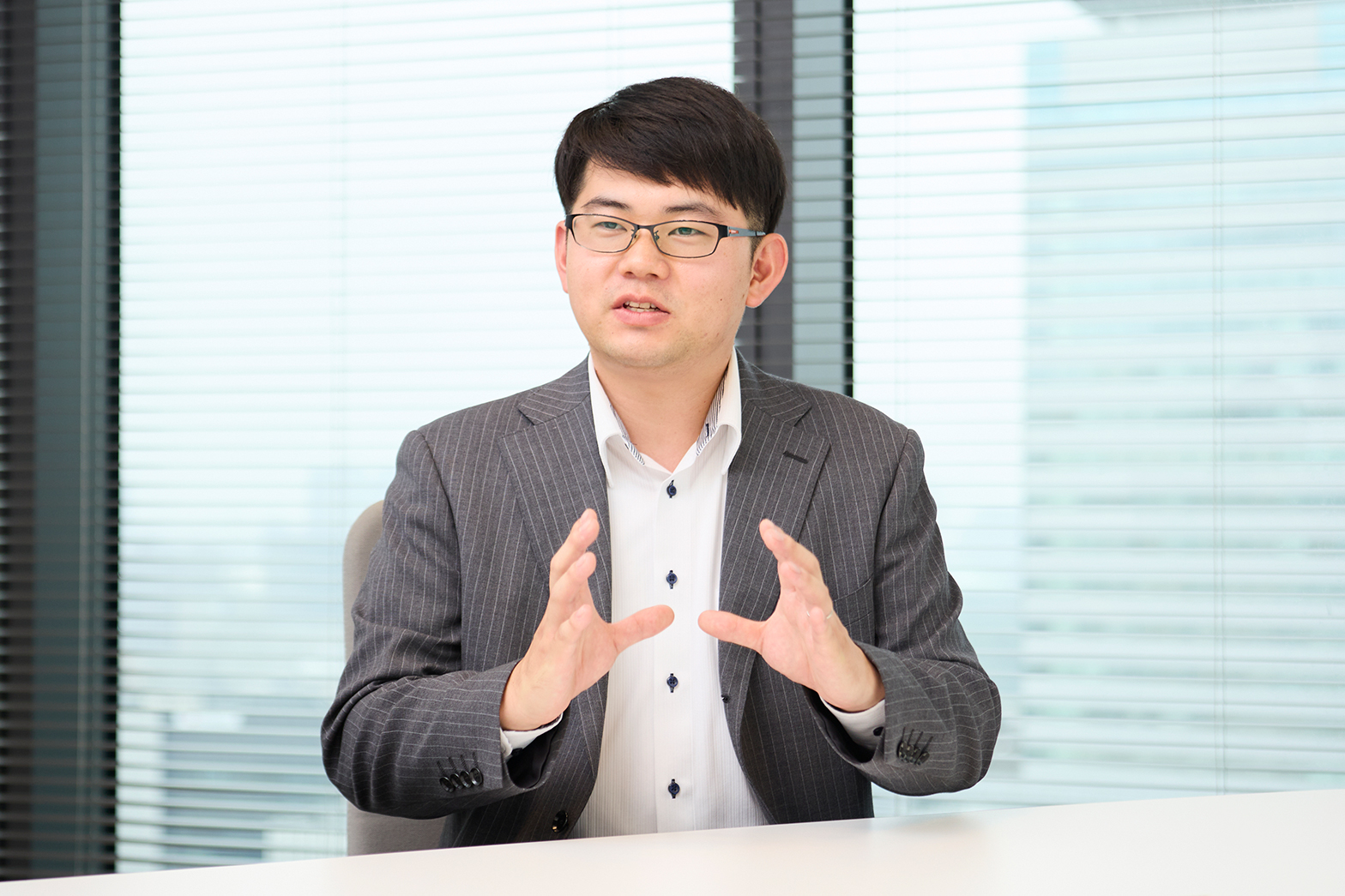
Ryo Teshima, who develops construction equipment and materials and sells and rents equipment to support construction companies, said, "At the construction site, ease of installation is a key point of evaluation from our customers, the construction partners."
"I visit construction sites to gather firsthand feedback and am involved in developing and improving equipment that is easier to use. Because the rehabilitation material is inserted through manholes rather than digging up the road, construction is possible even in confined spaces such as urban areas. It is a construction method that leads to shorter construction periods and cost reductions because it is quick and easy to install. In order to further enhance the balance between quality and ease of installation, the Omega Liner method is also being upgraded, with the introduction of the Z type, which makes it less likely to wrinkle even when the pipe is folded."
The ingenuity of the formulation that supports the superior construction method, and DX
The strengths that Toyoda and Teshima spoke of are underpinned by the "materials" unique to the Omega Liner method. Misaki Wakita of the Rehabilitation Pipe Technology Department is working with these materials at the Ritto Plant in Shiga Prefecture. What are the advantages that this unique compounding technology brings?
"The materials used in the Omega Liner construction method are made by blending rigid polyvinyl chloride as the base material with a modifier that provides flexibility and ease of deformation. The key to this blend is the material's 'elastic modulus'."
Let's review the construction flow of the Omega Liner method. The Omega Liner is preheated to about 50°C before being drawn into the pipe, then heated with steam to about 70-80°C to restore its shape and adhere tightly to the existing pipe. While flexibility is required when drawing it in, a material that gradually changes elasticity with temperature is ideal to ensure a smooth restoration and adhesion process.
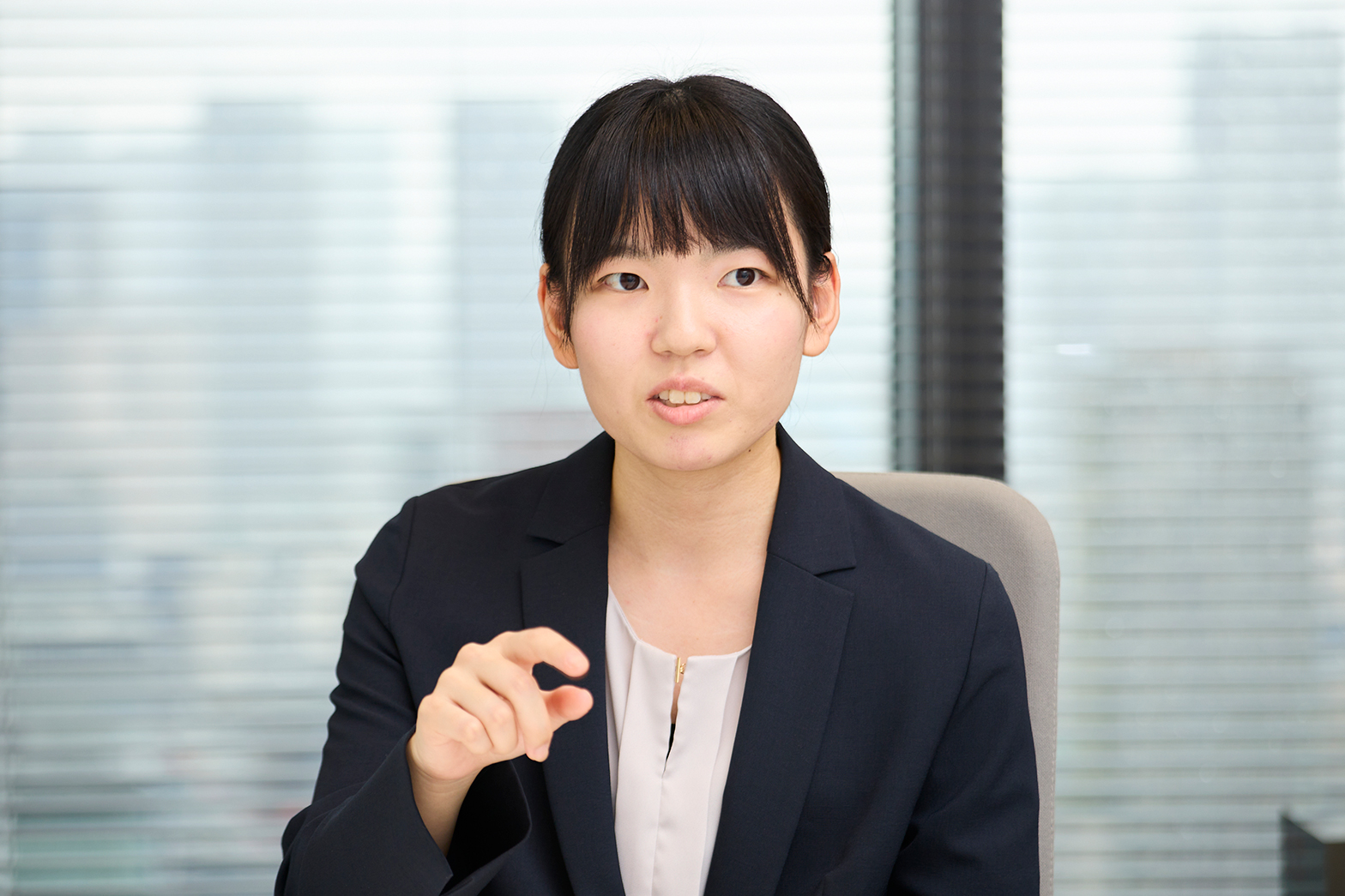
"To determine these properties, we evaluate the temperature dependence of the material's elastic modulus. Even a slight change in the composition of a material called a modifier can significantly alter the workability. We are still constantly searching for the best approach and experimenting, keeping in mind the ease of use for our construction partners."
While visualizing the temperature-dependent changes in the ideal elastic modulus, Wakita has been searching for the best balance in the compound. In recent years, with business continuity planning (BCP) in mind, he has also added the mission of searching for new materials by contacting more than 30 trading companies.
"There's no guarantee that the materials we currently use in our formulation will continue to be supplied in the future. If the supply were to stop, the unique features of this construction method would be lost. That's why we're obtaining candidate samples and searching for alternative materials while testing and evaluating their properties. Finding materials that can produce the same performance is a difficult task, but my desire to deliver stable products to every construction site in Japan is what motivates me."
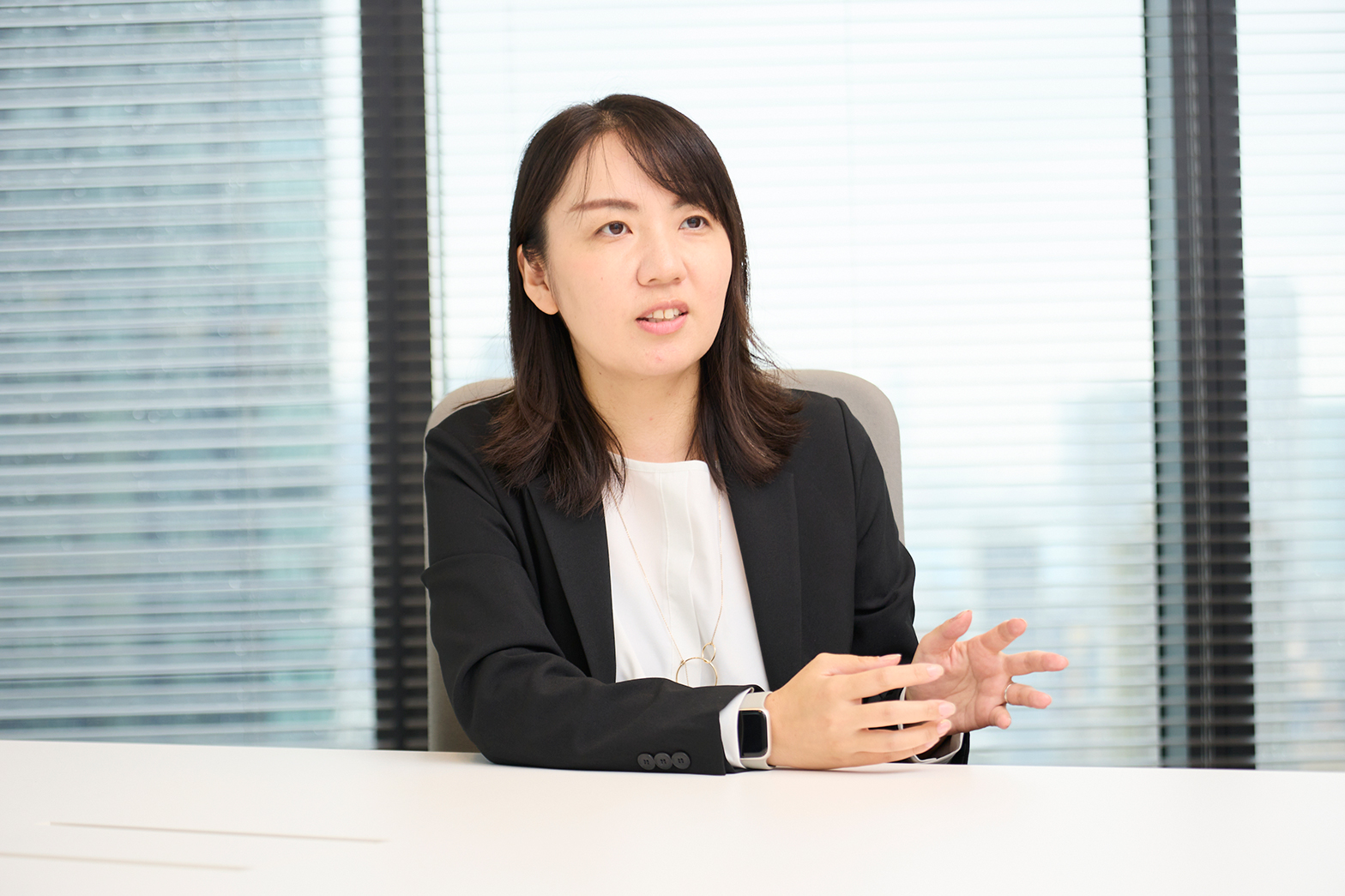
While we have observed the processes of construction, development and improvement of construction equipment, and material production, the advantages of this method are also demonstrated in engineering fields such as surveys, diagnostics, planning, and detailed design. DX is the solution to labor shortages and labor conditions. Urban Infrastructure and Environmental Products (UIEP) Company Iyo Kawasaki of the Engineering Center at the Research Institute aims to improve design-related efficiency while supporting sales staff, local governments that are clients, and construction partners through DX.
"DX is a powerful tool for providing our customers with the best possible solutions and for improving the working environment for all team members involved. We have created a database of design and construction case studies that our sales staff can refer to at any time, and we are also actively disseminating information to clients such as universities and corporations through webinars and email newsletters."
In the design of the Omega Liner method, we calculate the strength based on the soil cover of the existing pipes and proceed with cost estimation. Engineering in collaboration with design and construction partners like this will also be an area where DX (Digital Transformation) will be required in the future. To achieve construction that is both swift and high-quality, efficiency improvements through DX are essential."
We will contribute to maintaining social infrastructure and support a safe and secure future.
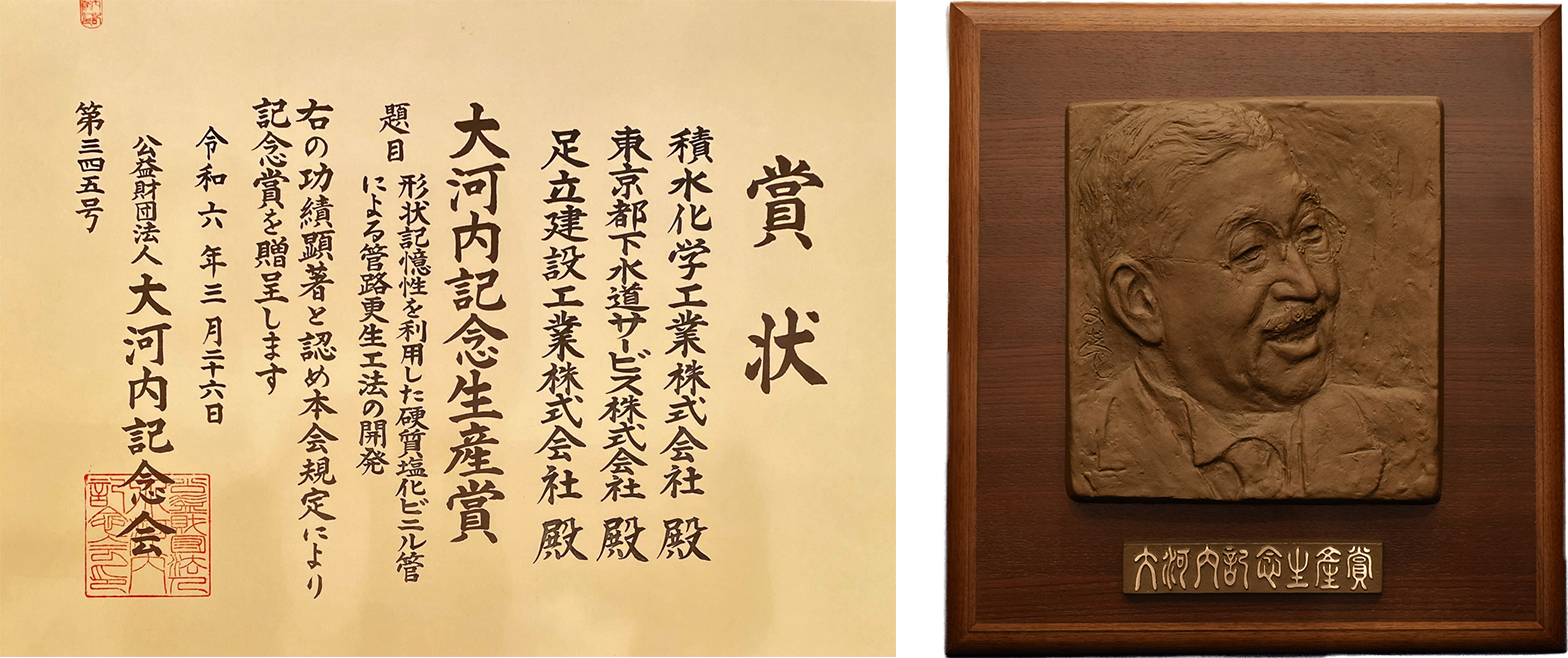
The Omega Liner method is not only appreciated at construction sites. This method was recognized for its social contribution in pipeline rehabilitation projects and received the 70th (2023) Okouchi Memorial Production Award. This is a prestigious and traditional award that recognizes outstanding achievements in the fields of production engineering, production technology, and production systems. The young members involved with the Omega Liner method will use this award as a stepping stone to continue their challenges.
Toyoda, who travels around the Kinki and Hokuriku areas that he is in charge of, emphasized, "I want to focus on sales that are rooted in the local community."
"Many of our construction partners recognize us as synonymous with the Omega Liner method from Sekisui Chemical. We believe that the catchy nature of this method, which utilizes shape memory, and its recognition on-site, led to this prestigious award. We are expanding its use not only to sewer pipes but also to the rehabilitation of aging pipes for power, agriculture, and telecommunications. We want to take a long-term perspective and promote this method widely."
"I'm pleased that our technological foundation has been recognized," said Teshima, who cited "digital implementation" as a key point for further evolution of the construction method.
"Currently, we rely on human observation to manage the heating temperature and pressure using steam. If we can move closer to automation with the support of sensing and AI, we can aim for further reductions in construction time and labor. We are also thinking about promoting digital transformation starting with the equipment on site."
The construction industry is concerned about the "2025 problem" and the declining workforce throughout Japan are urgent issues. Kawasaki sees potential in combining the Omega Liner construction method with digital transformation (DX) as a solution.
"As the number of aging pipes increases, so does the number of pipes that require countermeasures. Furthermore, with the ongoing consideration of introducing water PPPs *, the number of projects moving towards commercialization is increasing, and we are approaching an era where we must handle a massive amount of design work. The Omega Liner method, which balances speed and quality, is a method that fits the modern era. We aim to match it with DX and provide our customers with the best possible solutions."
(*) A public-private partnership model for gradually transitioning to public facility management businesses in the water supply, sewage, and industrial water supply sectors. The government's action plan aims to implement 225 such projects over 10 years.
The Omega Liner construction method was first implemented in 2000, and has been refined in every process, from design and production to construction. Wakita looks ahead, saying, "I want to properly pass on the technology that our predecessors have honed to the next generation."
"I focus on formulations and alternative materials, but this construction method is a condensed blend of various technologies and innovations, including engineering, improvements to construction equipment, and sales and marketing PR. Considering our more than 20 years of experience, there will be a need for further pipe rehabilitation in 20 or 30 years, and materials that are environmentally friendly and recyclable will also be required. I hope to consider approaches that benefit society and pass them on to future generations."
What value does the Omega Liner construction method create? The answer to this question extends beyond construction, production, and engineering sites. The team members also consider the lives of people and the global environment. This unified effort is sure to bring tangible value to society.