A massive underground space at Shibuya Station: A new era of urban flood control measures.
公開日:
What thoughts and stories were behind its development?
How will that connect to the people and societies living on Earth?
"SEKISUI | Connect with" is a future-creating media platform that connects you with Sekisui Chemical.
Shibuya, Tokyo, is becoming increasingly convenient as redevelopment progresses. It is one of Tokyo's iconic districts, and the Shibuya Scramble Crossing in front of Shibuya Station is a popular spot for tourists from overseas to take photos. Shibuya, an area where many people gather, has a "bowl-shaped" topography with the Scramble Crossing at its bottom. As a result, it has been greatly affected by torrential downpours. Rainwater tends to accumulate when it rains, and in the torrential downpour of the summer of 1999, the underground shopping area was flooded.
"The area around Shibuya Station has many railway lines and is densely packed with high-rise buildings, making development difficult. However, the Shibuya redevelopment project provided an opportunity to begin the construction of rainwater storage facilities."

This is according to Masashi Tabata of Higashi Nippon Sekisui Shoji, who was in charge of sales at the time. "Shibuya Redevelopment" is the collective name for the large-scale urban redevelopment project being carried out by Tokyu Corporation and the Urban Renaissance Agency, and is also called a "once-in-a-century redevelopment." The redevelopment began with "Shibuya Hikarie" in 2012, and since 2015, it has been nearing completion with plans to construct nine high-rise buildings and relocate three railway lines.
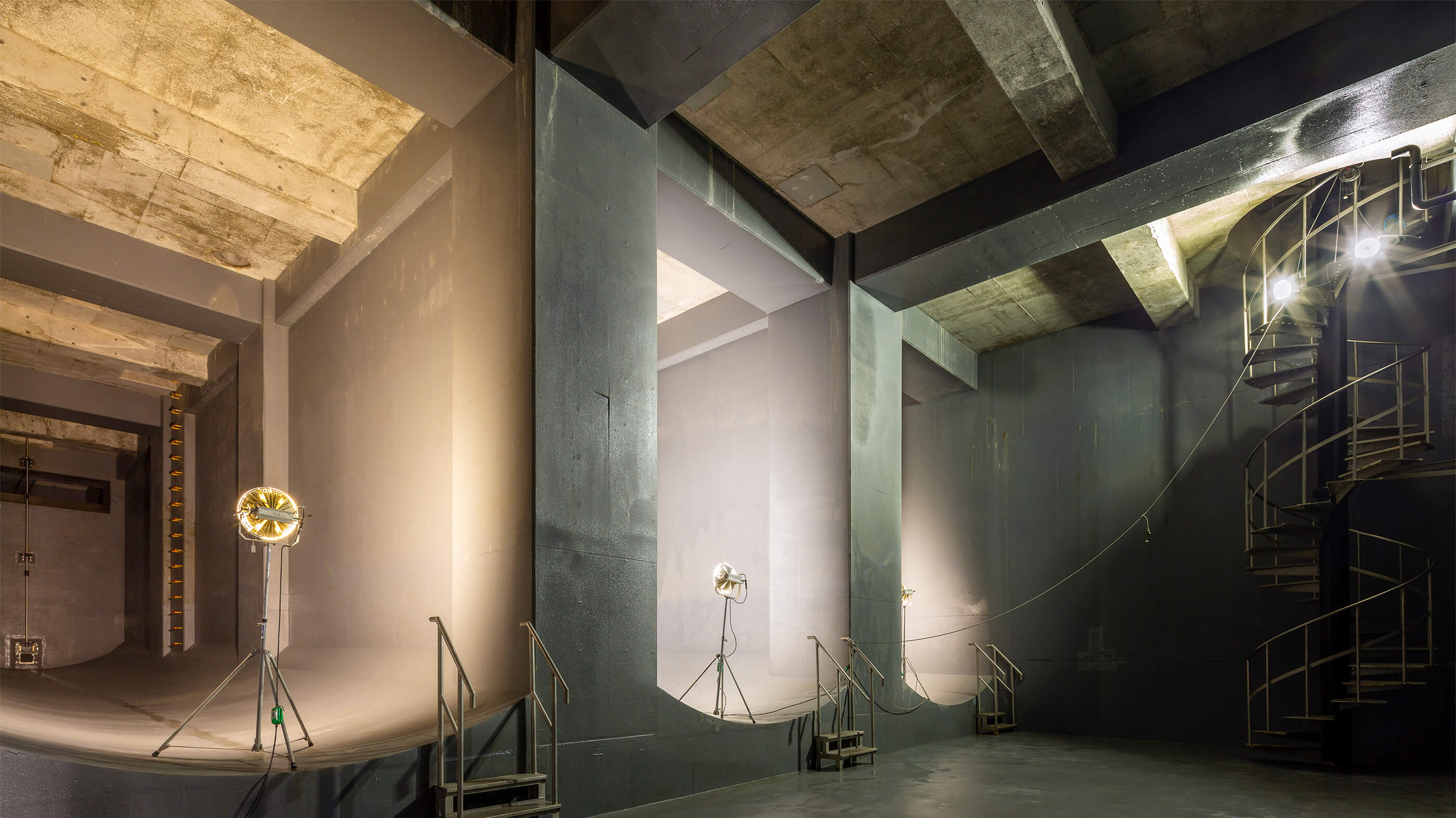
The rainwater storage facility, also part of the Shibuya redevelopment project, was completed on August 31, 2020, nearly 10 years after construction began in February 2011. The rainwater storage facility is located beneath the Shibuya Station East Exit Plaza, which is beneath the Shibuya River, which is now an underground culvert.
The storage tank measures approximately 45 meters from north to south and 22 meters from east to west, with a volume of approximately 4,000 cubic meters. When rainfall reaches a strength of 50 to 70 millimeters per hour, rainwater is collected in the rainwater storage facility and drained after the weather improves. This prevents flooding caused by heavy rain. The facility is approximately 25 meters deep from the ground, and the rainwater falls to the bottom. Sekisui Chemical's drop shafts were used for the pipes that carry the rainwater.
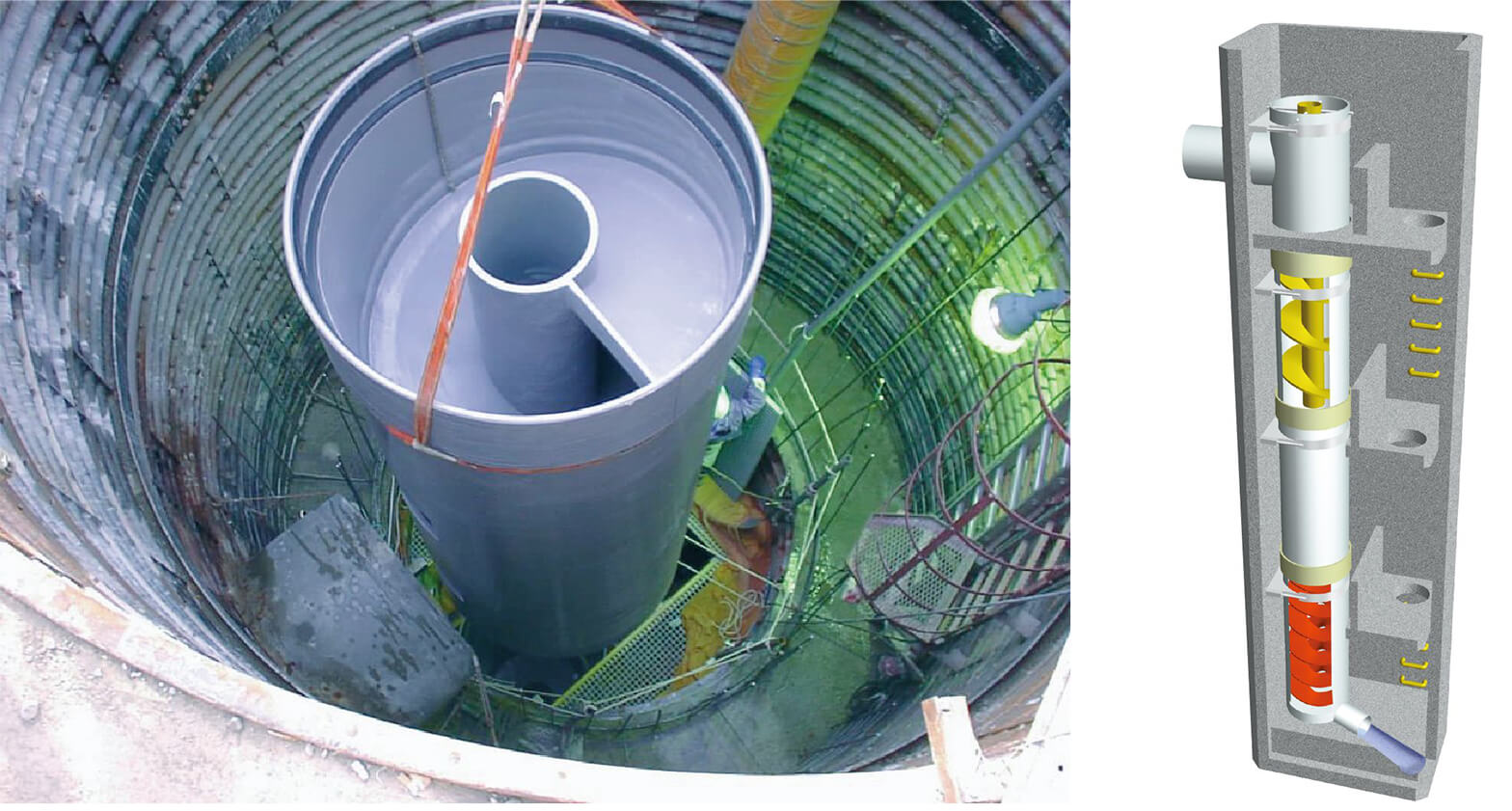
"The drop shaft reduces the force of the rapidly falling rainwater, preventing deterioration of the facility's base. It also includes measuring instruments to monitor the water level."
What exactly is a drop shaft?
The mechanism and strength of Sekisui Chemical's "drop shaft"
The drop shaft was developed by Sekisui Chemical in collaboration with the Japan Sewerage Technology Promotion Organization starting in 1994. This technology is a system that efficiently guides water deep underground by utilizing the difference in elevation, enabling the rapid and safe transport of large amounts of rainwater to storage facilities.
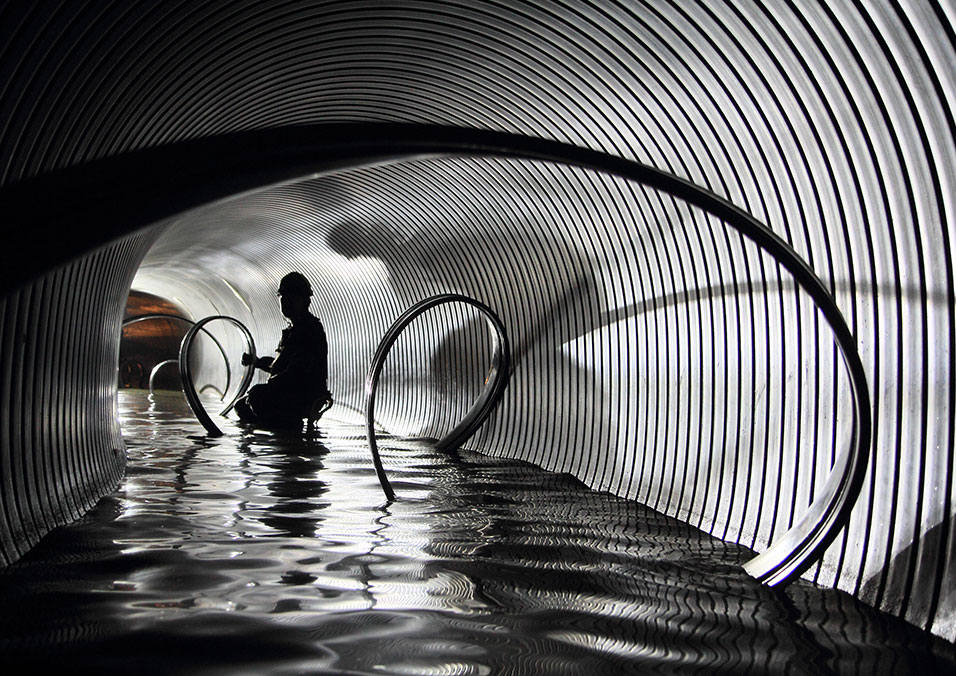
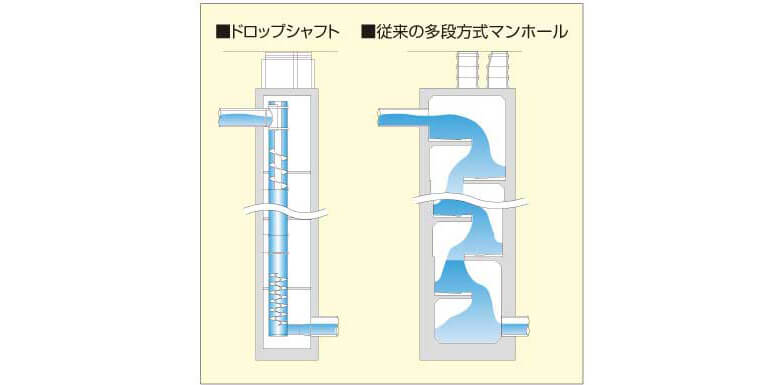
A drop shaft has a spiral guideway that generates vortices. This reduces the energy of the water flow, allowing it to flow smoothly and preventing scouring of the facility's bottom and walls. Furthermore, its smooth flow also has the advantage of suppressing noise and odor.
"Many public sewage systems in urban areas use a combined sewer system. This system carries both sewage and rainwater in a single pipe. However, with heavy rainfall, this can exceed capacity limits, causing sewage and rainwater to overflow onto the ground together. Therefore, in response to the increasing frequency of sudden, heavy downpours, plans have been made in various locations to install wider rainwater pipes."
In urban areas, the underground is already densely populated with subways and buildings, so installing new, larger pipes requires placing them at greater depths. As a result, a significant difference in elevation is created between the surface and the deep underground rainwater storage facilities.
"The drop shaft mitigates the energy shock by creating a swirling motion as the water falls. Imagine a waterfall; the area where the water falls is eroded, creating a pool at the bottom. The force of water is that tremendous, and if it were simply dropped from above, it would damage the bottom of the facility. The drop shaft prevents this from happening."

Hiroaki Kuroda of Sekisui Chemical, who has taken over from Tabata and is currently in charge of the drop shaft, explains: "Preventing damage will not only reduce maintenance costs such as repairs, but will also prevent unexpected incidents caused by deterioration."
"Furthermore, another function is that it doesn't bring in air. To continue with the waterfall analogy, you can see a lot of white foam where the water falls. This is because air is mixed with the water. When this happens, the volume of water increases. If the ratio of water to air is 1, then it becomes twice the volume. If the volume increases, it will exceed the tolerance level much faster than expected. The drop shaft has an overwhelmingly low rate of air transport compared to other mechanisms."
Sekisui Chemical's drop shafts have become increasingly popular in urban areas, with 100 units installed in 2000, 300 units three years later, and nearly 1,400 units currently in use in Japan as of 2024. Furthermore, Sekisui Chemical's drop shafts are made of FRP (fiber-reinforced plastic), offering superior durability and weather resistance compared to steel, as well as resistance to corrosion caused by water.
"In urban areas, there is an increasing number of rainwater storage facilities being built tens of meters underground, requiring methods to handle the difference in elevation. While multi-stage and vortex systems have been used for construction with elevation differences, the drop shaft can be installed in a smaller space. In today's densely populated underground areas of cities, the ability to construct in a small space is a major advantage."
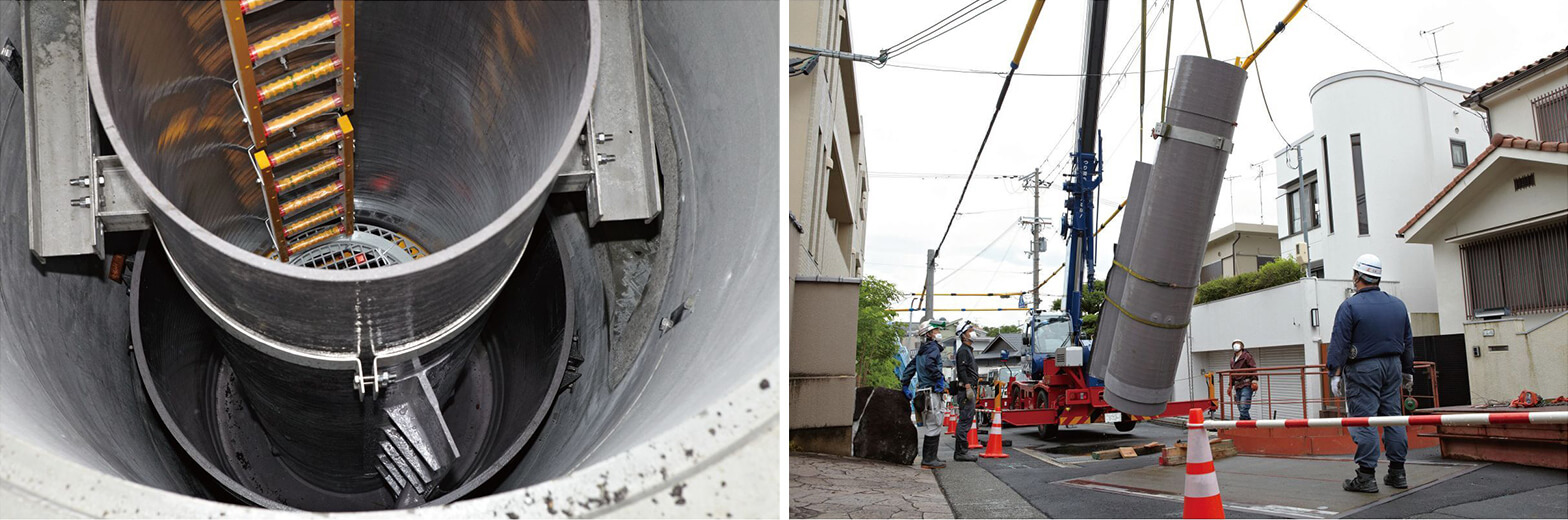
Based on the experience gained in Shibuya, we created an even more space-saving drop shaft.
Tabata recalls the construction at Shibuya Station, saying, "Because it was a construction project in a busy area like Shibuya Station, we had to deal with it late at night after train and bus services had ended. Also, there was no place for trucks to wait on the road, so we had to transport the materials by truck from our factory in Shiga every day to coincide with the schedule." There were also difficulties in the installation process.
"At the time, the Ginza Line platform was above, and the facilities were below it, so when we tried to lift the drop shaft with a crane, there wasn't enough height to insert it. Therefore, we had to cut the 4-meter-high drop shaft in half and insert it in small increments. Naturally, this was time-consuming. While it would normally take two days to install, it took seven days at this site. It was truly a race against time."
Sekisui Chemical was able to address these challenges because their drop shafts are factory-produced. Factory production allows for stable quality. The solution was achieved by performing calculations at the factory, dividing the shafts, and then stacking and installing them.
Now, drop shafts that can be installed even in narrow spaces have been developed. Takashi Imahashi of Sekisui Chemical says the following:

"Due to the continued overcrowding of underground infrastructure in urban areas, we have created an even more compact drop shaft. This makes it possible to install it even in narrow spaces such as ordinary residential streets."
In fact, a "central cylinder lifting type drop shaft," which can be installed even in narrow spaces, has been adopted in the Senriyama district of Suita City, Osaka Prefecture. The surrounding area is a quiet residential neighborhood, and it was necessary to minimize the noise and vibration caused by rainwater inflow. The narrow road width also made the space-saving nature of the drop shaft a key factor in its adoption.
Sekisui Chemical develops products for various natural disasters, not just drop shafts. For example, they developed a disaster-relief storage toilet system in collaboration with Kobe City, which was damaged by the Great Hanshin Earthquake. This demonstrates their proactive approach to solving problems in the less visible aspects of people's lives.
"At Sekisui Chemical, we have a strong awareness of disaster preparedness, and we consider it our top priority in product development. We have accumulated not only products but also know-how, and we are now able to offer a wide range of solutions."
According to Imabashi, they are exploring how their products can be effective not only against torrential rains but also against increasingly severe natural disasters in general. "Of course, we are planning and developing new products, but there are also many existing products that can be used to combat natural disasters."
September 1st is Disaster Prevention Day. Sekisui Chemical will continue to actively implement measures against natural disasters, including heavy rainfall, through its products, so that people can live in peace.