The day when land-raised salmon graces our dinner tables: Co-creation of water treatment technologies accelerates land-based aquaculture.
公開日:
What thoughts and stories were behind its development?
How will that connect to the people and societies living on Earth?
"SEKISUI | Connect with" is a future-creating media platform that connects you with Sekisui Chemical.

- Why raise salmon on land? The answer lies in the future projections for the Earth and marine resources.
- A large-scale plant construction project has begun. Land-based aquaculture will evolve to a scale of 3,500 tons per year.
- Collaboration in water treatment technologies has led to investment and has begun to foster co-creation.
- To deliver delicious salmon with a lower environmental impact. A chain reaction of consideration for people and the environment.
The day when land-raised salmon will be a common sight on family dinner tables is just around the corner. Various approaches are being taken in different places to sustainably utilize limited marine resources. One of these is the attempt to raise salmon on land.
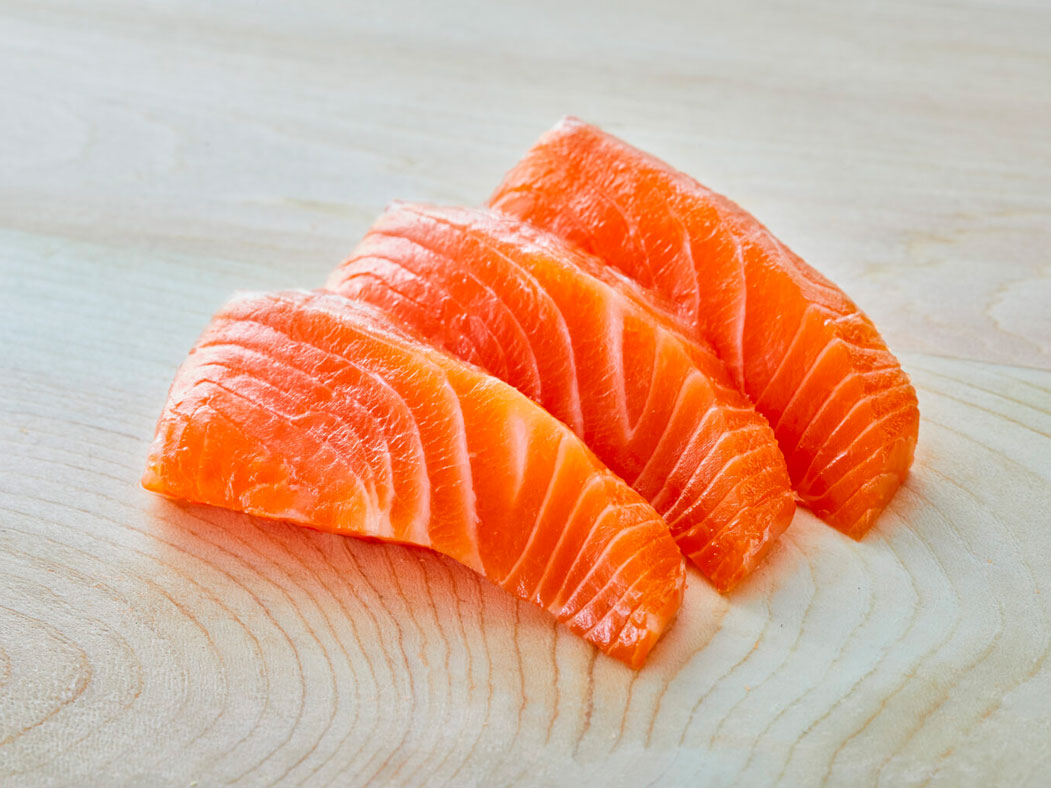
FRD Japan brands land-farmed salmon as 'Okasodachi' and scales its business. Why is it commercializing salmon farming on land rather than at sea? What is the background behind this, the technologies supporting land-based farming, and the future roadmap?
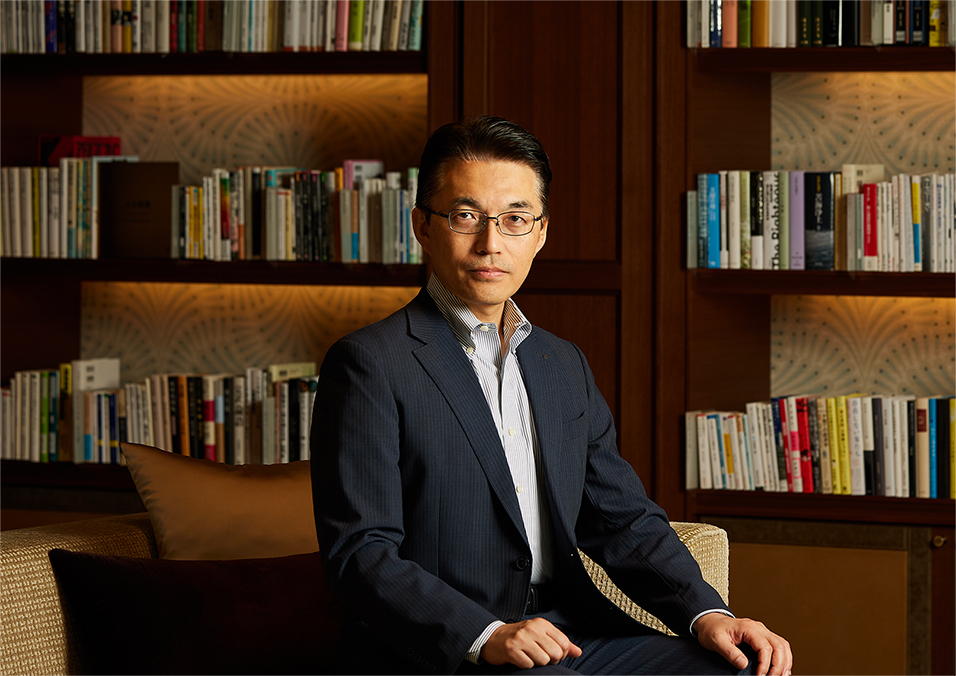
Tetsuro Sogawa of FRD Japan and Masataka Uemura, Executive Officer of Sekisui Chemical, who invested in the company, discuss the potential of salmon in "Okasodachi."
Why raise salmon on land? The answer lies in the future projections for the Earth and marine resources.
The custom of eating raw fish is spreading in emerging countries, and fish consumption is also increasing due to a growing health consciousness. As a result, global consumption of seafood is rapidly increasing. Among them, salmon is experiencing a fierce competition. It is a familiar and popular sushi ingredient, but there is also high demand for processed products such as smoked salmon, and consumption is surging in Europe, the Americas, and Asia. However, the catch of wild salmon has plateaued, and currently, a large portion of the market has to rely on aquaculture. Mr. Sogawa, who serves as Representative Director and Co-CEO of FRD Japan, was involved in purchasing imported salmon at Mitsui & Co.
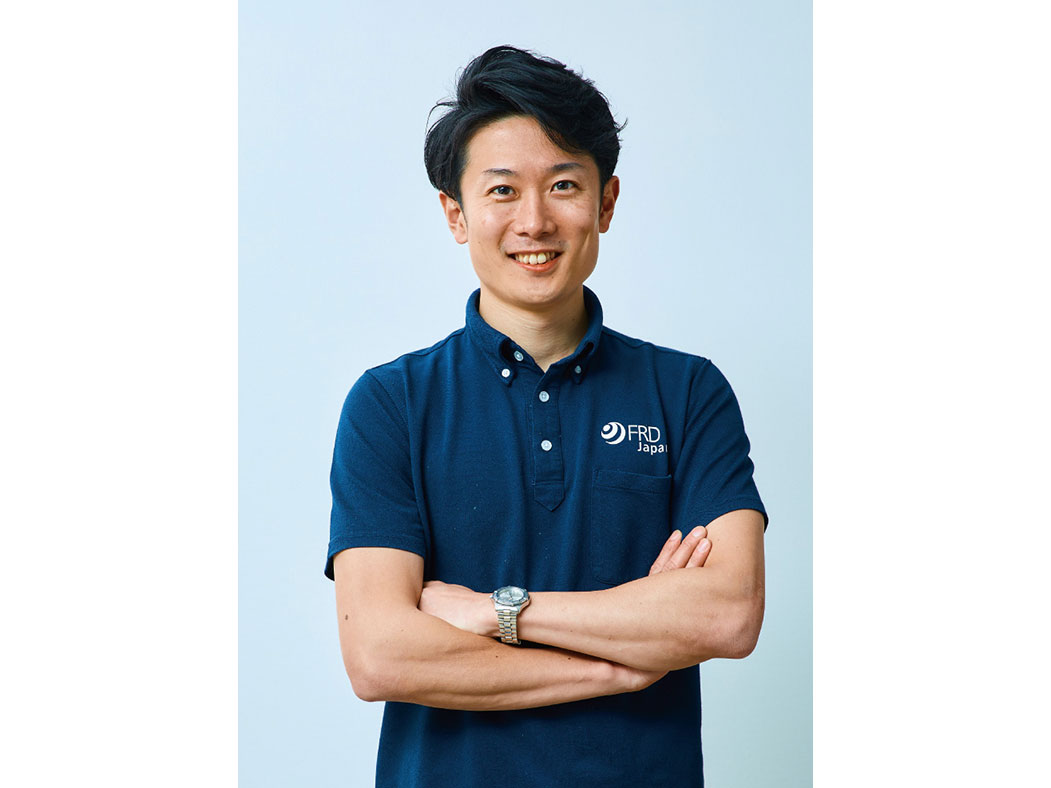
"Salmon, along with shrimp, is one of the most in-demand seafood products globally, and consumption is expected to continue rising. Most of the salmon shipped to Japan is farmed in the sea in Norway and Chile. This is because salmon farming in the sea is limited to fjords and other areas where the water temperature remains low throughout the year and the weather and waves are calm. However, local governments are restricting the issuance of farming licenses for environmental protection, and the balance between supply and demand is becoming increasingly unbalanced. If this continues, there may come a time when Japanese people will not be able to get enough of their beloved salmon. I felt this sense of crisis while traveling to Norway and Chile for purchasing."
Due to seawater temperature and geographical conditions, salmon farming in Japan remains on a small scale. The risks of uneaten feed and waste affecting the environment cannot be ignored. Amidst rising global demand for salmon, how can we ensure a sustainable domestic supply? Solutions are needed to replace wild salmon fishing and offshore aquaculture.
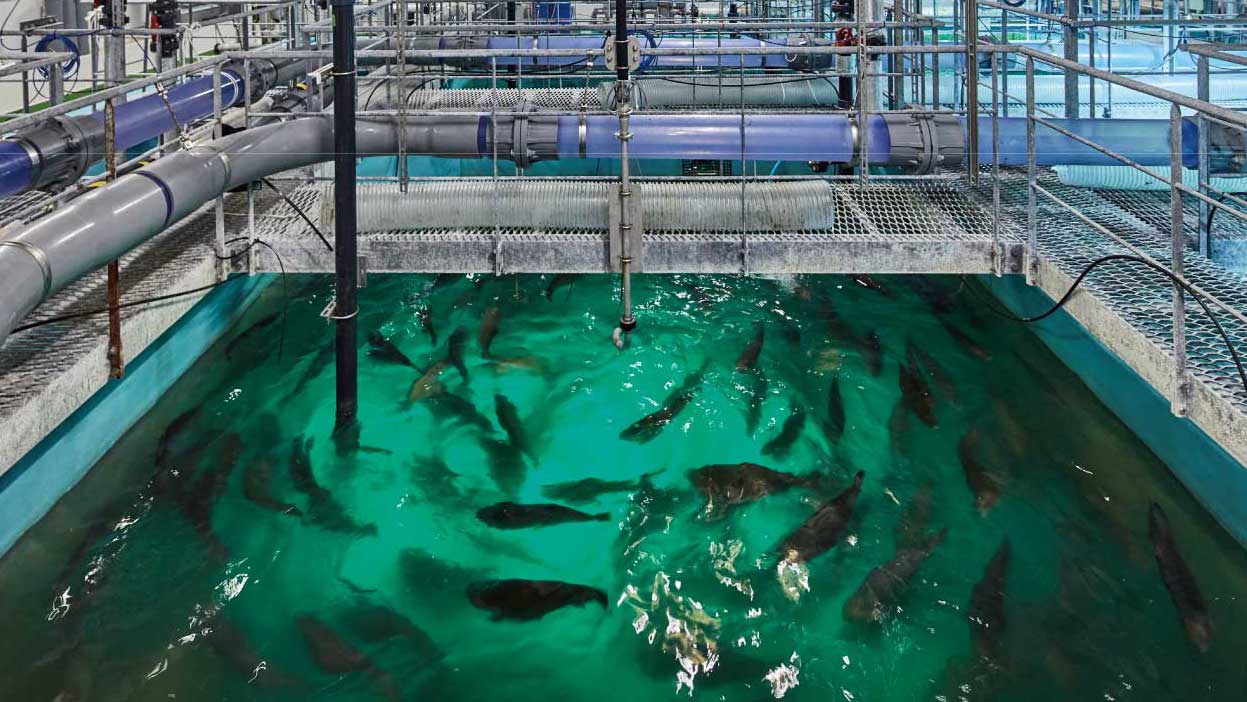
"That's where land-based aquaculture comes in as an excellent solution, unrestricted by climate or geography," Sogawa emphasized. Land-based aquaculture involves raising salmon in tanks where filtered artificial seawater circulates. There are no geographical constraints, and the risk of wastewater polluting the ocean is low. Sogawa and his team have branded their land-farmed salmon as "Okasodachi" (meaning "raised on land") and are delivering it to consumers through cooperatives and local supermarkets.
"Since our establishment in 2013, FRD Japan has been developing and selling salmon using our independently developed closed-loop recirculating system. A key feature of this system is that it minimizes water changes. In conventional recirculating land-based aquaculture, large-scale water changes were essential to remove nitrates and other substances. Our closed-loop recirculating system removes nitrates using a unique, high-performance filtration system that utilizes bacteria, making land-based aquaculture possible with only about 1% water change (changing the water in the tanks) per day."
Furthermore, especially during the summer months, the water, which can reach temperatures of around 30°C, needs to be cooled to the optimal temperature for salmon, around 15°C. The electricity costs associated with this have been a major bottleneck in land-based aquaculture. Our closed-loop recirculating land-based aquaculture system virtually eliminates the need for this seawater cooling cost, significantly reducing electricity expenses.
Based on this technology, we accumulated operational and distribution know-how, and were able to move from Phase 1 (demonstration plant) to Phase 2 (commercial plant)."
The fish are raised under meticulous control over water temperature, water quality, and feed, and are shipped from Kisarazu City in Chiba Prefecture, which is close to the consumption area. Therefore, a major advantage is that they reach the table without going through the freezing process. Because natural seawater is not used, there is no possibility of parasite contamination such as Anisakis. They can be safely eaten raw.
"Our 'Okasodachi' salmon are raised with a focus on a refined, well-balanced flavor and texture. And above all, we pride ourselves on their freshness. You can enjoy delicious, domestically produced, fresh salmon regardless of the season."
A large-scale plant construction project has begun. Land-based aquaculture will evolve to a scale of 3,500 tons per year.
Mr. Sogawa and the other members of FRD Japan are accumulating daily knowledge and refining land-based aquaculture technology while overseeing the construction of the large-scale plant. Over five years of field experiments, they have accumulated knowledge regarding the cultivation of "Okasodachi" salmon. Now, in order to rapidly scale up shipments, they have begun construction of a large-scale commercial plant. Operations are scheduled to begin in 2026, and from 2027 onwards, they plan to supply 3,500 tons of salmon annually.
In July 2023, Sekisui Chemical, together with six companies including Mitsui & Co., decided to invest in FRD Japan. They have joined the project as a partner to expand FRD Japan's land-based aquaculture business. Masataka Uemura, Executive Officer of the company's Urban Infrastructure and Environmental Products (UIEP) Company, expressed his hopes for co-creation, saying, "Our activities will align with Sekisui Chemical's sustainability philosophy."
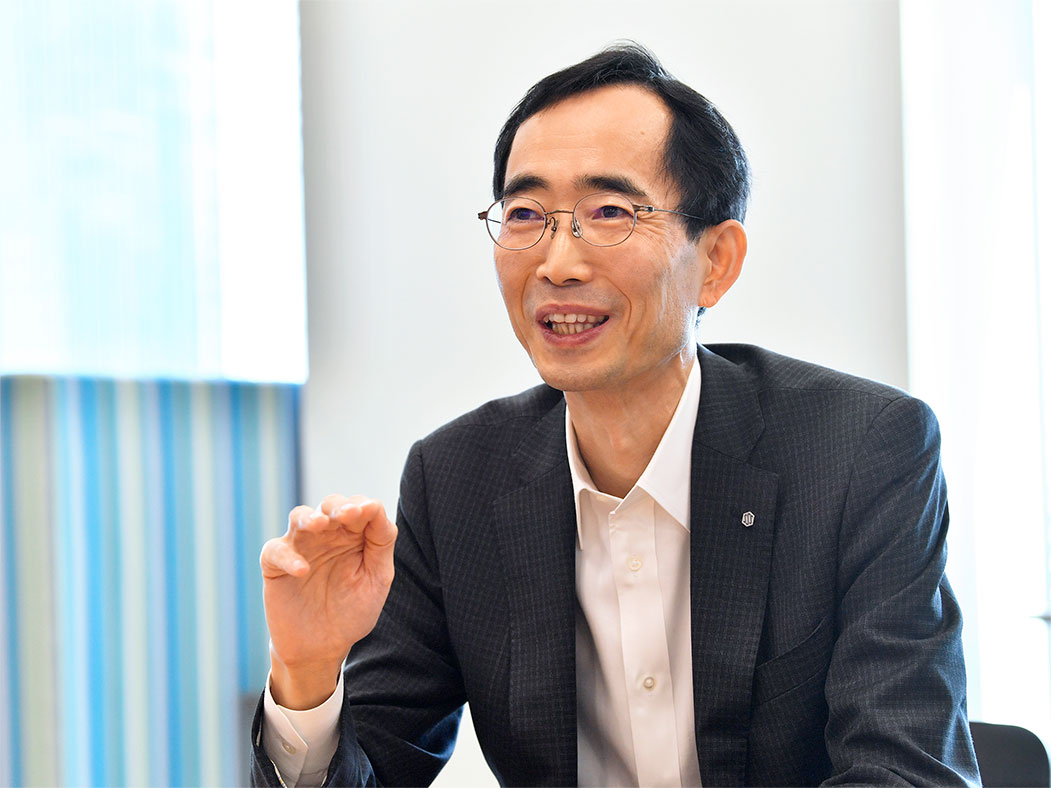
"In forming a partnership with FRD Japan, we also considered the importance of aquaculture that does not pollute the ocean and sustainable aquaculture practices. With the catch of wild fish said to be stagnating, how to support our food supply is a major challenge. FRD Japan is tackling this challenge by refining its unique technology. We also resonate with their spirit of challenge and want to contribute to solving social issues."
"Okasodachi" salmon are raised in Kisarazu, a major consumer market located in the Tokyo metropolitan area. Needless to say, this reduces transportation costs and CO2 emissions compared to importing from distant Norway or Chile. Furthermore, because there is no risk of viruses or parasites entering from seawater, it is possible to raise safe and secure fish without administering antibiotics. This co-creation, which aligns with Sekisui Chemical's philosophy of creating a prosperous and secure lifestyle while considering the global environment, has culminated in a commercial plant project.
Collaboration in water treatment technologies has led to investment and has begun to foster co-creation.
The synergy from the co-creation between FRD Japan and SEKISUI CHEMICAL Group goes beyond just a capital partnership. Through collaboration and sharing of water treatment technologies between the two companies, land-based aquaculture technology advances by several steps. Originally, the matching between the two companies began by hooking their technology into a hook. FRD Japan contacted SEKISUI CHEMICAL Group in March 2021. At the time, Uemura, who was president of Sekisui Aqua System, was interested in FRD Japan's mission. "When planning the medium-term plan, the keyword 'land-based aquaculture' emerged from the younger members," Uemura recalls. Meanwhile, Sogawa and others focused on SEKISUI CHEMICAL Group 's water treatment technology. This marked the shared sentiments of both companies. According to Uemura, co-creation is moving "at full throttle."
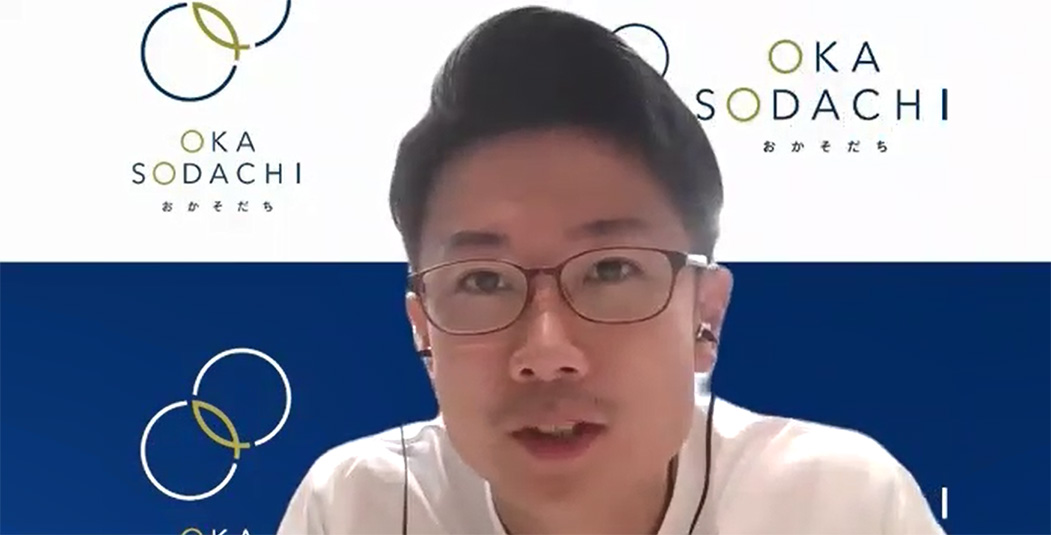
"We have honed wastewater treatment technology in manufacturing sites and accumulated assets as assets. We believe we can apply this technology and know-how to FRD Japan's land-based aquaculture, which independently established closed-circulation filtration technology. We believe we can contribute especially to plant wastewater treatment, and the two companies have been engaged in discussions like catch-and-catch. After FRD Japan approached us for investment, we launched a cross-departmental project across SEKISUI CHEMICAL Group departments to explore possibilities for collaboration. Although we have never been involved in the food or aquaculture businesses, as a SEKISUI CHEMICAL Group, we actively promoted open innovation, and there were no obstacles in terms of investment or technical cooperation. "We were able to approach co-creation at full throttle from the start," Uemura said.
"During discussions about co-creation, Sekisui Chemical went beyond the framework of 'sustainability activities' and clearly presented what they wanted to do and which technologies they wanted to integrate after investing. I strongly felt their desire to leverage the technologies SEKISUI CHEMICAL Group had cultivated to support land-based aquaculture," Mr. Sokawa also recalls the beginnings of co-creation.
"The members who participated in the project are smiling and enjoying themselves. They feel the potential and resonate with FRD Japan's vision for land-based aquaculture. And there is also the opportunity to become a leading expert in wastewater treatment in the rapidly developing land-based aquaculture scene. There is also hope that SEKISUI CHEMICAL Group 's innovation will take a step forward," Uemura said, expressing the technical team's excitement.
Through this exchange of technologies, the level of land-based aquaculture is improving, and expectations for next-generation water treatment are also rising. Members from both companies are working together as one to "enable stable salmon farming anywhere, anytime."
To deliver delicious salmon with a lower environmental impact. A chain reaction of consideration for people and the environment.
The project is accelerating through the technical and capital partnership between FRD Japan and SEKISUI CHEMICAL Group. However, while land-based aquaculture initiatives are progressing in various places both in Japan and worldwide, there have yet been cases where the business has reached profitability. Mr. Soga said, "We want to overcome cost challenges through closed-loop methods and aim to become a top runner in land-based salmon farming," expressing high expectations for collaboration with SEKISUI CHEMICAL Group.
"By becoming a strong partner, Sekisui Chemical will be able to propose ways to make fisheries more sustainable. Also, many players are currently entering land-based aquaculture, and the Fisheries Agency is conducting surveys of operators to understand the actual situation. In other words, communication with government authorities will likely increase going forward. We want to be a leading force in shaping the land-based aquaculture industry. SEKISUI CHEMICAL Group, which has a rich track record in public-private partnerships, hopes to continue providing knowledge and support going forward."
Consumers who have tasted the "Okasodachi" salmon are giving it their seal of approval, saying, "It's fatty and delicious!" Construction of the plant to ensure a stable annual supply of 3,500 tons has just begun. Mr. Sogawa, who spoke about the roadmap, continued, "We are only just starting Phase 2. We feel a strong sense of mission to see how much we can change the world through co-creation with Sekisui Chemical, and to deliver salmon that is even more delicious and has a lower environmental impact."
Uemura also looks ahead, saying, "We want to strengthen our partnership to solve social issues. We believe that land-based aquaculture is a theme that we should tackle together, and we are focusing on co-creation. This sentiment is what is driving the project forward."
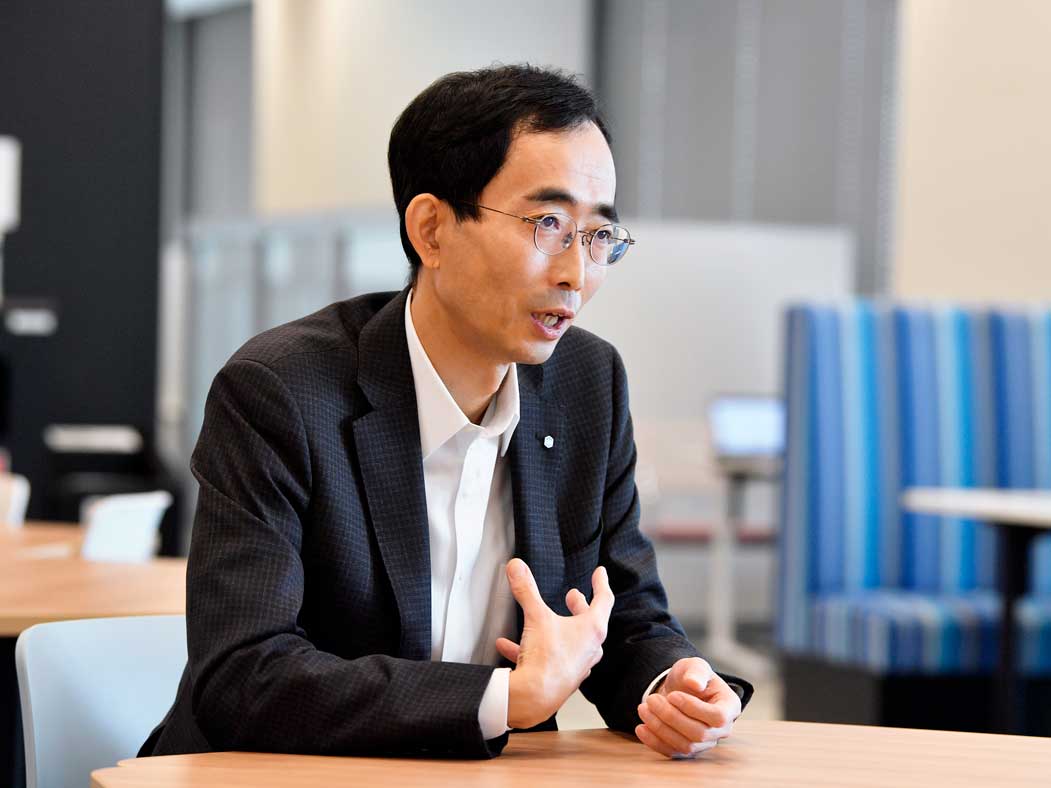
To make marine resources sustainable and to ensure safe and secure food in Japan, co-creation is driving innovation that brings smiles to both producers and consumers. The day when salmon raised on land in Kisarazu are a common sight on dinner tables is fast approaching.


Related Links
- FRD Japan received the "Minister of Agriculture, Forestry and Fisheries Award" at the "Japan Startup Awards 2024" (FRD Japan, announced July 23, 2024).
- Regarding the subscription to a third-party allocation of shares by FRD Japan Co., Ltd., a company that operates land-based aquaculture businesses (announced July 20, 2023)