Connecting tradition and the future, supporting well-being: The challenge of high-performance tatami mat "MIGUSA"
公開日:
What thoughts and stories were behind its development?
How will that connect to the people and societies living on Earth?
"SEKISUI | Connect with" is a future-creating media platform that connects you with Sekisui Chemical.
- MIGUSA: A new era of tatami mats that sustainably enhances Japanese-style spaces.
- Aiming for the quality of natural rush grass, we engage with traditional culture.
- In addition to color and functionality, we are also focusing on "care" to create a new market.
- With the mission of extending healthy life expectancy, we will continue to collaborate.
While sustainability activities present a wide range of challenges, those related to "natural capital" and "resources and waste" are becoming increasingly important. Our society and economic activities are heavily dependent on ecosystem services produced by natural capital, such as forests, soil, water, air, and biological and mineral resources. Furthermore, the depletion of resources due to economic activities and the ever-increasing problem of waste are also serious issues.
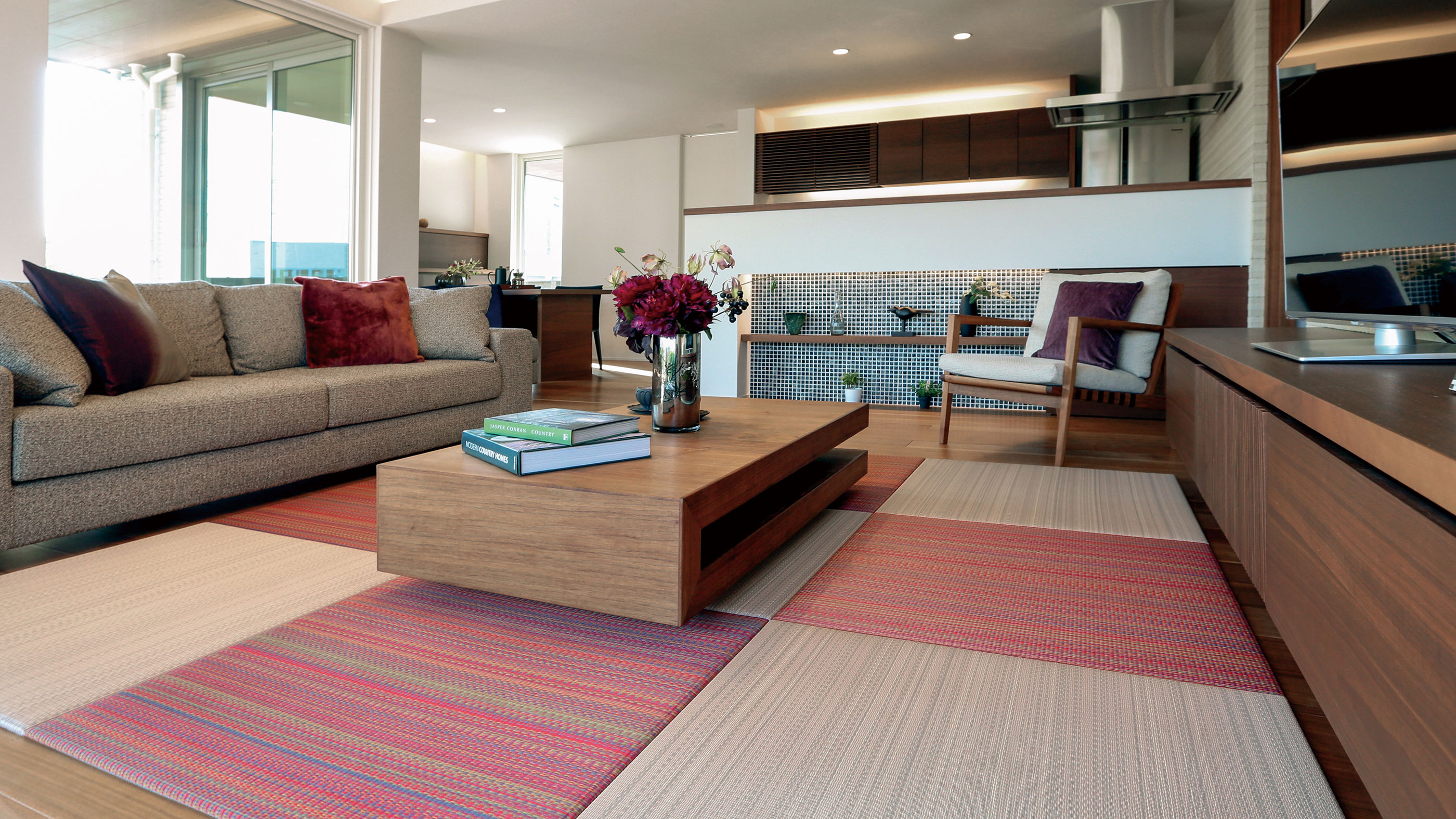
Responding to the demands of the times, Sekisui Seikei Kogyo has developed and is selling its original tatami mat, "MIGUSA." MIGUSA reduces the environmental impact throughout the production and supply process, and replaces natural materials with new materials. Furthermore, it aims to contribute to well-being by enhancing antibacterial, antiviral, and shock-absorbing functions. We will explore the true value of this "updated tatami mat" that has enhanced functionality and opened up new markets.
MIGUSA: A new era of tatami mats that sustainably enhances Japanese-style spaces.
Following climate change and decarbonization, "natural capital" and "resources and waste" have become global agenda items. This has led to increased attention on the circular economy, which aims to circulate limited resources and reduce the burden on natural capital. Companies are expected to fulfill their responsibilities through social contribution and CSR activities while also contributing to a sustainable society.
Sekisui Seikei Kogyo has developed "MIGUSA," a new type of tatami mat that retains the texture of natural rush grass while adding various functions. It is a new kind of tatami mat that reproduces a natural feel with a material that combines resin and inorganic materials, while also ensuring durability and safety. Masashi Yoshida, who leads the manufacturing and sales of MIGUSA in the company's Functional Molded Products Division, explains its strong points.
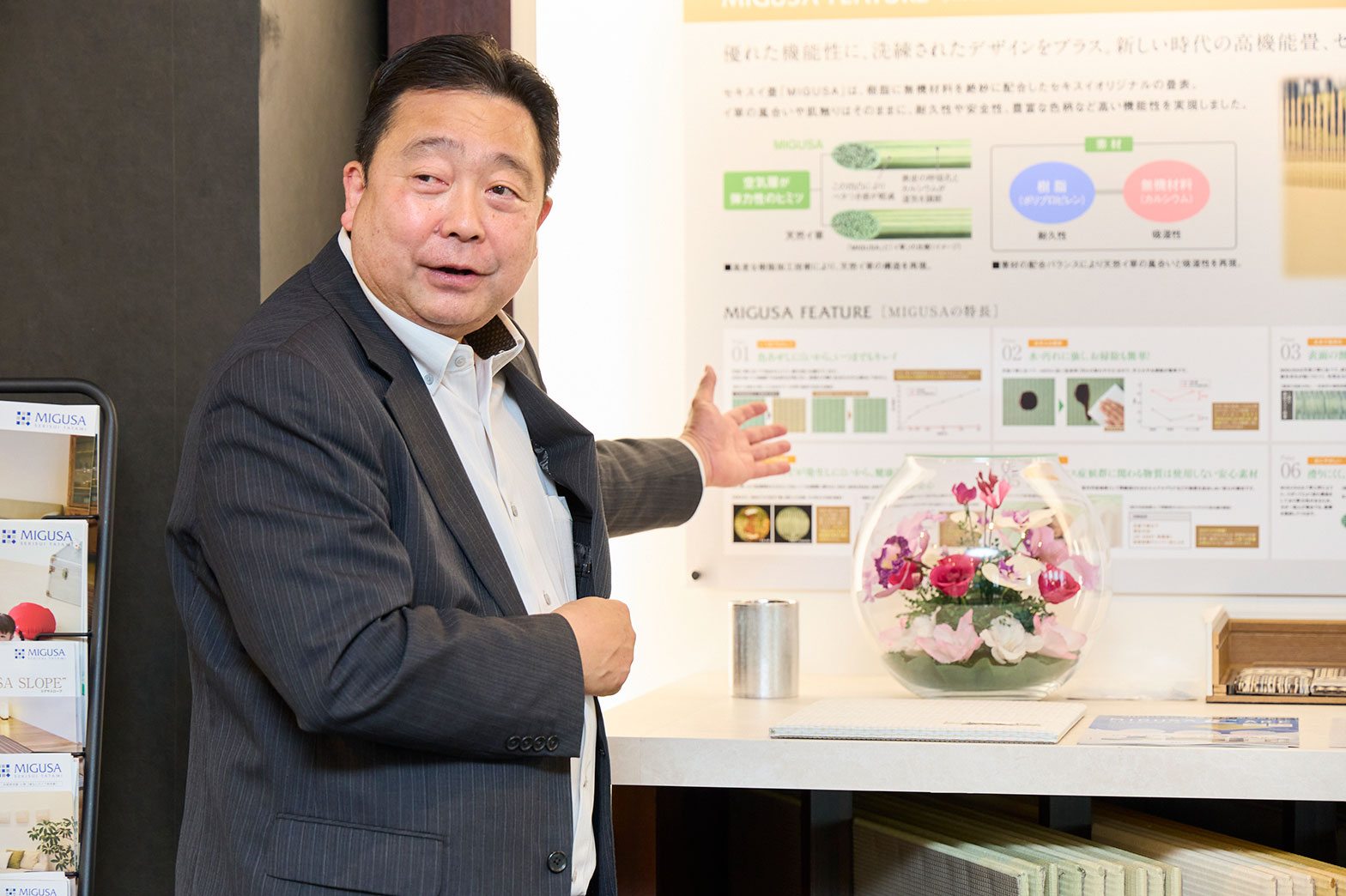
"The material is a blend of polypropylene and calcium carbonate. Polypropylene is used in toothbrushes and plastic tableware and is strong in heat resistance and durability. Calcium carbonate is a natural inorganic material that is processed into very fine particles. In the manufacturing process, ultraviolet (UV) absorbers and heat stabilizers are added to these main components. By optimizing the blend, we achieve lightfastness that prevents fading and heat resistance that allows it to be used even with the heat of underfloor heating, thus realizing versatility."
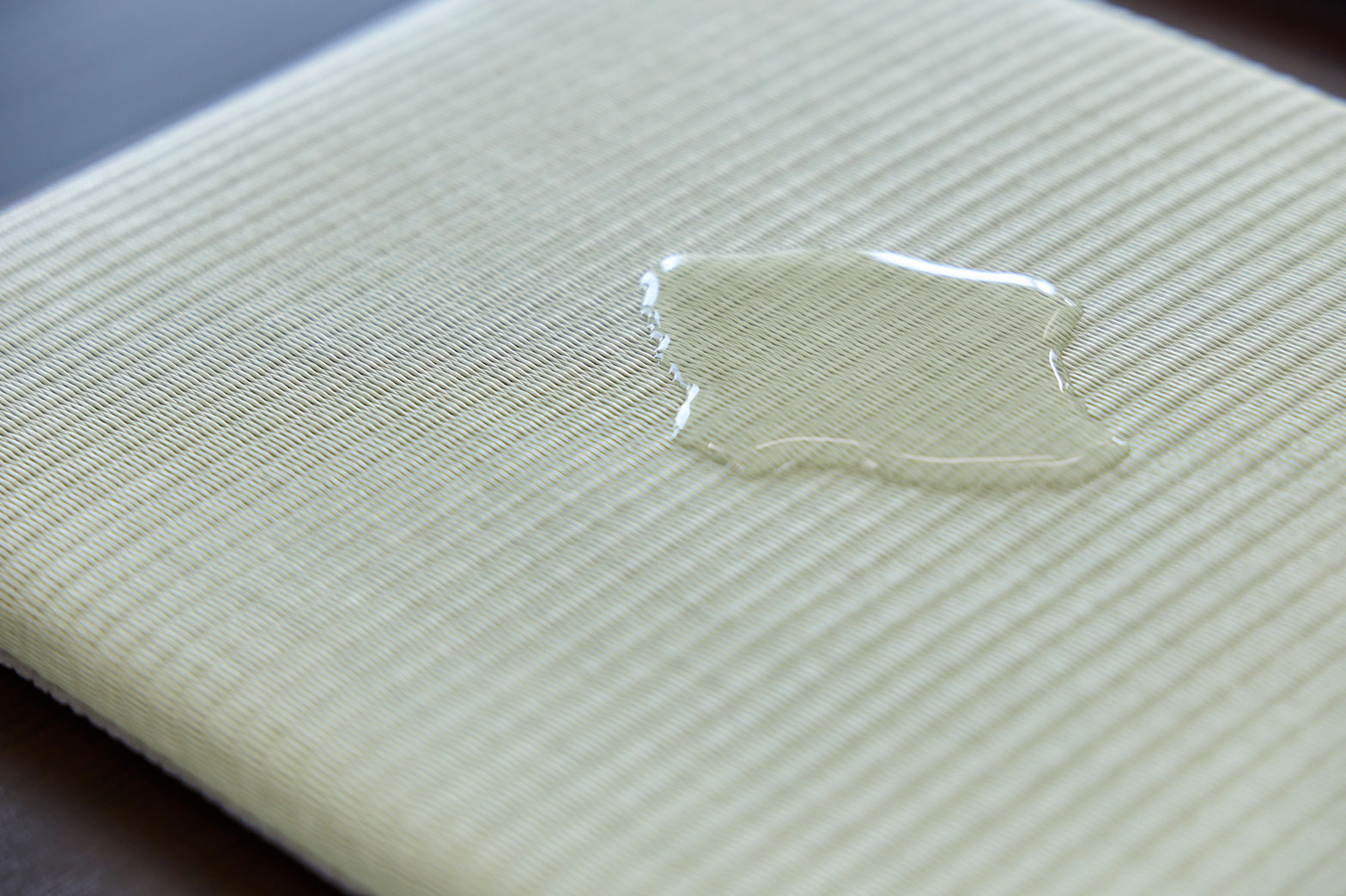
MIGUSA is resistant to water and dirt, and is less prone to dust mites and mold growth. It does not contain allergens and is recommended by the Japan Atopic Dermatitis Association. Yoshida continues, discussing proposals that are in line with the times.
"For centuries, Japanese households have lived on tatami mats, handling laundry and allowing children to lie down on them. MIGUSA fits perfectly into such spaces. Furthermore, our Izumo factory, where MIGUSA is produced, has achieved zero incineration waste and is committed to a circular economy by reusing raw materials and processing them in an environmentally friendly manner. MIGUSA is a product that is kind to both people and the environment. Our commitment to producing products that are distributed globally from a locally-based factory has been recognized, and we have been certified as an 'Izumo Brand Product'."
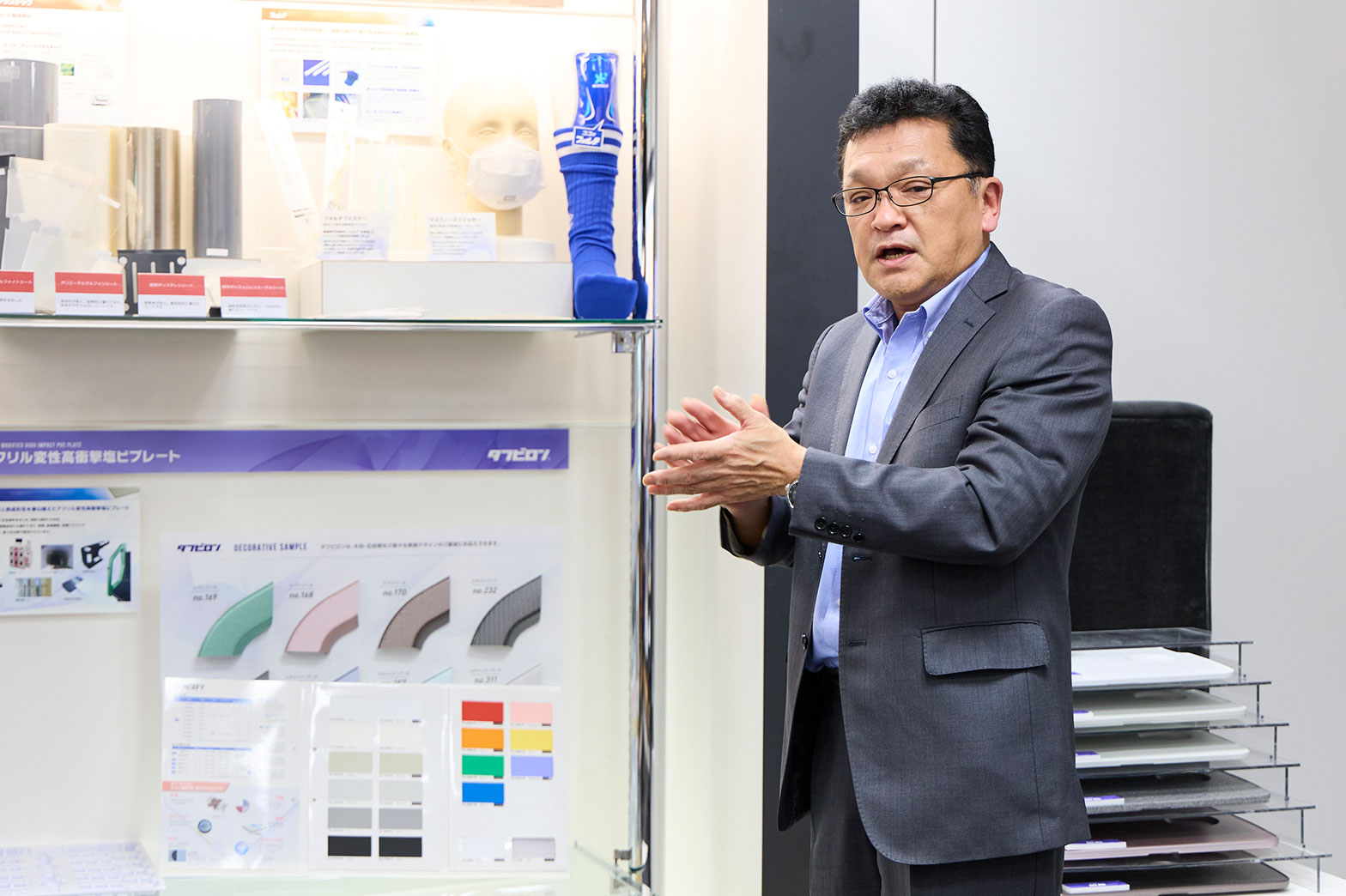
Sekisui Seikei Kogyo manufactures industrial plates, household goods, sheets for electrical materials, containers, and packaging materials, and has honed its extrusion, blow, inflation/stretching, and ultra-stretching molding technologies. The functionality of MIGUSA is supported by the molding techniques and know-how that have been cultivated over many years. "In addition to the material compounding technology, the mold design technology supports the texture and feel of natural rush grass," explains Atsuto Tadokoro, who has been consistently involved in the MIGUSA project.
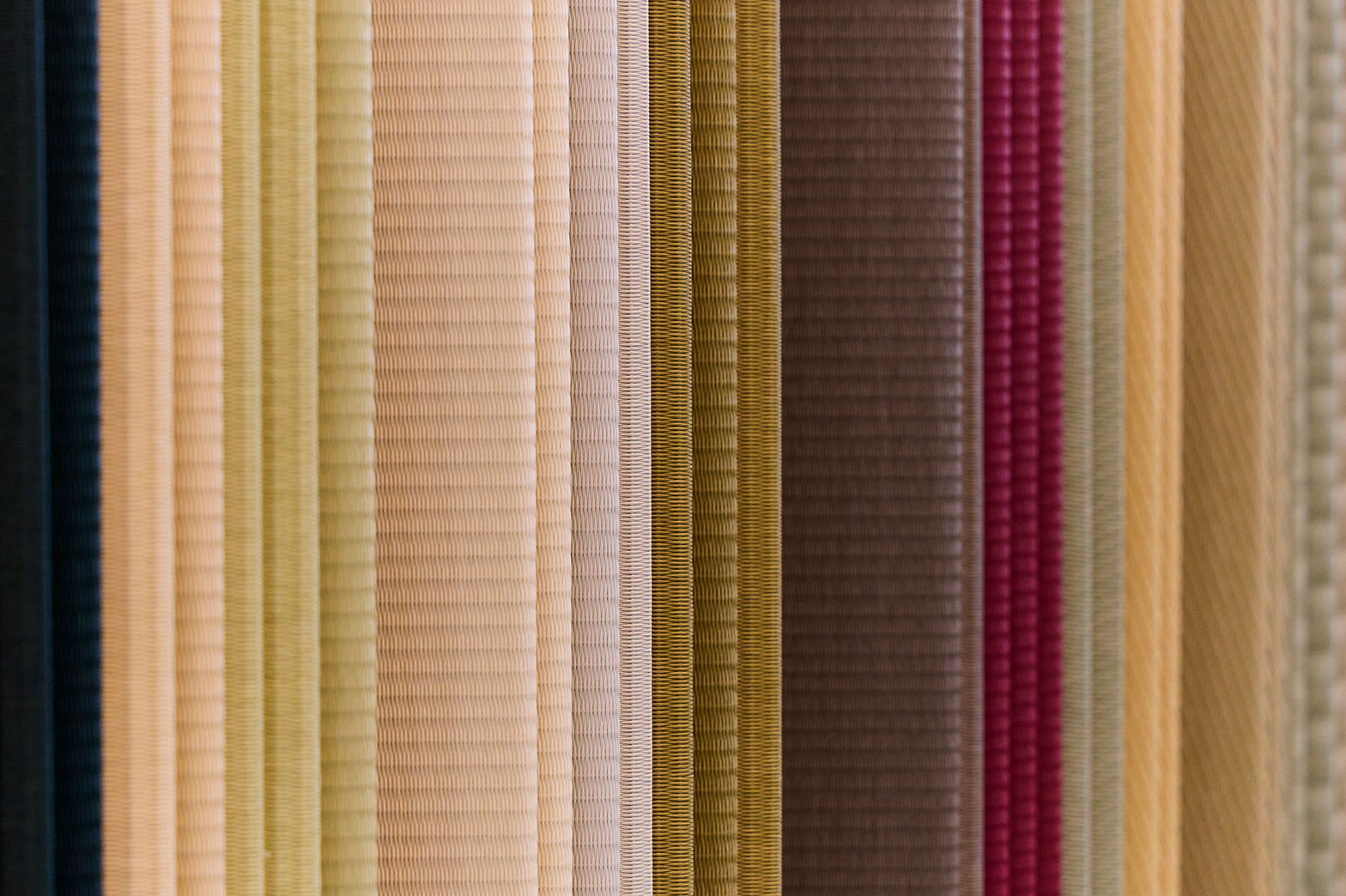
"Just like natural rush grass, each strand of resin is individually molded and then woven on a loom to finish the product. Thanks to our years of experience in resin processing and mold design, we've created a finely textured surface. This reduces skin contact, minimizing stickiness and providing a natural feel. The tape is bundled together to create a uniform skin layer, providing cushioning. Our accumulated expertise in resin processing has also led to a wide range of colors. In addition to traditional green, we offer over 60 colors, including yellow, commonly used in hotels and inns, and beige and ivory that complement modern architectural styles such as contemporary furniture."
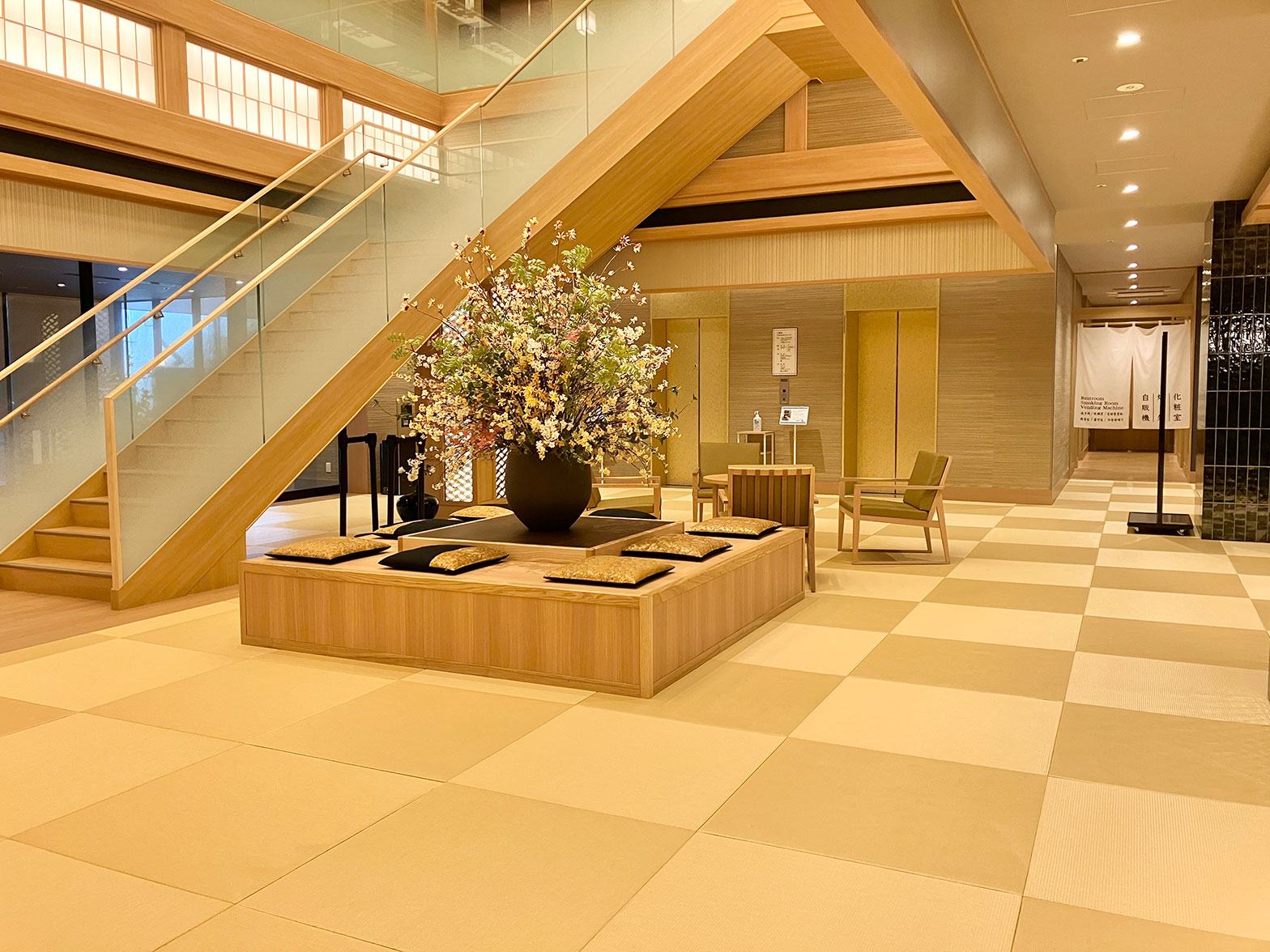
Tatami mats have supported the foundation of Japanese life and guaranteed the safety and security of those who live in them. MIGUSA is also conscious of this origin and aims to create products that are close to health and lifestyle. Yoshida says, "For example, at 'Onyado Nono Matsue,' the entire building is covered with MIGUSA tatami mats, creating a Japanese-style space and attracting many visitors. Our future prospects are to have MIGUSA used in various facilities and to spread the word about the merits of tatami mats even more widely," expressing his expectations for the potential of this new tatami material.
Aiming for the quality of natural rush grass, we engage with traditional culture.
MIGUSA was developed and released to the market in 1991. Sekisui Seikei Kogyo was originally formed through the merger of three subsidiaries of Sekisui Chemical that handled plastic molding: Sekisui Sheet Molding Industry, Sekisui Blow Molding Industry, and Sekisui Stretch Molding Industry. To integrate members with different backgrounds despite being group companies, the management at the time proposed "Let's develop a product that can be called a result of the merger." Thus, a team was formed that combined the company's technologies in extrusion, blow molding, and stretching, and they tackled product development and marketing. The entire company worked together to pioneer a fourth business.
"The development was led by the stretching technology team. Stretching technology is an advanced processing technique that had gained recognition for its use in packaging materials such as tapes, ropes, and strings," Yoshida recalls, reflecting on the technical team involved in the development.
"The foundation for MIGUSA's development was the technology related to komodaru (straw-wrapped sake barrels). Komodaru are the sake barrels familiar from the kagami-biraki and wari ceremonies. Traditionally, rice straw was wrapped around the barrels to prevent damage, but a resin-based komodaru made by twisting tape was developed as a substitute. By passing it through a special mold, each individual komodaru was created to have a texture similar to straw."
The development team noticed that the structure and texture of this product were remarkably similar to natural rush grass and rush grass tatami mats. Leveraging their accumulated stretching technology, they began working to develop their own unique tatami mat surface. The team named their target product "Migusa" (美草), meaning "beautiful grass." At the time, the tatami mat market was more than four times larger than it is today. With expectations high, the development project began.
However, a formidable obstacle stood in the team's way. "Tatami is a unique Japanese flooring material that has been used since the Heian period, and we were amazed by its high quality, honed by culture. The development team spent time on improvements and focused on bringing the product to market," Yoshida recalls, sharing an anecdote from that time.
"Each individual rush stalk is called a culm, but its outer layer was more robust than the team had anticipated. To achieve surface strength equivalent to natural rush, the team focused on designing the molds for forming the culms, designing the process, and modifying the product specifications. While conducting monitor evaluations, they also received guidance from leading Japanese craftsmen to learn about the culture of tatami mats, and thus came to understand 'what tatami is.'"
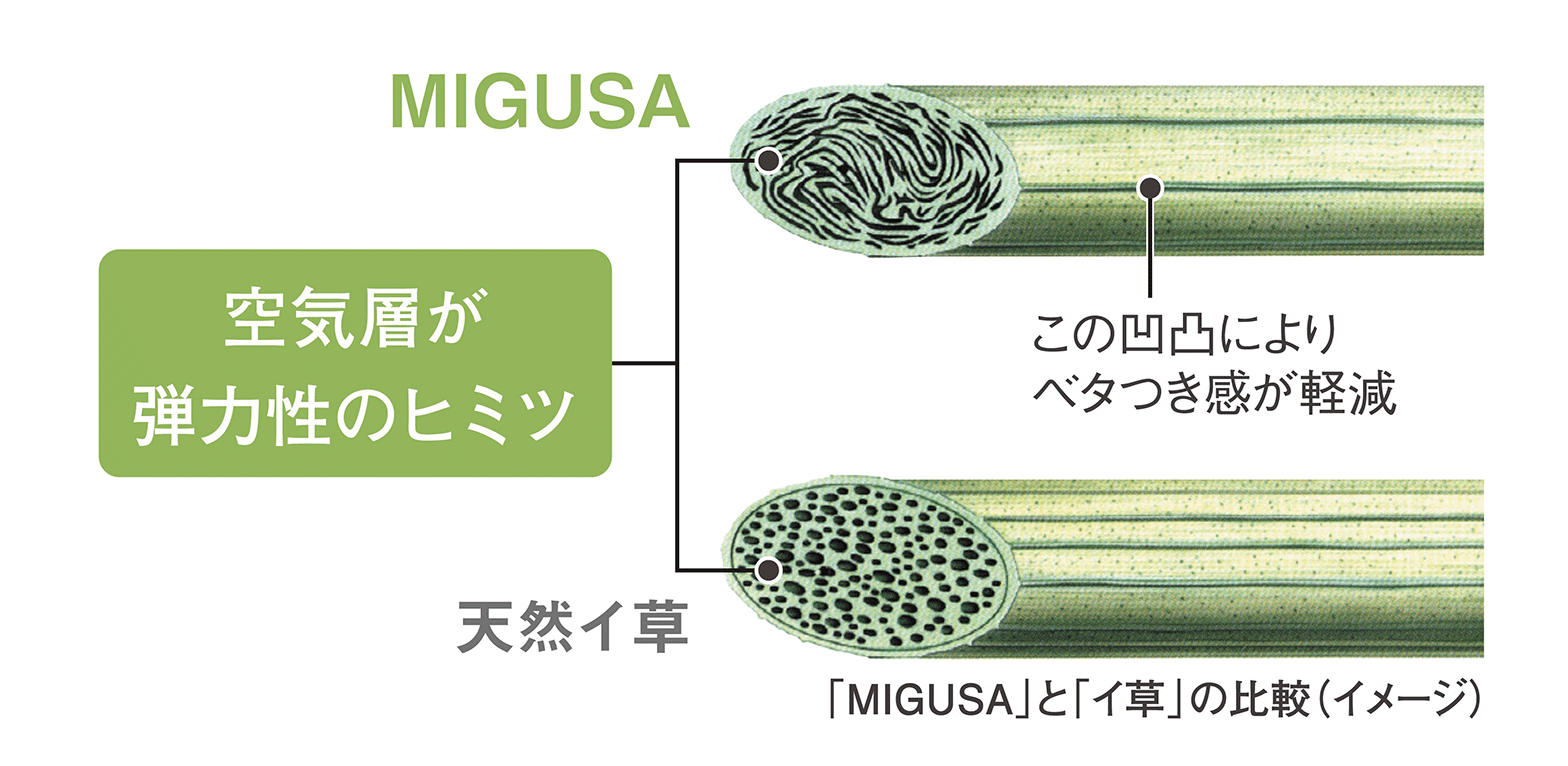
The interior of natural rush grass is spongy, and the air contained within this hollow space enhances its elasticity. Molding such a uniform spongy structure is not easy. If the surface skin layer is not molded uniformly, elasticity cannot be obtained, and as a result, surface strength cannot be ensured. MIGUSA is molded by forming an extremely thin tape and feeding it into a mold with narrow holes. This makes the interior hollow, resulting in elasticity equivalent to the spongy structure of natural rush grass.
"The team completely re-examined the mold's materials, shape, and even the smallest dimensions, and made repeated improvements to things like the tape's volume. The weaving machines were modified to specifications specifically for MIGUSA. We also devised our own methods for evaluating quality, aiming to optimize manufacturing. In this way, there were hardships in creating a product from scratch during the early days. That spirit from back then is still talked about and passed down within the team today."
Yoshida recounts that the trial and error process took three years. As a result, MIGUSA's fibers achieved a uniform shape, similar to natural rush grass. By creating grooves on the surface, just like natural rush grass, they improved not only elasticity but also texture and slip resistance. Thus, MIGUSA was launched to the market with the texture of natural rush grass and high functionality.
In addition to color and functionality, we are also focusing on "care" to create a new market.
MIGUSA's concept is "designing Japanese-style spaces in Western-style homes," and it adds a touch of Japanese elegance to spaces with its sophisticated designs. With the expansion of inbound tourism, its adoption is steadily increasing in hotels and commercial facilities that are frequently used by foreign visitors to Japan. Driven by models with enhanced functionality such as antibacterial, antiviral, and flame-retardant properties, demand for home use remains strong. In February 2024, MIGUSA released "MIGUSA CARE," a high-impact-absorbing thin tatami mat developed in collaboration with furniture manufacturer Widow Style. This is a new solution themed on "extending healthy life expectancy." Tadokoro explains the background of the product development.
"In Japan, the population is aging rapidly, and in 2020, there were approximately 6.82 million people requiring care, a number projected to reach approximately 9.88 million by 2040. While dementia and cerebrovascular disease (stroke) are cited as contributing factors to the need for care, the third leading factor is falls and fractures, which also pose a significant risk. Although we cannot offer solutions for dementia or stroke, we believe that MIGUSA may be able to reduce the risk of falls and fractures indoors. This is how the development of our high-impact-absorbing thin tatami mat began."
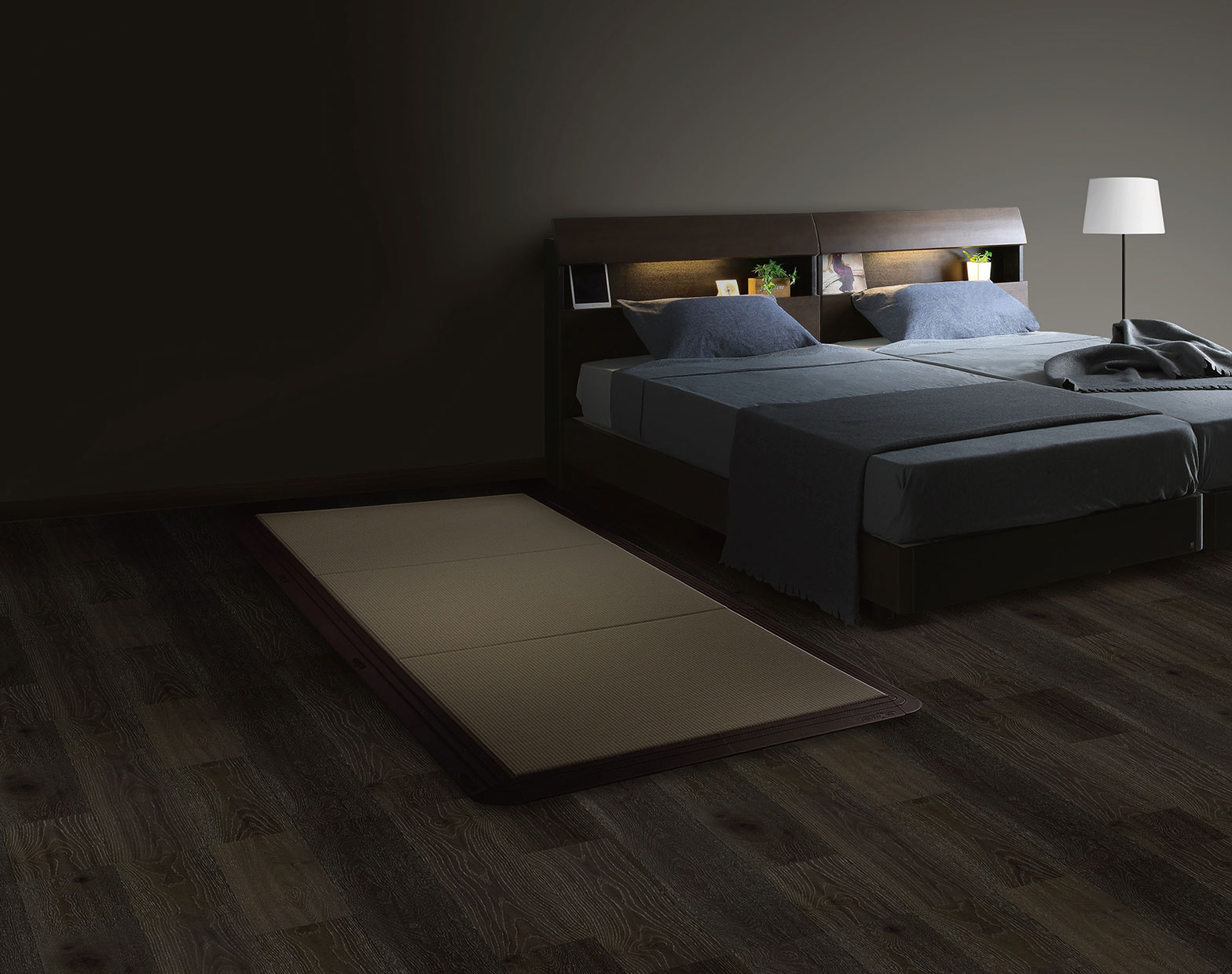
Because MIGUSA CARE uses MIGUSA, it can be disinfected with alcohol or sodium hypochlorite, making it highly hygienic. The core material is made of MDF (medium-density fiberboard) to ensure rigidity. While maintaining a thin profile and ease of use, it also improves shock absorption performance. Tadokoro et al. have collaborated with academia to secure evidence for the product. They have conducted demonstration experiments with expertise from Fujita Health University, Nagoya University, Shimane University, and Tokyo Institute of Technology, meticulously verifying its safety and ease of use in care settings.
"In our experiments, we verified various performance aspects related to the safety of people living in the area. For example, the hardness during falls and impacts is indicated by a value called the 'G value,' and typical flooring is around 120-140G. MIGUSA CARE is 42G, which is higher performance compared to the 60G of a judo dojo floor and the 50-60G of conventional tatami mats. Another feature is that it does not deform locally, so the load is distributed across the entire surface. As a result, it offers good walkability, and the 'hardness during everyday movements' is within the range of 0.8 to 1.3 recommended by JIS standards. It achieves a high level of balance between cushioning and ease of walking, and can be delivered to the field as a product that is easy for both those being cared for and those providing care to use."
In conducting the experiment, Tadokoro and his team played a role in bridging SEKISUI CHEMICAL Group 's expertise in residential environment studies with academia's expertise in medical engineering. Sekisui Mokeikei Kogyo's chemical technology and the group's mission of 'Residential and social infrastructure creation' were linked, marking a step toward solving social issues.
With the mission of extending healthy life expectancy, we will continue to collaborate.
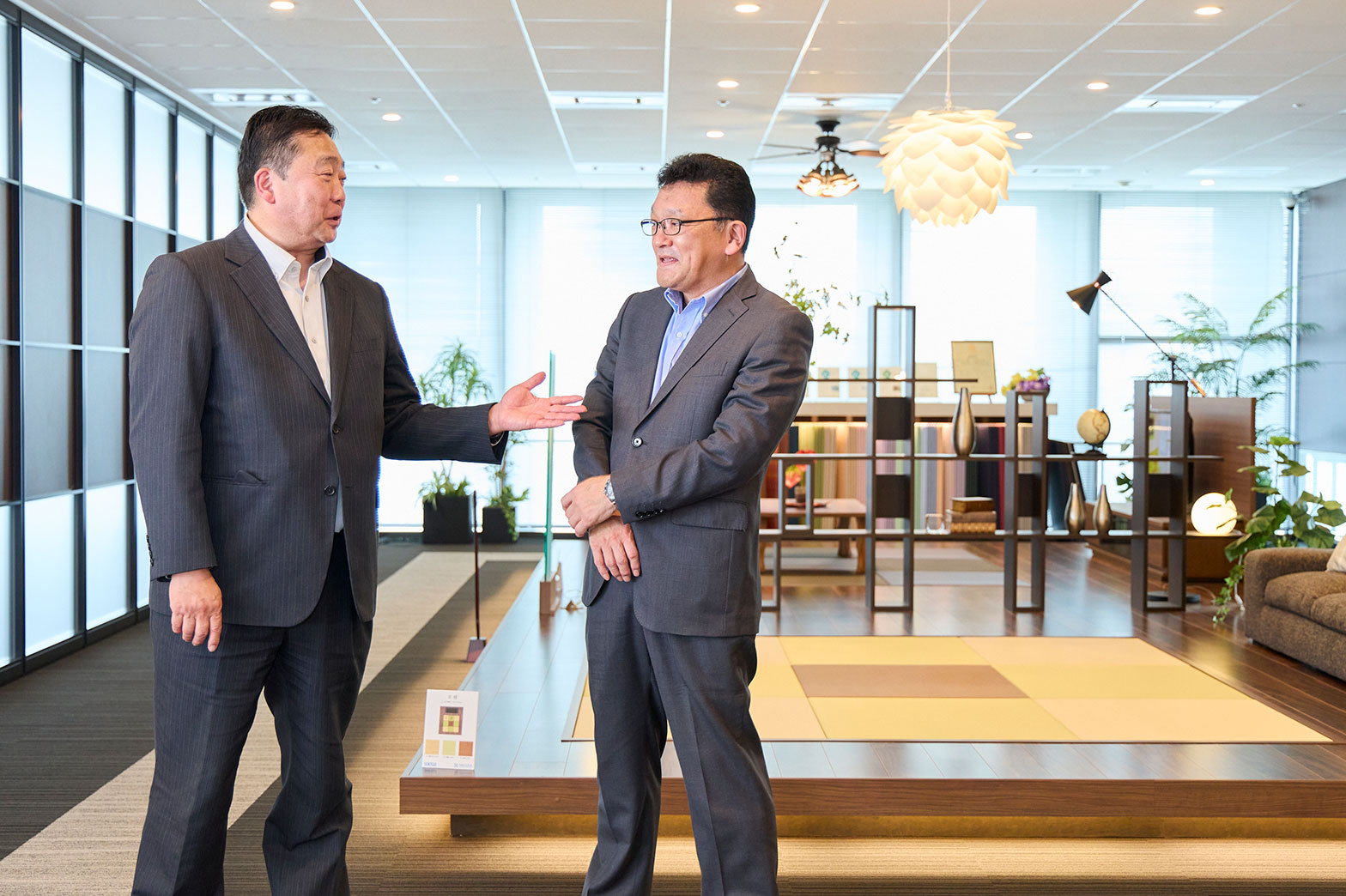
MIGUSA has added the keyword "care" to its brand, aiming to become an item that supports the 100-year life era and becomes an integral part of daily life. Based on the traditional culture of tatami mats, it aims to create a new health market. "Our collaboration with a furniture manufacturer has culminated in a product, but we have further co-creation in mind," Yoshida said, looking ahead.
"MIGUSA CARE has been selected to exhibit at the Osaka Healthcare Pavilion at the 2025 Osaka-Kansai World Expo, and is expected to attract even more attention as a product that plays a key role in health tech. This exhibition was selected because of its excellent compatibility with Sekisui Chemical's monitoring sensor, ANSIEL. By acquiring vital data through sensing, it functions for health management and monitoring—going beyond a simple tatami mat tool, it is expected to be a solution that extends healthy life expectancy. We have high expectations for the next generation of members to extend healthy life expectancy, consider the environment, and create high value-added products. We hope that they will further evolve MIGUSA and deliver products that contribute to society."
Tadokoro, who has been bridging the gap between the development team and academia, expressed his hope that "open innovation will be further advanced through co-creation with external partners." He also touched upon the core idea behind the development, stating that "MIGUSA is a bridge between the tradition and future of Japanese culture."
Yoshida said, "With the Westernization of lifestyles, the number of Japanese-style rooms in Japanese homes is decreasing. The supply of natural rush grass and rush grass mats is also on a downward trend, and the market is currently about a quarter of what it was 30 years ago *1. Even so, Japanese-style rooms and Japanese culture are being re-evaluated, with activities such as 'registering Japanese-style rooms as a UNESCO Intangible Cultural Heritage' *2, and we are proud that MIGUSA mats have been recognized as tatami mats that have been used in traditional events that have continued in Japan since ancient times." He touched upon the current state of tatami, which is indispensable to Japanese culture, and spoke about the prospects and expectations for MIGUSA.
"While MIGUSA has expanded its range of colors and added various functions, we have also prioritized reproducing the unique feel and texture of tatami mats. I have a strong desire to help pass on the traditional Japanese lifestyle of sitting on the floor to future generations. We have also supported tatami producers and construction companies that are struggling with declining demand. MIGUSA CARE is not limited to the Izumo factory, but certifies 35 producers nationwide. We are working to create a system that can widely deliver high-value-added products that meet our standards. We hope to offer new tatami products that many people can use comfortably."
Creating healthy and comfortable spaces with superior performance, and supporting residents with sophisticated design and safety. MIGUSA, which supports Japanese life in a new form—Sekisui Seikei Kogyo's challenge to continuously update tatami will continue.
*1 Circumstances surrounding rush grass (tatami mat surface) (Ministry of Agriculture, Forestry and Fisheries)
The supply of tatami mats was 38.31 million in 1996 and 7.45 million in 2023.