Achieving not only design but also comfort: Sekisui Chemical and Renoveru's initiative to bring renovated condominiums up to ZEH standards.
公開日:
What thoughts and stories were behind its development?
How will that connect to the people and societies living on Earth?
"SEKISUI | Connect with" is a future-creating media platform that connects you with Sekisui Chemical.
- Why did Sekisui Chemical and Renoveru decide to work together on "ZEH-level renovations"?
- Sekisui Chemical's technology is utilized in "ZEH-level renovations."
- The new initiative, "ZEH-standard renovation," was born with the support of many people.
- Many people are satisfied with the difference in electricity rates, and customers also appreciate the "comfort" they receive.
- As a leading player in "ZEH-standard renovations," we aim to create a major trend through public-private partnerships.
In recent years, the world has been riding a major wave towards carbon neutrality. Within this trend, energy-saving measures for housing have been rapidly progressing in Japan. However, while there are movements to effectively utilize existing housing from the perspective of addressing vacant properties and promoting resource recycling, progress in energy conservation has tended to lag behind.
A new initiative has begun to address this situation. In April 2023, Sekisui Chemical and Renoveru, a leading company in condominium renovations, entered into a capital and business alliance to develop renovation businesses that combine their respective strengths, aiming to create a new circular market for housing stock. As the first step in this collaboration, they launched a project to meet ZEH (Zero Energy House) standards for housing performance in condominium renovations. This innovative project aims to be environmentally friendly and to significantly contribute to improving resident comfort and reducing utility costs.
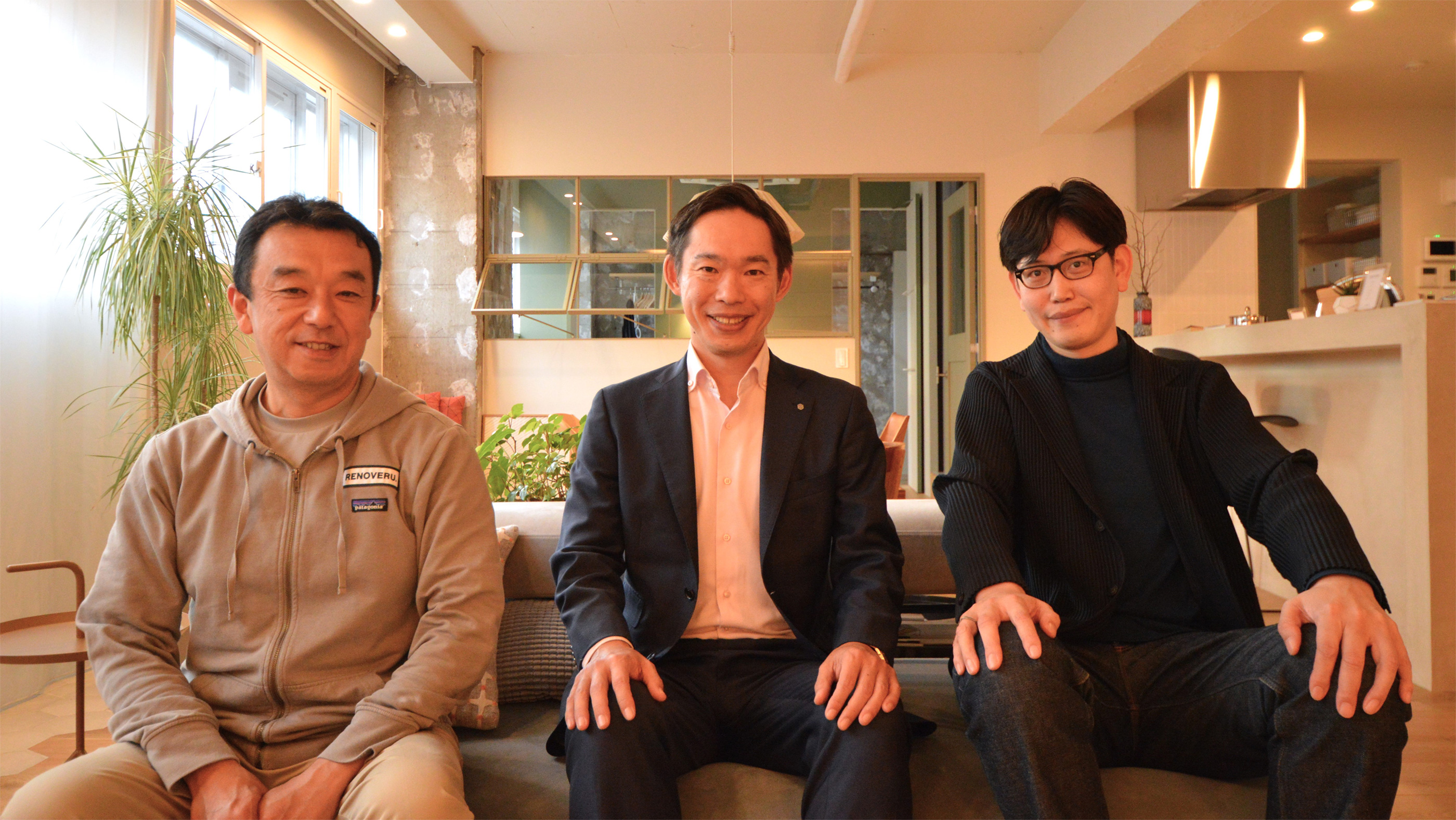
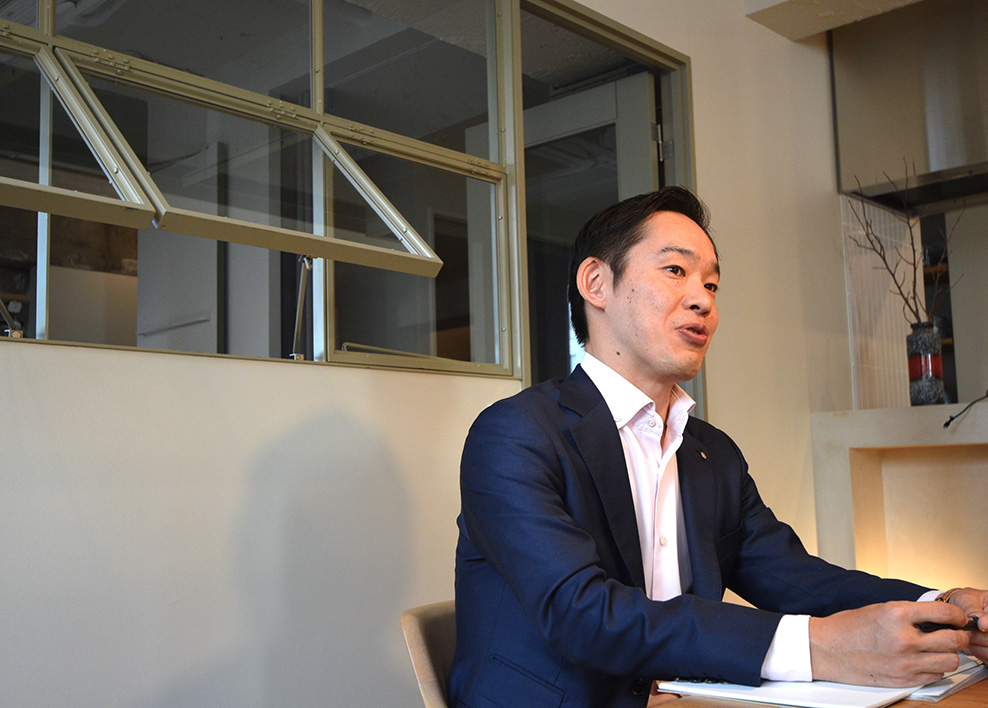
We spoke to three people about this project: Takeo Yamada (center in the photo), who was in charge of project management for this collaborative development at Sekisui Chemical; Takahiro Miura (left in the photo), who is in charge of the buy-and-resell business at Renoveru; and Takehiro Sugitani (right in the photo), who is in charge of Corporate Development at Renoveru.
Why did Sekisui Chemical and Renoveru decide to work together on "ZEH-level renovations"?
First of all, "ZEH" is an abbreviation for "net Zero Energy House," and it refers to a house that aims to achieve a net energy balance of zero or less in heating, cooling, ventilation, hot water supply, and lighting by introducing renewable energy. *1 Equipped with high insulation, energy-saving equipment, and solar power generation, it is cool in the summer and warm in the winter. It can be said to be a comfortable and budget-friendly house that also saves on utility costs.
*1 Depending on the usage environment and other conditions, the value may not fall below zero.
Yamada of Sekisui Chemical explains the circumstances that led to the capital and business alliance with Renoveru as follows:
"At Sekisui Chemical, our long-term vision, 'Vision 2030,' aims to double our business size by 2030, and we are pushing forward with expanding our existing businesses and challenging ourselves with new ventures. In the housing sector, the number of new detached house starts is expected to decline in the medium to long term, and we believe that developing and expanding businesses in construction and real estate areas other than new detached houses is essential to realizing our long-term vision. On the other hand, the hurdles to developing new business areas are high with only our own resources (personnel, know-how, and technology), and we have been searching for a strong partner company that can help us overcome these hurdles for several years. Against this backdrop, when we considered the growth of our business, especially in the renovation and condominium sectors, we felt a very strong attraction to Renoveru's real estate partner network, construction track record, design proposal capabilities, and marketing capabilities."
Sekisui Chemical and Renoveru are considering collaboration on four themes. The first is the "ZEH-standard renovation of condominiums" (ZEH-standard renovation). The second is the expansion of the condominium purchase and resale business. The third is the expansion of the distribution volume of our detached house purchase and resale business "Be Heim". The fourth is the development of mixed urban development and whole-building condominium renovation projects.
Mr. Sugitani of Renoveru says, "Renoveru's B2C business mainly involves apartment renovations, but apartments, of which there are approximately 7 million nationwide, only account for about 10% of the total housing stock (existing housing). Renoveru's mission is to make Japanese living the smartest and most wonderful in the world, and in order to achieve this mission, we felt that we needed to work more on the renovation of detached houses, which make up the majority of existing housing. The detached houses built by Sekisui Chemical have a robust structure using a unit construction method and come with a 60-year maintenance program from the date of handover of a new house, so in a sense there is an analogy (similarity) to the structure of an apartment building, and we believe that it is easy to adopt an approach of updating the interior and equipment according to lifestyle without changing the structure. For this reason, we find the collaboration with Sekisui Chemical very attractive as it offers the possibility of extending our know-how in apartment renovations directly to the detached house domain."
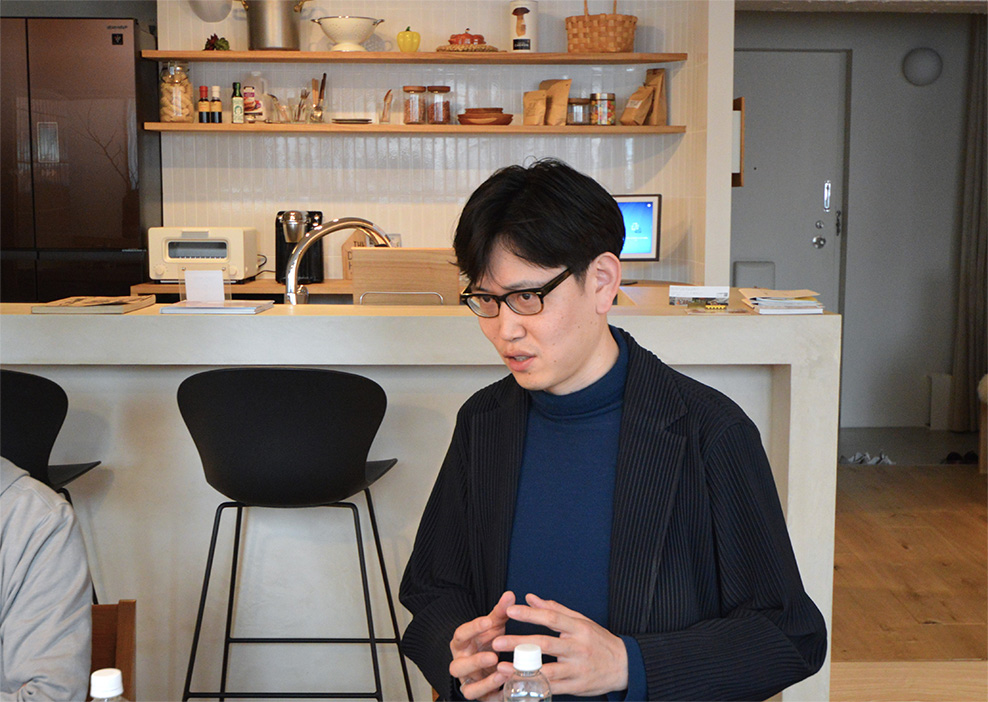
Miura of Renoveru continues, explaining that the reason they started this joint initiative between the two companies, which involves bringing renovated condominiums up to ZEH (Zero Energy House) standards, is also rooted in social circumstances.
"For newly built homes, compliance with energy efficiency standards will become a mandatory requirement from 2024 in order to receive mortgage interest deductions. By 2025, energy efficiency standards will be mandatory for all new homes, and buildings with low energy efficiency will not be permitted to be constructed. Furthermore, by 2030, the government aims to set a guideline standard to ensure performance at ZEH (Net Zero Energy House) levels."
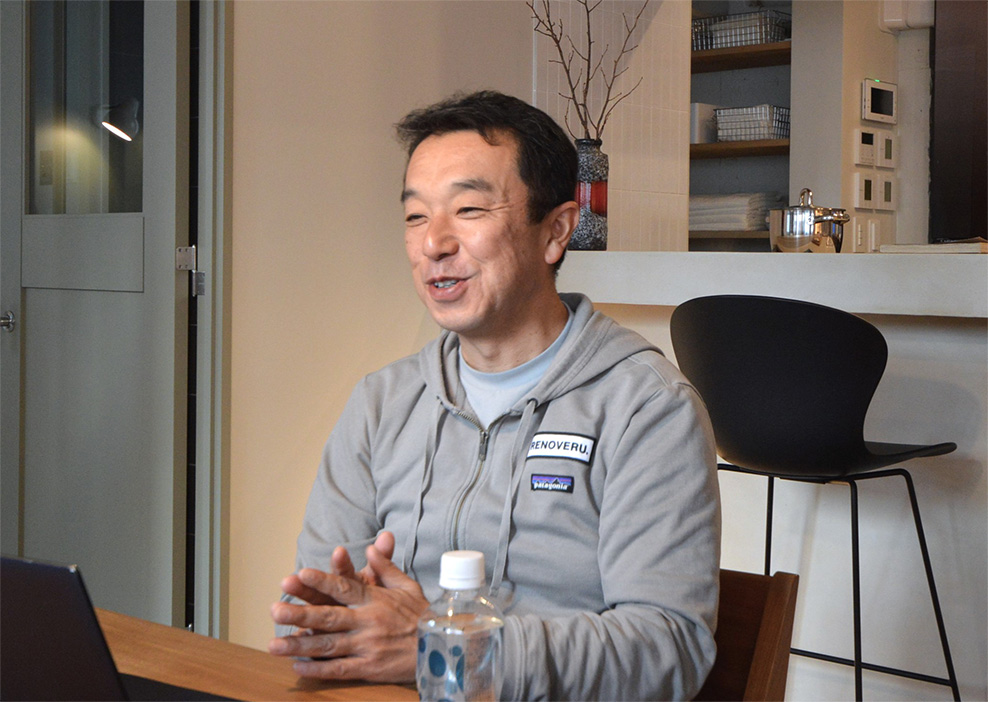
Japan aims to achieve a carbon-neutral society by 2050, and various institutional reforms are planned to promote energy-saving and insulation improvements in homes.
"On the other hand, as of 2019, approximately 87% of the total housing stock of about 50 million homes did not meet current energy-saving standards *2. To improve the energy-saving and insulation performance of existing housing stock, there are two options: rebuilding and renovation. Renovation has been shown to reduce CO2 emissions compared to rebuilding *3, and promoting energy-saving and insulation improvements through renovation is one solution toward realizing a decarbonized society."
*2 Ministry of Land, Infrastructure, Transport and Tourism document, "Ministry of Land, Infrastructure, Transport and Tourism 2022 Social Infrastructure Development Council 46th Building Subcommittee Document 1-3," p. 48, "Thermal Insulation Performance of Housing Stock" (https://www.mlit.go.jp/policy/shingikai/content/001487476.pdf)
*3 Renoveru announced on November 30, 2021, "Renovation reduces CO2 emissions by 76% and waste generation by 96%: Industry-academia collaborative research conducted to realize a decarbonized society" (https://renoveru.co.jp/news/5273)
While ZEH (Zero Energy House) is becoming increasingly common in newly built homes, the number of existing homes that meet ZEH standards is still relatively small. To expand the development of homes with guaranteed energy efficiency, Sekisui Chemical and Renoveru have decided to work towards achieving "ZEH standards" in condominium renovations. In new high-rise condominiums, "ZEH Oriented" is the mainstream, which does not require the installation of solar power generation, and this project also aims to meet "ZEH Oriented" standards for each unit.
Sekisui Chemical's technology is utilized in "ZEH-level renovations."
In what ways will Sekisui Chemical's technological capabilities be demonstrated in this initiative? Yamada will explain.
"At Sekisui Chemical, we support all aspects of insulation technology, including thermal calculations and design. In particular, for insulation renovations, we utilize the patented insulation method of our condominium renovation brand, 'Marurino.' This insulation method involves attaching high-performance board-shaped insulation material to the interior walls. Its greatest feature is that it provides high insulation performance even with a thin layer, and its quality is stable. In addition, the insulation panels conform to the unevenness of the concrete surface, reducing gaps and lowering the risk of deterioration caused by condensation and mold growth within the wall."
Mr. Miura of Renoveru adds, "Many people associate insulation with spray-on materials. Spray-on insulation requires 200 volts of electricity, making securing a power source a challenge during construction. Board-type insulation, on the other hand, does not require 200 volts of electricity, and from the perspective of the installer, it has the advantage of being easier to install. Also, because it is thinner than spray-on materials (for the same performance), the room is less likely to be narrowed by the thickness of the insulation."
For insulation renovations, SEKISUI CHEMICAL Group 's patented insulation method from 'Marlino' is utilized, and equipment such as high-efficiency air conditioners, Eco-Jozu (high-efficiency water heaters), and highly insulated bathtubs is installed to meet ZEH standards.
The new initiative, "ZEH-standard renovation," was born with the support of many people.
The "ZEH-standard renovation" project progressed very quickly. The business partnership was announced in April 2023, and construction on the first project (in Kawasaki City) began in July 2023. Yamada reflects on the background, saying, "The shared desire of both companies to create comfortable homes that are kind to both the planet and the residents was a major driving force."
Mr. Miura of Renoveru also said, "This is our first time doing a 'ZEH-standard renovation' and collaborating with Sekisui Chemical, so everything was a learning process. Thorough interviews and investigations with government officials and certification bodies were essential, but with the support of many people, we were able to successfully realize it. Everyone cooperated willingly, and we felt a sense of mission as we realized that this is attracting attention as one of the means to realize a decarbonized society."
Yamada agrees with what Miura said.
"Initially, I had some vague anxieties about whether the 'ZEH-standard renovation' project would be viable as a business. However, as we developed the project, we received approaches from the Tokyo Metropolitan Government wanting to hear more, and we really felt the market's impact and the level of interest. That made us think, 'We can do this!' and we continued to push forward with it."
Many people are satisfied with the difference in electricity rates, and customers also appreciate the "comfort" they receive.
What kind of reactions did they actually receive from customers after they communicated this initiative to them?
Miura says the most easily understood and impactful change was the electricity bill.
"With the recent significant rise in electricity prices and concerns about further increases, we explained the difference between ZEH-standard homes and those that don't meet these standards. In the case of the first project, the estimated difference in electricity costs was 93,085 yen per year *4. When converted to mortgage payments, this amounts to approximately 3 million yen per month over a 35-year repayment period *5, which is enough to offset the approximately 3 million yen cost of the 'ZEH-standard renovation.' In addition, there are significant benefits such as subsidy programs and additional mortgage tax deductions, so we presented these cost estimates with concrete figures. What was also surprising was that the evaluation of 'comfort' was higher than we had imagined."
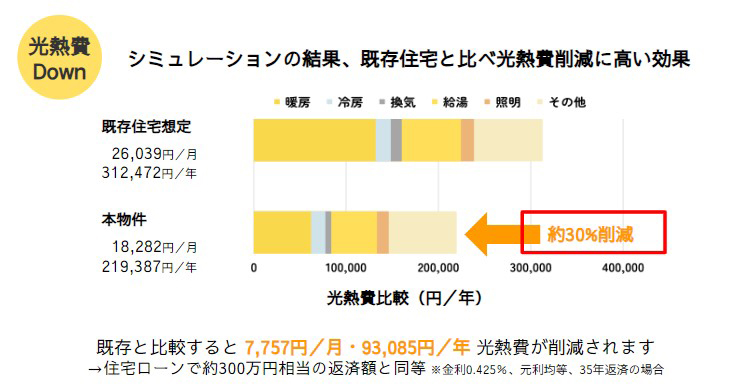
*4 [Calculation Conditions] <Assuming an existing house> UA value 1.75, air conditioning: air conditioner, hot water supply: conventional gas water heater, <This property (after renovation)> UA value 0.51, air conditioning: high-efficiency air conditioner, hot water supply: gas latent heat recovery type water heater, bathtub: high-insulation bathtub. Electricity rates are based on the revised rates from June 2023 onwards (including fuel adjustment charges). Renewable energy surcharges are based on the rates for fiscal year 2023. Discounts due to mitigation of drastic changes are not included. Gas rates are calculated using the standard unit price (fuel adjustment charges are not included). Primary energy consumption results calculated using a web program based on energy conservation standards (National Institute for Land and Infrastructure Management) are used and converted to electricity, gas, and kerosene (excluding water and sewage). "Other" utility costs refer to electricity charges for general household appliances, excluding heating, cooling, ventilation, hot water supply, and lighting. This is merely a simulation, and actual utility costs will vary depending on the usage environment and other conditions.
*5 Based on an interest rate of 0.425%, equal principal and interest payments, and a 35-year repayment period.
Yamada reflects, "It's not just about cost benefits; it also adds comfort to the living space. I thought the biggest point of this project was that it would create a comfortable and livable space where you can stay cool in the summer and warm in the winter without excessive use of air conditioning, and I'm glad that it has actually been appreciated."
This first property went on sale in October and sold in about a month, faster than expected. Interviews with the buyer revealed that they liked the electricity costs, the comfort of the property, and the warm, inviting atmosphere of the wooden interior.
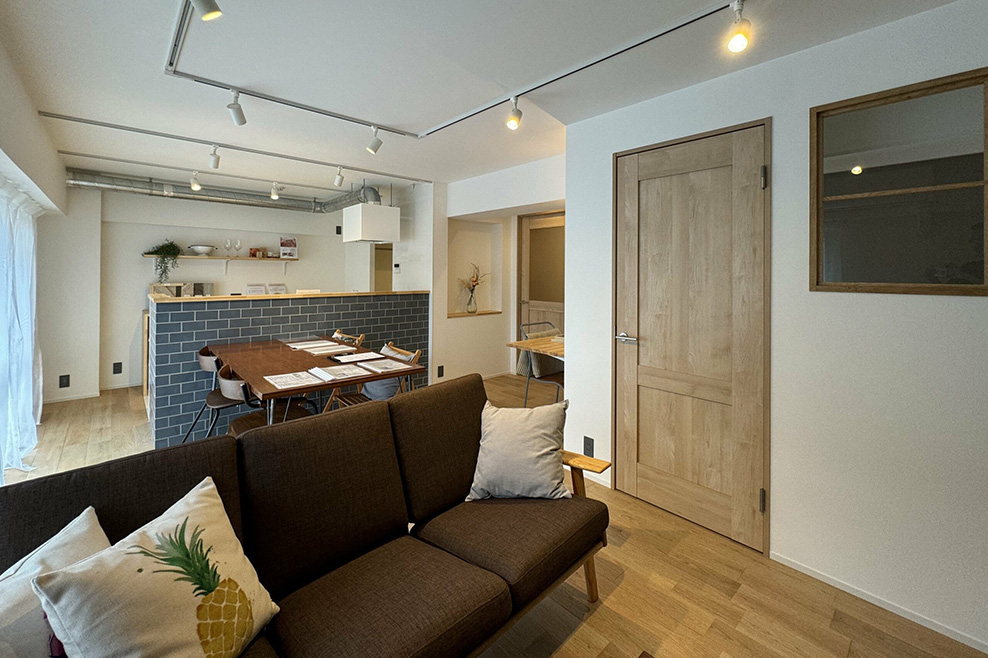
Mr. Miura said, "Right now, many customers are attracted to the design and come to see our properties. Our 'ZEH-standard renovated' properties are priced higher than comparable properties in the area, so we need to work hard to effectively communicate the advantages of economics and comfort so that people will want to buy a ZEH-standard home."
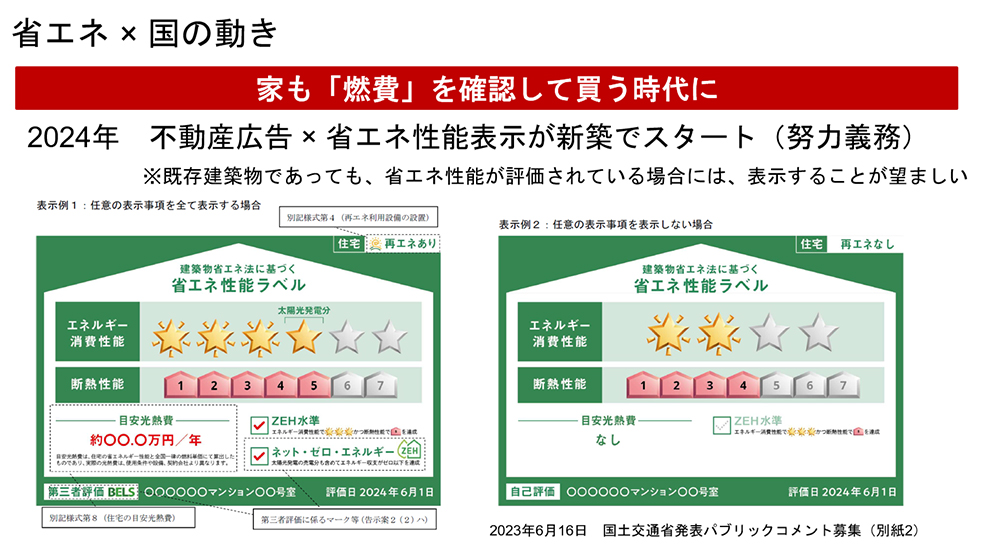
Starting in April 2024, the "Building Energy Efficiency Labeling System" will be implemented, with labels clearly displaying energy efficiency and insulation performance ratings. Currently, it is only applicable to new homes and is still in the stage of being a voluntary effort, but from now on, we will be entering an era where homes will also be mindful of their "energy efficiency." The time will come when energy efficiency will be valued as a matter of course.
As a leading player in "ZEH-standard renovations," we aim to create a major trend through public-private partnerships.
What challenges lie in promoting "ZEH-standard renovations"? Mr. Sugitani says that successful overseas examples will eventually reach Japan with a time lag.
"As a comparison with other countries, for example, leading US companies have pledged to achieve the 2050 net-zero target by 2030. Many other large companies, including those ranked in the Fortune 500, have also declared that they will accelerate their targets. Some are even opting to only rent buildings that meet net-zero standards. I believe this trend will reach Japan with a time lag, so building owners can expect a positive cycle where energy efficiency in buildings leads to increased tenant attraction. Our first project was a single apartment unit, but we would like to actively pursue opportunities such as ZEH-level renovations of entire buildings in the future."
Mr. Miura argues that cost issues must also be taken into consideration.
"ZEH standards require meeting insulation performance standards and primary energy consumption performance standards. However, regarding primary energy consumption performance, it can be difficult depending on the property, such as by upgrading to high-efficiency water heaters. Even if high-efficiency water heaters can be installed, cost remains a major challenge. Currently, there are government subsidy programs, which is helpful, but even without them, the business needs to be profitable. I think we need to think beyond the renovation industry, including the government and manufacturers, to find ways to further reduce costs. Looking ahead to 2050, I think we need to accelerate both technologically and educationally."
After listening to both of them, Yamada said that collaboration between just the two companies would not be enough to expand the market.
"To spread this throughout the entire industry, it's probably impossible for just the two of us to do it alone. I feel it's crucial for the public and private sectors to work together to promote it. Only with that foundation will customers begin to recognize the necessity of ZEH, and that will lead to it becoming the industry standard. The next challenge is how to connect this project to expanding the collaboration between our two companies and making it the industry standard."
Nevertheless, they decided to start with these two companies. Mr. Miura of Renoveru said, "We want to promote its widespread adoption not only by introducing it in the buy-and-resell business of condominiums for both companies, but also by expanding it to condominium renovations contracted by individuals and corporations." Initially, they will start in the Tokyo metropolitan area, but will expand to Kansai and Nagoya, and after establishing their business style and methods, they aim to expand to partner companies.
Thanks to these efforts, in November 2023, Renoveru received investment from the Decarbonization Support Organization, a public-private fund, to promote the decarbonization of housing stock in order to achieve "net zero by 2050." This was the first investment in the housing, real estate, and construction sectors, and it gave an endorsement to both companies' approach of renovation as a way to contribute to a decarbonized society.
Yamada also said, "We can consider various forms, such as an entire apartment building, an entire rental housing complex, or urban development. By combining these, we want to expand our business domain through our collaboration with Renoveru and become a leading force in the market."
Globally, it is said that 40% of CO2 emissions are related to real estate *6, and as Mr. Sugitani put it, "Without net-zero emissions from buildings, there can be no net-zero emissions for the planet." Sekisui Chemical and Renoveru are creating a major movement toward contributing to a decarbonized society by converting existing housing stock into ZEH (Net Zero Energy Houses).
*6 Fifth Wall Insights