Mobility revolution brought about by "flying cars"
Sekisui Chemical's capital alliance with German company Volocopter reveals its vision for the future.
公開日:
What thoughts and stories were behind its development?
How will that connect to the people and societies living on Earth?
"SEKISUI | Connect with" is a future-creating media platform that connects you with Sekisui Chemical.
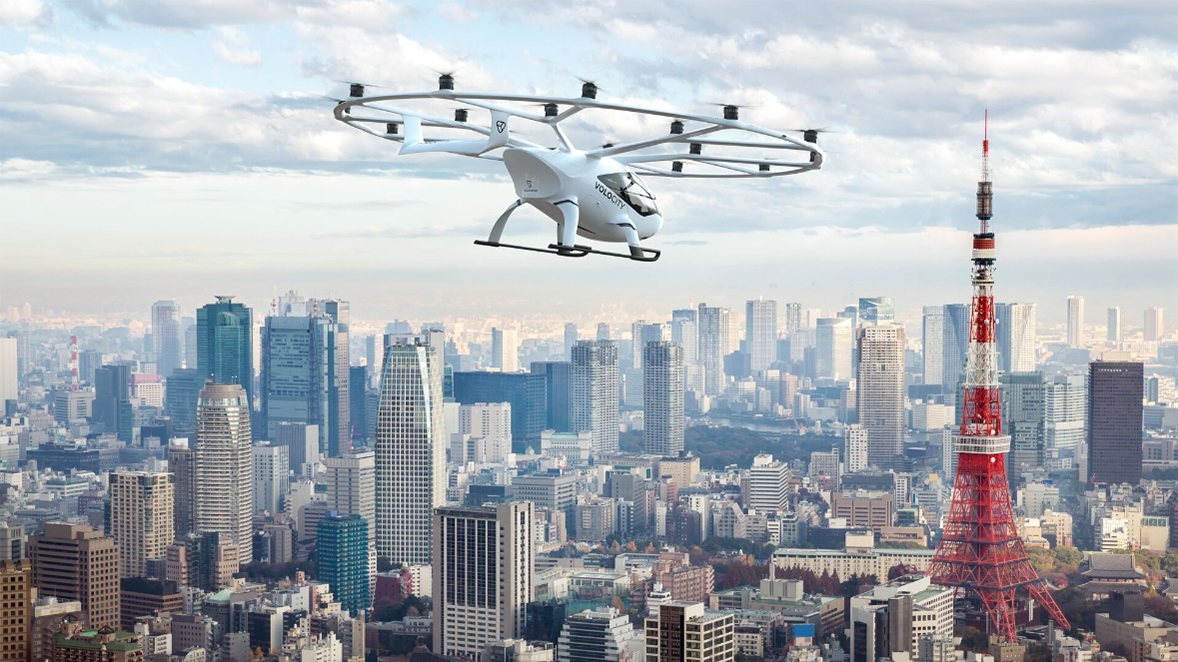
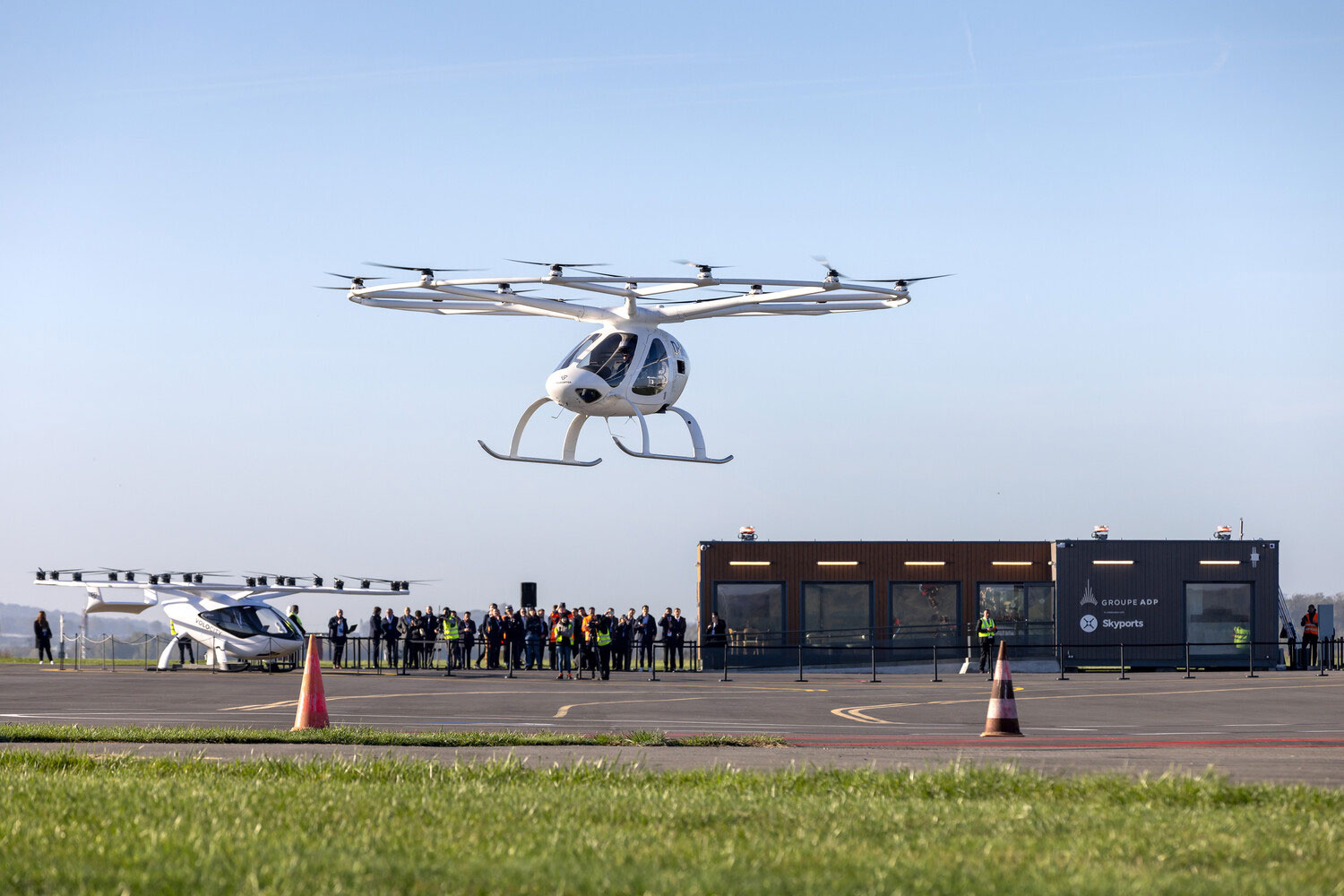
News about eVTOLs (electric vertical take-off and landing aircraft), also known as "flying cars," is increasing, with multiple companies aiming for Japan's first commercial operation at the 2025 Osaka-Kansai World Expo. On December 11, 2023, German company Volocopter and others conducted a pilot-operated demonstration flight at a heliport on the Osaka Bay coast.
What exactly is a "flying car"?
A "flying car" is a vehicle that can travel through the air with a small passenger capacity and can be used daily like a car. In other words, it refers to a "car" in a conceptual sense. Its actual form is closer to a giant drone. It is attracting attention as a new means of aerial transportation that is neither an airplane nor a helicopter.
"Traffic congestion is a major challenge in cities around the world. The flying car initiative will provide a faster and more comfortable means of transportation by utilizing the available space in the sky."
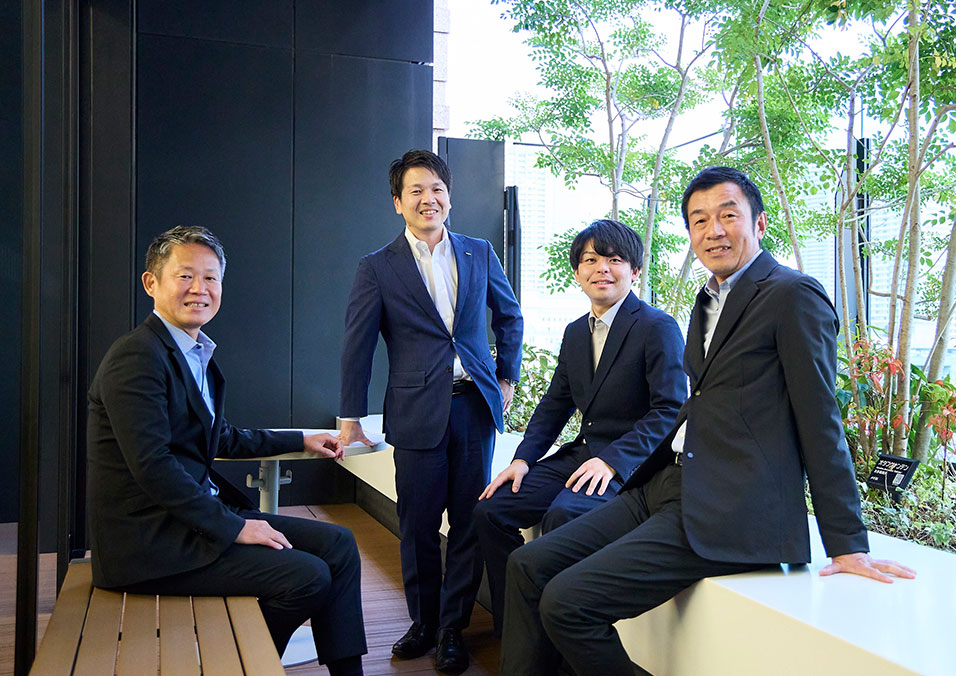
This is according to Kento Nagai of the Corporate Planning Group in the Corporate Strategy Department at Sekisui Chemical. Nagai has entered into a capital and business alliance with the German company Volocopter, mentioned earlier, through Sekisui Chemical's corporate venture capital (CVC) program, and is working on flying cars.

"It eliminates the need for infrastructure like roads, bringing a new transportation experience through straight-line travel such as to remote islands or across bays. In addition, most of the aircraft currently under development are electrically powered, which could lead to a reduction in CO2 emissions."
How does it differ from airplanes and helicopters as a means of aerial transportation?
Unlike airplanes and private jets that fly at an altitude of 10,000 meters, flying cars operate at an altitude of several hundred meters and are designed for shorter-distance transport of tens to hundreds of kilometers. Furthermore, they are significantly quieter than helicopters flying in similar airspace, making them well-suited for urban transportation systems.
Flying cars are a form of mobility that transforms "close yet far" into "close."
When we travel by car or other means, it's common for a destination to appear shorter in a straight line, but actually taking the roads makes it seem longer. This is because the concept of transportation is based on pre-defined "lines." A transportation network is a "network" made up of overlapping "lines" such as roads. In other words, to reach your destination, you must use this network of transportation routes. This is true not only for land routes but also for sea and air routes.
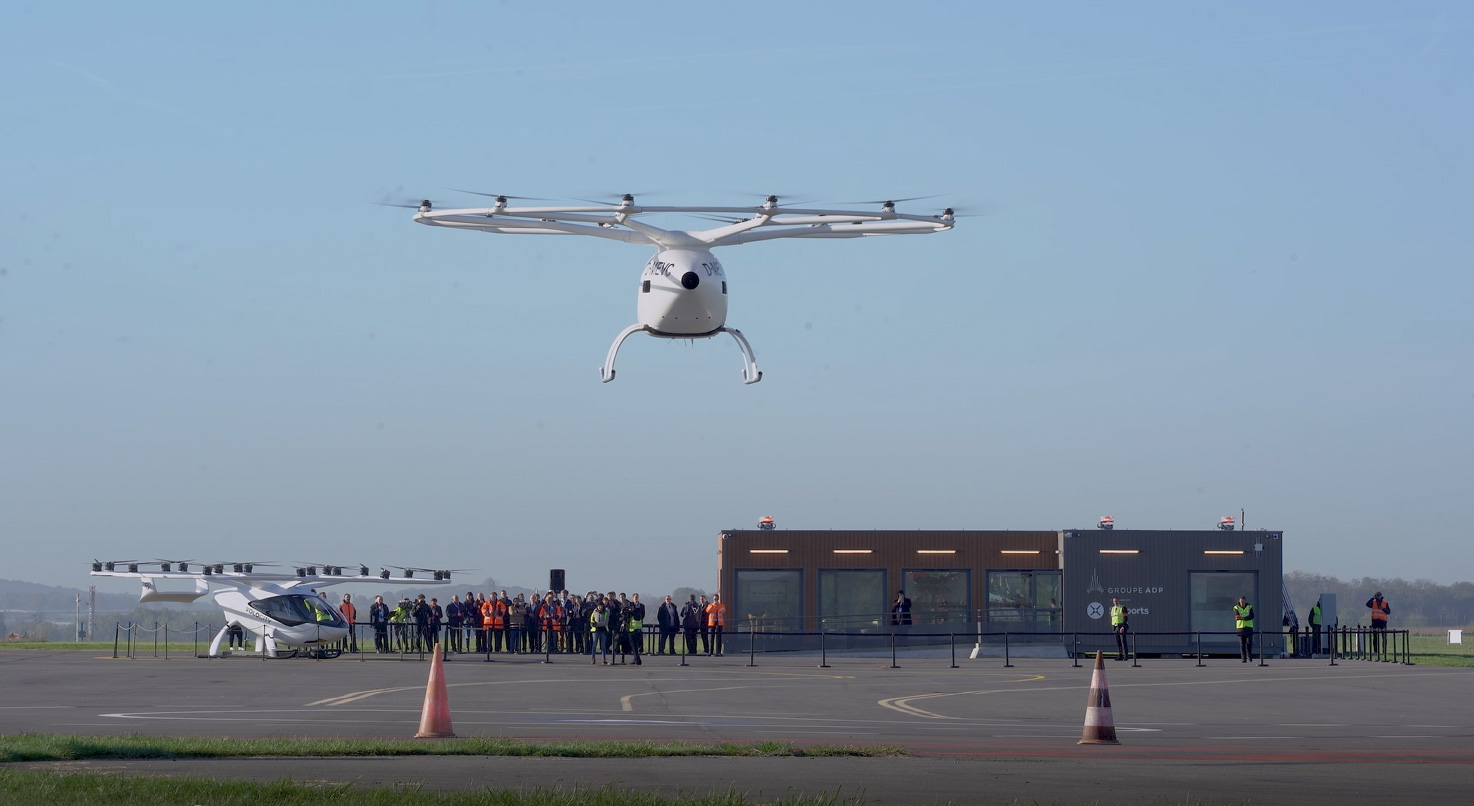
Helicopters are an escape from this constraint. Helicopters connect the point of origin and destination point by point, allowing for travel by the shortest distance. Air ambulances, for example, likely utilize this characteristic. However, as Nagai mentioned, helicopters are noisy, and the places where they can take off and land are limited. They are not really practical for everyday use. On the other hand, flying cars are electrically powered and produce little noise. You can experience their quietness by watching the video below.
Why Sekisui Chemical is taking on the challenge of "flying cars"
Sekisui Chemical has been conducting research into entering the flying car market since acquiring AIM Aerospace, a parts manufacturer for the aerospace industry, in 2019 (now Sekisui Aerospace).
"At Sekisui Chemical, we aim to support the realization of the flying car business by leveraging the technologies we have cultivated in aerospace, automotive, electronics, and other businesses. Because Sekisui Chemical possesses a wide range of technologies, we believe we can contribute in various fields, and to that end, we have started collaborating with Volocopter GmbH of Germany at an early stage, even before the market is established, and are proceeding with the verification of the possibility of collaboration."
Developing, producing, and operating aircraft requires passing various certifications and obtaining licenses in each country. Volocopter, the German company with which this company has a capital alliance, was one of the most advanced companies in Europe in terms of its efforts to obtain these certifications. The aircraft under development was highly refined and had undergone numerous flight tests.
"Currently, we are in the process of collaborating while holding regular meetings with members from both sides. Volocopter is a German company, but the commercialization of flying cars is a common global trend. Sekisui Chemical is also participating in this collaborative project with them from various locations in the United States, Europe, and Japan."

There are many challenges to realizing flying cars. For example, while the durability of the materials is a given, they also need to be lightweight. Automobiles also need to be lightweight, but the requirements are even higher for flying cars.
"For example, carbon fiber reinforced plastics (CFRP) are lightweight, strong, and corrosion-resistant, and are used in aircraft and other applications. Aerospace, which we acquired in 2019, also molds CFRP and supplies it to aerospace equipment manufacturers. First and foremost, we aim to contribute to the realization of flying cars through these kinds of materials."
CFRP is used in parts for passenger aircraft, but it has been considered difficult to mass-produce. However, Aerospace has also established automated processing technology for carbon fiber reinforced thermoplastics (CFRTP), which are more suitable for mass production. Compared to passenger aircraft, flying cars, which require a large number of airframes like taxis, require not only high-quality materials but also a mass production system.
"Eliminating the manual manufacturing process will allow for mass production while keeping costs down. While the above technology is already being recognized in the aviation industry, I am excited about the potential for an even greater impact in the flying car business."
Realizing flying cars requires not only the development of the aircraft itself, but also reforms in legal frameworks and regulations, presenting many challenges. "Nevertheless, everyone wants a means of transportation when they are in a hurry or need to travel quickly. We want to take on the challenge of creating new mobility and solving social issues such as traffic congestion," says Nagai. "The World Expo is just the beginning, and we want to contribute to the industry in various ways until flying cars become a part of everyday life."
The time it took for horse-drawn carriages, which were the dominant mode of transportation around 1900, to be replaced by automobiles was just over 10 years. A 1913 photograph of Fifth Avenue in New York shows the streets overflowing with the first Ford Model T, which began shipping in 1908. A 1900 photograph taken in the same area shows the streets overflowing with horse-drawn carriages.
Right now, a similarly significant transformation in mobility is about to occur. The day may be near when we ride in flying cars that are as easy to use as taxis.