The latest developments of "Warm Heim," which is no longer just "warm."
公開日:
What thoughts and stories were behind its development?
How will that connect to the people and societies living on Earth?
"SEKISUI | Connect with" is a future-creating media platform that connects you with Sekisui Chemical.
Of all the seasons, winter is probably the one that most people wish would end quickly. The cold makes it difficult to move around. During this time, you often hear the phrase "Attaka Heim." Some people may remember the catchy phrase from TV commercials, such as "I want to go home♪ I want to go home♪ Attaka Heim is waiting for you♪." But what exactly is "Attaka Heim"?

"Simply put, it's a system that heats the entire house from under the floor."
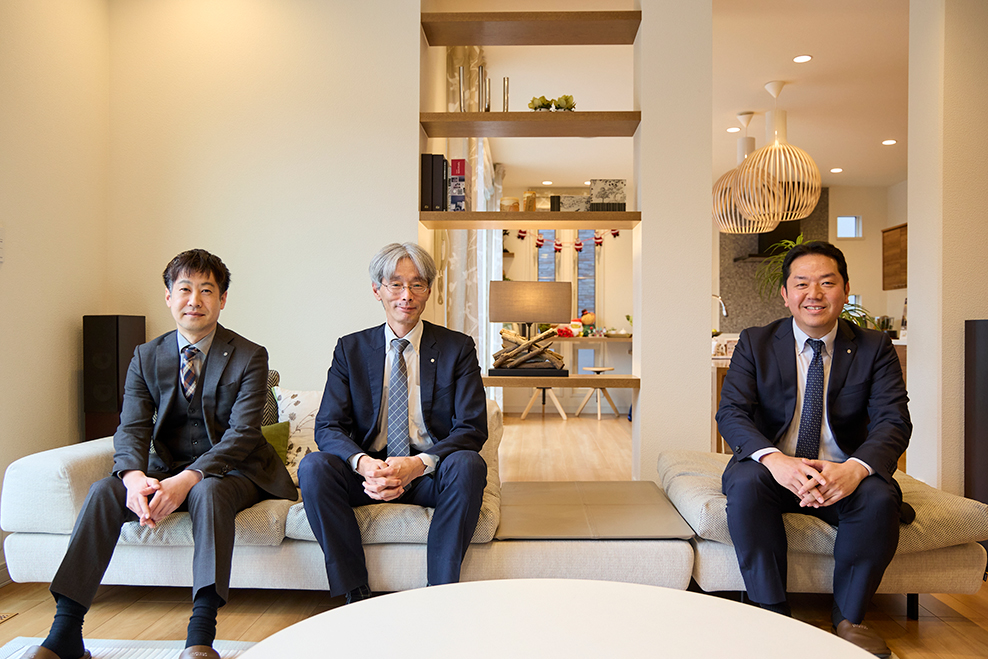
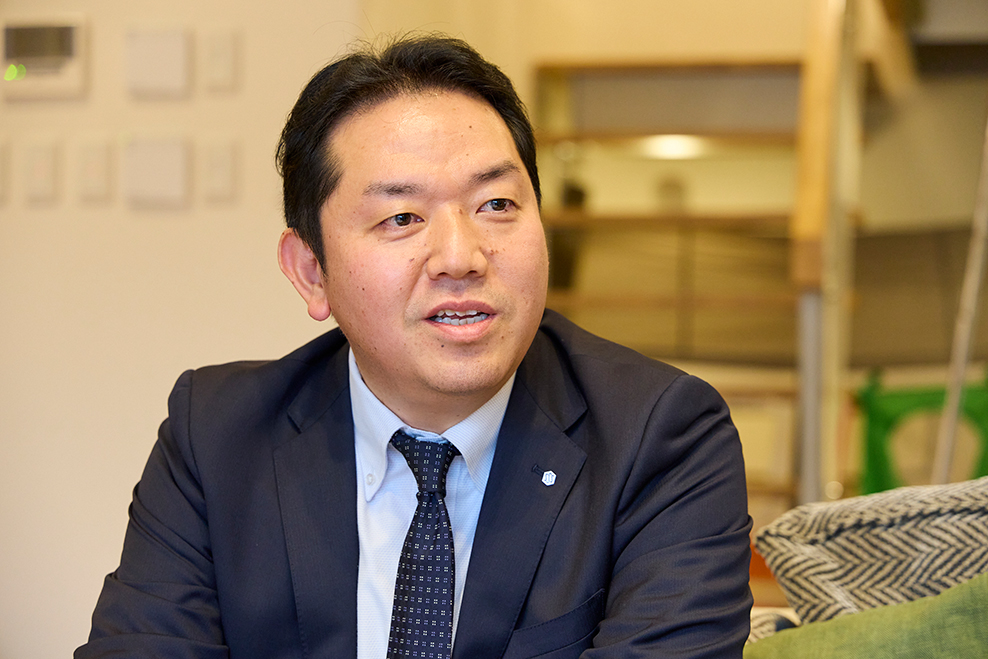
This is said by Mineo Sagara from the Smart Promotion Office, Housing Company Corporate Strategy Department, Marketing Department, Sekisui Chemical. Sagara has been involved in basic research on energy systems and technology development for home air conditioning equipment, and has been involved in planning housing products centered on smart house technology. It may seem like the answer is straightforward, but in fact, various attempts were made before this system was born.

"Simply developing a system to heat from under the floor won't be effective if the house itself has poor insulation. Also, if the underfloor heating isn't energy-efficient, the utility bills will be high, making it impractical to use. Attaka Heim is a system that creates a warm home within the overall design, including the building's insulation performance."
Until Warm Heim was born
The Japanese government is calling for further energy conservation and reduction of CO2 emissions from housing and buildings, which account for approximately one-third of total CO2 emissions, in order to achieve carbon neutrality by 2050. To promote energy conservation in housing, the key is to improve "insulation performance," such as preventing heat from escaping from the building and preventing solar heat from entering the building, as well as "energy-saving performance." Sekisui Chemical's housing brand "Sekisui Heim" has been working on this challenge.
"At Sekisui Heim, we began selling homes equipped with solar power generation in 1997 and have been promoting energy-saving housing. For the past 27 years, we have been working on a system that generates electricity from sunlight, utilizes that electricity as energy, and allows the generated energy to be used in the event of a power outage *1."
*1: [When using a battery] In the event of a power outage, if the battery has no remaining charge, power cannot be used. Also, the usable range will vary depending on the battery and the pre-design. There is a limit to the amount of power that can be used simultaneously.
This is according to Ken Shiomi of the Housing Environment Technology Group, Basic Technology Research Laboratory, Housing Technology Research Institute, Development Division. He has worked in various roles, from on-site design for newly built detached houses to development work, and is currently engaged in research and development of housing technology.
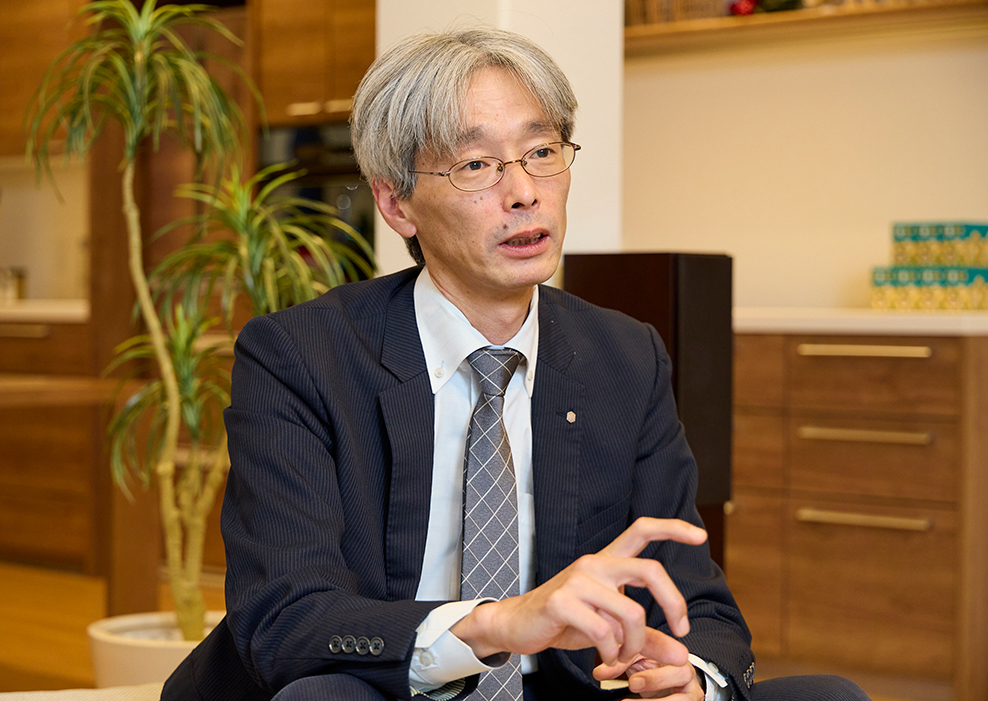
"Currently, Japanese homes have lower insulation performance compared to those in Europe and other regions. However, improving insulation and energy efficiency is essential for Japan to achieve its goal of reducing CO2 emissions. Since launching our solar-powered homes, we have been considering ways to improve the insulation performance of homes and make Japanese homes warmer."
Sekisui Heim has adopted the raft foundation for its safety and security, as it is less prone to moisture buildup and is highly resistant to earthquakes. A raft foundation is a type of foundation where the raised portion of the foundation and the entire floor surface are integrated with reinforced concrete, supporting the weight of the house over a large surface area. Furthermore, because the box-frame structure of the building allows for a minimal reduction in the height of the foundation, it was possible to create a large, open foundation space with fewer partitions, which led to the consideration of creating a "warm floor." This was around 2001.
To create a warm floor, they developed a foundation insulation system that prevents heat from escaping from beneath the floor, completed an underfloor heat storage system in 2004, and became widely known in 2006 under the name "Attaka Heim" (Warm Heim). Warm air rises from the bottom. By doing this from the entire underfloor area of the building, the inside of the house is warmed.
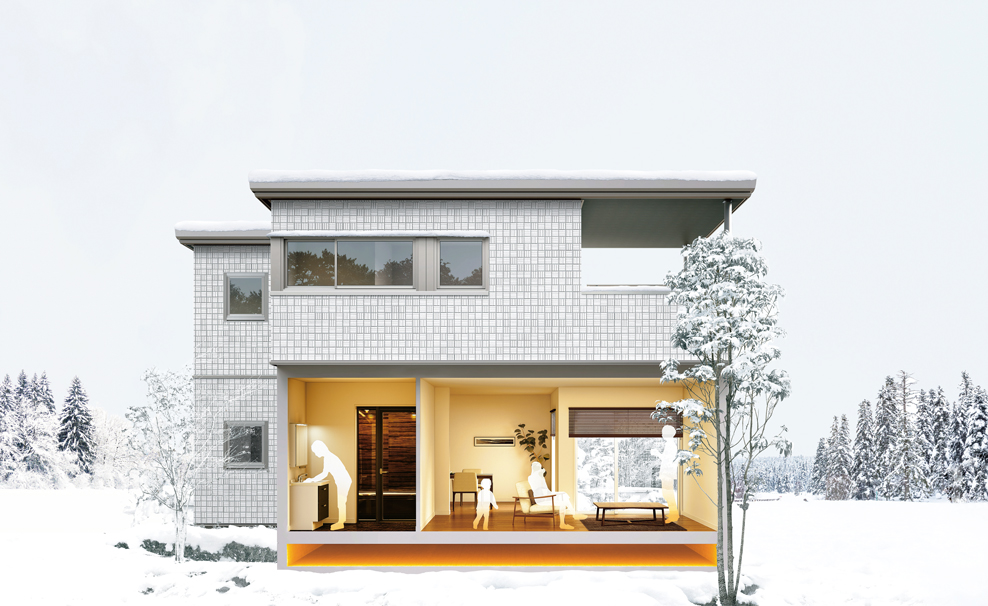
More than just warm, the latest "Warm Heim"
The current "Attaka Heim" features "Comfortable Airy," which not only keeps you warm in winter but also refreshes in summer. Aiming for a comfortable indoor environment, the air quality has also been improved. The system that suppresses the intrusion of dirty air during air conditioning and ventilation has been upgraded. By integrating SEKISUI CHEMICAL Group 's technological expertise, they developed a filter using the antiviral material "Willtaker" for the indoor air intake, and adopted a "HEPA filter" for ventilation to accommodate the new normal. In other words, "Attaka Heim" achieves "warmth× refreshing× and clean."
*2: The inhibitory function against viruses attached to the filter has been demonstrated based on JIS standards (JIS L1922:2016 (ISO 18184)). However, it is not effective against all viruses. Furthermore, the antiviral function against air passing through the filter has not been confirmed. It is not intended for the treatment, improvement, or prevention of disease.
It also has very high thermal insulation performance.
"There is a national standard for 'thermal insulation performance.' We implement measures to improve thermal insulation, solar radiation protection, and condensation prevention, achieving standardization to thermal insulation grade 6 *3," says Sagara.
*3: Standardization applies to all single-story and two-story detached house products (steel-frame Sekisui Heim and wooden Two-U Home) sold in general areas (energy-saving zones 5-7). Depending on the plan and some adopted features, it may not meet insulation grade 6.
Insulation grade 6 exceeds insulation grade 5, which is considered the standard for ZEH (Net Zero Energy House). In other words, it boasts even higher insulation performance than the ZEH standard. Incidentally, ZEH stands for Net Zero Energy House, which is a house that aims to achieve a net-zero balance of annual primary energy consumption (direct energy consumption associated with the use of the building) by improving insulation performance and introducing highly efficient equipment systems to maintain the quality of the indoor environment while achieving significant energy savings, and by introducing renewable energy. The ZEH standard is a grade set by the government to aim for this ZEH standard.
"By improving insulation performance, we can achieve benefits such as a smaller temperature difference between rooms and hallways, less cold feet, and reduced condensation. However, in order to achieve this level of performance, we had to overcome three challenges," Sagara and Shiomi explained.
The first is "what to use." Sekisui Heim uses a variety of high-performance insulation materials and window frames in its homes. The second is "where to use them." Even good materials will lose their effectiveness if used in the wrong place. For example, high-performance glass wool, which is excellent in insulation, ease of installation, durability, and fire resistance, is used in ceilings, and aluminum-resin composite window frames, which are excellent in insulation and design, are used in openings.
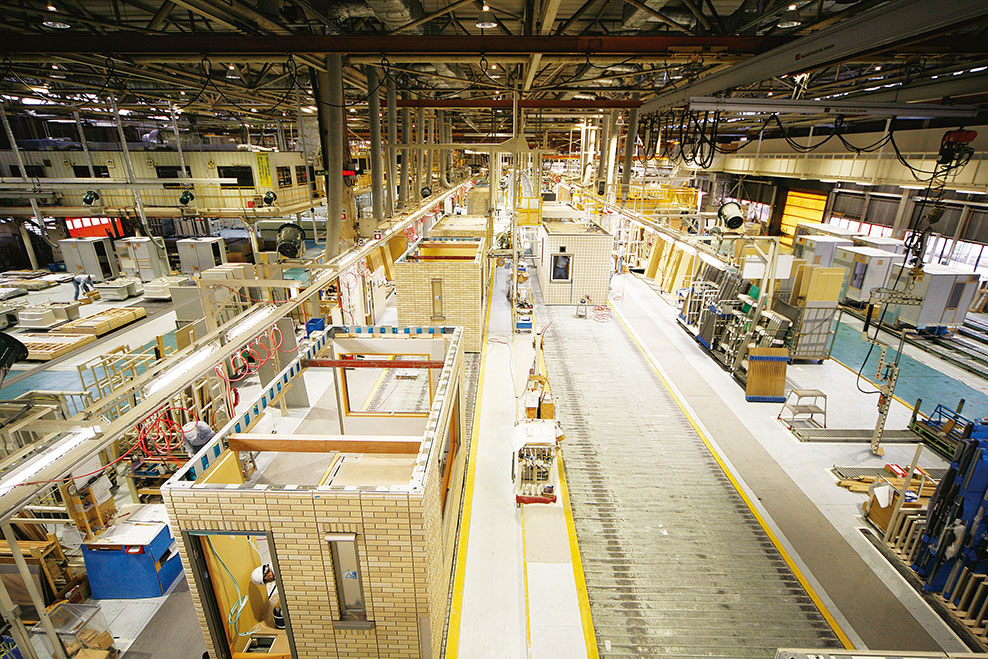
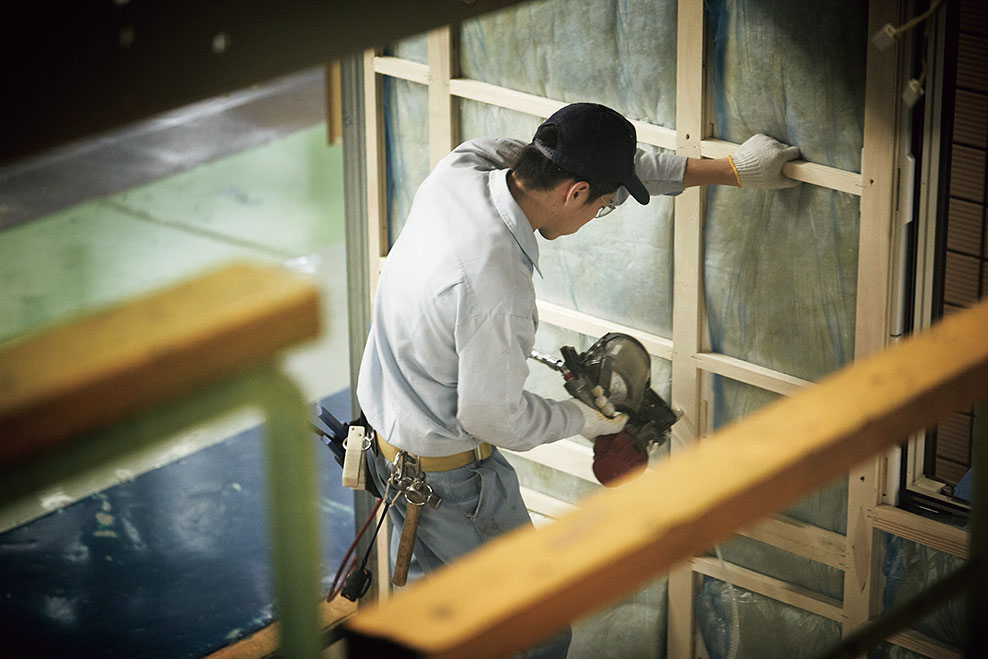
"The third point is 'how the construction is carried out.' At Sekisui Heim, the majority of house construction is done in the factory. Because it's not done on-site, we can use large machinery and perform construction with millimeter-level precision. The insulation material is properly filled in the factory in the correct form, and airtightness is ensured by sealing most of the gaps in the factory. This makes it possible to achieve the warmth designed for the house."
"Attaka Heim TR" transforms your current home into a "Warm Heim" home.
While Attaka Heim was previously only designed for new construction, in September 2023, the insulation renovation service "Attaka Heim TR" was launched. This service targets existing steel-frame houses built by Sekisui Heim and aims to achieve ZEH (Zero Energy House) level insulation performance.
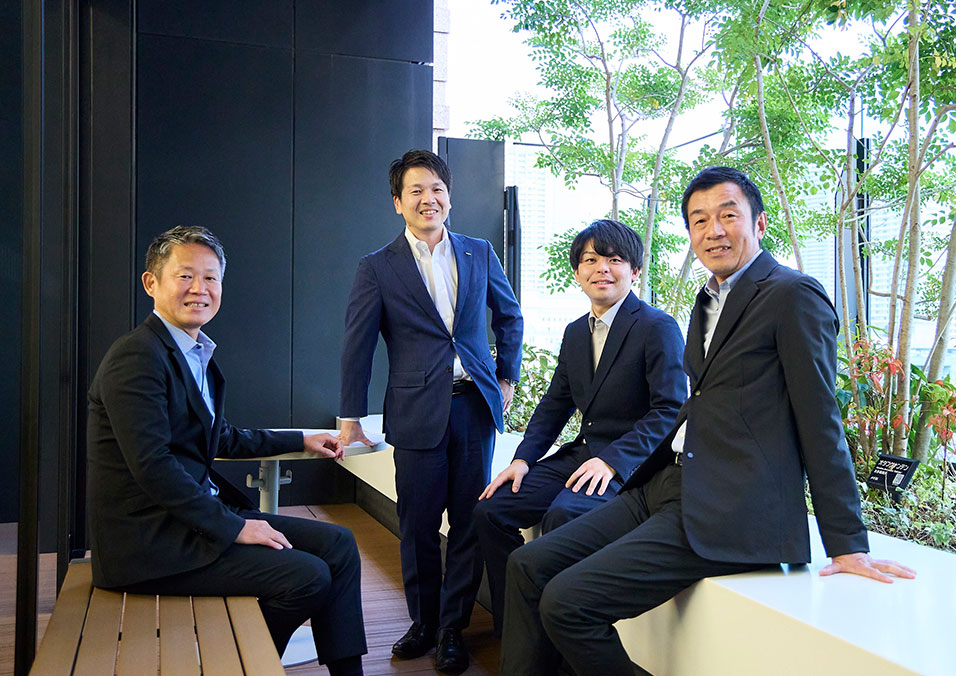
Shigeru Sakakibara of the Renovation Development Department, Stock Business Division, will explain. After working in product technology at a housing production company, Sakakibara has been involved in planning and developing renovation menus.
"The key feature of Attaka Heim TR is that you can renovate your home to ZEH-level insulation performance while living in it, without needing to move to a temporary residence *4. With Attaka Heim TR, you can expect improvements in temperature uniformity within your living space, as well as a reduction in cold feet in winter and difficulty getting up in the morning."
*4: If combined with renovation work other than Attaka Heim TR, temporary housing may be required.
The reduction in utility costs is also significant. Based on a model plan that assumes the construction of the entire house, it is estimated that the annual reduction in utility costs will be approximately 70,000 yen, and the reduction in CO2 emissions will be 1.3 tons per year. *5
*5: [Calculation conditions] Building: Sekisui Heim (steel frame) flat roof type model plan, floor area: approx. 126 m² (1st floor: approx. 68 m², 2nd floor: approx. 58 m²), insulation performance: UA value 1.31 before renovation, UA value 0.55 after renovation, weather data: Tokyo, electricity contract: Tokyo Electric Power Company "Metered Lighting B" July 2023 unit price (including fuel adjustment charge and renewable energy generation promotion surcharge), air conditioning conditions: heating 22℃, cooling 26℃ setting, operating hours: LDK, Japanese-style room, master bedroom (6-10am, 12-2pm, 4-10pm), two Western-style rooms (8pm-11pm). Utility costs are estimated values calculated based on the customer's estimated lifestyle. The amount is an estimate and may be lower depending on the electrical appliances used, lifestyle, site conditions, surrounding area, etc.
Attaka Heim TR offers three package plans: (1) the flagship "Whole House TR" which aims for ZEH-level insulation performance throughout the entire house, (2) "One Floor Whole House TR" which covers the entire first floor where the family spends a lot of time, and (3) "LDK Whole House TR" which specializes in the living room, dining room, and kitchen (LDK).
"Compared to newly built Attaka Heim homes, Attaka Heim TR requires improving the insulation performance of buildings that are 25 to 40 years old or older. Achieving ZEH-level insulation performance necessitates considering how much performance improvement is needed for each part of the house, and whether the construction can be carried out while the customer is living in the house. It's challenging, but that's precisely why it's a worthwhile challenge. We hope to upgrade the homes of our Sekisui Heim customers through this initiative."
They've already received many inquiries and are feeling positive about the response.
"Currently, we base our standards on insulation grade 5, but since grade 6 has become the standard for new constructions *3, we want to aim for grade 6 in renovations as well," Sakakibara says enthusiastically. "Sekisui Heim homes are characterized by their high durability and the fact that you can live in them for a long time. That's why I think insulation renovations for existing homes are important. In addition, since we are improving the performance of an existing building, it is easy to feel the difference between before and after. Some people are amazed that even though the building is the same as before, the comfort level is completely different."
*3: Standardization applies to all single-story and two-story detached house products (steel-frame Sekisui Heim and wooden Two-U Home) sold in general areas (energy-saving zones 5-7). Depending on the plan and some adopted features, it may not meet insulation grade 6.
Meanwhile, Shiomi, who has been involved in new construction, spoke about his future goals, saying, "What I want to aim for in my current position is to significantly improve the structural performance in numerical terms. It's not simply a matter of adding insulation to raise the score. Where should we focus our efforts to bring out performance while maintaining cost-effectiveness? To do that, we have to derive a solution from an infinite number of combinations."
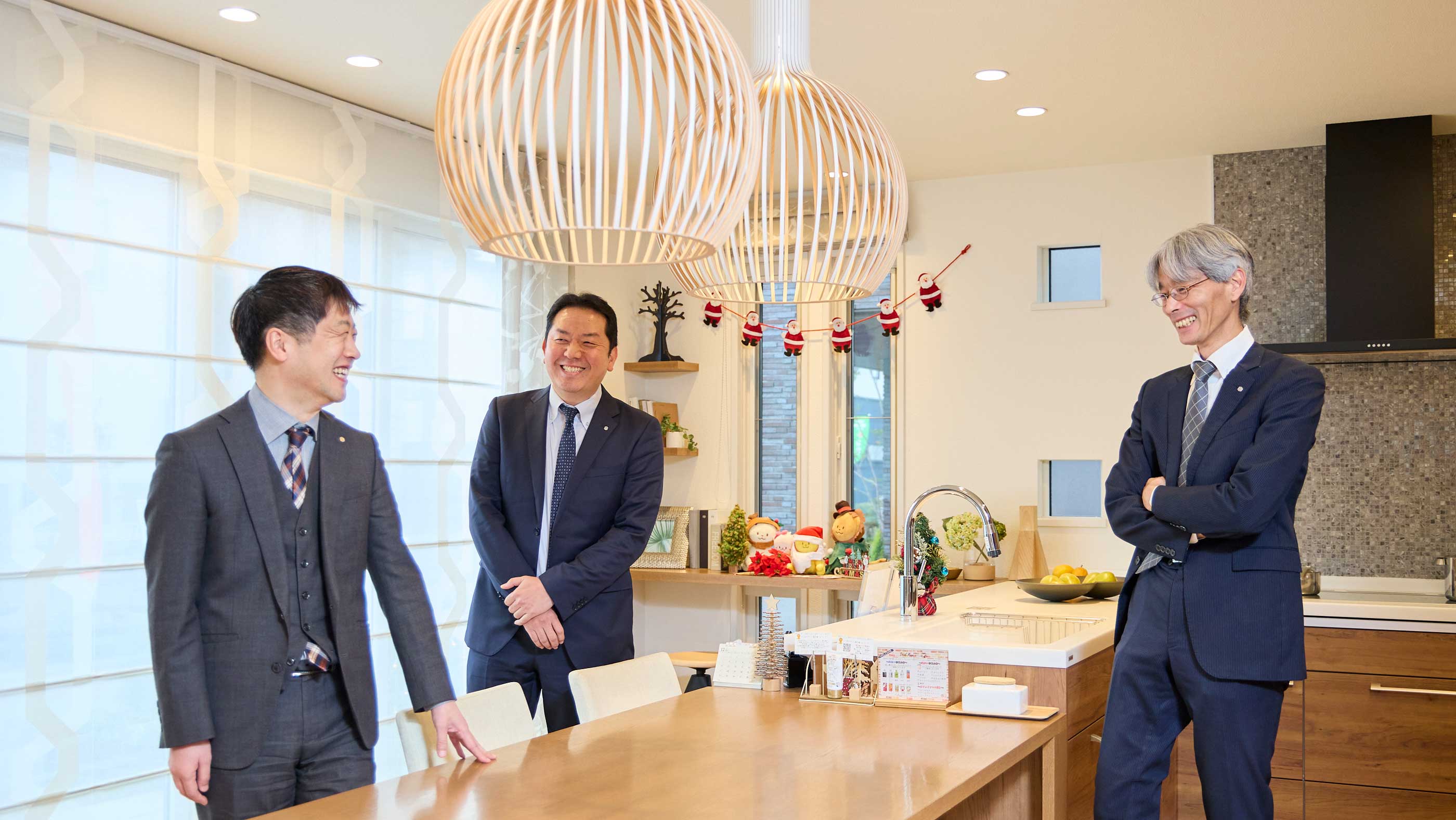
After listening to the two, Sagara summarized by saying, "I may not be in a position to say this, but the performance of Attaka Heim is wonderful. However, customers are not only looking for warmth. Social trends are changing every day, such as the recent surge in energy prices. In this context, we want to build homes that allow customers to feel warm while keeping their utility costs down, and that can always respond to the needs of our customers."
Users who have installed Attaka Heim have commented, "We can go barefoot even in winter," "The kitchen, which tends to get cold, is comfortable so we can enjoy cooking," and "The entire floor is not too hot in summer and not too cold in winter *6, so it's a suitable environment not only for ourselves but also for our pets." In fact, Sekisui Heim has held events in the past at its model homes where people can experience Attaka Heim in the early morning when no one is around. "We want people to experience the comfort at a model home first," says Sagara and others. Why not try Attaka Heim, which is now possible not only for new construction but also for renovations?
*6: Individual perceptions of temperature may vary.