Towards a "Green, Decarbonized Factory": Sekisui Medical Iwate Plant's Challenge to Conserve Biodiversity
公開日:
What thoughts and stories were behind its development?
How will that connect to the people and societies living on Earth?
"SEKISUI | Connect with" is a future-creating media platform that connects you with Sekisui Chemical.
- Certified as a "Nature Coexistence Site"
- Natural Resources and Technological Innovation: Initiatives for Sustainable Factory Operations
- Environmentally conscious factory initiatives and their evolution
- Towards a "Green, Decarbonized Factory": Enhancing Biodiversity and Taking Responsibility for the Future
The "30 by 30" target for 2030 is an international initiative aiming to preserve 30% of the Earth's land and sea as healthy ecosystems. Behind this goal is the urgent need to halt the accelerating loss of biodiversity and ensure healthy ecosystems for a sustainable future (achieving nature positivity). However, achieving conservation goals requires more than just protected areas such as national parks; the role of the OECM (Organisation for Environmental Conservation) is therefore crucial.
OECM refers to areas outside protected areas, such as rural woodlands and corporate forests, where local communities, companies, and organizations contribute to biodiversity conservation. This recognizes nature conservation efforts outside protected areas, thereby promoting their conservation. This approach brings various benefits, including not only biodiversity conservation but also improved livelihoods for local communities and adaptation to climate change.
Certified as a "Nature Coexistence Site"
The fact that Sekisui Medical's Iwate Factory, which belongs to SEKISUI CHEMICAL Group, has been certified as a 'Nature Symbiosis Site' by the Ministry of the Environment symbolizes the growing awareness of environmental conservation within the industrial sector.

A Nature-Friendly Site is an area certified by the government as "an area where biodiversity conservation is being achieved through private sector initiatives, etc." It refers to facilities and areas that actively protect the local natural environment and work to maintain and improve biodiversity while conducting business activities, and is a certification system that promotes the OECM initiative.
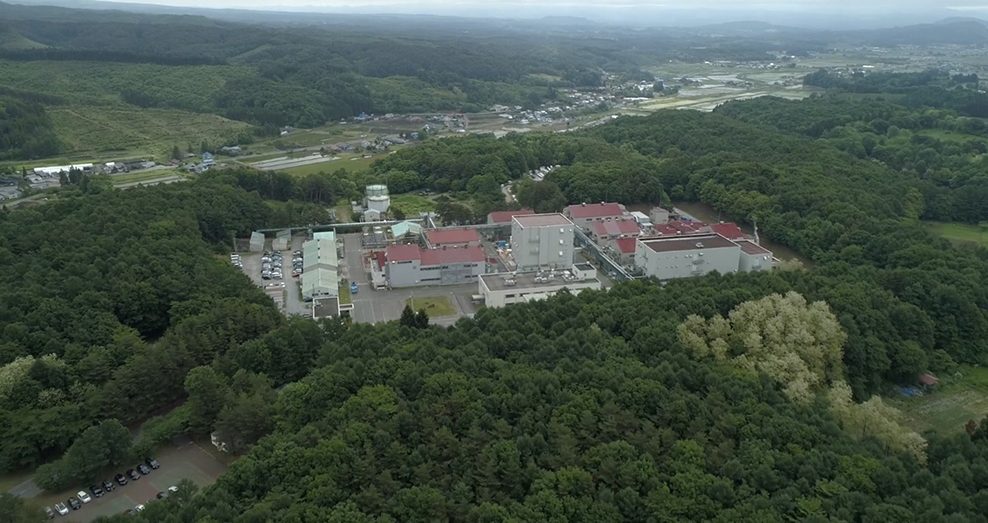
The Iwate Plant is located in an area adjacent to Towada-Hachimantai National Park, and the majority of its 450,000 square meter site has been preserved in its natural state. This area forms a unique ecosystem created by the mountains of the northern part of the Ou Mountains and the lowlands of the Nagakawa River basin in the Kitakami River system, and 951 species of plants and animals have been identified within the plant grounds.
In particular, the presence of 22 rare species, including the Japanese serow (a special natural monument) and the Japanese dormouse (a natural monument), highlights the value of the Iwate Plant as a site for coexisting with nature. This certification is an inspiring example of how companies can contribute to biodiversity conservation and holds significant meaning for the entire industrial sector.
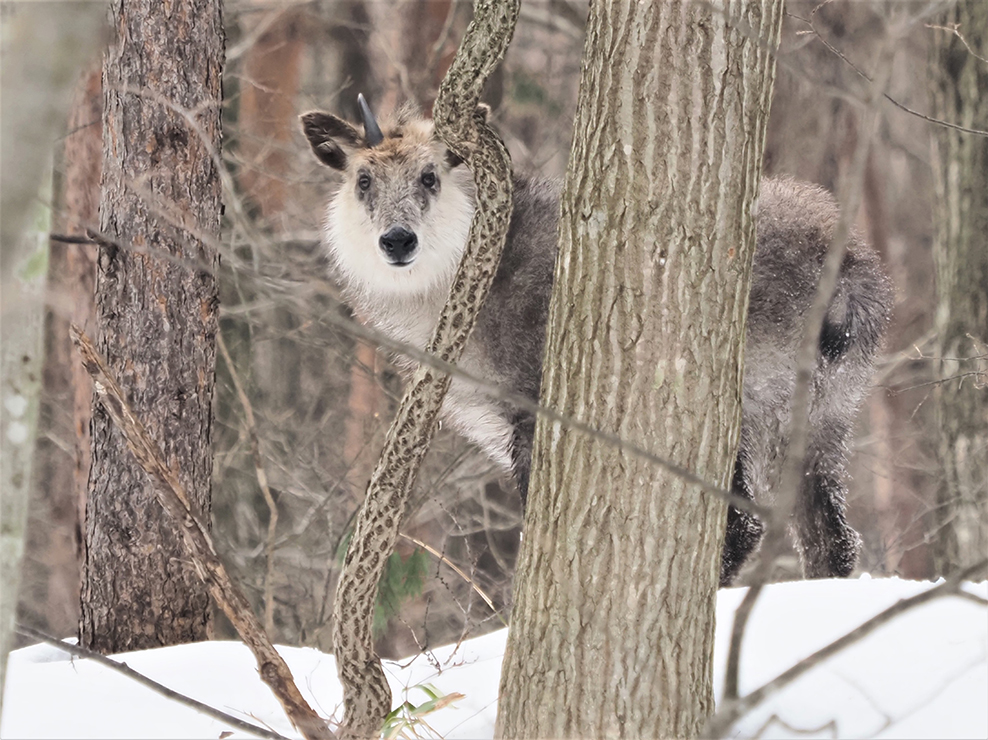
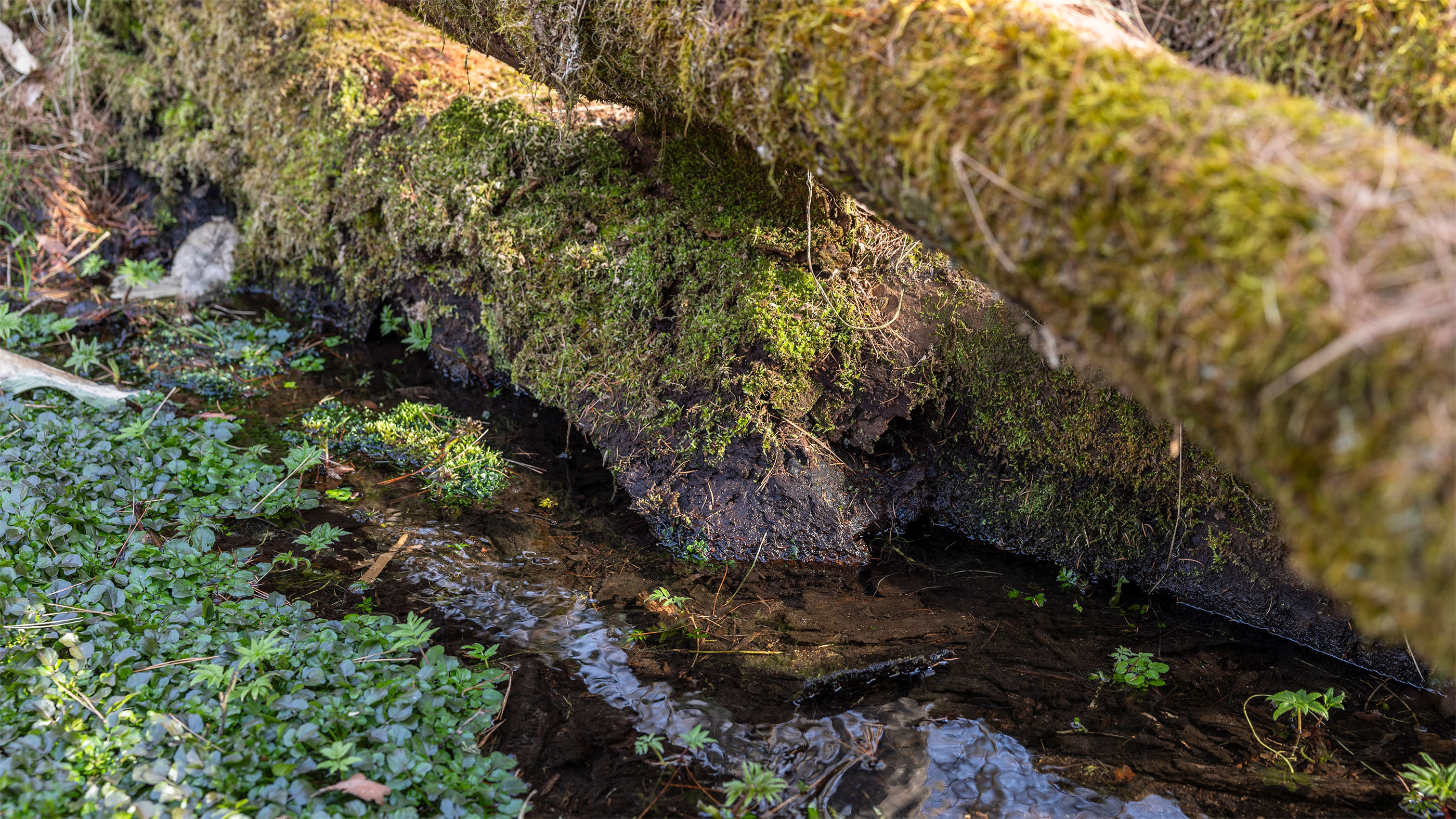
The Iwate factory was originally conceived as a "green park factory" that takes nature into consideration. When the site was acquired for the factory in 1973, cultivated fields and other farmlands were scattered throughout the wooded area, dividing the forest. However, over 50 years, a natural forest has formed surrounding the factory buildings, creating a place where animals can roam freely. In addition, several spring-fed ponds on the site have become biotopes used as watering holes by wildlife such as amphibians, aquatic insects, and dragonfly larvae.
Natural Resources and Technological Innovation: Initiatives for Sustainable Factory Operations
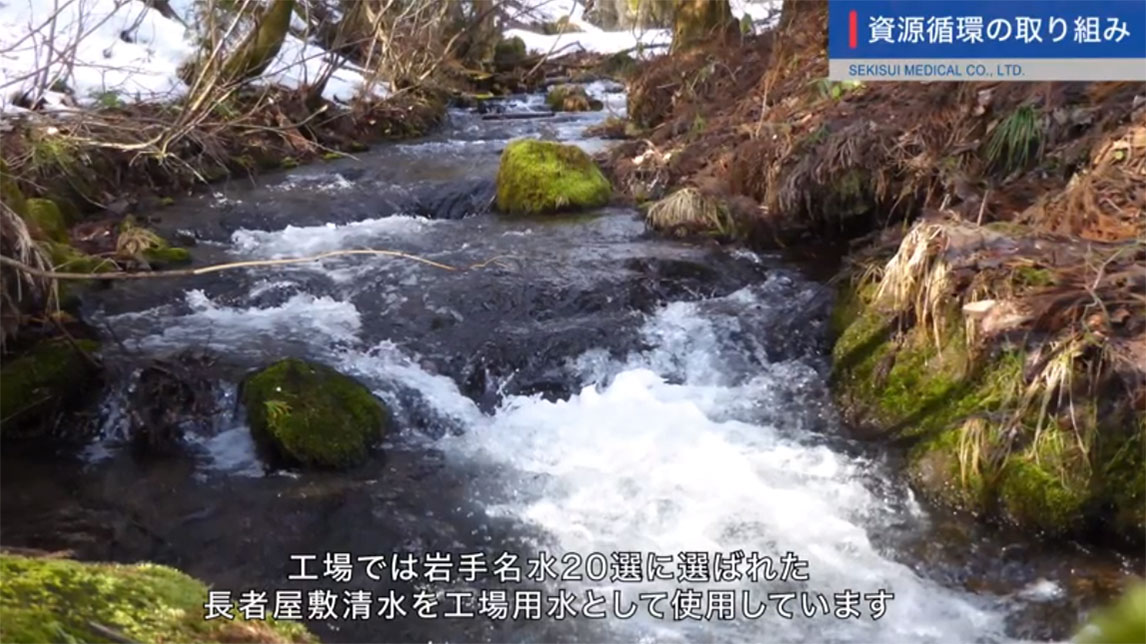
Environmental considerations at the Iwate factory have also led to technological innovations, such as wastewater treatment systems and the use of renewable energy. For industrial water, the factory uses Chojayashiki Shimizu, which has been selected as one of Iwate's 20 best waters, supplying 3,881,000 cubic meters of water annually.
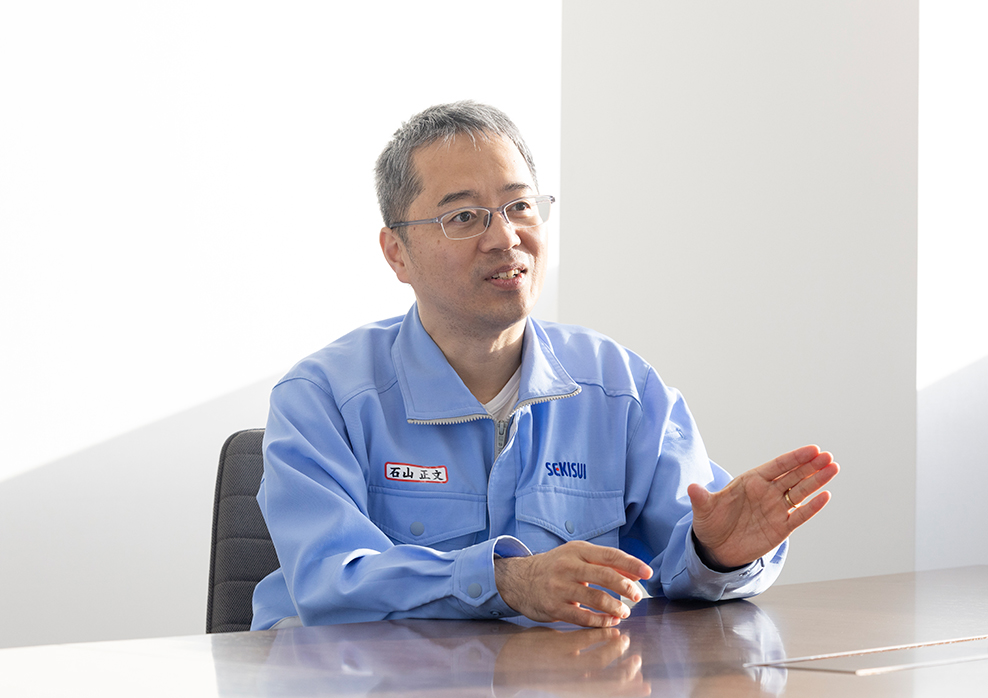
"At our Iwate factory, we manufacture pharmaceutical raw materials. We use a large amount of water when making medicines. The cleaner the water, the better. This is because we use water not only as cooling water during manufacturing but also to clean the equipment. Dirty water can damage the equipment."
That's according to General Manager Masafumi Ishiyama.
The Iwate Plant's concept of a "green park factory" aims not just to construct a factory, but to conduct sustainable production activities while harmonizing with the surrounding natural environment.
Since 1991, the factory's wastewater has undergone a two-stage biological treatment process that combines conventional aerobic treatment (activated sludge treatment) with anaerobic treatment.
"We ferment the wastewater we use to produce methane gas, which we then use as fuel. This has allowed us to significantly reduce our conventional fuel consumption," (Ishiyama).
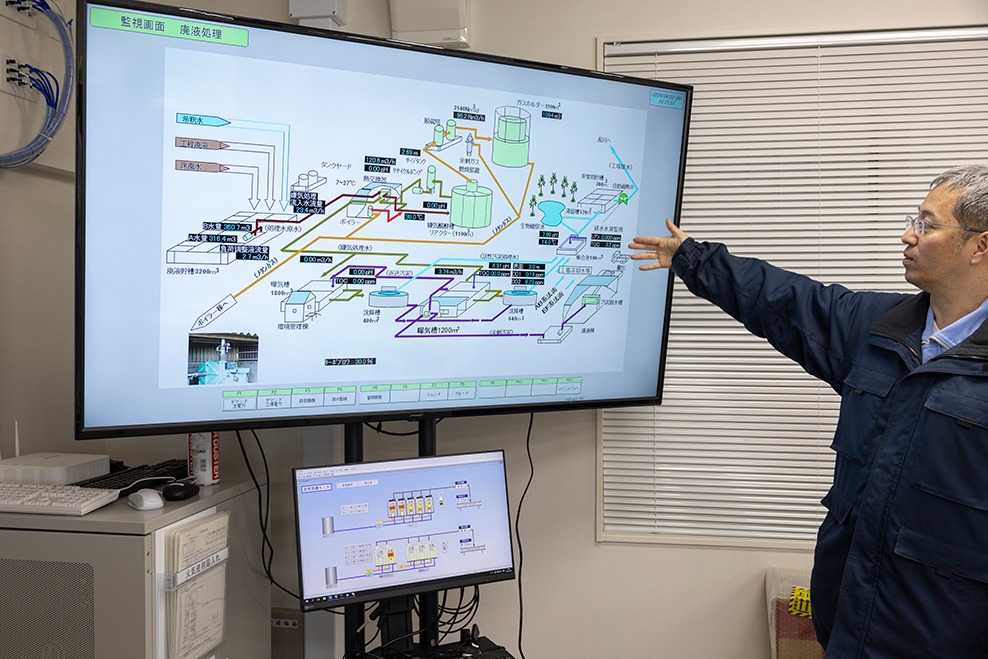
I received an explanation of the process, including a diagram. According to the explanation, when discharging water, they have set stricter self-regulations than the legal regulations and the agreed-upon values of Hachimantai City, and they constantly monitor key management items such as pH and cyanide concentration. The treated water is also visually observed in a biological observation pond (approximately 400 cubic meters) where rainbow trout and carp live.
"Regarding biochemical oxygen demand (BOD), an important indicator for confirming the safety of tap water, we have set a voluntary limit of 35 ppm or less, compared to the agreed-upon value of 55 ppm, thus imposing strict regulations on ourselves," (Ishiyama) emphasizing the reduction of the burden on the natural environment.
After confirming that there are no problems with the drainage, the water is released into the Nagakawa River in the Kitakami River system. In addition to regulations, a double emergency storage tank is also in place to prevent contaminated water from being discharged into the outside world.
Such environmentally conscious technological innovations contribute to reducing CO2 emissions and help combat global warming. These initiatives can serve as a model for companies to balance environmental protection with economic activity.
Environmentally conscious factory initiatives and their evolution
At the Iwate Plant, employees are currently actively carrying out maintenance work in the area. Leading the charge is Kazutaka Kawaguchi, section chief of the Safety and Environmental Section of the Management Department at the Iwate Plant.
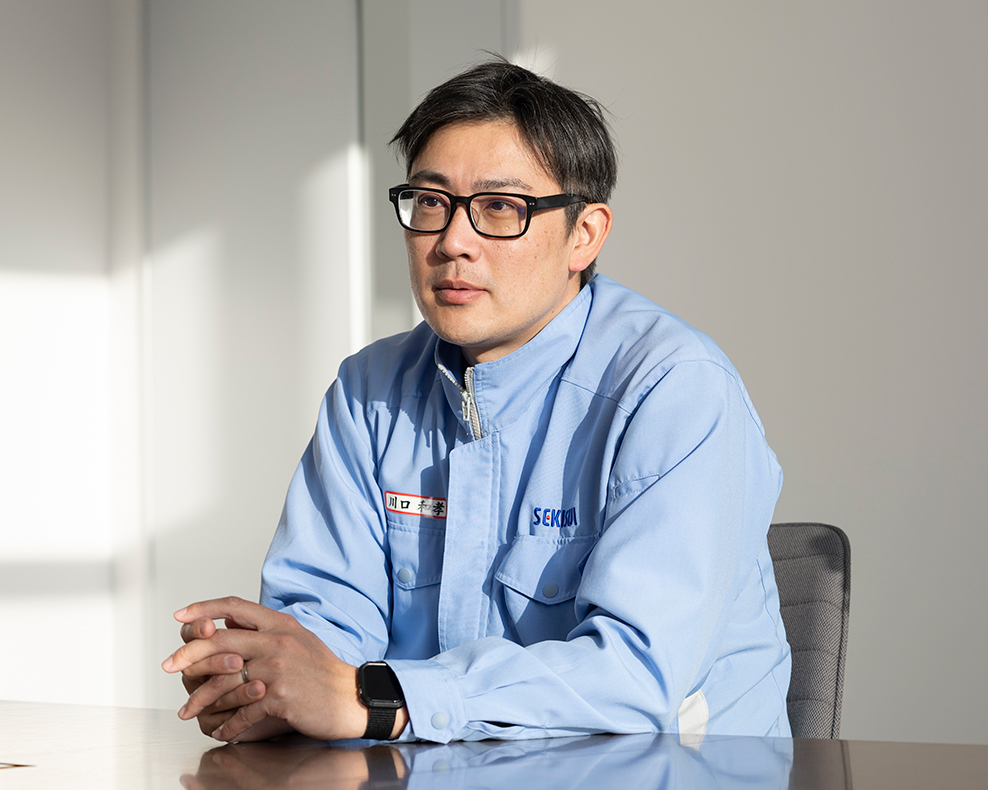
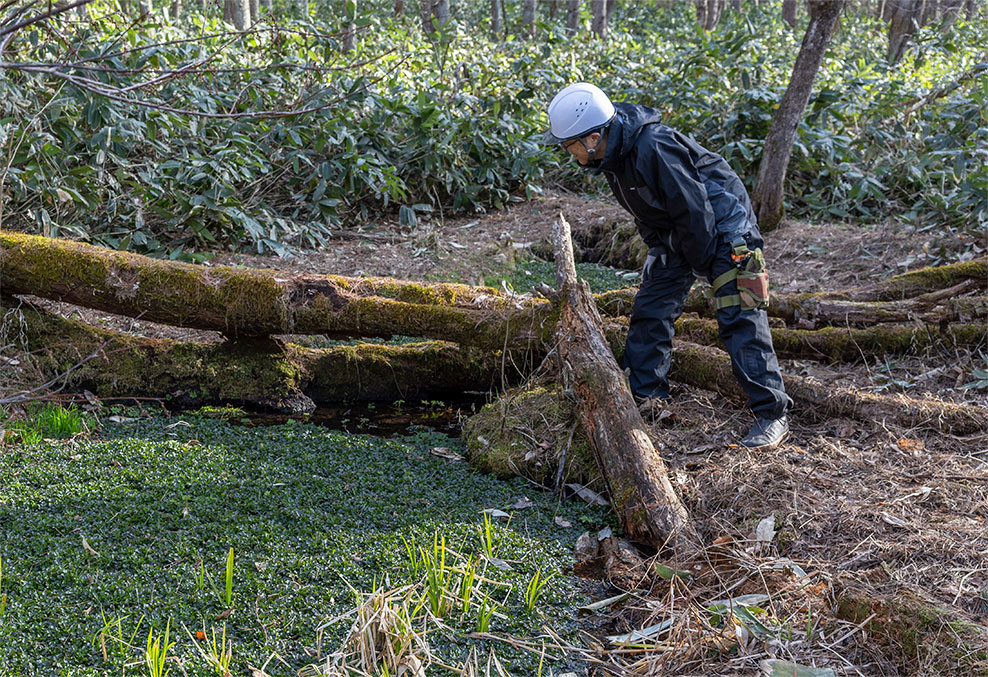
"We are transplanting and growing immature broadleaf trees in the shaded areas of the factory's woodland, planting them in the places where the artificially planted coniferous trees have died. We have also started activities to collect acorns and walnuts and germinate them. These are all planned as part of the factory's environmental management program."
It's not just plants that are maintained in the factory grounds alongside the employees.
Keiichi Matsuzawa of the Safety and Environmental Department, who has worked at the Iwate factory for many years and is currently engaged in environmental work, explains.
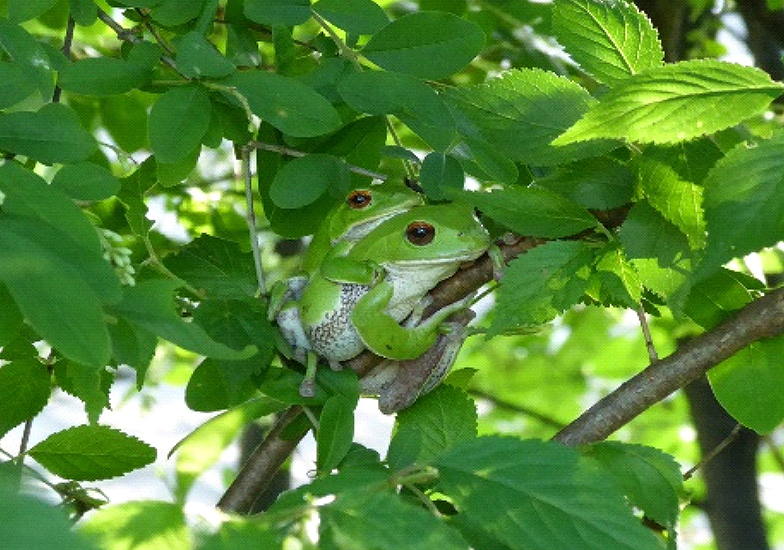
"Japanese tree frogs have started laying their eggs in our emergency storage tank. However, in the event of an emergency, we need to run a pump to draw water from there. So, we decided to collect the eggs laid in the storage tank and transplant them into a 300L plastic storage tank filled with rainwater. The eggs hatch into frogs there and safely return to the mountains. Now we've increased the number of storage tanks, and the frogs are even laying their eggs directly in them."
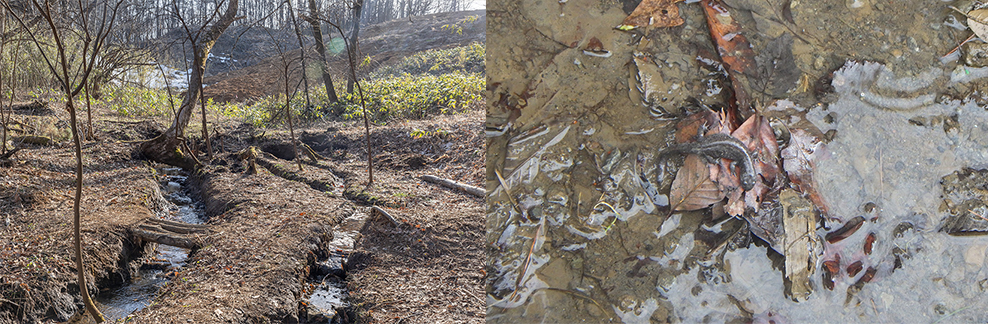
In addition to transplanting the plants, they also created a biotope to make it easier for the organisms to live. The impetus for this was the spawning of salamanders. Matsuzawa continues:
"We discovered that the Tohoku salamander, a near-threatened species on the Ministry of the Environment's Red List, was laying a large number of eggs in the rainwater drainage ditch at the corner of the factory. However, most of these precious eggs failed to hatch. This is thought to be due to a lack of oxygen caused by insufficient water inflow. So, in 2022, we cleared a bamboo thicket in the buffer zone between the factory building and the surrounding woodland and created a small biotope. We simply dug three ponds about 1 meter in diameter, but the Tohoku salamanders came and laid eggs, and grew into healthy adults that successfully left the nest."
The entire Safety and Environmental Division is working together to move the animals to their proper locations and ensure their survival. These efforts are also connected to the larger theme of reducing CO2 emissions.
"The Iwate plant uses a lot of energy, so we've been working on reduction efforts since around 2012," says Ishiyama, mentioned earlier. "We switched from heavy oil to liquefied natural gas (LNG) to reduce CO2 emissions, and in 2021 we gradually switched our electricity to renewable energy. This year (2023), 85% of our electricity comes from renewable energy sources."
What will 2024 bring, and what will the future hold?
"The energy used at the Iwate plant is expected to have zero CO2 emissions from electricity generation by 2024. However, what we are looking at is energy production beyond that. The next stage will be initiatives to generate our own energy, rather than purchasing it from external sources, through solar power generation and other means," Ishiyama told us about the future outlook. The Iwate plant is truly evolving from a "green park factory" to a "green decarbonized factory."
Towards a "Green, Decarbonized Factory": Enhancing Biodiversity and Taking Responsibility for the Future
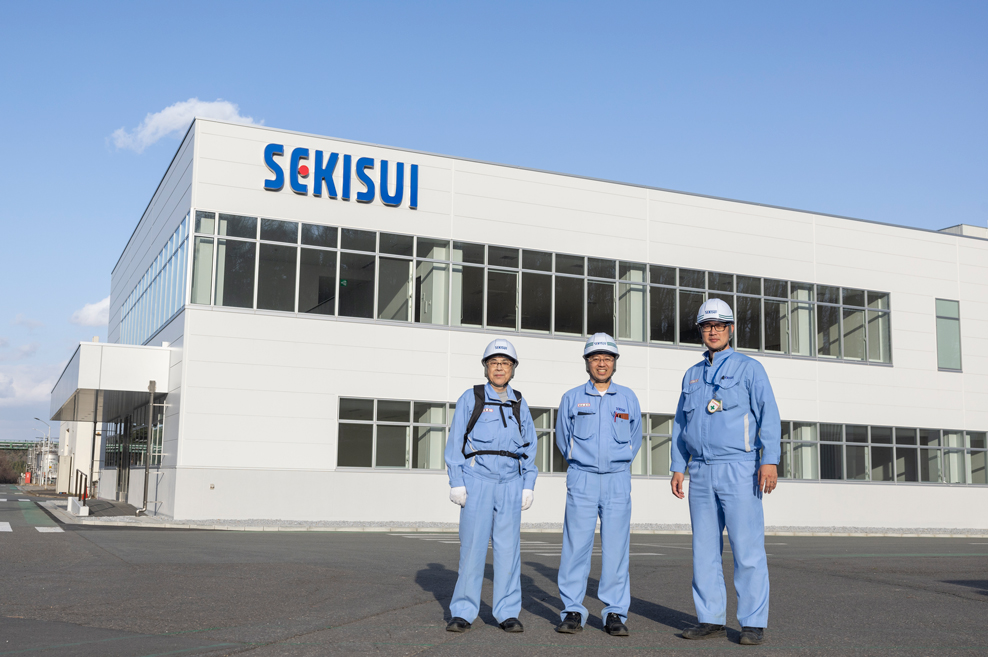
At the Iwate Factory, we have continued "nature conservation without intervention," but in recent years have focused on planting deciduous broadleaf trees and promoting afforestation that emphasizes the native vegetation of the region. This is based on the intention to gradually reduce artificial plantations and restore the region's unique ecosystem, thereby maximizing the inherent potential of living organisms. In addition to the "Green Park Factory" from a human perspective, as Ishiyama mentioned, they aim to become a "green decarbonization factory" that contributes to decarbonization for society. Not limited to the Iwate Factory, SEKISUI CHEMICAL Group aims to achieve "Earth with Maintained Biodiversity" by 2050, and through its products and business activities, it is advancing various natural and social environmental issues. By solving global issues with the natural and social capital used in corporate activities, the company aims to contribute over 100% returns. Naturally, decarbonization efforts are also essential to fulfill this mission. The Iwate Factory can be said to embody this group's policy. Efforts aiming to become a "Green Decarbonized Factory" aim to provide an ideal environment not only for humans but also for local living organisms. Such long-term perspectives reflect a deep sense of responsibility toward future generations and a commitment to a sustainable society. Sekisui Medical's Iwate Factory's efforts demonstrate that harmony between industrial activities and nature conservation is possible, and it is expected to have a significant impact on other companies and local communities as well.
Creating the future in harmony with nature: Sekisui Medical Iwate Factory