
グループの歩み 1960年代
The path to development
A movement to clean up towns – the cleaning revolution (the introduction of the poly pail)
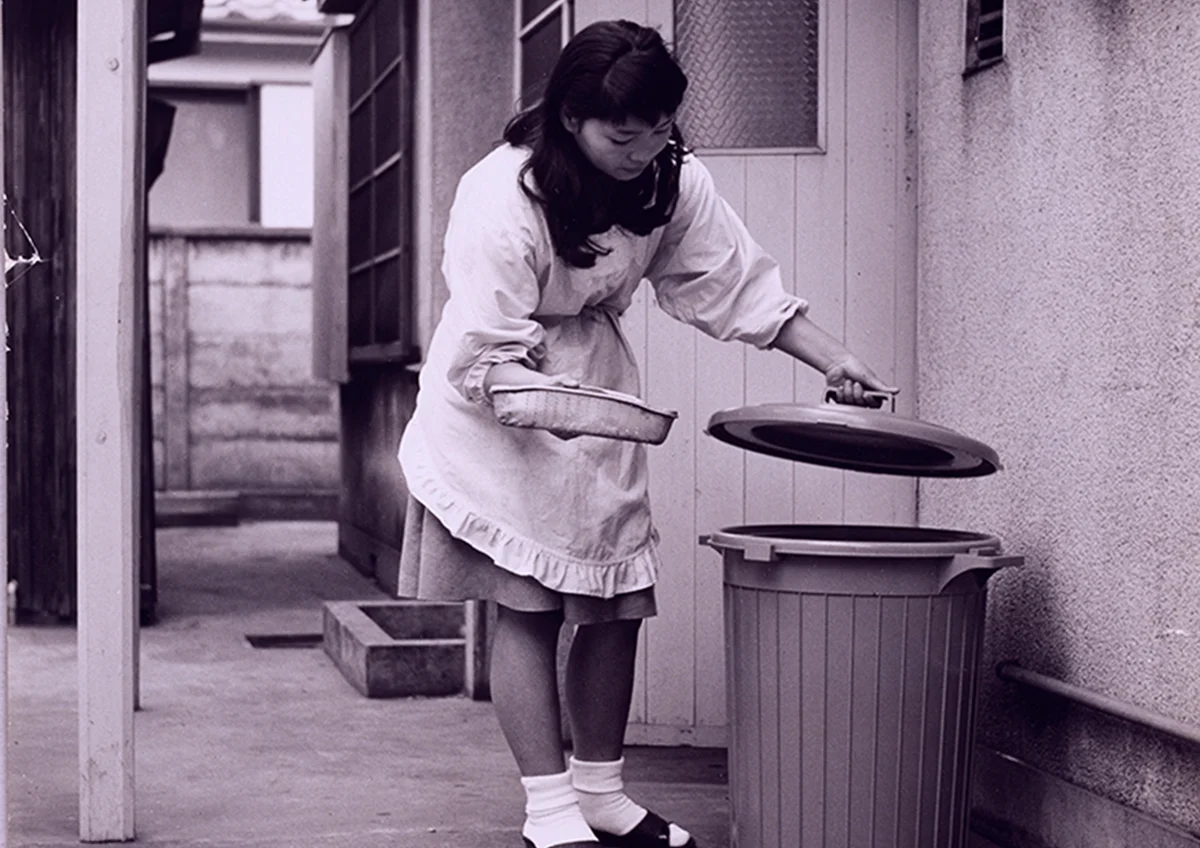
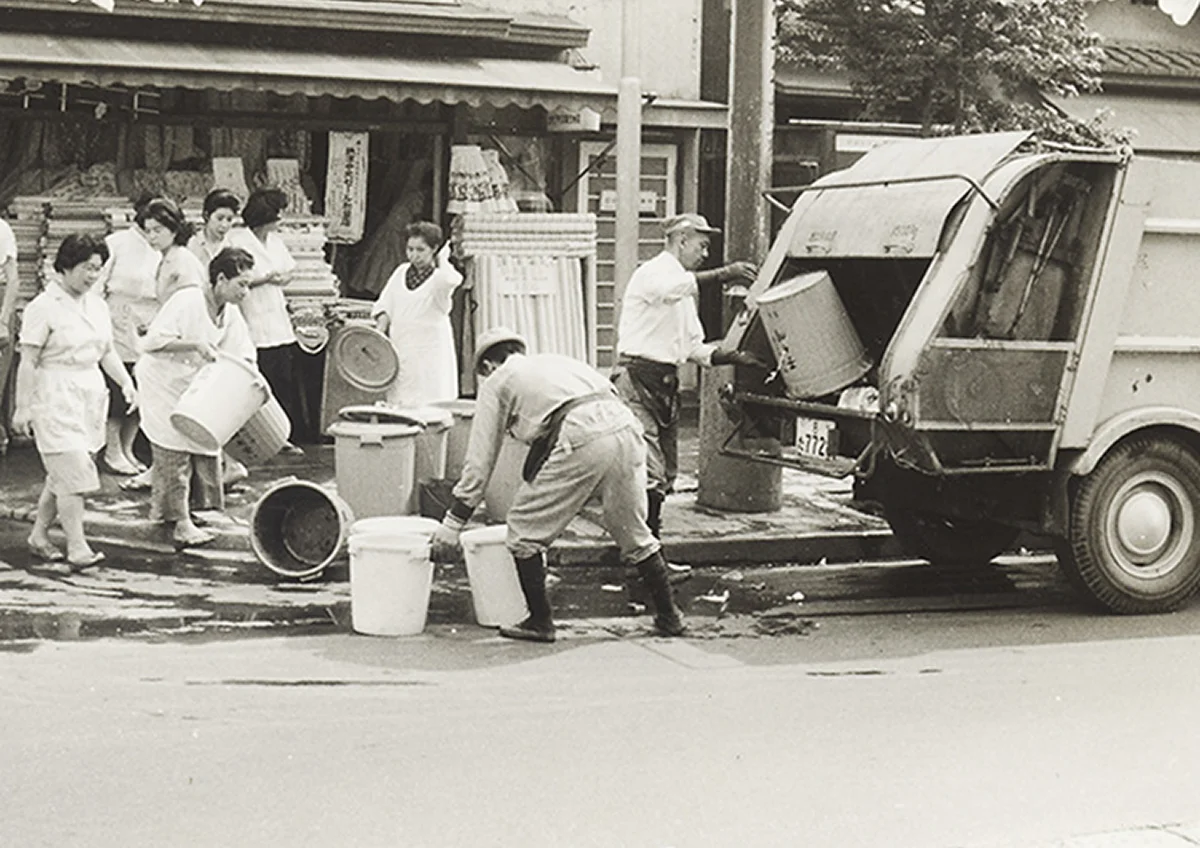
Sekisui Chemical's "Polypail," a plastic sorting and collection container that began full-scale sales in 1961, became a groundbreaking product in solving Japan's waste disposal problem. At the time, Tokyo, where waste disposal had become a social issue due to rapid urbanization, was considering the New York City model of waste collection, in which each household would have a portable container for scheduled collection. Sekisui Chemical proposed the "Polypail," a prototype polyethylene container with a lid, as an alternative to conventional wooden and concrete trash cans. A new waste disposal system was adopted in which each household would put their waste in Polypails and leave them outside, and road packers would collect the waste. In addition, as part of its 15th anniversary campaign in 1962, Sekisui Chemical launched the "Clean Up the City Movement," conducting consumer awareness campaigns and proposals regarding waste problems. Thanks to the effectiveness of this activity, which was linked to public interest, the system spread explosively in Tokyo, and similar waste disposal systems became widespread throughout Japan. These activities are a direct implementation of the company's motto, "Contributing to society through business activities," and can be said to have strongly impressed upon Sekisui Chemical's corporate image and become the origin of its current CSR activities.
The first Japanese manufacturing company to enter the United States
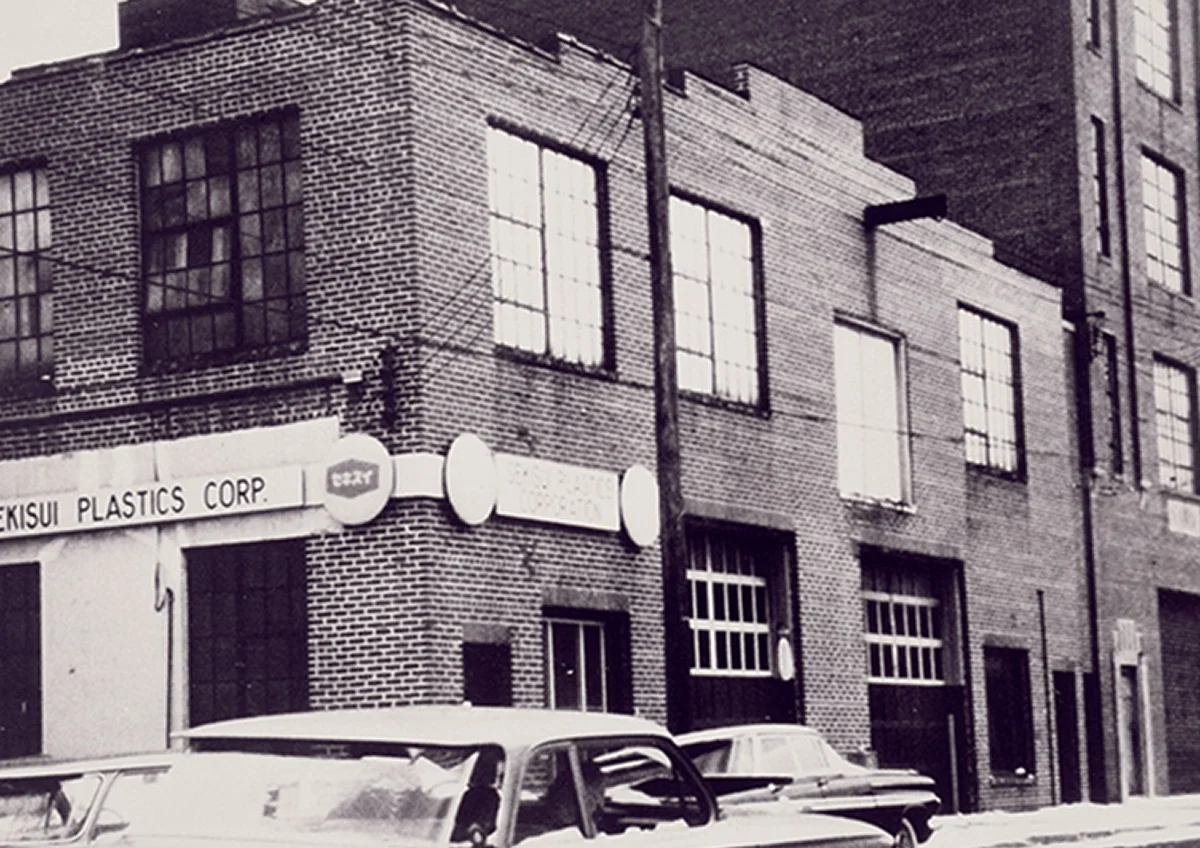
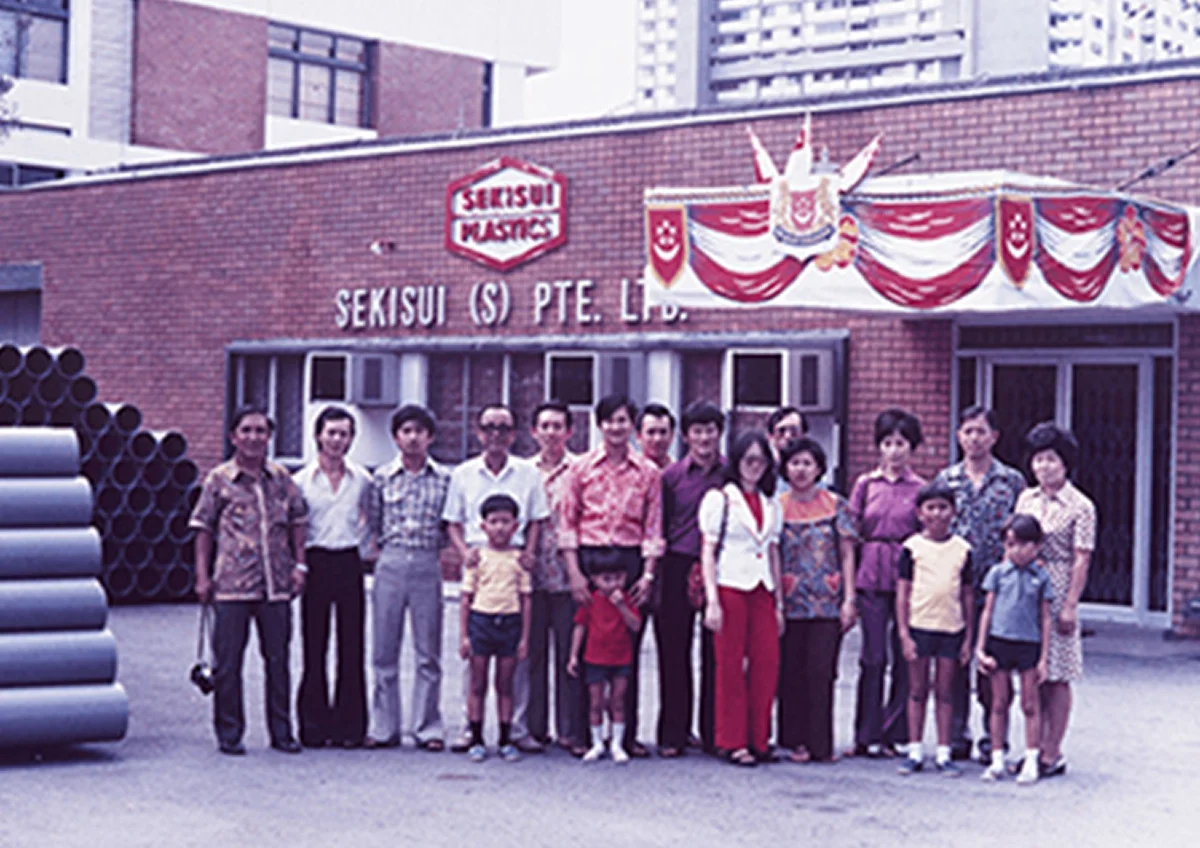
In 1963, Sekisui Chemical established SEKISUI PLASTICS CORPORATION in Pennsylvania, USA, to manufacture expanded polystyrene paper. This marked Sekisui Chemical's first overseas expansion through local production, and also the first time a Japanese manufacturer had established a presence in the United States. In the same year, SEKISUI MALAYSIA CO., LTD. was established in Singapore to manufacture water pipes for tin mines and water supply systems. From then until the mid-1970s, Sekisui Chemical actively pursued overseas expansion.
Sekisui Chemical's flagship global products: "Softlon" and "Interlayer Film"
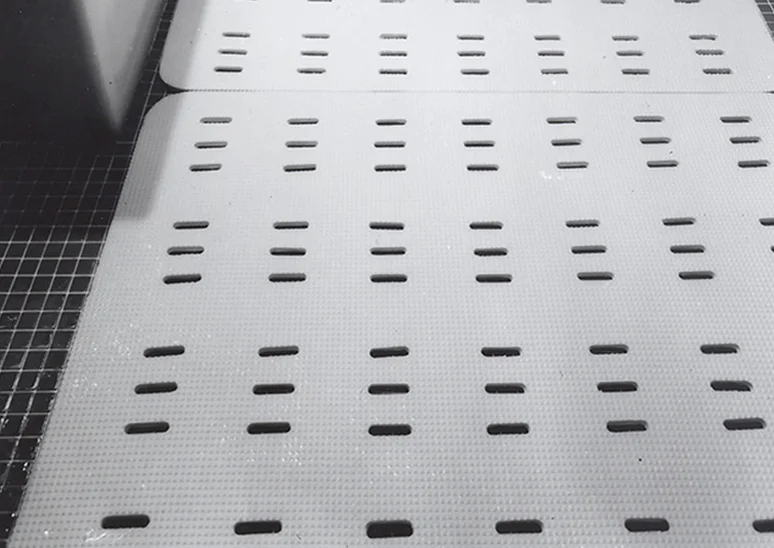
Softlon, a cross-linked foamed polyolefin, was commercialized in 1968. Thanks to its uniquely developed, groundbreaking foaming technology, Softlon possesses excellent heat insulation and shock absorption properties. It has been used in a wide range of fields, from household goods such as bathroom mats to automotive interior materials, and has grown into a flagship product for Sekisui Chemical.
Furthermore, with the establishment of the Shiga Minakuchi Plant in 1960, the production of "Eslec Film," an interlayer for laminated glass, began. From around 1975, in response to the growing demand accompanying the increase in the production volume of export automobiles, efforts were made to improve quality and develop unique production technologies. In 1987, 27 years after the start of production, the installation of safety glass was legalized in Japan, and demand surged even further. "Eslec Film," which also has excellent heat insulation and sound insulation properties, saw expanding demand for use in architecture, and its applications evolved with the times.
Currently, both Softlon and Esrec Film are leading global products representing Sekisui Chemical, holding high market shares worldwide.


| March 1960 | Prototype of "Sekisui House Type A" completed, housing business division established. |
|---|---|
| August 1960 | Shiga Ritto Plant Opens, Commencement of Manufacturing of PVC Pipes and PVC Building Materials |
| August 1960 | Spun off the House Division and established Sekisui House Sangyo Co., Ltd. (now Sekisui House, Ltd.) |
| November 1960 | Shiga Minakuchi Plant Opens, Begins Production of Polyvinyl Butyral and Interlayer Films |
| May 1961 | Central Research Institute established in Minase, Osaka. |
| June 1961 | Manufacturing of plastic waste containers, "Polypails," begins at the Nara factory. |
| March 1962 | As part of its 15th-anniversary campaign, the company launched a "Clean Up Town Movement," and the cleaning revolution using "Polypail" is spreading nationwide. |
| July 1962 | Musashi Plant established, manufacturing of plastic tape and polyvinyl chloride tape begins. |
| January 1963 | Manufacturing of the first domestically produced FRP press-molded bathtub, "Sekisui Bath," has begun at the Nara factory. |
| April 1963 | SEKISUI PLASTICS CORPORATION was established in Pennsylvania, USA, to manufacture expanded polystyrene paper (the first Japanese manufacturing company to expand into the US market). |
| January 1964 | Tokuyama Sekisui Kogyo Co., Ltd. was established and began manufacturing polyvinyl chloride resin. |
| 1965年 | This was the first time since its founding that the company experienced a decline in revenue, a net loss, and no dividend payments. In 1967, it implemented a 50% capital reduction. |
| 1967年 | The "Sekisui Ladybug Festival" was held in various locations, and the Sekisui brand became established as a provider of high-quality household plastic products. |
| March 1968 | The "Softlon" expanded polyolefin business was launched, and the bathroom mats were very popular at the time. |