
グループの歩み 1950年代
As a pioneer in plastic products
Sekisui products are becoming widespread in Japanese life.
During the post-war reconstruction period and the high-growth era, as Japan aimed for a more affluent lifestyle, the uses of plastic products rapidly expanded.
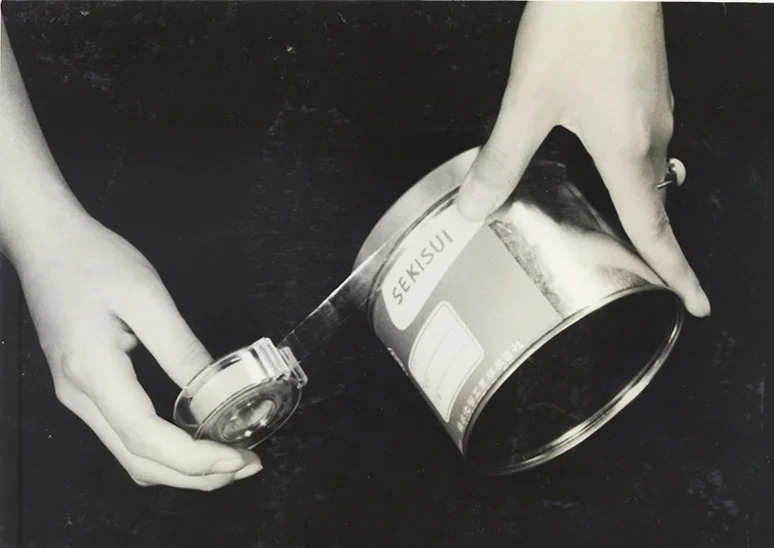
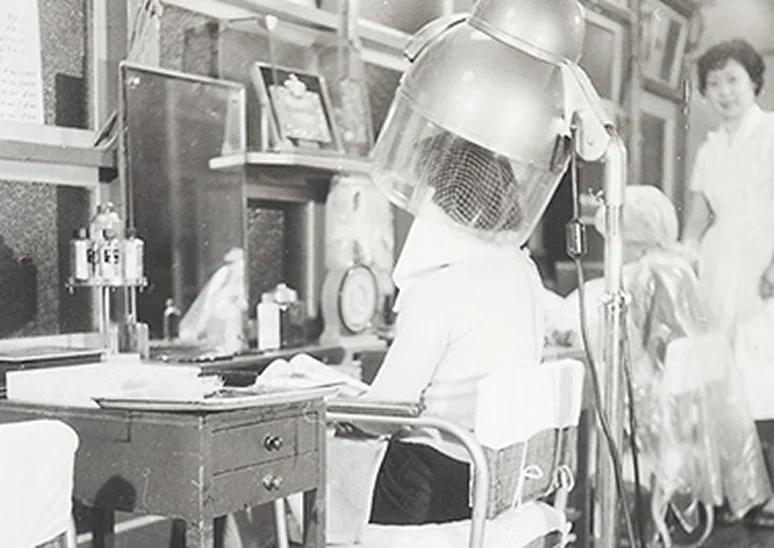
Sekisui Chemical opened its second factory, the Osaka Plant, in 1948. In 1950, it began manufacturing "cellophane tape," one of its longest-running products. In an era of material shortages, tape that could easily repair broken or torn items was highly valued. After its launch, demand steadily increased, and it became used as an envelope seal and moisture-proof tape for canned goods, as well as a staple item in homes and offices.
In 1953, we also opened the Amagasaki Plant and began manufacturing polyethylene film. The water resistance, chemical resistance, and electrical insulation properties of polyethylene film make it ideal for packaging materials, and it has gained significant demand in various fields, including food, clothing, and machine parts.
In 1955, polyethylene buckets were first sold in the United States, and two years later, Sekisui Chemical's "Poly Bucket" became a product that strongly introduced plastic as a material to Japanese households. Buckets had traditionally been made of tin, but the lightness of the material, bright colors, and ease of use completely changed the image of household goods, and it was especially popular with housewives.

The birth of Eslon pipe
The company's founding business, plastic injection molding, expanded into producing large-scale molded products by introducing large-scale molding machines. In 1951, it received the Director-General's Award from the Industrial Technology Agency for its "unbreakable telephone" made of thermoplastic material. This was achieved using Japan's first 12-ounce injection molding machine and marked the beginning of the large-scale expansion of its injection molding business.
In 1952, full-scale production of rigid polyvinyl chloride pipes, "Eslon Pipe," began at the newly established Kyoto factory. In 1954, it received designation approval from the Tokyo Metropolitan Waterworks Bureau, and in 1955, the Tokyo factory successfully developed injection molding for PVC pipe fittings. The development of these fittings dramatically improved ease of installation, and Eslon Pipe rapidly gained popularity. Since then, it has grown into a highly versatile pipework material covering almost all fields, from water supply and drainage to construction, civil engineering, power and telecommunications, and plant engineering, and it continues to be a flagship product of Sekisui Chemical to this day.
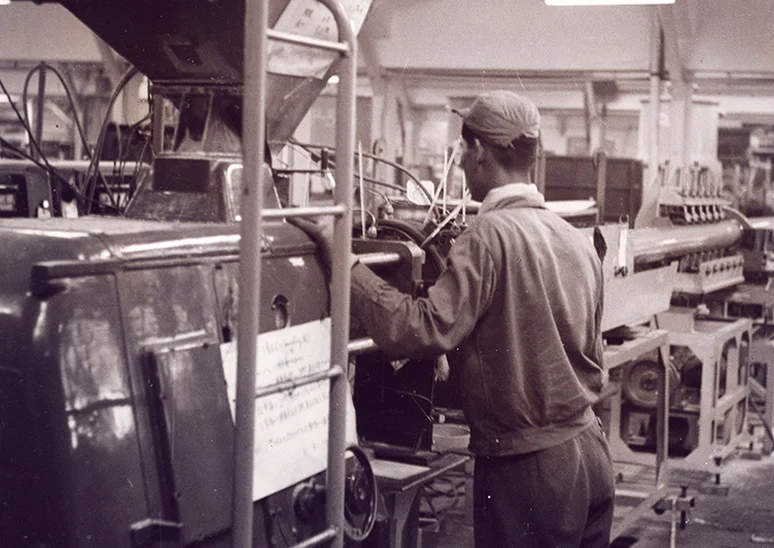
When it was first established, production was 500 kg per month, but five years later it grew into a flagship product with a monthly production exceeding 1,000 tons.
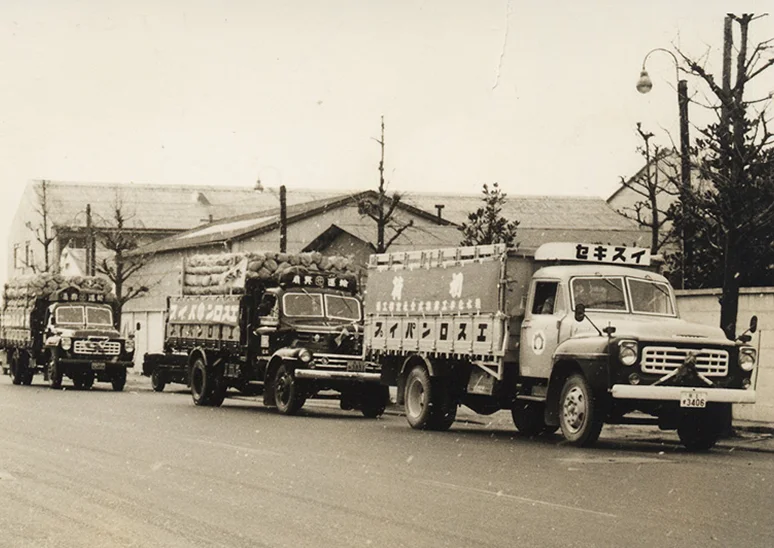
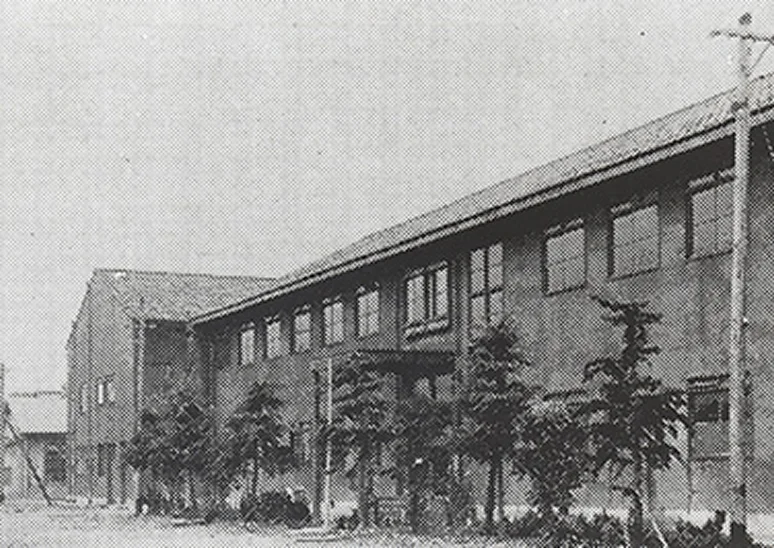
In March 1955, the Kyoto factory was designated as a JIS standard-marked factory.
Strengthening the production base – factory construction boom
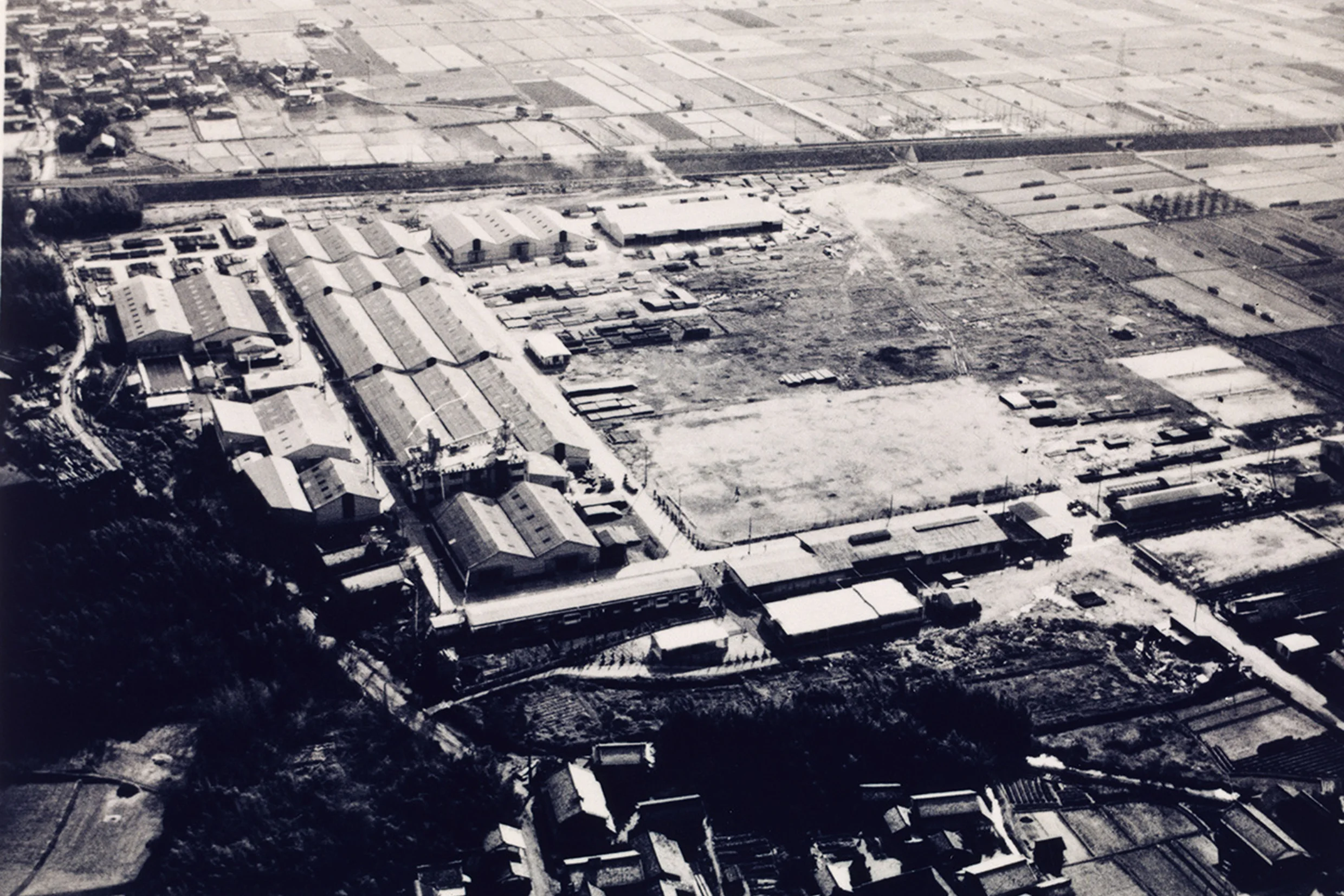
Sekisui Chemical opened the Amagasaki Plant in 1953 and the Tokyo Plant the same year, securing production bases in the eastern Japan region. In 1956, it opened its second Osaka Asahi Plant in Osaka, and began developing Japan's first plastic rain product, 'Esron Ame Toi.' Then, in 1957, a new factory was established in Nara. The new Nara Factory, which relocated and expanded the molding equipment from the previous Nara Plant, became the largest plastic molding plant in Toyo and one of the world's leading plastic molding factories.
To further respond to expanding demand driven by economic growth, the Shiga Ritto Plant and Shiga Minakuchi Plant were opened in 1960. The Shiga Ritto Plant became the main factory in Urban Infrastructure and Environmental Products (UIEP) Company, and the Shiga Minakuchi Plant developed into the Japanese production base for the main product of High Performance Plastics (HPP) Company, laminated glass interlayers. Then, in 1962, the Musashi Plant was established as a Kanto production base following the Tokyo Factory. To meet the growing demand for packaging materials in the Tokyo metropolitan area, the company established a production system for tape and film. In 1970, Sekisui Chemical steadily expanded its base around the start of Japan's rapid economic growth, including the Sakai Plant, a state-of-the-art plasticizer factory.
Alongside expanding the production base, in 1961 we opened a central research institute in Minase (Osaka Prefecture), where we have been engaged in research and technological innovation to develop even more outstanding new products.
| April 1950 | We exhibited a prototype of cellophane tape at the "Plastics Exhibition" held at the Hankyu Department Store in Osaka. |
|---|---|
| August 1950 | The successful development of a "breakable telephone" using thermoplastic material (awarded the Director-General of the Industrial Science and Technology Agency Prize), using Japan's first 12-ounce injection molding machine, marked the start of a large-scale injection molding business. |
| August 1952 | Kyoto factory opened, full-scale production of PVC pipe "Eslon Pipe" begins. |
| March 1953 | Listed on the Osaka Securities Exchange (now Osaka Exchange, Inc.) |
| July 1953 | The Amagasaki factory was established, and the production of plastic tape began, followed by polyethylene film production the following year. |
| September 1953 | Tokyo factory opened (until 2015), production of plastic molded products began, and it became a supply source for the Kanto region. |
| April 1954 | Listed on the Tokyo Stock Exchange (now Tokyo Stock Exchange, Inc.) |
| November 1954 | Adhair Chemical Co., Ltd. (now Sekisui Jushi Co., Ltd.) established. |
| December 1955 | Successful injection molding of PVC pipe fittings, receiving designated certification from the Tokyo Metropolitan Waterworks Bureau, playing a significant role in the widespread adoption of "Eslon Pipe." |
| June 1956 | Osaka Asahi Plant established; "Eslon Rain Gutter," Japan's first plastic rain gutter, developed; Central Research Institute (now: Development Research Institute) established within the Osaka Asahi Plant; Osaka Plant renamed Osaka Izumio Plant. |
| April 1957 | A new factory was opened in Nara, the molding equipment from the old Nara factory was relocated, and it became the largest plastic molding factory in East Asia (at the time). |
| 1957年 | Polyethylene bucket "Polybucket" released. |
| 1958年 | Manufacturing of "S-LEC film," an interlayer for laminated glass, began, and commercialization took place the following year. |
| 1959年 | The "3S Spirit" was officially established as the company's motto (in 1992, partially revised in 2014). |
| October 1959 | SEKISUI Sponge Industries Establishment of Sekisui Chemical Products Co., Ltd. (now Sekisui Chemical Products Co., Ltd.) |