[From Systems to Culture] Sekisui Chemical's Approach to Making Challenges the Norm
公開日:
What thoughts and stories were behind its development?
How will that connect to the people and societies living on Earth?
"SEKISUI | Connect with" is a future-creating media platform that connects you with Sekisui Chemical.
"We want to make a culture where taking on challenges is the norm within our organization."
With that in mind, some members have started working towards fostering innovation within the company.
The challenges facing society are becoming increasingly complex, and the pace of change is accelerating, including the transition to a decarbonized society, the aging population and declining birthrate, and the strengthening of disaster resilience. Addressing these increasingly complex social challenges and creating a sustainable future is a crucial mission for businesses. This requires the ability to continuously create new value that goes beyond mere extensions of the past.
Against this backdrop, Sekisui Chemical established a "New Business Development Department" in 2020, and the following year launched the "Innovation Promotion Group" within that department. The members there are working on the "COBU Accelerator" (hereinafter, "COBU"), an internal entrepreneurship program for all employees of the group. This initiative, which allows anyone to propose their own insights and ideas as business ideas, transcending age, department, and career barriers, is moving beyond being just a "system" and is progressing towards creating a culture of challenge.
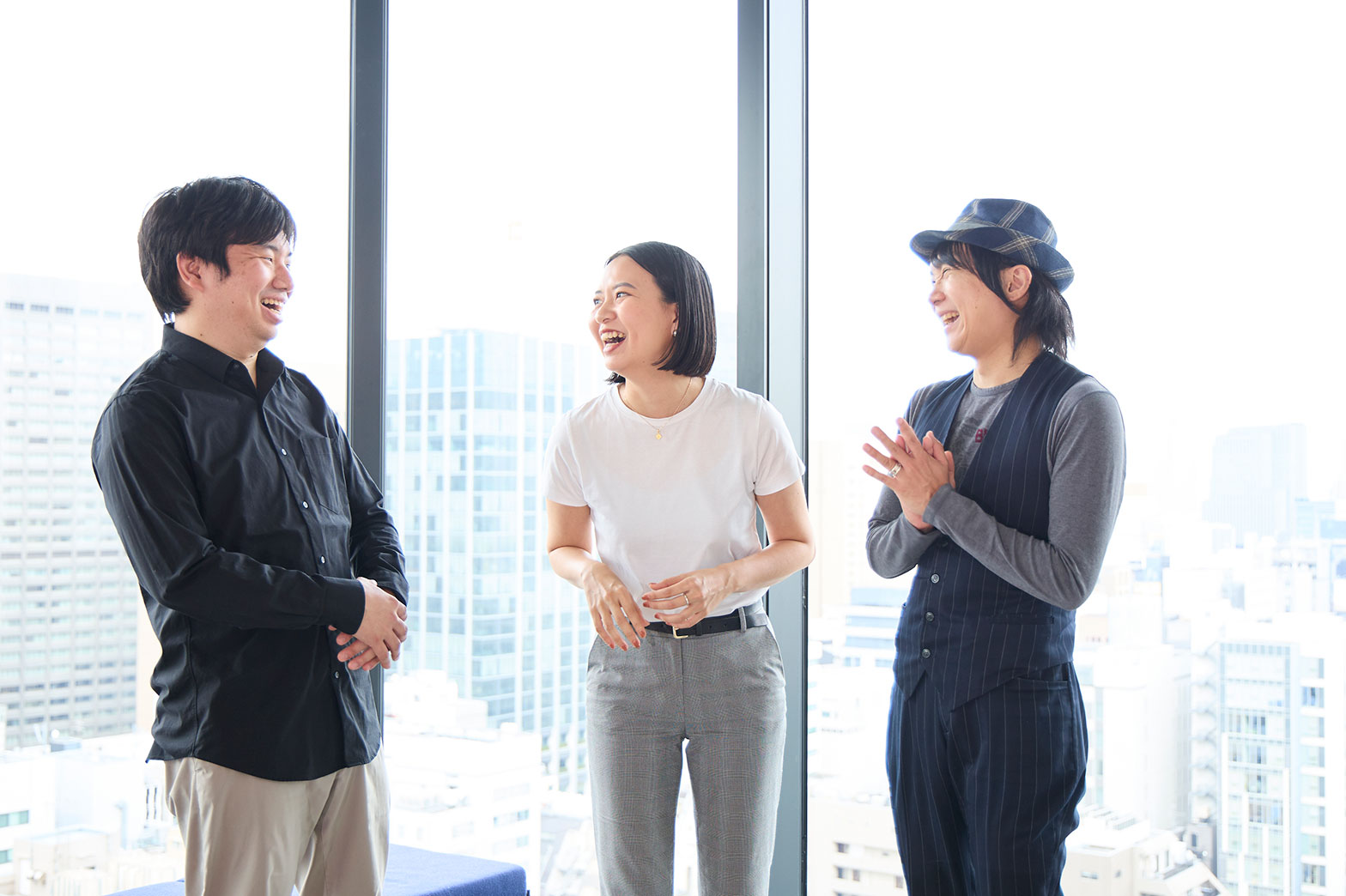
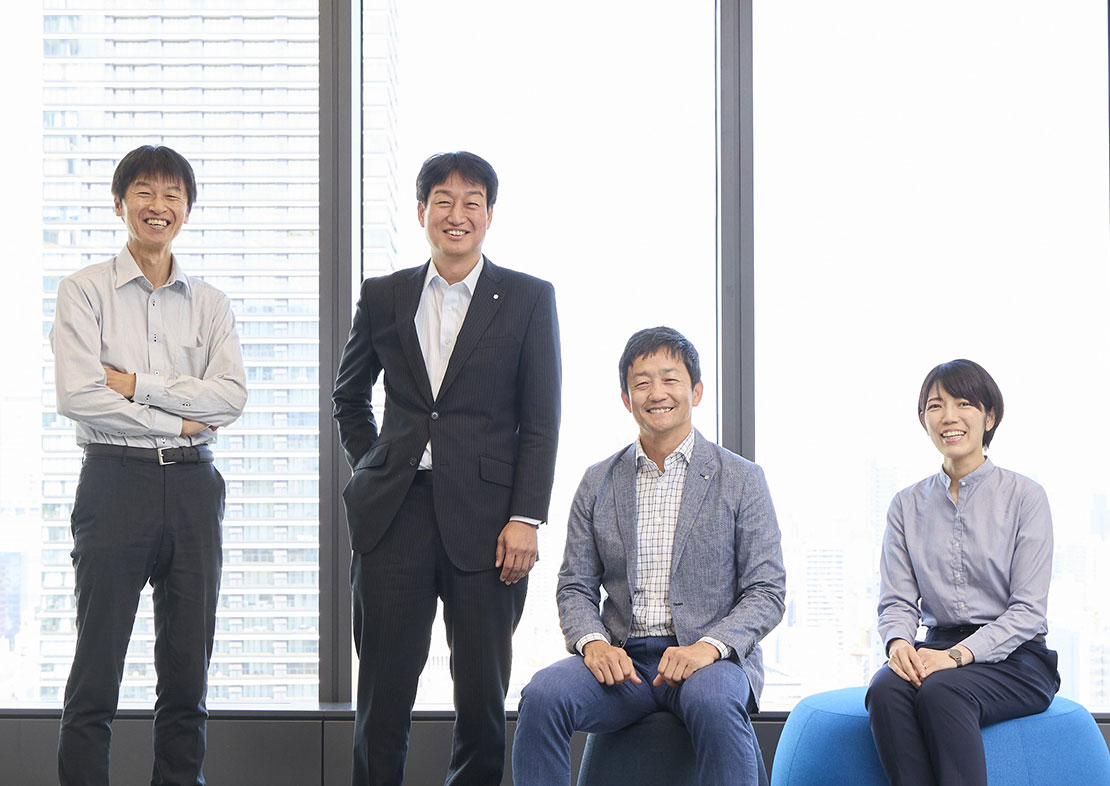
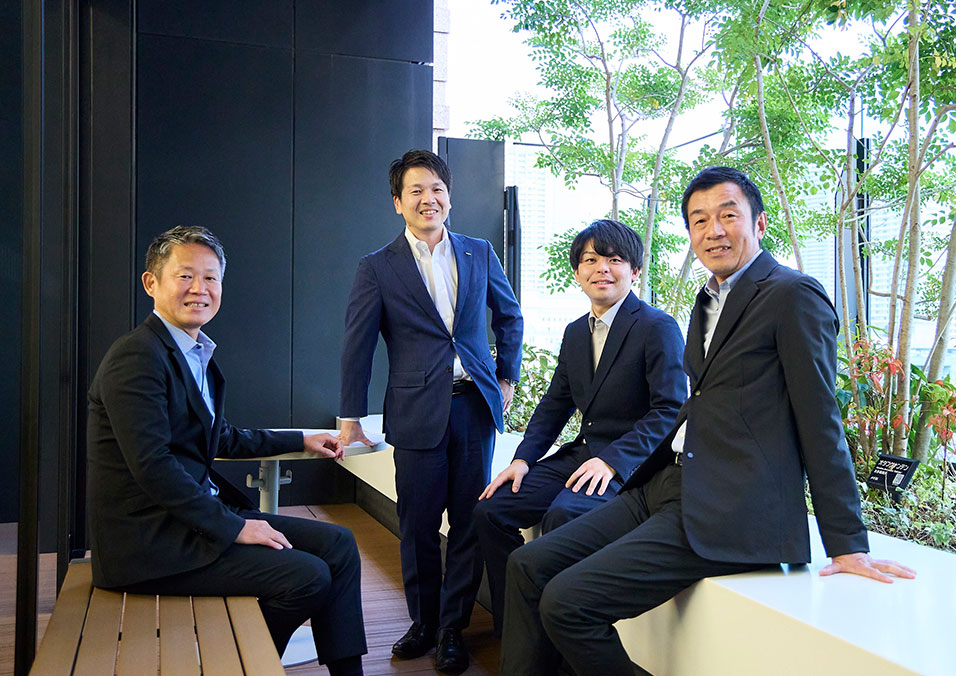
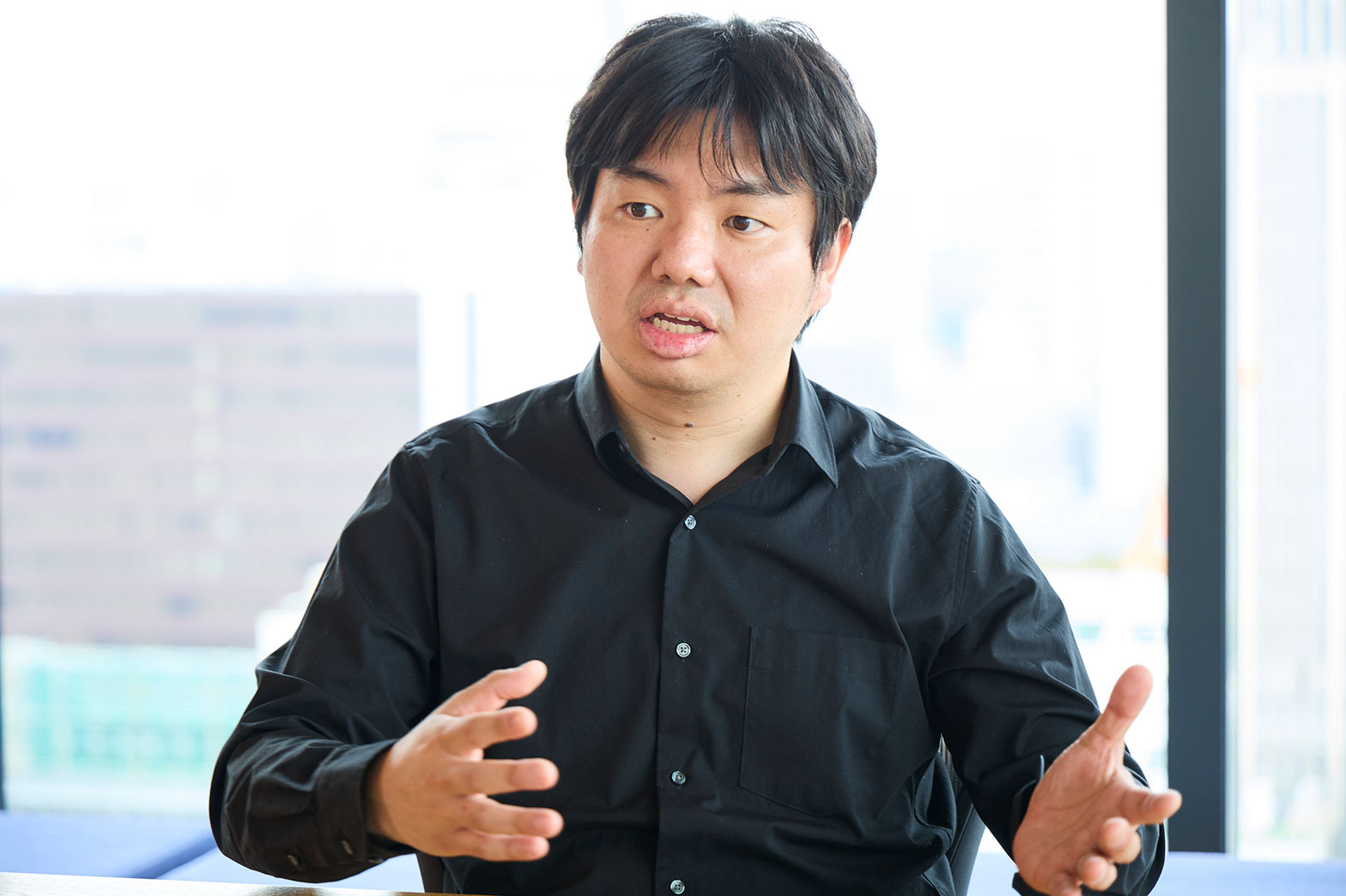
What is required to make challenge a part of a company culture? We spoke with Innovation Suzuki, Keisuke Yoshida, and Eiko Kitabayashi of the Innovation Promotion Group, who are responsible for designing and operating COBU's system, about the aims of the system and the potential of the organization and its personnel that has emerged from its implementation.
Co-creation that begins with "inspiration"—a system that supports the challenges of each and every employee.
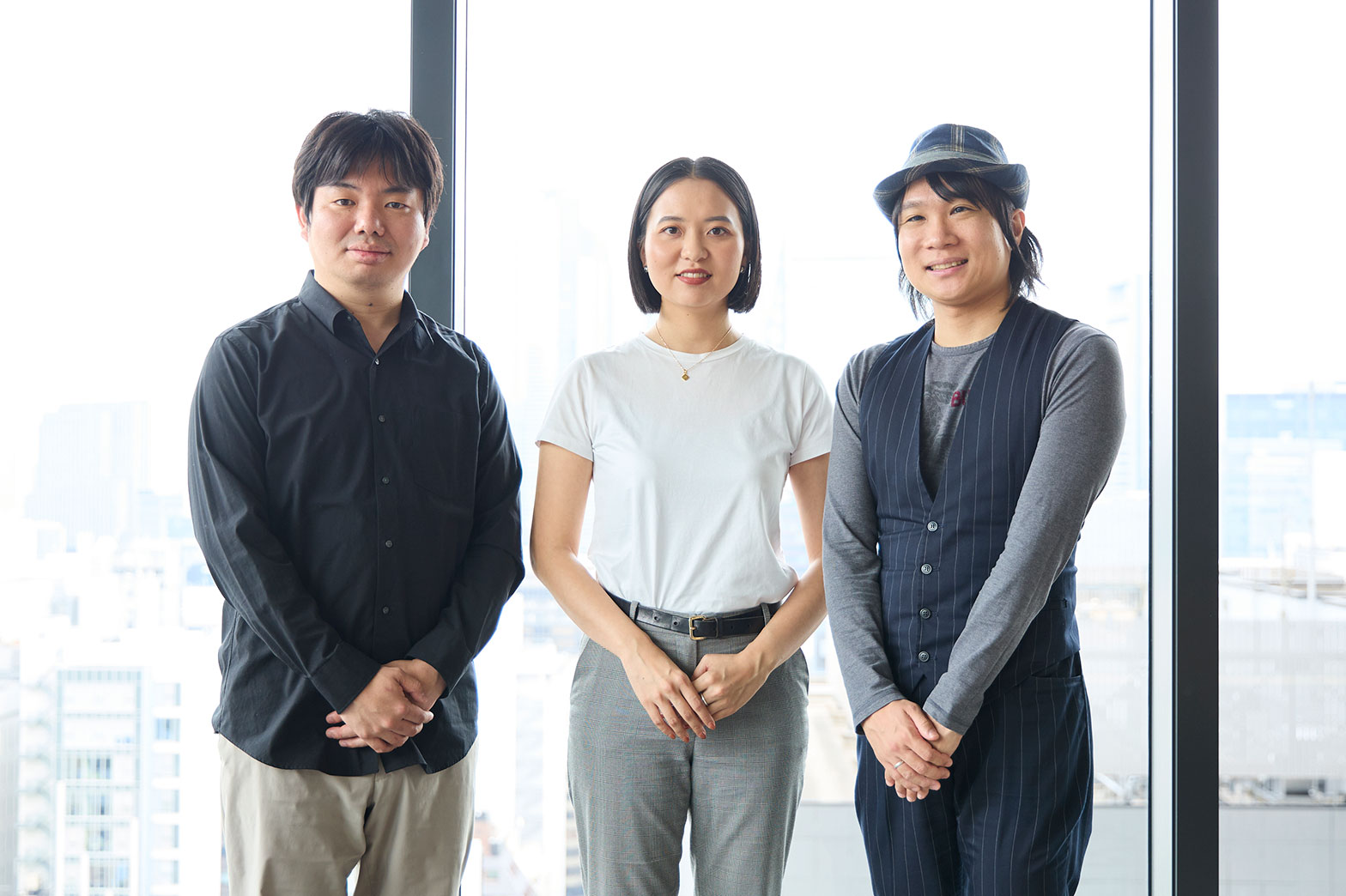
"COBU"—these four letters are now the slogan for "transformation" at Sekisui Chemical. Volunteers with diverse backgrounds, including members who joined through career recruitment and employees who responded to internal job postings, have gathered in the Innovation Promotion Group of the New Business Development Department.
"Community of Brave Unicorn. It represents a community that takes a courageous step forward towards a big challenge. It also embodies the meaning of inspiring people both inside and outside the company."
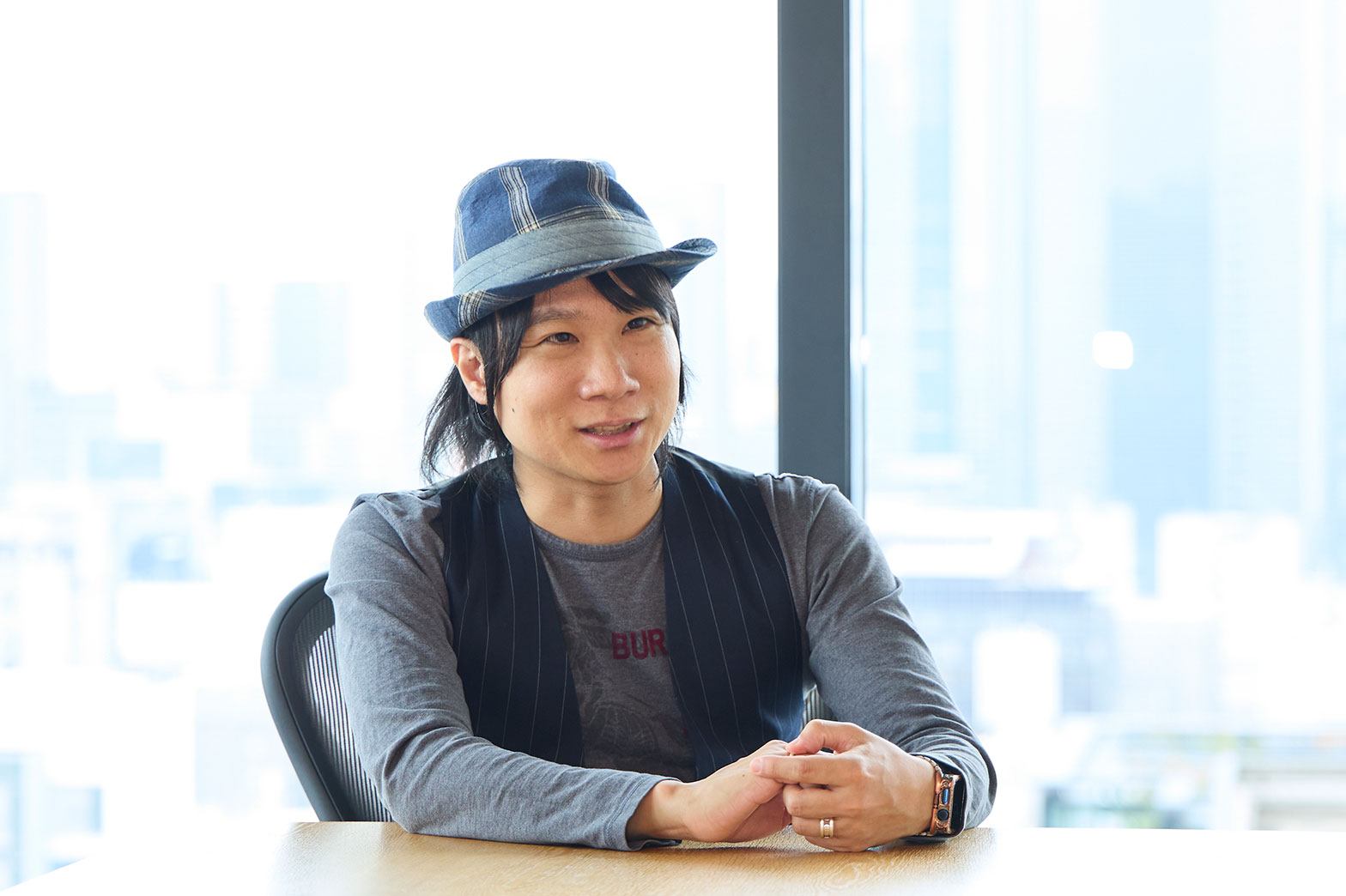
These are the words of Innovation Suzuki, who leads the group. He has experience creating new businesses at a manufacturer and is currently in the new business development department, where he is in charge of managing "COBU".
This system is a new business proposal program for all SEKISUI CHEMICAL Group employees. Keisuke Yoshida, who is in charge of designing the system, looks back on its launch.
"The background to the creation of this program lies in Sekisui Chemical's long-term vision, 'Vision 2030.' This vision, with the statement 'Innovation for the Earth,' aims to double the amount of contributions made to solving social issues by 2030 and to create new value through innovation. To achieve this, this program was launched as a mechanism to encourage challenges from the field and create new businesses."
Seven people joined the Innovation Promotion Group, which was established in 2021, through an internal recruitment process. Coincidentally, this is the same number as when Sekisui Chemical was founded. The founding members are remembered as the "Seven Samurai," and we are approaching this system with the spirit of a "second founding."
COBU's steps for creating new businesses are clear. Ideas are solicited from across the entire group and then reviewed through a document screening process. The 20 themes that pass the screening proceed to Stage 1, a hypothesis testing phase lasting approximately three months. Five themes selected after a pitch screening move on to Stage 2, customer validation, where market verification and interviews are conducted over six months. The member who proposed the one theme selected after the final pitch is transferred to the Innovation Promotion Group and works on commercializing it for approximately one year.
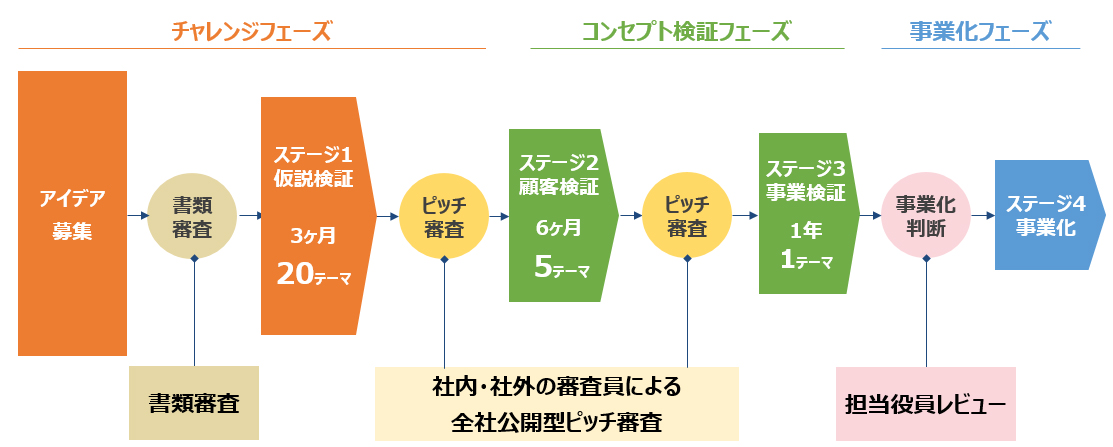
This system itself follows the typical flow of a business contest. Many companies have also implemented internal systems for soliciting new business ideas. However, precisely because of this, the team researched existing examples and engaged in extensive discussions. This was to determine what kind of system would truly work for their own company.
"The biggest realization I had there was the reality that 'we are a manufacturing company,'" Yoshida says.
"For service companies like SaaS, it can sometimes be possible to commercialize projects relatively quickly. On the other hand, for manufacturing companies that are responsible for 'making things,' the hurdles from R&D to proof-of-concept are high, and there are not many successful examples of internal entrepreneurship programs. That's why we chose to develop the system itself from scratch in-house, rather than simply following existing templates. And even when commercialization is in sight, we don't 'hand it over' to the business divisions, but continue to provide support until the very end—that attitude is our commitment."
This "determination" is strongly reflected in the design of the system. They provide ongoing support for approximately two years, from the conceptual stage to business implementation. This long-term support is fostering a new corporate culture.
From systems to culture: Cultivating a culture where challenges take root.
COBU's program received 206 applications in 2023, from which 20 were selected. The program maintained a high level of 153 applications in 2024, demonstrating that a "culture of challenge" is steadily beginning to take root through the system. One of the key figures supporting this movement is Eiko Kitabayashi.
"My role is to support them through brainstorming and dialogue to help their ideas become better. Rather than leading, I want to walk alongside them. I value this approach, and I hope to cultivate the mindset to take that first step."
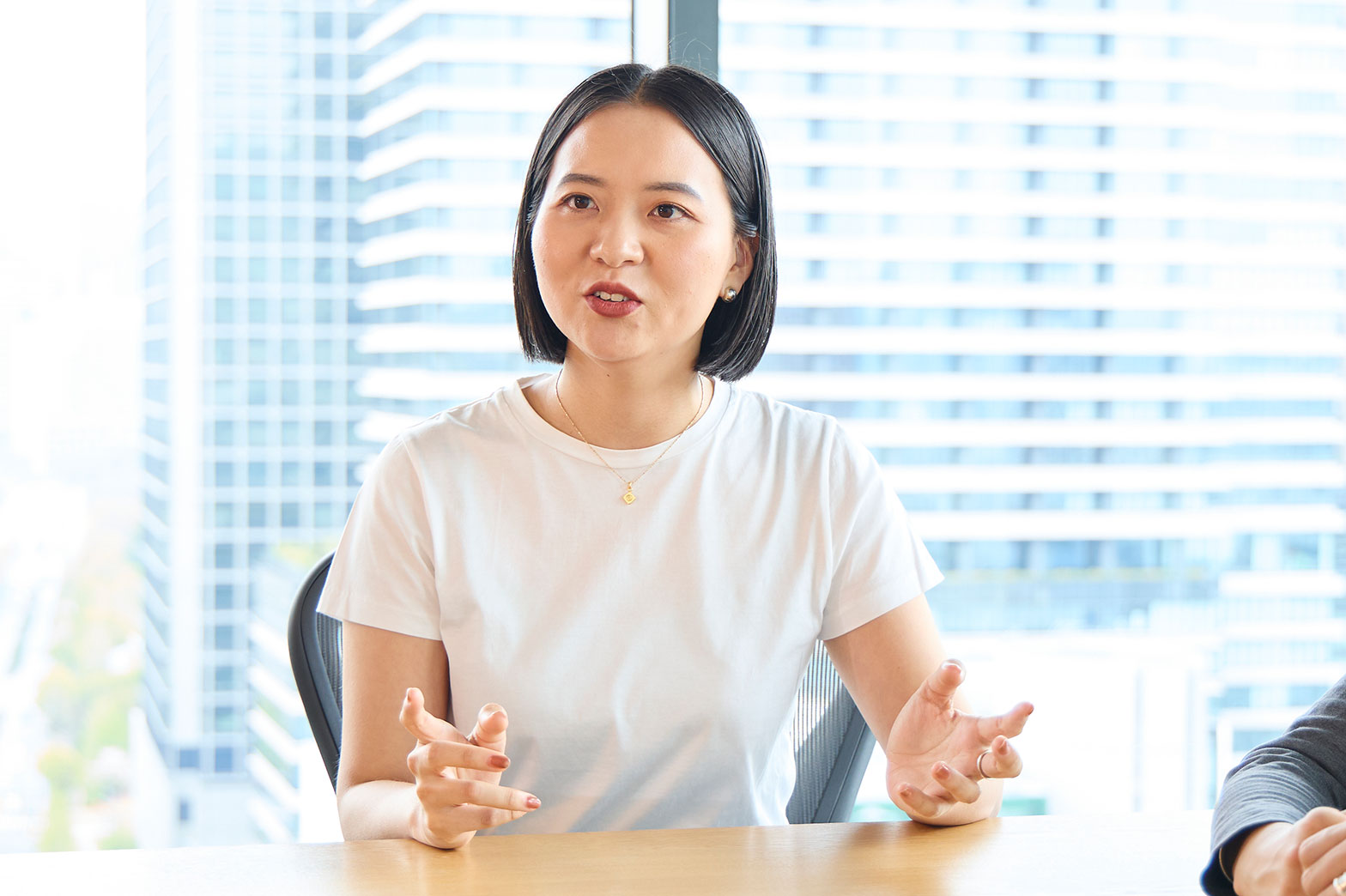
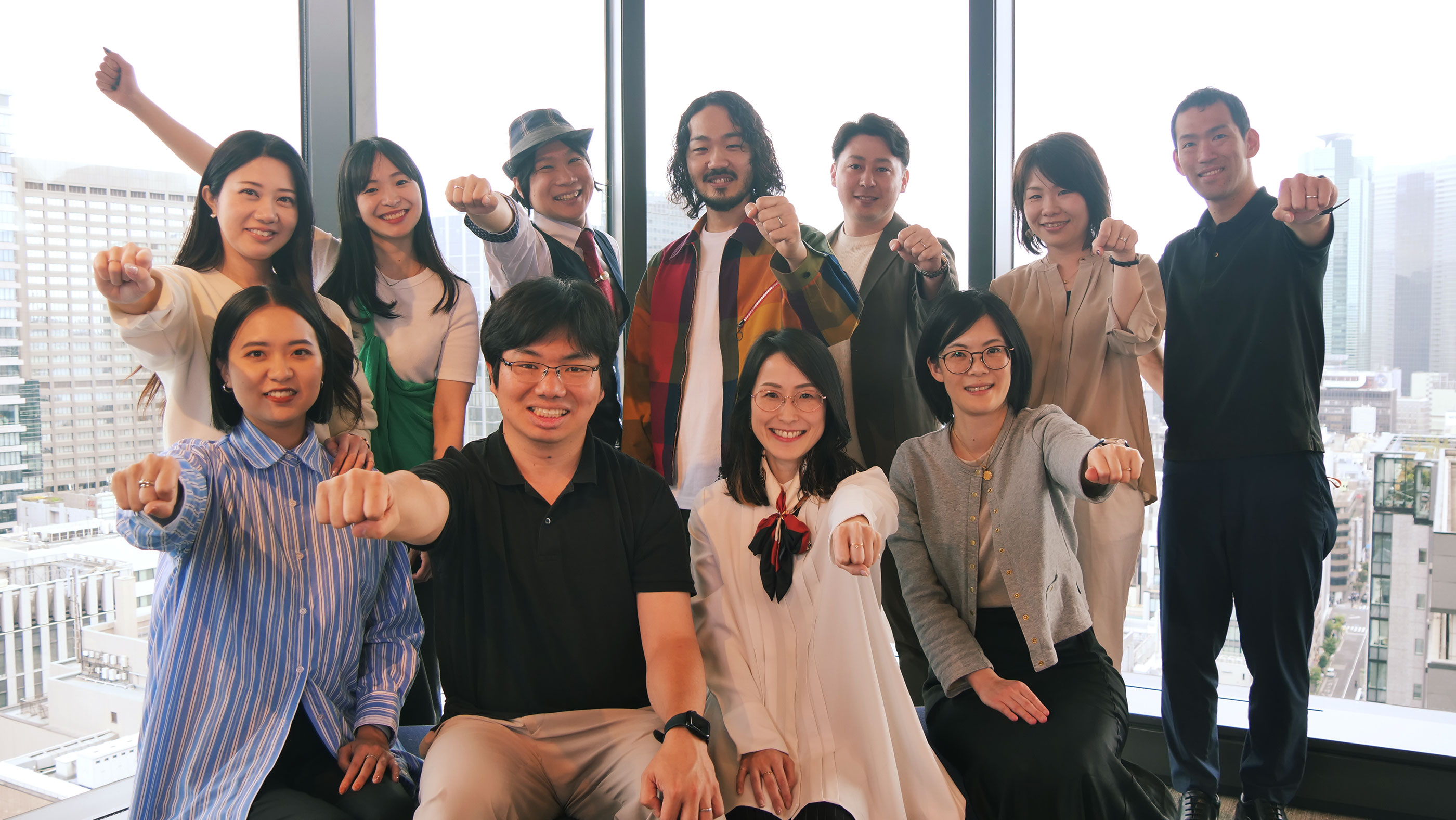
In addition to managing the program, they also focused on internal communication. A key aspect they emphasized was "making the faces of the contestants visible." They used visual cues, such as boldly featuring applicants' photos on posters and internal announcements, to promote awareness within the company.
"By making internal actions visible, an atmosphere of 'I want to try it too' is created. Kitabayashi's approach, which combined the power of design, really shone," recalls Innovation Suzuki.
The smiles on the posters are merely symbolic. The first step taken by each applicant is quietly expanding into action.
"One of our employees who was selected changed from a suit to a polo shirt for work. You might think, 'Is that all?' But changing a work style that has been ingrained as a long-standing habit actually takes a lot of courage. Others have shared the insights they gained through the system with their juniors or started to confront the challenges within their own organizations. I believe that even without grand, sweeping reforms, the accumulation of these small episodes can gradually change people's attitudes."
Yoshida also said he felt a strong passion in the application documents.
"We received passionate responses such as, 'I want to be the first penguin.' In the first phase, a wide range of people participated, from their 20s to their 50s, and 70% of them had no prior experience in planning. Many employees, including those in manufacturing and support departments, raised their hands because they wanted to try. Sekisui Chemical has always had a culture of confronting social issues head-on and taking action. COBU served as a platform to bring that out and give it shape. I feel that this fact itself proves the value of our initiative."
The pitch judging panel, comprised of judges from both inside and outside the company, welcomes these challengers. Innovation's Suzuki laughs, saying, "The presentation is like something out of a TV show, and it's even been described as being 'like the M-1 Grand Prix'."
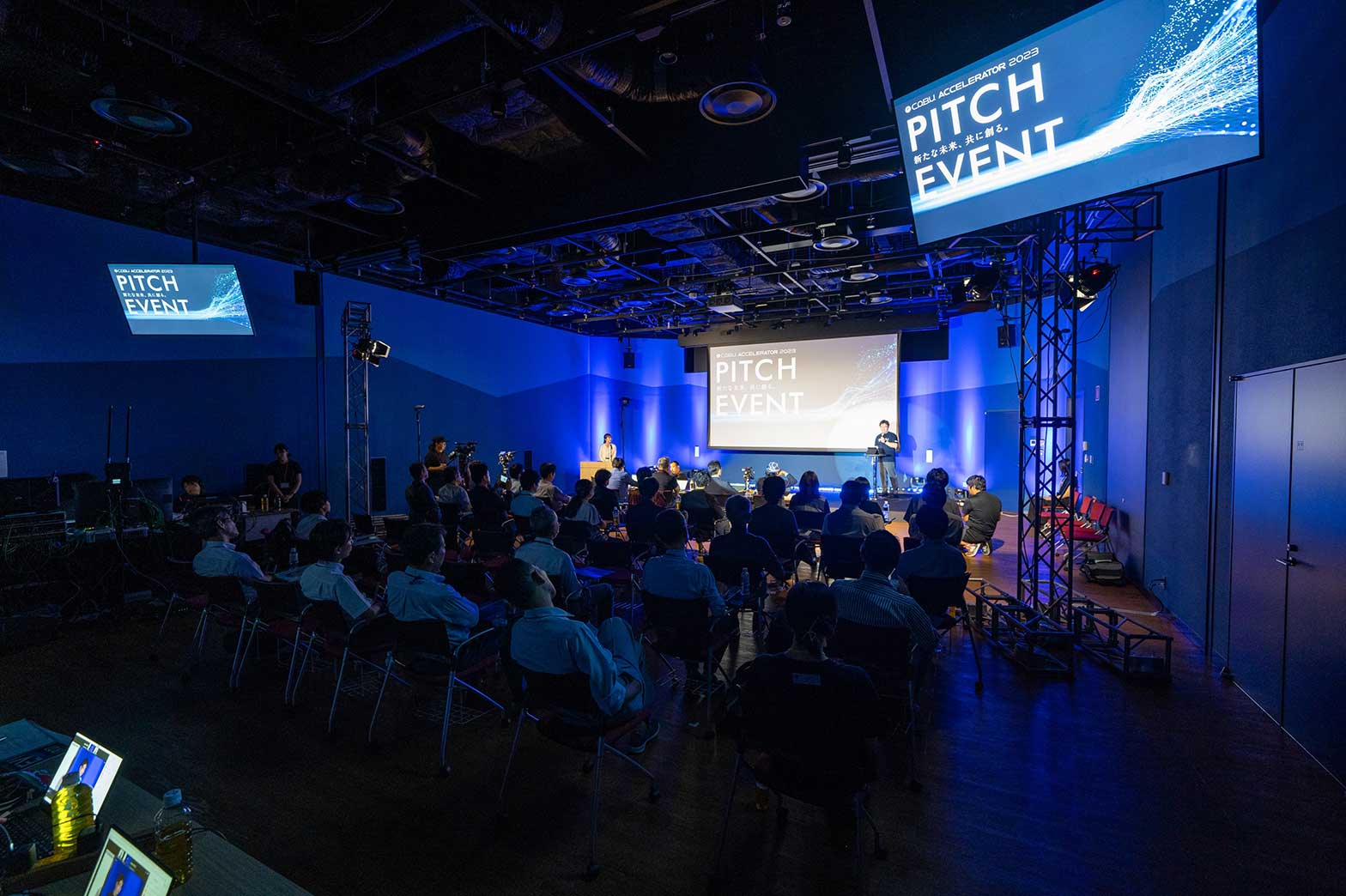
"The judging panel is a place to show tangible respect to those who have worked hard. We want to convey to those who have stepped forward and taken on the challenge while juggling their main jobs that 'we've seen your efforts.' That's why we're so serious about every detail, from the visuals to the production. The broadcast is open to all employees, and we've set up a system to deliver the applicants' appearances in real time. We've received comments such as, 'I didn't know that person was thinking that way,' and 'I got a glimpse of Sekisui Chemical's present and future.'"
COBU aims to create a chain reaction of spirits through a stage where those striving to bring ideas to life take center stage. Beyond that lies the next stage, where they will take on challenges together with their comrades.
Not alone, but together. Towards a culture where "teammates" support challenges.
Those who passed the selection process in the first and second rounds are now beginning the verification phase toward commercialization. The nascent ideas are moving into the practical application phase, and co-creation with the New Business Development Department continues. What thrives throughout is COBU's unique value system: not "taking on the challenge alone," but "nurturing together with colleagues."
"Providing support is also about finding companions. There is great meaning in meeting people who share the same aspirations, talking together, and taking action," says Kitabayashi.
"From my perspective as someone who supports them, I'm struck by the passion of everyone who applies. Some people interviewed over 100 people in preparation for their pitch, and afterwards, they went on to apply for other internal job postings and projects. I've come to realize that the significance of that first step is far greater than one might imagine."
Yoshida describes the spread of enthusiasm as follows: "What was particularly impressive was that these passionate people were scattered all over the country. At the 'festival' of the pitch, it all became instantly visible and began to connect. We ourselves want to enjoy that. New initiatives are born from enjoyment, and in order to establish the system, we hope to cultivate that kind of mindset."
While continuously updating the system, Innovation Suzuki is looking ahead to the future of COBU.
"In order to open our doors to more people and to provide better support, we continue to review our system every year. There is no ideal form; the ultimate goal may be for emergence and co-creation to occur naturally even without the COBU framework."
Therefore, it is essential to continue welcoming like-minded individuals who resonate with our values. Innovation Suzuki says that COBU's starting point is not a grand business plan, but rather a single "idea."
"We believe that the origin of innovation lies in intuitive insights and small feelings of unease. We want to respond to even the simplest voice, such as, 'What do you think about this?'"
Yoshida nodded in agreement with Innovation Suzuki's words. "Getting a new business off the ground is by no means easy. But taking that first step is something anyone can do. I believe that the seeds of future change are surely hidden in our daily conversations and work."
Turning small insights into action. The team that supports that first step is here. COBU is steadily cultivating an organizational culture where challenges spontaneously arise.