
SEKISUI CHEMICAL Group Regarding the Formulation of Environmentally Conscious Design Guidelines
February 6, 2026
SEKISUI CHEMICAL CO., LTD.
SEKISUI CHEMICAL CO., LTD. (President and CEO: Keita Kato, hereinafter "Sekisui Chemical") has formulated environmentally conscious design guidelines to further accelerate responses to "climate change," "resource recycling," and "water risks," which are set as critical issues in "environment," which is positioned as one of the materialities of ESG management. These guidelines aim to enhance Environmental Value as the source of SEKISUI CHEMICAL Group 's competitiveness.
SEKISUI CHEMICAL Group under the "Products to Enhance Sustainability" system, by promoting product design in line with these guidelines, we will provide products and services that contribute to reducing greenhouse gas (GHG) emissions throughout the product lifecycle and supply chain, as well as realizing a circular economy society. Through this, we will contribute more than ever to solving the natural environment and social issues, and aim to realize the "Earth with Maintained Biodiversity" targeted in SEKISUI Environmental Sustainability Vision 2050.
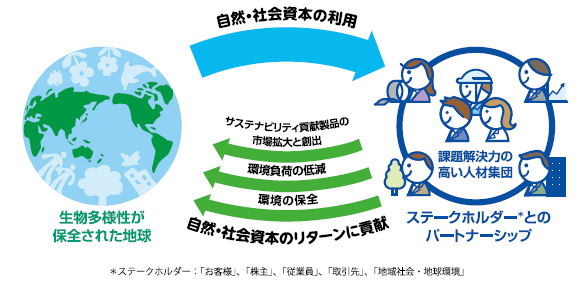
Figure 1: "SEKISUI Environmental Sustainable Vision 2050"
■ Environmentally Conscious Design Guidelines
SEKISUI CHEMICAL Group Sustainability-contributing products focus on carbon neutrality and circular economy solutions, aiming to (1) reduce energy and resources throughout the product lifecycle, (2) switch the energy and raw materials used to renewable or low-carbon products, and (3) recognize the carbon footprint (CFP), aiming for 100% low-carbon and circular products (including packaging materials) by 2050.
■ Key Considerations
The following four points are key considerations throughout the product lifecycle and supply chain, based on the environmentally conscious design guidelines.
1. Reduction of energy and resource consumption throughout the product lifecycle.
We strive to improve efficiency in resource management, production, and transportation throughout the product lifecycle, and promote the reduction of energy and resource consumption.
2. Transition to renewable or low-carbon energy and raw materials.
We will promote the transition to non-fossil fuels for energy, and also use non-fossil materials (bio-derived materials, CO2) as raw materials for products. 2 We will promote the use of recycled materials (such as derived materials). We will also promote the use of low-carbon raw materials (such as green steel). We will also promote the shift to non-fossil materials and recycled materials for packaging materials used in products.
3. Promoting circular product design
We will promote product design with a recycling perspective in mind, including ease of collection, dismantling, and disassembly of used products. We will also increase the number of our own products that are subject to horizontal recycling.
4. Promoting the visualization and reduction of product CFP (Chemical Factor Productivity)
We will promote the visualization of GHG emissions (CFP) at all stages of the product lifecycle, from procurement, production, transportation, sales, installation/assembly, use, and disposal. Based on this, we will promote designs that lead to a reduction in product CFP.
<Contact information regarding this matter>
■For members of the press
Corporate Communications Department, Public Relations Group
Email: kouhou@sekisui.com
■ For those other than members of the press
ESG Management Promotion Department
E-mail: communication_esg@sekisui.com