
We have developed a "paint transfer sheet" that contributes to reducing CO2 emissions in the automotive painting process.
May 21, 2024
SEKISUI CHEMICAL CO., LTD.
SEKISUI CHEMICAL CO., LTD. (President and CEO: Keita Kato, hereinafter referred to as "the Company") High Performance Plastics (HPP) Company (Company president: Ikusuke Shimizu) has developed a "paint transfer sheet" that contributes to CO2 reduction in automotive painting processes by utilizing material design, formulation, and film formation technologies cultivated through tape manufacturing.
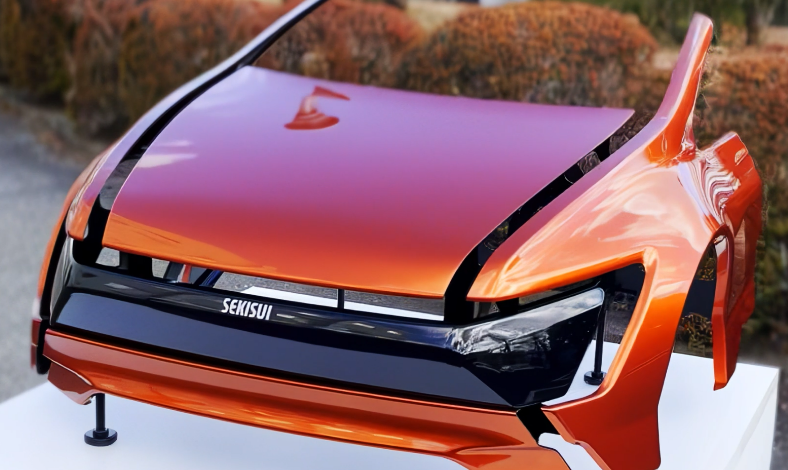
Mockup using "paint transfer sheet"
1. Background of Development
The painting process accounts for approximately 20% of CO2 emissions in the automotive manufacturing process, making it a major challenge in achieving carbon neutrality in the automotive industry. Our company has cultivated tape manufacturing and material compounding technologies over many years. Applying these technologies, we have developed a technique to create paint sheets and achieve painting through transfer, bypassing the traditional painting process. We believe this technology offers one solution to achieving carbon neutrality while maintaining paint quality.
2. Characteristics of paint transfer sheets
- A structure in which a paint film (paint layer) formed using our proprietary technology is sandwiched between a transfer film and a support film (Figure 1).
- The thickness of the paint layer is the same as for regular paint, several tens of micrometers.
- Can be stored in a rolled state (Figure 2)
• Various paints can be applied to the paint layer.
*The paint layer of the developed product is an adapted version of a thermosetting paint with a proven track record in automotive exteriors, and meets automotive exterior specifications under curing conditions equivalent to those of new car paint (Table 1).
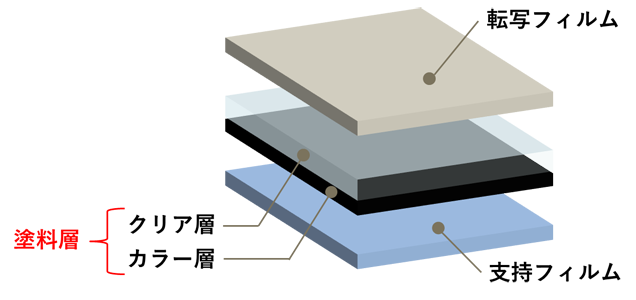
Figure 1: Basic structure of paint transfer sheet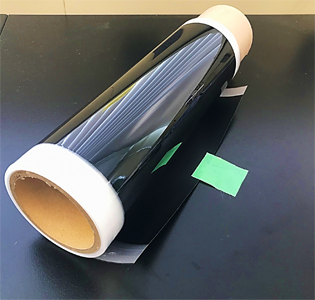
Figure 2 Product form in rolled state
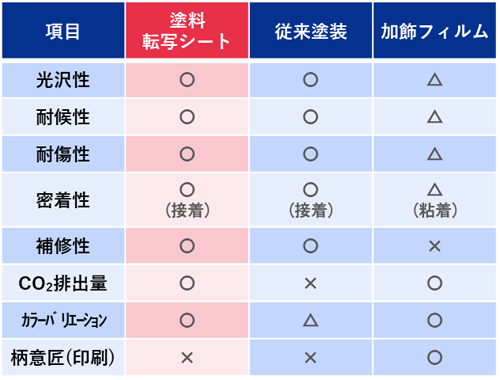
Table 1: Performance comparison of paint transfer sheets
[Paint Transfer Process]

*The paint layer is adhesive and can be applied like adhesive tape. It can be applied by hand like wrapping film, but vacuum forming is also possible (Figure 3).
Furthermore, it also supports TOM (Three-Dimensional Overlay Method).
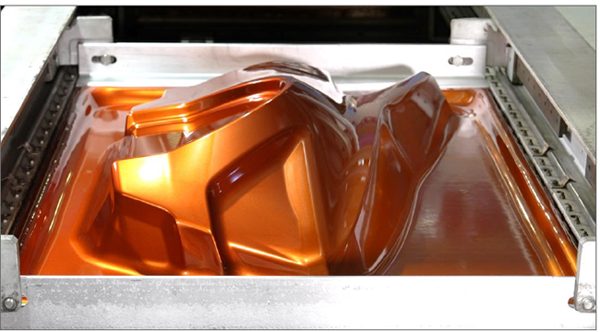
Figure 3. Mockup fabricated by vacuum forming.
[Effects of this technology]
In recent years, two-tone cars with a roof color different from the body color have become popular. These two-tone cars are manufactured by passing them through the painting line twice, once for the first color and once for the second color. By applying paint transfer sheets as the second color to the roof, it is possible to reduce CO2 emissions by approximately half (Figure 4). Furthermore, the reduction rate is even higher for designs that involve multiple painting processes, such as multi-tone or distinctive line designs.
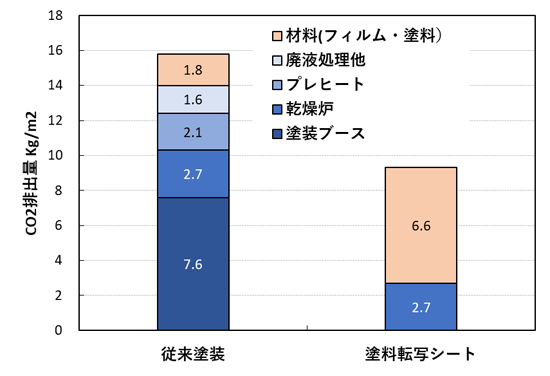
Figure 4: CO2 reduction image due to two-tone painting (calculated by our company)
3. Future Outlook
We plan to launch the paint transfer sheets in 2026, and are currently working to establish mass production and application technologies. We are also developing low-temperature curing technology to expand the range of coating applications to resin substrates with lower heat resistance, thereby contributing to the social challenge of reducing CO2 emissions in automobile manufacturing.
<Contact information regarding this matter>
To members of the press
Corporate Communications Department, Public Relations Group
Email: kouhou@sekisui.com
Clients Other Than the Press
High Performance Plastics (HPP) Company Mobility Strategy Office
E-mail:sekisui-mobility-pr@sekisui.com