
Interview with an outside director
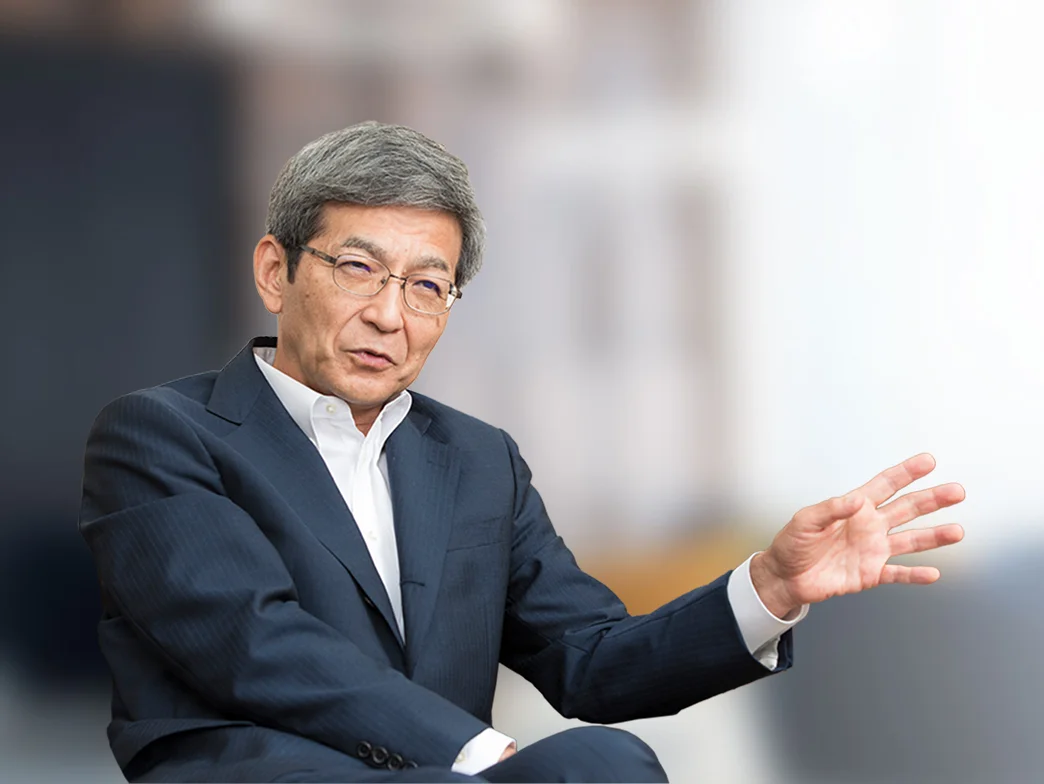
Under a highly effective governance system, we will support "ESG management" by leveraging an objective perspective.
August 2022
Independent Outside Director
Hiroshi Oeda
Since assuming the position of outside director in June 2018, he has leveraged his extensive experience and skills cultivated as the head of Japan's largest flour milling company, including global corporate management, business strategy, and overseas M&A activities, to provide advice on the company's management and appropriately oversee its operations.
Q.01 First, please tell us about your thoughts on the role of an outside director as Director Oeda sees it.
Generally, outside directors are expected to oversee executive operations from an independent and objective standpoint. Among these roles, I believe it is crucial to create an environment where the executive team can operate the business soundly while taking risks. I previously served as president and chairman of the board of directors at a food company for six years, and I feel that the difference between an outside director and the president lies in objectivity. When I was president, I made management decisions with a strong will to avoid losing in the competition, always under a high level of tension. In that process, the outside directors at the time, while acting as a support group, provided calm and objective advice from a broad perspective, which was invaluable in facilitating decision-making. Now, four years have passed since I became an outside director of this company, and during that time, the company has actively pursued its business while taking risks and has maintained sound management. There is no such thing as risk-free management, so I keep in mind the importance of respecting the executive team's management decisions and their consideration process, and when I perceive a significant risk, I support them in taking necessary measures with a calm and objective perspective.
Q.02 How do you evaluate the effectiveness of our company's governance?
When I became an outside director, President Takashita (at the time) concurrently served as Chairman of the Board, but two years ago, President Kato replaced me, and Mr. Takashita became Chairman and Chairman of the Board of Directors for non-executive duties. Currently, our Board of Directors consists of six executive members and six non-executive members, with non-executive members making up half, and the non-executive side serving as Chairman of the Board is an effective governance structure for separating executive and supervisory duties. The pre-lectures on Board agenda items for us outside directors are thorough and thorough, allowing us to approach with an understanding of the content. As a result, active opinions are expressed on agenda items and the quality of discussions is high. Furthermore, the Chairman of the Board conducts outstanding proceedings by thoroughly listening to everyone's opinions and organizing discussions, and when necessary, discusses issues to be addressed going forward. Because of these factors, we evaluate the effectiveness of our governance as extremely high.
Regarding Board diversity, three new female outside directors were added in June 2022. All five outside directors have experience in corporate management, but even within the same management team, each has different backgrounds and strengths, so discussions from diverse perspectives are expected to become even more active. Including the diversity of the expertise of the auditors, I believe the diversity of our Board of Directors is at a very high level. With the growth of Overseas Housing, we expect that diversity in nationality will also be realized in the future.
Q.03 From Director Oeda's perspective, could you tell us about SEKISUI CHEMICAL Group 's strengths?
Existing segments such as housing, environmental & lifeline, high-performance plastics, and medical have strengths in their respective industries and continue to grow steadily. This portfolio is primarily our major strength. In housing, we are expanding our market share by leveraging unit construction methods not found in other companies, and the intermediate membranes made from high-performance plastics are high value-added products that are globally competent. Additionally, the medical field has grown to the stage where it could become a fourth Divisional Company through M&A and other activities, which I believe will further strengthen our portfolio. We are looking forward to full-scale commercialization of new businesses such as biorefineries that contribute to solving global environmental challenges.
Another strength is our culture of nurturing abundant talent and people. The intertwined strictness and warmth in employee dialogue, which can be seen during meetings and visits to business sites, conveys a culture that values and nurtures human resources. Many of our staff are serious and gentlemanly, and our executive candidates have been well developed, making them valuable assets for our company.
Q.04 Please tell us about any governance challenges at our company and any areas where you feel there is room for improvement.
Our company has two organizational structures: the Divisional Company as a business division and the corporate as the headquarters organization. From my impression, the Divisional Company has strong authority and the corporation sometimes seems to support it. There are companies where the corporate side oversees the entire system horizontally and has a governance system that allows them to have a strong sense of control. I can't say which is better, but as we expand our Overseas Housing going forward and deter compliance risks, I think it might be worth considering an organizational structure where the corporation oversees the Divisional Company more horizontally.
Furthermore, we evaluate our long-term vision and medium-term management plan as being very clear because the president and management have formulated their own perspectives. However, since the separation of execution and supervision is progressing in a positive way, we believe it would be better if the Board of Directors could spend more time discussing and deepening involvement in dividing issues into short-term and medium- to long-term issues.
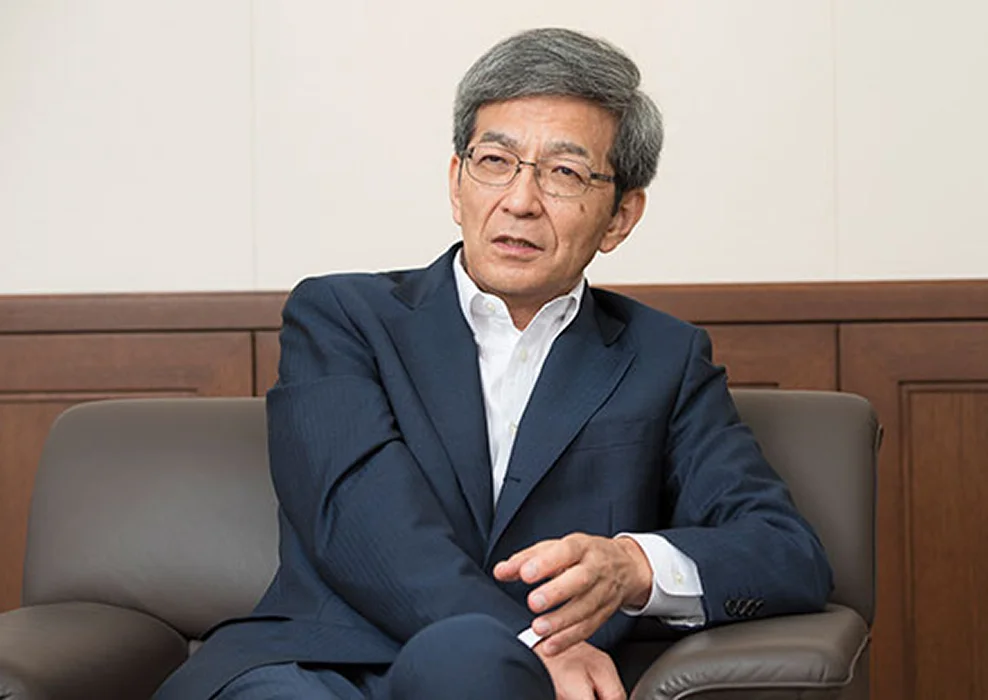
Q.05 From the perspective of Director Oeda, who has extensive experience in M&A and global business, please make recommendations for expanding our Overseas Housing.
Long-term Vision To achieve the goals set in "Vision 2030" of 2 trillion yen in sales and over 10% operating profit margin, it will be necessary not only to achieve organic growth of existing businesses overseas but also to carry out M&A. In 2019, our company made a full-scale entry into the aircraft sector by acquiring AIM Aerospace, a major aircraft parts manufacturer in the United States, for the largest acquisition amount ever made. However, the aviation industry was heavily affected by the COVID-19 pandemic immediately afterward, and last year we recorded impairment losses. However, from a long-term perspective, we believe that this acquisition was the right management decision for our growth when considering our company's growth. As we actively pursue M&A going forward, we hope you will continue to pursue business expansion with confidence.
Q.06 How do you evaluate our company's ESG management?
During the tenure of former President Takashita, he repeatedly emphasized the importance of ESG in very clear terms, saying, "ESG is at the very heart of management," and current President Kato said, "ESG is the work itself." Excellent technical capabilities and problem-solving capabilities for environmental issues are major strengths of our company, and a Promoting diversity Committee centered on outside directors was established in June 2022, and we are actively working to further strengthen our D&I (Diversity & Inclusion) initiatives, which have already been steadily yielding results. As a company that has firmly practiced ESG management, I naturally accept that it is highly regarded by investors and others.
As we expand our global business going forward, we expect that we will place particular emphasis on "S (Social)," specifically promoting human rights due diligence and D&I across the entire supply chain, preventing risks before they arise, building a robust global management system, and continuing to grow.