From water pillows to three-dimensional designs—Japan's first plastic containers nurtured by on-site feedback and co-creation.
公開日:
What thoughts and stories were behind its development?
How will that connect to the people and societies living on Earth?
"SEKISUI | Connect with" is a future-creating media platform that connects you with Sekisui Chemical.
It's not widely known that behind the treatments we receive, there are containers like these. In recent years, the term "bio" has been attracting attention. Bioethanol, biomass, etc. In the fields of medicine and pharmaceuticals, regenerative medicine, antibody drugs, etc. We are entering an era where diseases that were previously considered incurable can be overcome with these new bio approaches. New drugs made from cells. The raw materials for these are living cells and the liquids that cells produce. Even a tiny amount of bacteria can compromise the safety of the drug that reaches the patient. That's why a "container" is needed that can transport and store the contents without touching them. Surprisingly, the company that took on the challenge of creating such a container is a manufacturer that handles plastic products. Furthermore, by joining forces with equipment manufacturers from other industries that have technology for food and beverage manufacturing and cell culture, they are further expanding the possibilities of containers.
The challenge of transporting it while maintaining sterility.
First of all, the liquids that form the basis of cells and drugs are extremely delicate. They are created, cultivated, purified, and transported. If even a single bacterium enters during the many processes they go through, the safety of the drug that eventually reaches the patient will be compromised. No one usually pays attention to this, but if the wrong container is used, the precious cells and drug components will not be able to get from one place to another.
So how do you keep it clean? The old-fashioned method involves using a large stainless steel tank and washing and sterilizing it after each use. However, this is quite a hassle. It requires water, chemicals, and a lot of effort, and there's always the lingering worry that you haven't really washed it thoroughly.
This is where "single-use bags" became popular. These bags are sterilized beforehand, used only once, and then discarded. Since they are not washed and reused, there is no risk of contamination.
However, there was a catch. Flat film bags had been commonly used for containers under 20 liters. These were known as "water pillows" on-site. Since they weren't originally designed for transport, they took up space and weren't as easy to handle as bottles. There simply wasn't a suitable container for this convenient size.
Transforming a "water pillow" into a "three-dimensional" one.
An unexpected company stepped up to address this gap. Sekisui Molding Industries has various plastic molding technologies and has been handling liquid transport containers mainly for Plant, such as poly containers and plastic drums.
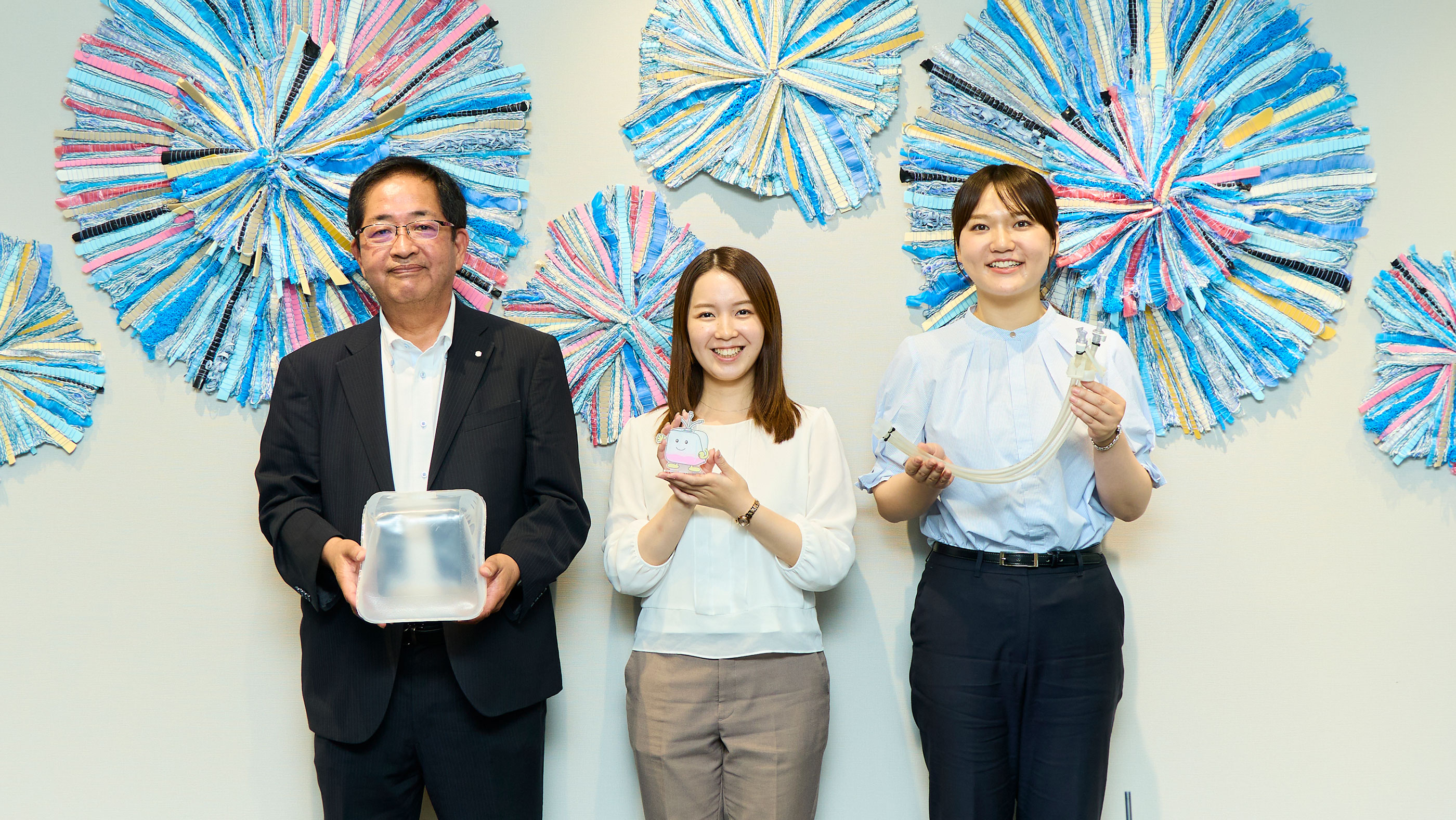
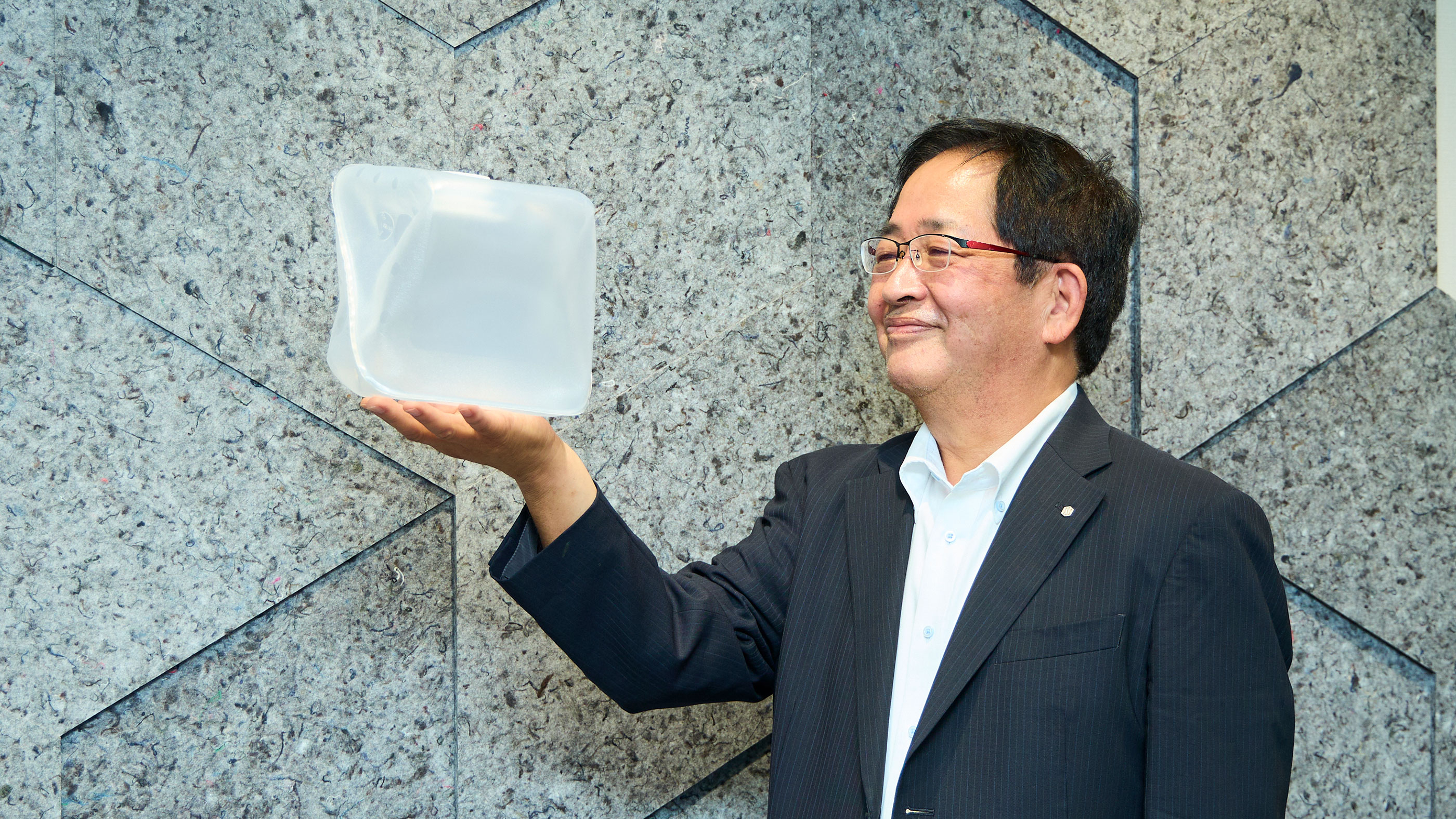
In fact, they had the perfect asset: foldable, three-dimensional containers for food and pharmaceutical manufacturers. Nagai, who was in charge of market development, thought, "We have thin-walled containers called Rontainers that have traditionally been used for transporting pharmaceuticals and food ingredients. Could we repurpose them for the pharmaceutical field?" "Instead of creating something new, why not use our existing assets to enter a completely different market?" Upon investigation, they discovered that in the biopharmaceutical field, because they handle living organisms like cells, sterilized single-use film containers were used as liquid storage containers throughout the manufacturing process. In particular, in the 5-20 liter capacity range, which is Sekisui Seisei's specialty, all of them were pillow-type containers, which are shaped like water pillows. "In the past, containers for storing liquids such as water and beverages were mostly three-dimensional, such as jars and glass bottles. The reason is simple: 'They don't take up much space.' It's because it's the most efficient shape, proven throughout history. However, the bio-field was using water pillow-type bags."
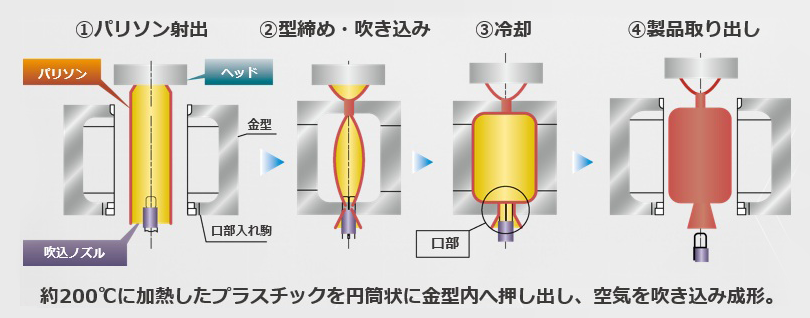
The company's strength lies in its "blow molding" technology. This process involves heating resin and inflating it like a balloon inside a mold to create containers. Because all processes are carried out within the mold, it eliminates the possibility of external contamination—a key characteristic of blow molding. Furthermore, the company's expertise in creating clean containers, honed to meet the high demands of the semiconductor and LCD industries, has proven directly applicable to the pharmaceutical industry, where the absence of foreign matter and microparticles is paramount.
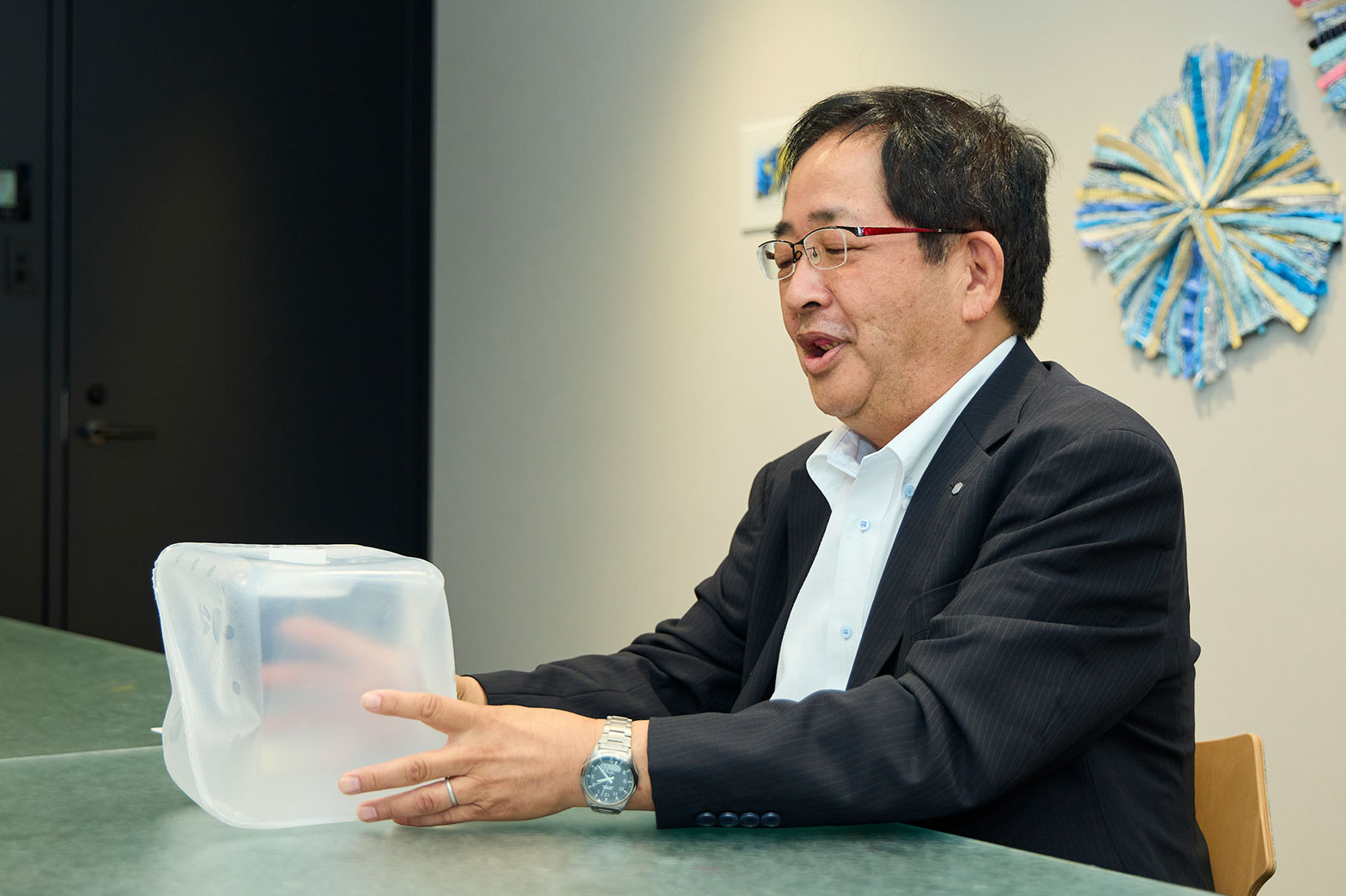
However, he wasn't welcomed from the start. The company had virtually no business in the pharmaceutical field. When he handed out his business card, people would say, "Sekisui? Isn't that a housing company?" It seems they had a strong image of the company from its TV commercials. Nevertheless, Nagai visited each of the leading figures in the cell culture academic community, and despite being criticized by researchers, he gradually made his way in. "Everywhere I went, people would say, 'I've never seen anything like it before.' And that felt really good."
The effectiveness of the three-dimensional design is easy to see. Because it's foldable, it takes up about one-third the space of conventional models. Its space-saving capabilities are outstanding. Also, because no additives are used, there is no need to worry about them dissolving into the liquid inside. The "cleanliness" honed in semiconductor manufacturing could be used directly.
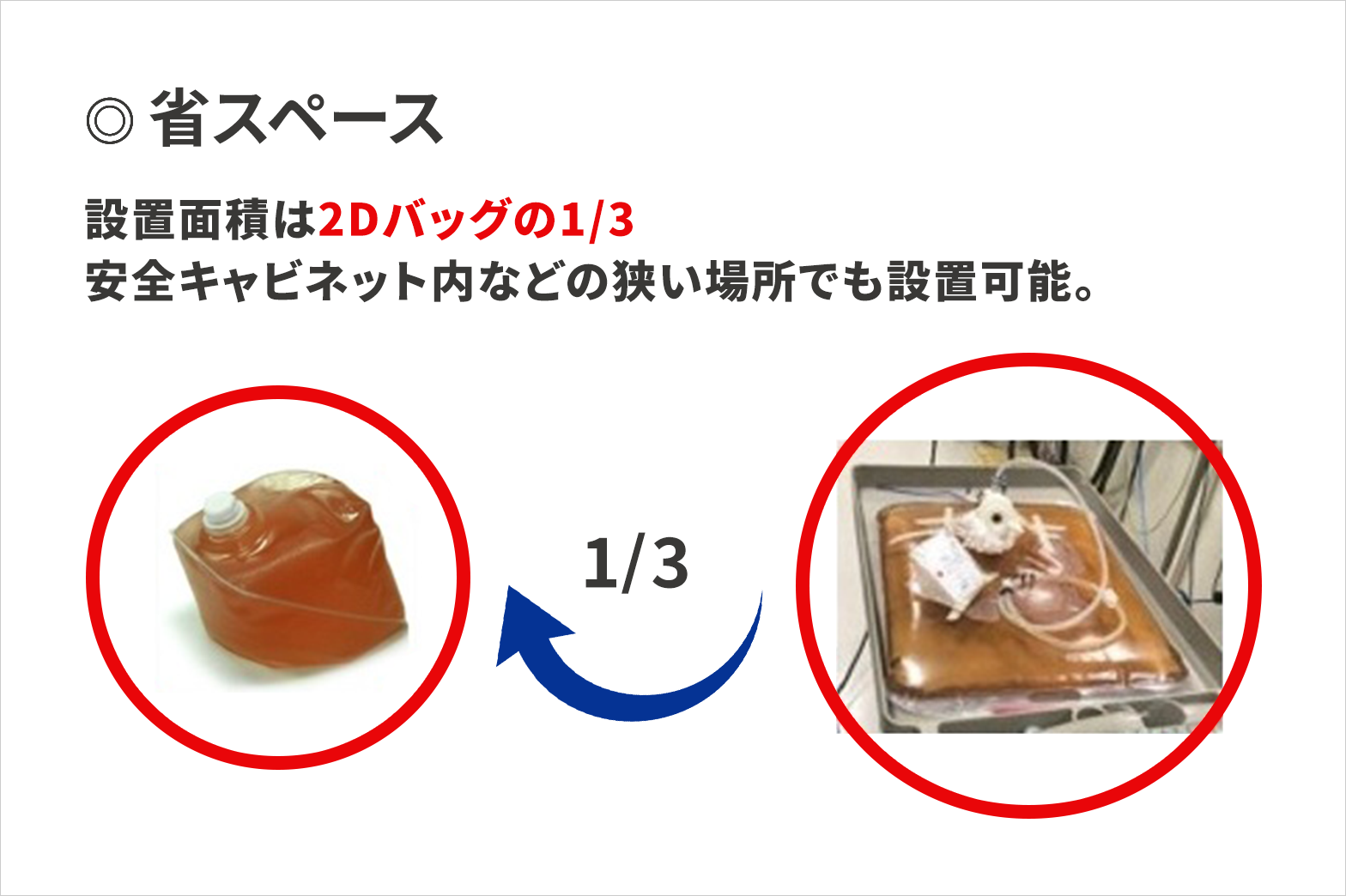
Moreover, this container was designed not only for transporting liquid seasonings to restaurants and other establishments, but also for transporting toxic and hazardous materials such as chemicals. "Most manufacturers of single-use bags are made with the assumption that they will be used on-site. Transporting them is the user's responsibility," says Nagai. Sekisui Seikei is primarily a transport container manufacturer. Their containers are designed with transport safety in mind. That's what sets them apart. They can withstand drops of 2 meters and land transport exceeding 1000 km without any problems. They can also be used in freezing conditions of -80°C. Being able to transport frozen materials over long distances is a great advantage for workplaces handling cells and raw materials.
The difference isn't just the shape. The ability to attach and detach tubes and connectors is also a strength. "With typical single-use bags, tubes are welded and can't be removed, but with detachable tube units, you can directly load them into containers and freely choose and rearrange them according to your needs." "While overseas manufacturers mainly focus on large production lines of several hundred to several thousand liters, for 10 or 20 liters, we see these as our main battlegrounds and have thoroughly prioritized usability." Sekisui Molding deliberately narrowed down the size to just before this, targeting prototyping and process development sites. Institute (subordinate research units: Laboratories) space is limited. That's why this foldable three-dimensional container fit perfectly.
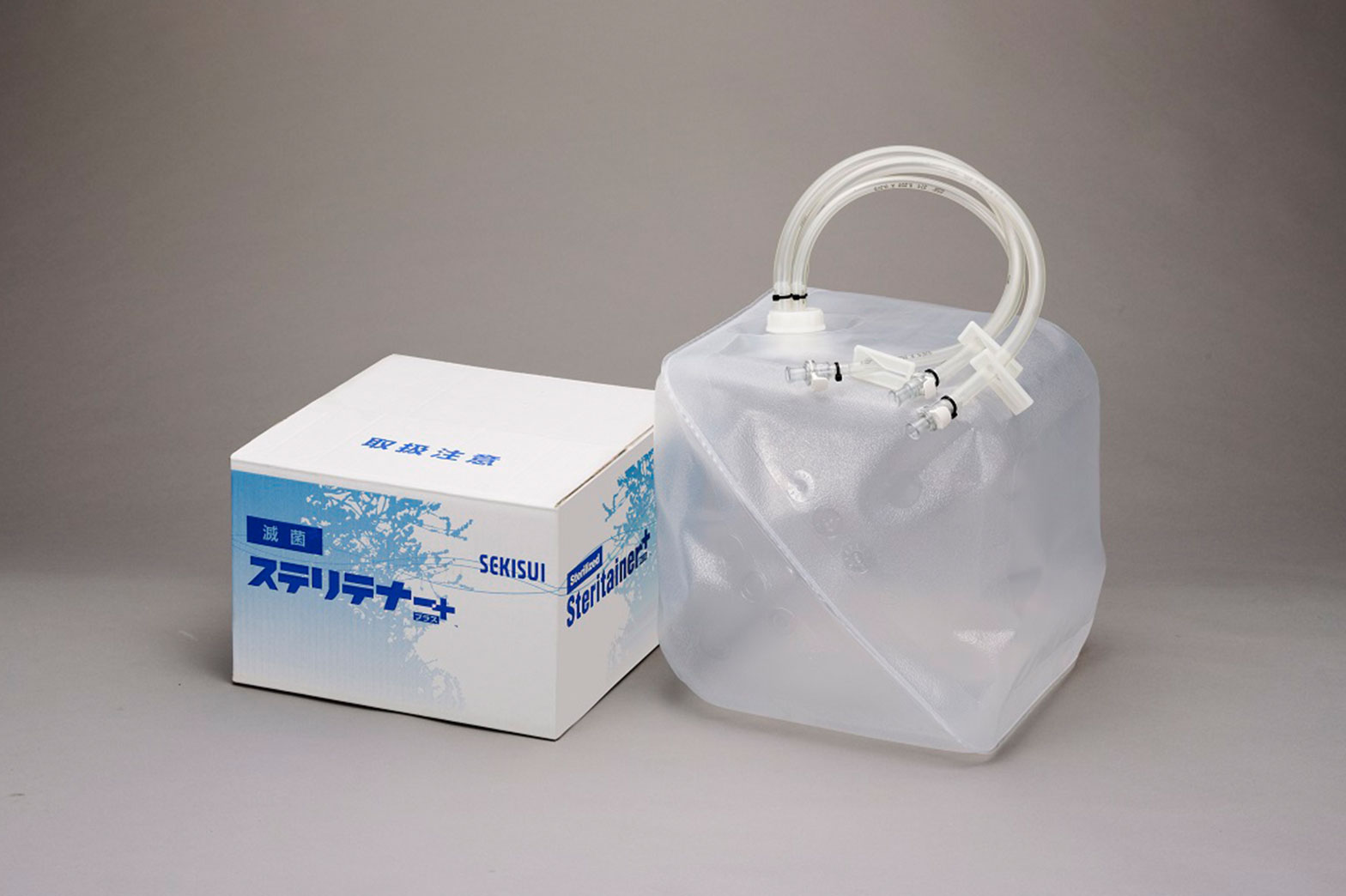
The voices from the field have nurtured it.
This container was actually developed based on feedback from the field. A good example of this is the "inverting rack" available as an optional accessory, which allows for easy pouring of the contents down to the last drop. It addresses the concerns of users who said, "We want to use up all of the expensive culture medium and nutrient solution," and "Lifting a 20kg bag is difficult," by allowing the container to be inverted upside down. Traditionally, pillow-type containers are often suspended like IV bags. When these weigh 10kg or 20kg, they become heavy, limiting who can handle them. "We believe that being able to handle them safely and easily by anyone is the key to future success. With the declining birthrate, labor shortages will not go away anytime soon." Making daily tasks easier may be an important perspective that also contributes to safety.
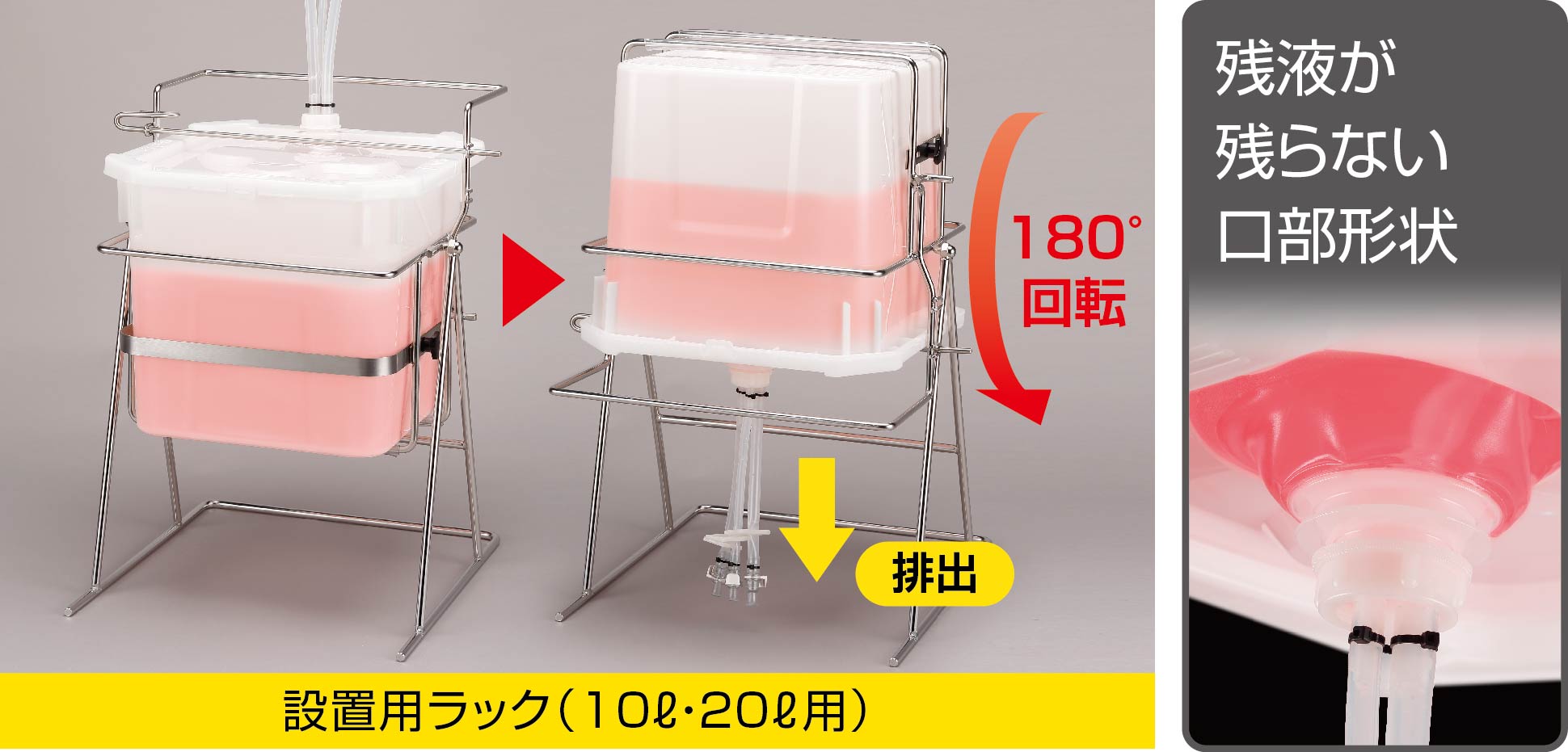
However, the first version was heavy. It was also difficult to grip the knobs while wearing gloves. We listened to feedback from users, made improvements, and the current version is the fourth generation.
What's interesting is that unexpected uses can lead to new ideas. For example, the "selectable" form factor with detachable tubes. The idea came from seeing researchers connecting extension tubes themselves. Some people use this container solely for mixing the liquid inside. From there, the path to "culture" for growing cells became clear. "The next hint comes from places we never would have thought of. Customer feedback is truly important, and I've learned a lot from questioning things that customers aren't even aware of, like 'Why are they doing it this way?'"
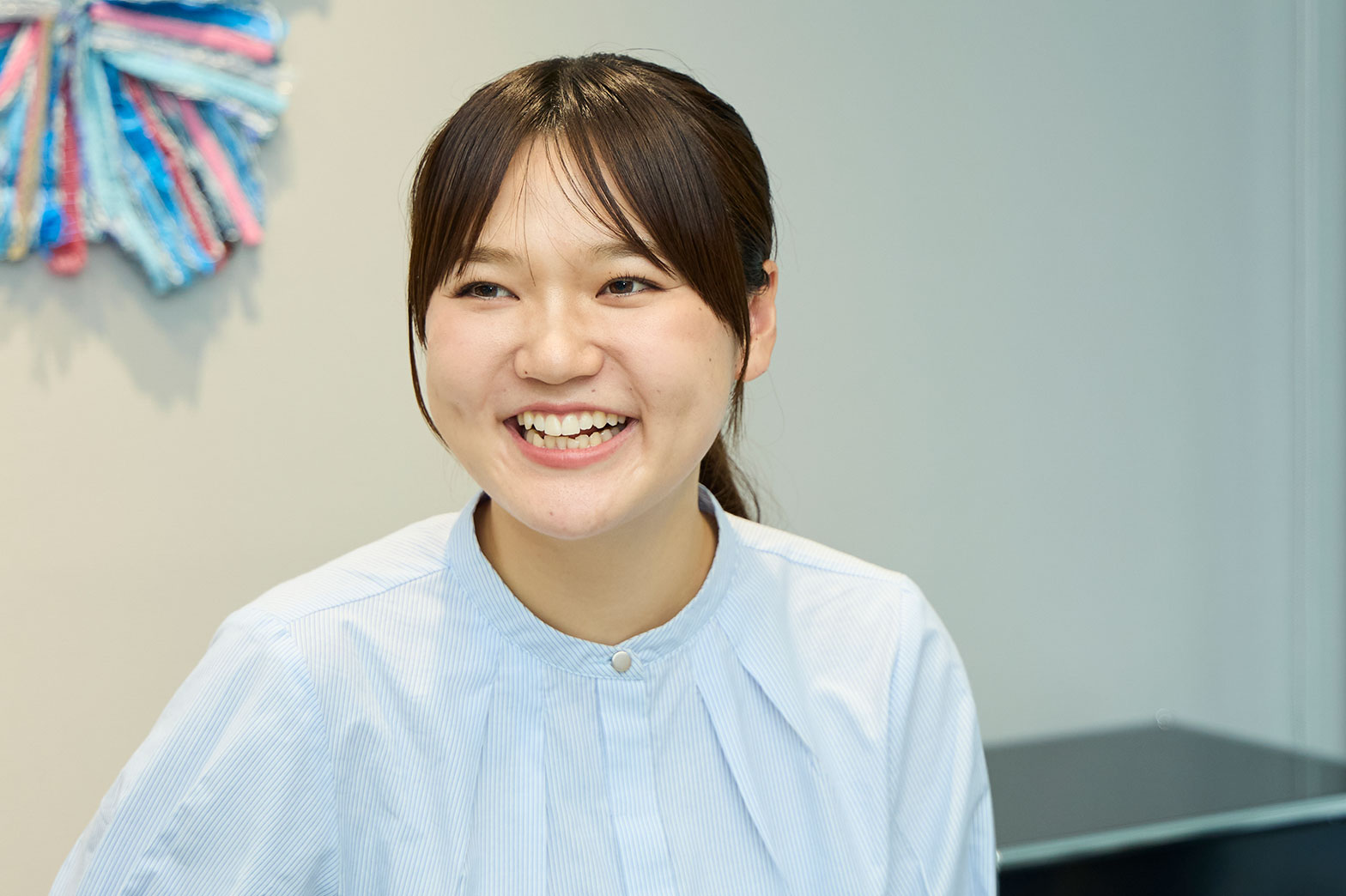
Two young sales representatives have now taken over that role. They are the company's first female sales representatives. Fujita Maki, who has a liberal arts background, started from scratch, saying, "Even when asked, 'What is the liquid inside?', I don't even know that." She added annotations to the katakana terms and even made her own glossary. Kawano Riko, a recent graduate, holds two-hour "study sessions" with Nagai every time she goes on a business trip.
Nagai's teaching style is also unique. "For example, in the context of poultry farming, he explains, 'Antibody drugs are like shipping eggs. What we want are eggs, so we cultivate healthy chicken cells to produce lots of good eggs. Regenerative medicine, on the other hand, is about delivering the chicken itself, in a healthy state, not just the eggs.' Cells are living things, so they get stressed if they are crowded and too hot. The culture device controls the temperature and environment, and the feed is the culture medium. To prevent chickens from dying from viruses like avian influenza that come in from the outside, they need to be raised in a sterilized container that is isolated from the outside world.'"
After the hardships, there is also a sense of accomplishment. Institute (subordinate research units: Laboratories) Kono, who witnessed the scene where this container is being appreciated without taking up much space, says: "It feels like what I've studied has now connected to reality."
Nurturing cells with food technology – a collaboration between two companies
The door to cell culture was now in sight. However, it was impossible for Sekisui Seikei, a container manufacturer, to build the culture equipment on its own. "We are experts at making containers. It's better to leave the machinery to the experts in that field." So Nagai partnered with Osaka Sanitary Co., Ltd.
Their connection is surprisingly old. About ten years ago, at a social gathering, Nagaza met Mr. Kakizaki, the company's Executive Officer. They hit it off as 'like-minded comrades,' and when they reunited at a bio gathering a few years later, Nagaza called out to them. 'Let's do it together.' Although he hesitated about his relationship with competitors, Kakizaki said he pushed him on, saying there was nothing to worry about.
Osaka Sanitary has been making stainless steel sanitary piping for food and pharmaceutical Plant for sixty years. One of these divisions is now tackling cell culture. They work on the culture device Ai-genmix. Instead of using wing-like stirring blades, the entire container is shaken to gently stir the contents. In fact, this technology originally comes from making food dressings.
Sekisui Seikei, which brought food containers into the biotechnology field, and Osaka Sanitary, which shifted food mixing to the biotechnology field, are now using technologies from completely different fields in the field of regenerative medicine.
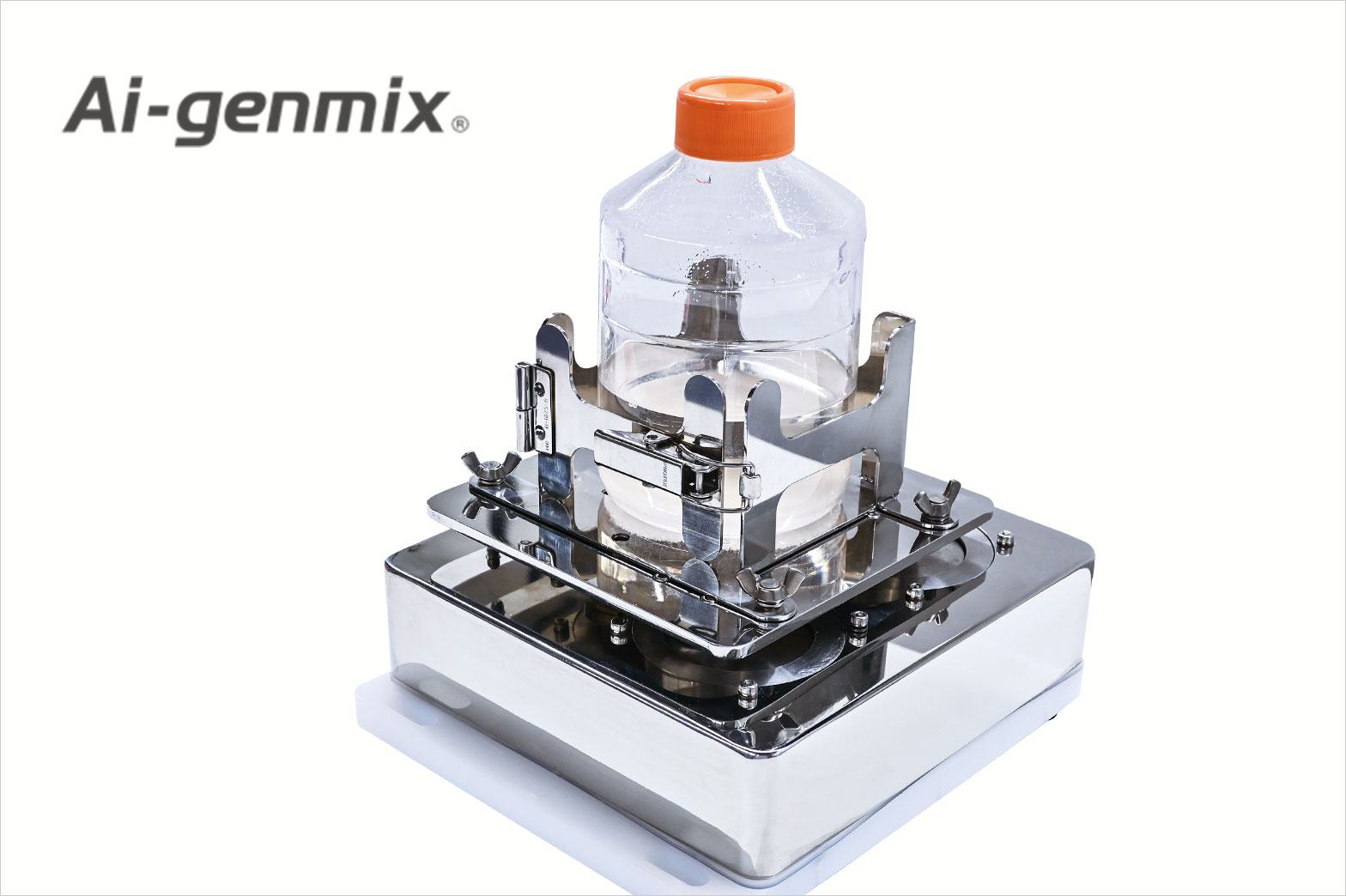
Osaka Sanitary was actually also a user of Steritainer. The overseas-made containers they used before took a long time to arrive and were expensive. Switching to domestically produced Steritainer shortened delivery times and allowed them to handle the containers while keeping them sealed by connecting them with tubes. What Mr. Kakizaki cites as the deciding factor is that it is made in Japan, is versatile, and has a proven track record in the food industry—that "sense of security as a product."
The two companies are now tackling the challenge of large-scale cultivation on a scale of several liters. Traditionally, there has been a lack of suitable equipment for this intermediate size. The method of lining up small bottles is insufficient, and large-scale equipment is too cumbersome. Therefore, they are aiming to create a system that allows for large-scale cultivation while keeping the container sealed by combining the large-capacity model of <Ai-genmix> with Steritainer. However, they are still in the early stages of testing large-capacity cultivation. They are currently testing it step by step, starting with 3 liters.
Its strength lies in its ease of use. No special equipment is required. Simply place the standard Steritainer directly onto the device. Transport, freeze, and cultivate while sealed. The same container can be used even when moving between processes.
Making special medical care commonplace
The positive response is also being seen overseas. A German customer commented, "This is the only product that can be transported in a three-dimensional format and meets the required quality standards." At a major trade show in the United States, "everyone was seeing it for the first time." Overseas expansion will be led by Kono, who has strong English skills.
Being domestically produced is now a strength. When infectious diseases spread globally, overseas-made materials were delayed in delivery, causing problems for domestic sites. That experience has also increased expectations for containers made in Japan.
Nagaza has an unwavering outlook. The workforce will definitely decrease from now on. In that case, it will be important in the field that "even someone who just started yesterday can use it safely, reliably, and without mistakes." That is why the 5 to 20 liter size, which can be carried by a person, is effective in regenerative medicine, which is labor-intensive.
And their aspirations extend far beyond that. "Regenerative medicine is still a specialized field of medicine, only halfway to industrialization. To make it a commonplace medical treatment accessible to everyone, we need materials that are easy for anyone to use. It may seem unassuming, but we believe we play a vital role in that. Only a few people know about our product, Steritiner. We want more people around the world to know about the merits of our product."
"We want to create something that anyone, young or old, can use without needing complicated instructions or manuals, something only we can make, and spread it around the world. Our goal is to contribute from research to industry. We don't want regenerative medicine to end up as just a hobby, like pottery or bonsai."
It's not flashy. But it's trying to broaden its reach starting from the basics of consumable goods.
SEKISUI CHEMICAL Group has supported the foundations of daily life and society by replacing metal tubes with resin and converting crackable blood collection tubes into unbreakable plastic. Extending this line is the "vessel that supports life." This small container is also beginning to support the foundation of regenerative medicine.